When a renovation includes gas appliances, do not close off, redirect or disguise ventilation and flue routes until you know the equipment will still operate under the required conditions. A smarter kitchen, an enclosed balcony or a new utility cupboard can change air supply and combustion-gas discharge. Before ordering cabinets or finishes, identify every appliance, its air and flue route, its isolation valves and the access required for maintenance.
Contents
- Why can a small alteration create a serious risk?
- What should you record before demolition or closing walls?
- Ventilation is not a decorative opening
- How can cabinets, doors and finishes work around an appliance?
- Which warning signs mean you should stop and seek help?
- A work sequence that protects the home and its occupants
Why can a small alteration create a serious risk?
A gas appliance burns fuel and therefore needs suitable air-supply conditions and, where applicable, a safe route for combustion gases. Portugal’s technical framework for gas installations in buildings requires project documentation to consider the building’s ventilation system and its suitability for the appliances installed; it also refers to ventilation requirements for buildings with gas appliances. Read the technical rules published in Diário da República before treating an alteration as a purely decorative choice.
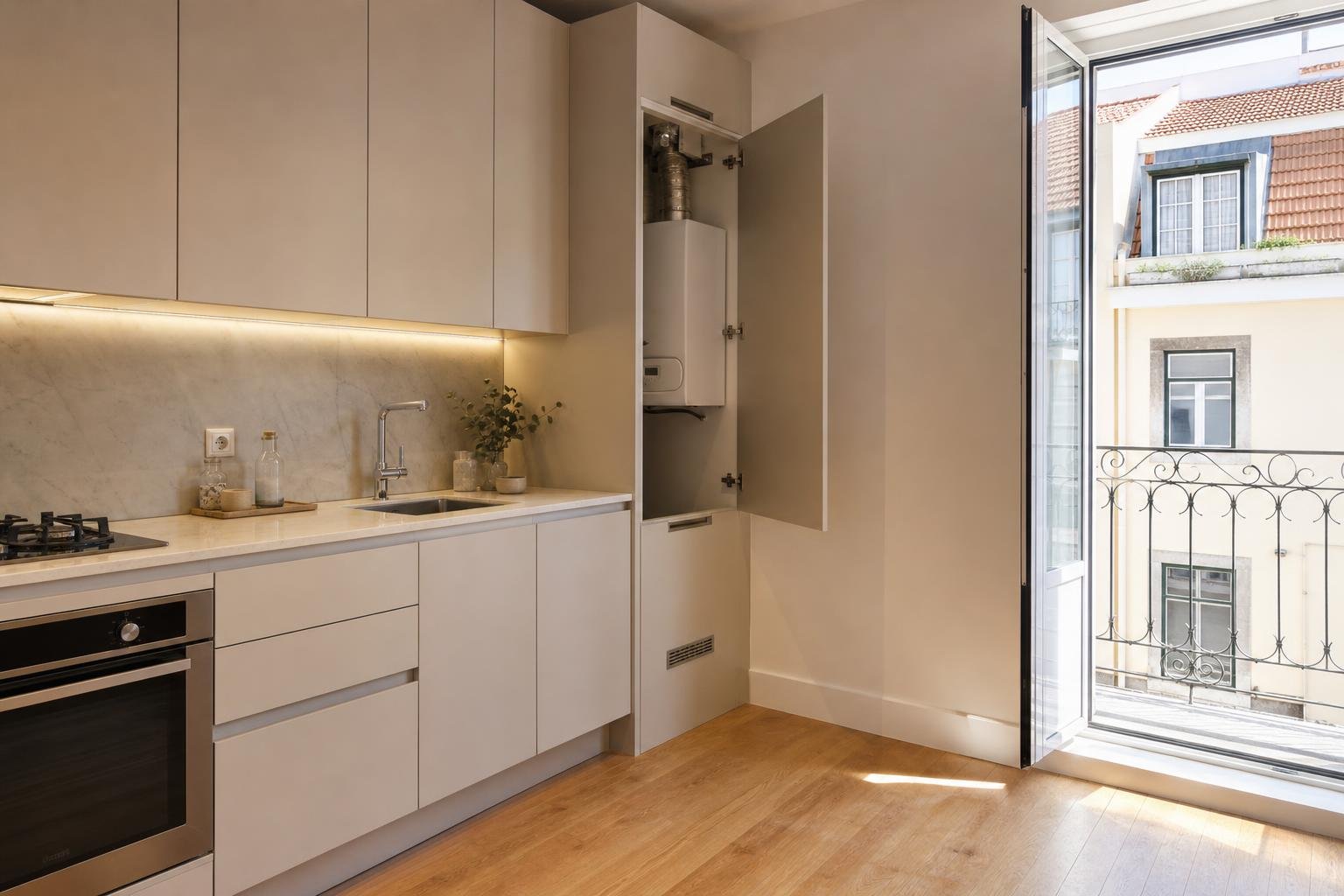
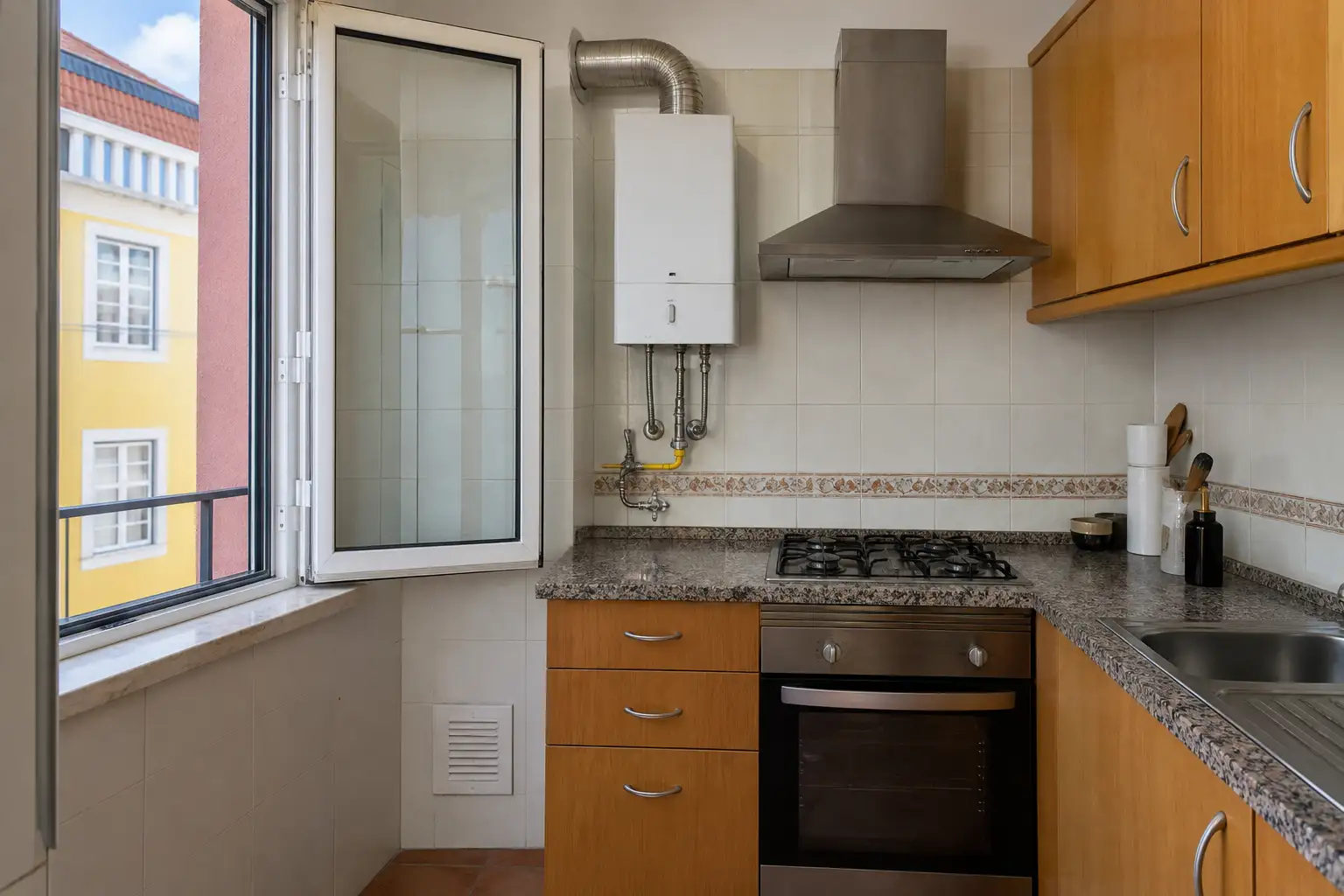
In practice, trouble often starts with apparently minor decisions: turning a kitchen into an open-plan space, enclosing a balcony that contains a water heater, building bespoke cabinetry around a boiler or replacing a ventilated door with a sealed one. The result may be reduced air renewal, no practical access to controls or unwanted heating around components.
Carbon monoxide is especially dangerous because it has no colour, smell or taste. The Portuguese health authority’s guidance on carbon monoxide explains that it compromises oxygen transport in the body. This is not an issue to solve with improvised grilles, tape or a rushed cut-out in a cabinet.
What should you record before demolition or closing walls?
Make a short but careful survey while the area is still accessible. Photograph connections and note the position of every relevant element. This does not replace technical assessment, but it prevents the renovation from concealing useful information.
- Identify each appliance: water heater, boiler, hob, oven or another gas-fired item.
- Locate isolation points: identify the appliance valve and main shut-off valve without hiding them behind fixed furniture.
- Follow the route: establish where air enters, where ducts run and where combustion gases leave.
- Check service access: cabinet doors, removable panels and suspended ceilings must allow inspection, maintenance and eventual replacement.
- Record planned changes: new openings, tighter windows, extractor hoods, doors, cabinets and enclosed balconies.
If the renovation moves a kitchen or changes room layouts, treat gas as a specialist system coordinated with architecture, electrics and ventilation. Obra Lisboa’s guide to moving a kitchen in a Lisbon apartment sets out decisions that should be checked before chasing walls.
Ventilation is not a decorative opening
A ventilation grille works only when it remains unobstructed and forms part of a solution suited to the appliance and room. Do not seal it to reduce noise, cold air, street odours or dust without finding a technically appropriate alternative. Equally, an existing grille does not prove that any appliance can be installed in that location.
Two mistakes are common in renovations of older Lisbon flats. The first is assuming that more airtight replacement windows solve every issue; they can change how air behaves in a room. The second is treating a kitchen extractor as if it replaced the ventilation needed by a gas appliance. An extractor moves air, but it does not by itself validate air supply or safe combustion-gas discharge.
The DGS advises adequate ventilation where combustion appliances are used and warns of carbon-monoxide poisoning. See its cold-weather preventive guidance. During a renovation, the sensible order is to define the system first and design cabinetry, bulkheads and false ceilings afterwards.
How can cabinets, doors and finishes work around an appliance?
A technical cupboard can make a kitchen or laundry area tidier, yet it must not turn a combustion appliance into a sealed box. The design must follow the manufacturer’s instructions, the intended ventilation arrangement and the maintenance area. Provide a door or removable front that gives access to controls and connections without dismantling whole cabinet runs; avoid shelving that blocks service panels.
Before fitting a door, confirm that the altered air path has been accounted for. Before tiling or panelling a wall, confirm that you are not concealing a joint, valve or point that needs observation. Before closing a false ceiling, establish where ducts will be, how they can be inspected and whether they conflict with cables, water pipes or structure.
In buildings where work affects common systems, façades or shared ducts, condominium decisions and building-specific restrictions may apply. To keep control points clear throughout the work, review Obra Lisboa’s practical advice on avoiding common renovation problems before appointing the contractor.
Which warning signs mean you should stop and seek help?
Do not wait for the next refurbishment if there are signs of poor combustion, a leak or failed discharge. Stop using the appliance and seek competent assistance if you notice:
- a smell of gas;
- a yellow, unstable or unusually behaving flame;
- soot, dark marks or unusual condensation around the appliance or flue outlet;
- headaches, dizziness, nausea, weakness, confusion or drowsiness that begin in the space and improve outside;
- blocked grilles, loose ducts, corrosion or furniture preventing access.
If carbon monoxide is suspected or symptoms are consistent with exposure, move everyone outside and call 112; do not re-enter until professionals have declared the place safe. The DGS lists these symptoms and response guidance in its safety recommendations. Do not strike matches, operate switches or try to trace a leak by dismantling connections.
For changes to gas networks, installations or appliances, use appropriately qualified professionals and companies. The IMPIC information on construction activity identifies gas networks, installations and appliances among technical categories subject to specific requirements.
A work sequence that protects the home and its occupants
Set the sequence before demolition: diagnosis and technical definition first; routes, service access and cabinet coordination second; finishes last. Do not leave the appliance check until the kitchen has already been fitted. This order reduces repeat demolition and stops an attractive finish from limiting safety or future maintenance.
At handover, check that valves can be identified, grilles remain clear, technical doors open without special tools and the appliance manual is easy to find. Include periodic maintenance in the household routine, especially before colder months.
A coordinated renovation improves comfort without hiding essential working parts. Where gas is involved, ventilation and flue arrangements belong in the project alongside flooring and cabinetry.
Key takeaways
- Map appliances, valves, air inlets and flue routes before demolition or cabinet orders.
- Do not cover grilles or enclose gas equipment in cabinetry without technical validation.
- A gas smell, soot, abnormal flame or physical symptoms means stop using the appliance and act cautiously.
- Plan service access before closing walls, false ceilings and kitchen fronts.
If you are renovating a kitchen, laundry room or technical area with gas equipment, ask for ventilation, access and finishes to be coordinated from the start. Learn about Obra Lisboa’s construction and renovation services, then bring this survey to the first project discussion.
Sources and further reading
- technical rules published in Diário da República
- cold-weather preventive guidance
- Portuguese health authority’s guidance on carbon monoxide
- IMPIC information on construction activity
AI-generated editorial image; it does not depict an Obra Lisboa project.

Obra Lisboa