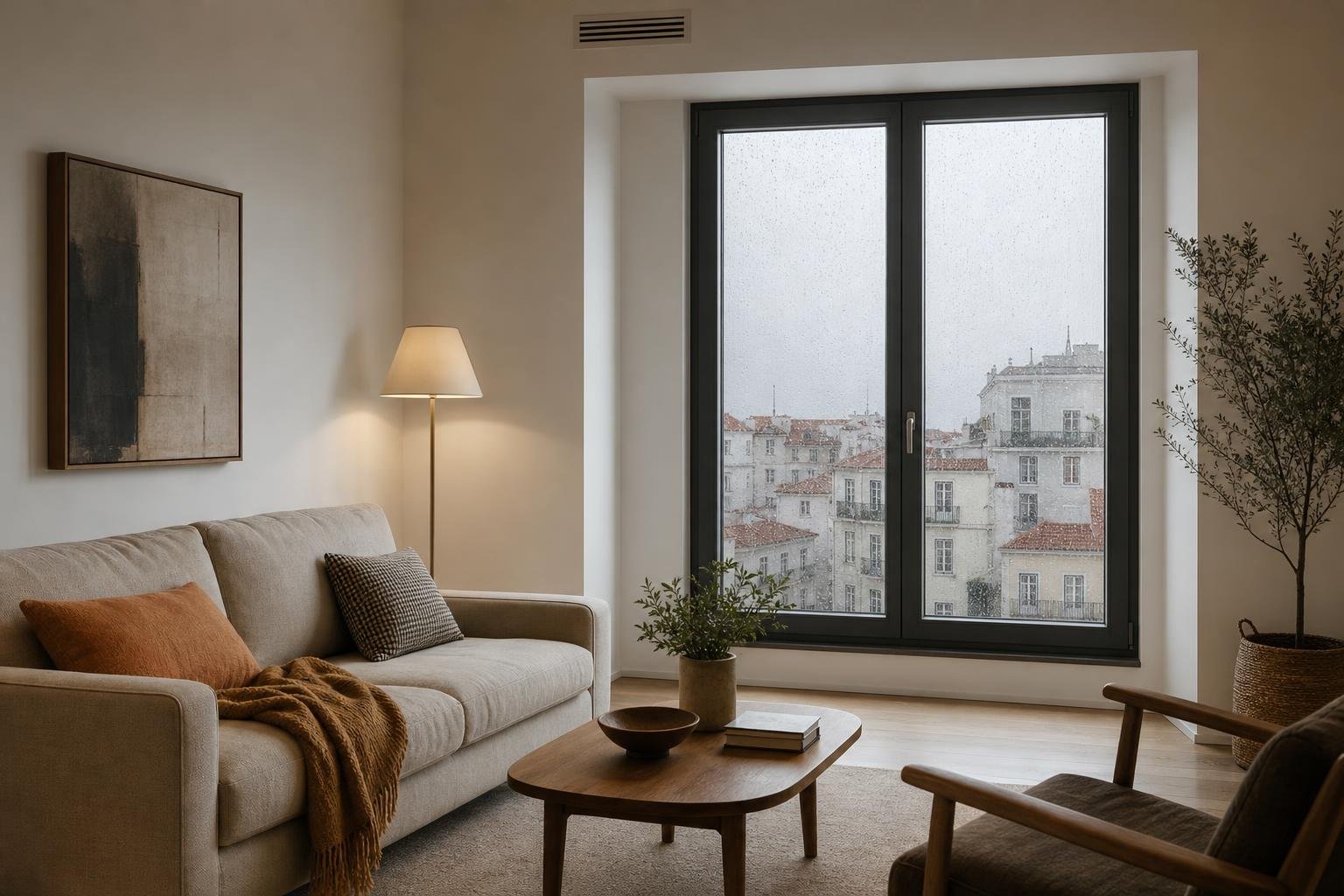

When outdoor air quality is poor or bad, keep windows closed during the episode and reduce pollution sources indoors; air the home again once conditions improve. The usual advice to open windows for fresh air still applies on ordinary days, but it cannot be followed automatically during dust, smoke or other air-quality alerts. In a Lisbon flat, the practical decision is to follow the warning, protect vulnerable residents and avoid turning a temporary measure into a stuffy home through cooking, cleaning or unsafe heating.
Contents
- When should you actually keep the windows closed?
- Before closing the home, cut the pollution made indoors
- How can you refresh the air without swapping stale air for dust?
- Air conditioning and purifiers: what do they solve during an alert?
- Combustion, humidity and filters: mistakes that make it worse
- What plan makes sense for your flat?
When should you actually keep the windows closed?
Keeping windows closed temporarily makes sense when there is a poor or bad air-quality warning, or when smoke is visible or noticeable outdoors. The Portuguese health authority’s guidance for poor-air episodes is especially clear for children, older people, pregnant people and those with respiratory or cardiovascular conditions: they should stay indoors, preferably with windows closed, when outdoor conditions call for it.
There is no need to turn the flat into a sealed box for days. The aim is to reduce particle entry while the episode lasts. Also close balcony doors facing a busy street and check whether shutter boxes, window seals or the entrance door admit visible dust. Curtains reduce glare, but they do not filter air entering through gaps.
Pay particular attention to nurseries, bedrooms used by people with asthma and rooms where people spend long periods. If someone develops wheezing, breathlessness, chest pain or a sudden worsening of symptoms, household air management is no longer the priority: seek appropriate health advice.
Before closing the home, cut the pollution made indoors
A closed window reduces outdoor air entry, but it does not remove pollutants generated inside the flat. Portugal’s health authority notes that cooking, smoking, candles or incense, harsh cleaning products and everyday occupancy all affect indoor air quality. Read the DGS guidance on indoor pollution sources before assuming that every smell comes from outdoors.
During an episode, simplify daily routines:
- avoid scented candles, incense, room sprays and aerosols;
- do not smoke indoors, including by an open window;
- postpone heavy cleaning with bleach, solvents or strongly scented products;
- cook with lids on and use an extractor that vents outdoors, if available;
- avoid lengthy frying and do not allow food to burn in the oven or pan;
- do not dry laundry in a small closed room without a plan to remove the moisture afterwards.
Reducing sources matters because it prevents a misleading solution: keeping everything shut while moisture, odours and cooking particles build up. If the cooker hood only recirculates air through filters, it can capture grease but it does not replace effective extraction outdoors.
How can you refresh the air without swapping stale air for dust?
Under normal conditions, the DGS recommends airing a home for at least ten minutes a day, as well as during and after cooking, bathing, cleaning, washing or drying clothes indoors. See its general indoor-air recommendations. On an alert day, change the timing rather than abandoning ventilation indefinitely.
- Check whether the pollution episode is still active before opening windows.
- Choose the façade less exposed to traffic or smoke if the flat has two aspects.
- Open briefly once outdoor air is better instead of leaving a window ajar for hours.
- After a shower, keep the bathroom door closed and use the available extraction; air the room when it is safe to do so.
- If you use a CO₂ monitor, treat a persistent rise as a sign to review occupancy, indoor sources and when to refresh the air; do not use it as an outdoor-particle monitor.
There is an important difference between discomfort and a persistent defect. Condensation on glazing, laundry taking too long to dry, lingering smells or rising damp show that the home needs a ventilation solution, rather than random window opening and closing. For recurring condensation, also read our guide to cleaning mould on a painted wall and stopping it from returning.

Air conditioning and purifiers: what do they solve during an alert?
Air conditioning does not supply fresh air. During a poor outdoor-air episode, it can help keep one room usable with doors and windows closed and the unit in recirculation mode, provided its filters are clean and the equipment is maintained. That does not make the system a universal air purifier or compensate for clogged filters, dirty ducts or poorly designed installation.
A purifier with filtration suitable for particles can help in a bedroom used by a vulnerable resident, but it should be selected for the actual room volume and used with doors and windows closed during the episode. It does not solve carbon monoxide, damp, sewer odours or a combustion leak. Nor does it make it safe to use a fireplace, brazier or gas heater without proper ventilation.
In practice, choose one occupied room for the hottest or most polluted hours: close unnecessary air leaks, lower shutters to reduce solar gain and keep the temperature moderate. Setting sensible heating and cooling schedules avoids running the system flat out after the home has already overheated; the same principle is covered in our guide to thermostat settings and schedules for a Lisbon flat.
Combustion, humidity and filters: mistakes that make it worse
Do not use an oven, gas hob, charcoal brazier or outdoor heater to warm a closed room. During cold weather with windows shut, this shortcut can create a far greater risk than the initial discomfort. Gas appliances, stoves and fireplaces need proper flue conditions and ventilation; if there is an unusual smell, smoke entering the room, an irregular flame or symptoms such as dizziness and nausea, switch the appliance off if it is safe and ask for help. Also read what to check when a fireplace sends smoke into the room.
Do not block permanent grilles, air outlets or technical gaps in an attempt to seal everything. They may be part of the building’s ventilation route or required by combustion equipment. The ADENE energy-saving manual recommends keeping grilles and air outlets clear and matching ventilation to real occupancy.
A dirty air-conditioning filter, a dust-clogged grille or a weak extractor fan needs maintenance. Do not wash filters identified by the manufacturer as non-washable, spray products inside equipment or dismantle gas appliances in an attempt to correct poor draught.
What plan makes sense for your flat?
Make a short plan before the next episode. Identify the most comfortable room, check that shutters and frames close properly, keep air-conditioning manuals accessible and decide who will check alerts when children, older residents or someone with a respiratory condition lives at home. If the flat is beside an avenue, in an area with building work or exposed to seasonal smoke, it is worth separating temporary responses from permanent work.
A renovation can provide effective kitchen and bathroom extraction, air paths between rooms, well-positioned climate-control equipment and window details that reduce unwanted air and dust ingress without removing necessary ventilation. The answer is not simply choosing one machine: it depends on the air route, moisture and the activities that happen indoors every day.
For a planned intervention, gather photographs of grilles, existing equipment and points where dust enters or condensation appears. Obra Lisboa can help incorporate ventilation, thermal comfort and building solutions into a clear scope; the next step is to request a renovation quote with those priorities identified.
Key takeaways
- During a poor or bad outdoor-air alert, keep windows closed and reduce pollution sources indoors.
- Air the home briefly again once outdoor conditions improve; leaving a home closed for too long also builds up moisture and pollutants.
- Air conditioning and purifiers can support comfort, but they do not replace extraction, maintenance or safe ventilation.
- Never use improvised combustion equipment to heat a closed room.
If you are renovating and want to resolve extraction, windows, climate control and damp together, ask Obra Lisboa for a quote that includes these decisions from the outset.
Sources and further reading
- Portuguese health authority’s guidance for poor-air episodes
- general indoor-air recommendations
- DGS guidance on indoor pollution sources
- ADENE energy-saving manual
Editorial image; it does not depict an Obra Lisboa project.

Obra Lisboa