
Law 3/2026 does not remove the need for anyone renovating in Lisbon to confirm who signs the design, who directs the work and what qualification the contractor holds. Published on 6 January 2026, the change concerns professional-qualification rules; for a private renovation, its practical value is in avoiding decisions based solely on a business card or commercial quote. Before filing an application or appointing a contractor, ask for names, roles, evidence and a clear match between the scope of work and each responsibility.
Contents
- What changed in January 2026 — and what did not
- Which works deserve a pause before you ask for a price only
- Which documents should be attached to each person
- How to check a contractor without confusing qualification, price and trade
- Mistakes that delay a renovation before day one
- A safe sequence for moving forward
What changed in January 2026 — and what did not
The IMPIC notice on Law 3/2026 says that the law completes the transposition of European rules on recognising professional qualifications and amends Law 31/2009. One amendment concerns suitable qualifications among staff of public authorities and public-project owners who assess projects.
For the owner of a flat or house, the sensible reading is limited and practical: the law does not automatically turn a small paint job or a furniture replacement into a planning operation. It also does not replace the existing rules on project authors, coordination, site direction, supervision, condominium decisions or licensing. It does reinforce the need to know who is legally qualified to take each technical responsibility when the work requires it.
Do not accept “we have a technician” as a complete answer. Ask the contractor to identify the person, their role and the documents that will be supplied. Where the work affects structure, façade, roof, accessibility, technical systems or an operation subject to municipal control, this is not paperwork for its own sake. It affects the application, programme and responsibility for mistakes.
Which works deserve a pause before you ask for a price only
An internal renovation can look straightforward until it includes demolition, a new gas installation, a relocated kitchen, a change of use or work on common elements. In those situations, define the operation before choosing finishes or comparing prices.
- Describe what will remain, be removed, be built and be installed.
- Mark anything affecting structure, façade, balcony, roof, shared service risers, ventilation or meters.
- Check whether the work needs a design, prior communication, licence, condominium approval or specialist opinions.
- Only then request quotes based on the same technical scope.
Lisbon’s checklist for prior communication for building works shows that an application can require responsibility statements, valid professional-body declarations, civil-liability insurance, design documents, a programme and a cost estimate. Where the work affects common parts, the checklist also calls for condominium-authorisation minutes.
There is a useful distinction between “the company can carry out this work” and “the intervention has been correctly defined and prepared for execution”. Get the second answer before walls are closed or replacement windows are ordered.
Which documents should be attached to each person
Arrange the renovation by role. The project author is responsible for the documents they produce and sign; the project coordinator brings disciplines together where there is a team; the contractor carries out the work; site technical direction follows execution for the contractor; and supervision, when appointed or required, checks conformity with the design and applicable rules. One person may only combine roles where that is permitted and properly formalised.
Keep one folder containing:
- identification and contact details for every technical participant;
- relevant responsibility statements;
- professional declarations or evidence requested for the application;
- civil-liability insurance where required;
- the design, specification, drawings and dated revisions;
- the contract, accepted quote, work programme and change record.
The municipal page on building-work licences still refers to Law 31/2009 in its current wording, alongside the applicable forms and submission requirements. Use that as a working rule: check the current document set before filing, even if you used a similar package a few months ago.
To prevent the quote from becoming vague, prepare a finish schedule before requesting quotes. It stops the design and contract from depending on choices made through scattered messages during the build.

How to check a contractor without confusing qualification, price and trade
The contractor’s qualification is an essential check, but it does not guarantee that the quote includes every trade, protection for common areas, waste removal or daily coordination. Ask for the alvará, certificate or other applicable qualification number, and check that it is suitable for the nature and value of the work.
In its construction-activity FAQs, IMPIC explains that private works may be undertaken by firms holding different qualifying titles. It also states that, for private works, the title does not remove the need to meet the requirements of Law 31/2009 on a work-by-work basis, according to the class, category and subcategory of the works involved.
Compare three things side by side:
- Scope: what is included, excluded and measured.
- People: who handles the design, site direction, specialist disciplines and coordination.
- Evidence: which documents will be supplied before commencement and at handover.
This matters particularly where one quote combines demolition, electrics, plumbing, HVAC, waterproofing and joinery in a single sum. A lump-sum price makes financial reading easier; it should not conceal responsibilities belonging to different parties.
Mistakes that delay a renovation before day one
The costliest mistake is buying items before knowing whether the solution can be built and approved. A worktop may not fit after a service riser is corrected; an external air-conditioning unit may need a condominium decision; an opening may require a structural assessment. Another common mistake is accepting drawings without a revision number, date or a clear record of what was approved.
Do not appoint extra work by telephone alone. If a hidden condition appears — degraded masonry, old pipework or an uneven slab — record the issue, proposed solution, cost and programme effect, and the owner’s approval. A renovation clarification log helps distinguish a technical query from an approved change.
Finally, do not confuse municipal documents with condominium consent. Work to a façade, roof, balcony or another common element may need a separate resolution. Clear that route before ordering made-to-measure materials.
A safe sequence for moving forward
If the renovation is still at idea stage, start with a scope-definition meeting. Bring photographs, available measurements, older plans, condominium information and a list of the changes you want. Ask for a clear explanation of what is maintenance, what is alteration, and what needs technical or administrative confirmation.
Then close the minimum appointment pack: a design solution where applicable, finish schedule, responsibilities, itemised quote, programme, payment conditions and a rule for extra work. Keep a contingency, but do not use it as a substitute for a properly defined scope; a renovation contingency budget works best when every additional decision is recorded.
Law 3/2026 is a timely reason to update this documentary discipline. It does not change the need to choose the team carefully; it makes it less sensible to leave qualifications and responsibilities until after the deposit is paid.
Key takeaways
- Ask for names, roles and documents before appointing a team for work requiring a design or municipal control.
- Check the contractor’s qualification, then confirm who is responsible for site direction, specialist work and coordination.
- Do not order made-to-measure solutions before the technical scope, approvals and design documents are settled.
- Record every extra item, design change and programme effect in writing.
If you are preparing a Lisbon renovation involving technical or administrative changes, gather the scope and available documents first. Obra Lisboa can help structure a clear building proposal, identifying work items, materials and responsibilities before appointment.
Sources and further reading
- IMPIC notice on Law 3/2026
- prior communication for building works
- building-work licences
- construction-activity FAQs
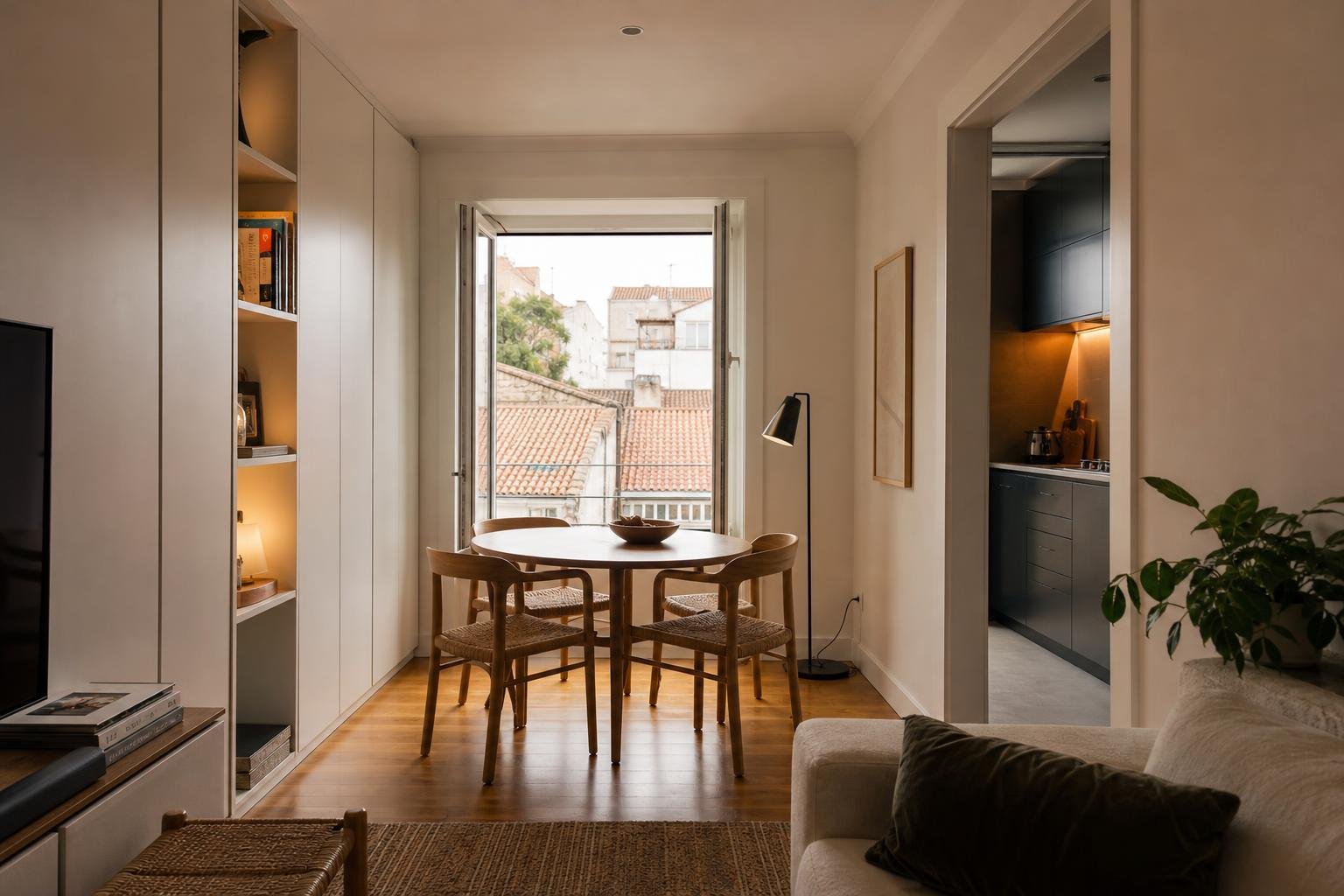
Editorial image; it does not depict an Obra Lisboa project.

Obra Lisboa