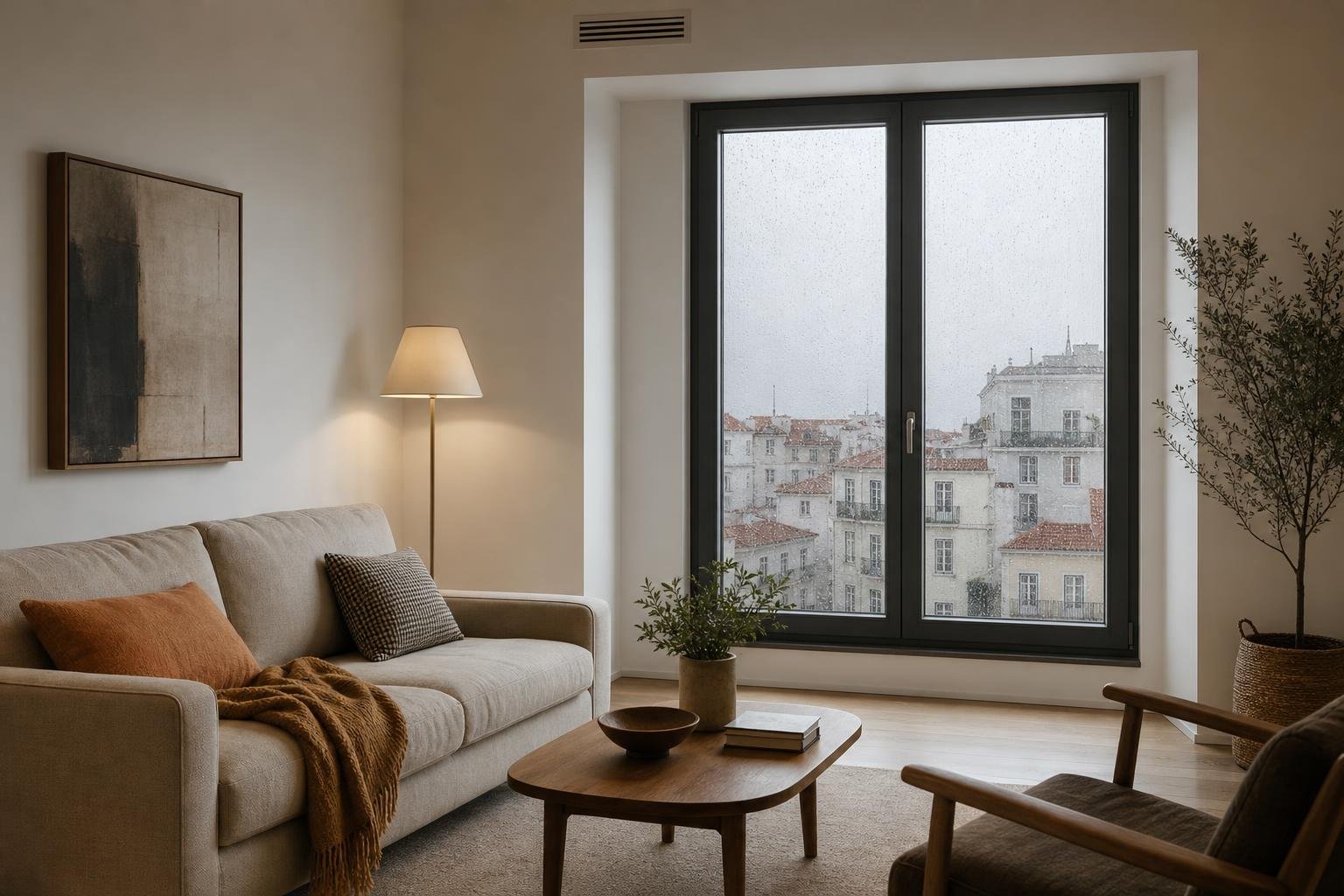

A plant in a windowless bathroom only works when it has dedicated artificial light and the room’s ventilation already controls shower steam. Humidity may suit some plants, yet it cannot replace light or solve mould, condensation or a weak extractor fan. Before buying a pot, decide where the light will go, how the plant can be removed for watering and cleaning, and whether the chosen surface can cope with drips without damaging the furniture.
Contents
- Start with ventilation, not the plant
- Without a window, where does the light come from?
- Where can the pot sit without disrupting the room?
- Choose the plant around the maintenance routine
- Avoid mistakes that create mould and marks
- Use a four-week trial before fixing anything permanently
Start with ventilation, not the plant
The bathroom is one of the home’s main sources of moisture. The Portuguese Directorate-General of Health recommends ventilation during and after bathing, as well as clean, properly maintained ventilation systems. A plant cannot absorb enough steam to correct a mirror that stays fogged, mouldy silicone or damp walls.
Run a simple one-week check first: after a shower, does the mirror clear, does the air stop feeling heavy, and do towels dry between uses? If not, postpone the green corner. Review the extractor fan’s control and maintenance, the gap below the door and the airing routine in adjacent rooms. For this starting point, see Obra Lisboa’s guide to a post-shower routine for a windowless bathroom.
Avoid placing pots against cold walls, inside the cabinet below the basin or on a shelf where water remains trapped. Those locations add cleaning and maintenance to an area already likely to develop condensation.
Without a window, where does the light come from?
In a room with no daylight, the plant depends entirely on a dedicated grow light. The usual ceiling fitting is designed to light people and surfaces; it may make the room pleasant, but it does not necessarily provide enough regular light at leaf level.
Choose an LED plant light with a timer, positioned outside splash zones and connected to a suitable socket. The aim is a consistent routine, rather than leaving a powerful light on unnecessarily. Follow the lighting manufacturer’s recommended running time and watch the plant over the first few weeks: pale leaves, leaning growth or continued leaf drop call for a change in position or duration.
Do not hide the fitting inside a closed cabinet or run cables across the basin. Electrical work in bathrooms needs particular care; if the plan requires a new socket, a fixed light point or wiring near water, include it in the renovation brief and ask a qualified electrician to assess it.
| Situation | Practical decision | Likely result |
|---|---|---|
| There is a window and good air renewal | Assess the actual daylight through the day | It may work without a grow light, depending on position |
| There is no window, but there is a safe socket and space for a fitting | Plan a timed grow light | A selected indoor plant can be maintained |
| There is no window and no room for a light | Use dried stems, a ceramic piece or a washable artificial plant | Avoid buying a plant that will decline |
| There is persistent mould or steam | Fix ventilation and the moisture cause first | Avoid disguising a room problem |
Where can the pot sit without disrupting the room?
In a small WC, the best place is rarely on top of the cistern or at the edge of the basin. Both are used every day, receive splashes and make cleaning slower. Look for a position that keeps access clear to the tap, mirror, towels and toiletries.
- Side shelf: works when it is outside the direct shower splash area and has an edge or removable tray.
- Wall support: frees the worktop, but must be fixed to a wall that can take the load and kept away from concealed pipework.
- Tall cabinet: only works when light reaches the leaves and the pot can be removed without standing on a chair.
- Narrow stool or trolley: can suit a larger bathroom if it does not reduce the clear route or make floor cleaning difficult.
A straightforward option is one plant only, with a deep saucer or waterproof outer container. Water it in the kitchen sink or shower tray, allow it to drain, then return the clean pot to its place. If you are considering visible shelving, Obra Lisboa’s guide to open or closed storage in a small living room is useful for weighing easy access against dust, splashes and cleaning time.

Choose the plant around the maintenance routine
Use the plant label to guide the choice: look for indoor suitability and check its light, watering and temperature requirements. In a windowless bathroom, “tolerates low light” does not mean “lives without light”. If you do not intend to fit a grow light, choose a different decorative element instead of repeatedly testing plants.
It also helps to separate humid air from waterlogged compost. Shower steam does not justify frequent watering. Check the growing medium before adding water, use a pot with drainage and do not leave standing water inside a cachepot. A constantly wet plant can bring odours, fungus gnats and marks on lacquered or timber furniture.
If small children or pets live in the home, check the safety of the species before placing it within reach. Avoid fertilising in a closed room with strongly scented products and remove dry leaves when they appear. The goal is a green feature that remains simple to care for, rather than another daily task in an already demanding room.
Avoid mistakes that create mould and marks
The most common mistake is treating a pot as a solution to a damp bathroom. Portugal’s health authority explains that mould control depends on reducing indoor moisture and increasing ventilation and temperature; when moisture remains, mould returns. Read its guidance on damp and mould in homes before trying to solve the issue through decoration.
- Do not place the pot over silicone joints, improvised ledges or swollen furniture.
- Do not cover extraction grilles, even if the plant would hide an unattractive detail.
- Do not leave water in the saucer for several days.
- Do not mist leaves in a room that already holds steam.
- Do not use heavy pots on weak shelves or on fixings that have not been checked.
If there are black marks, peeling paint or a persistent musty smell, remove the pot from the area and investigate the cause. Surface cleaning can improve appearance, but it does not eliminate leaks, thermal bridges or inadequate ventilation. Read how to clean mould from a painted wall safely and stop it returning before painting or decorating over the issue.
Use a four-week trial before fixing anything permanently
Set up the green corner as a reversible arrangement. For four weeks, use a light pot, washable tray and timed light without drilling or altering furniture. Record only what matters: leaf condition, compost drying, mirror condensation, odour and how easy the area is to clean.
Lisbon has dry, warm summers, but the conditions inside a bathroom depend mainly on showers, extraction and the home’s temperature. The IPMA climate normals for Lisbon/Tapada help place outdoor seasonal changes in context; they do not replace observation of the actual room. In winter, a lightly heated bathroom may dry more slowly. In summer, the plant may need less water even with the grow light running.
If the trial works, choose a support that is easy to clean and keep the extractor accessible. If it does not, do not force it: a botanical print, ceramic object or well-lit mirror can bring the same visual presence without requiring light, watering and moisture management.
Key takeaways
- Deal with steam, mould and extraction before adding a pot.
- Without a window, expect to use a timed grow light; normal bathroom lighting may not be enough.
- Use a draining pot, removable tray and a position that does not compromise cleaning or circulation.
- Test the arrangement for four weeks before drilling or ordering built-in furniture.
If you are renovating the bathroom, add ventilation, sockets, lighting and shelving to the decision list from the start. Obra Lisboa can help coordinate these details in a renovation so decoration does not conflict with the room’s everyday use.
Sources and further reading
- Portuguese Directorate-General of Health recommends ventilation during and after bathing
- damp and mould in homes
- IPMA climate normals for Lisbon/Tapada
Editorial image; it does not depict an Obra Lisboa project.

Obra Lisboa