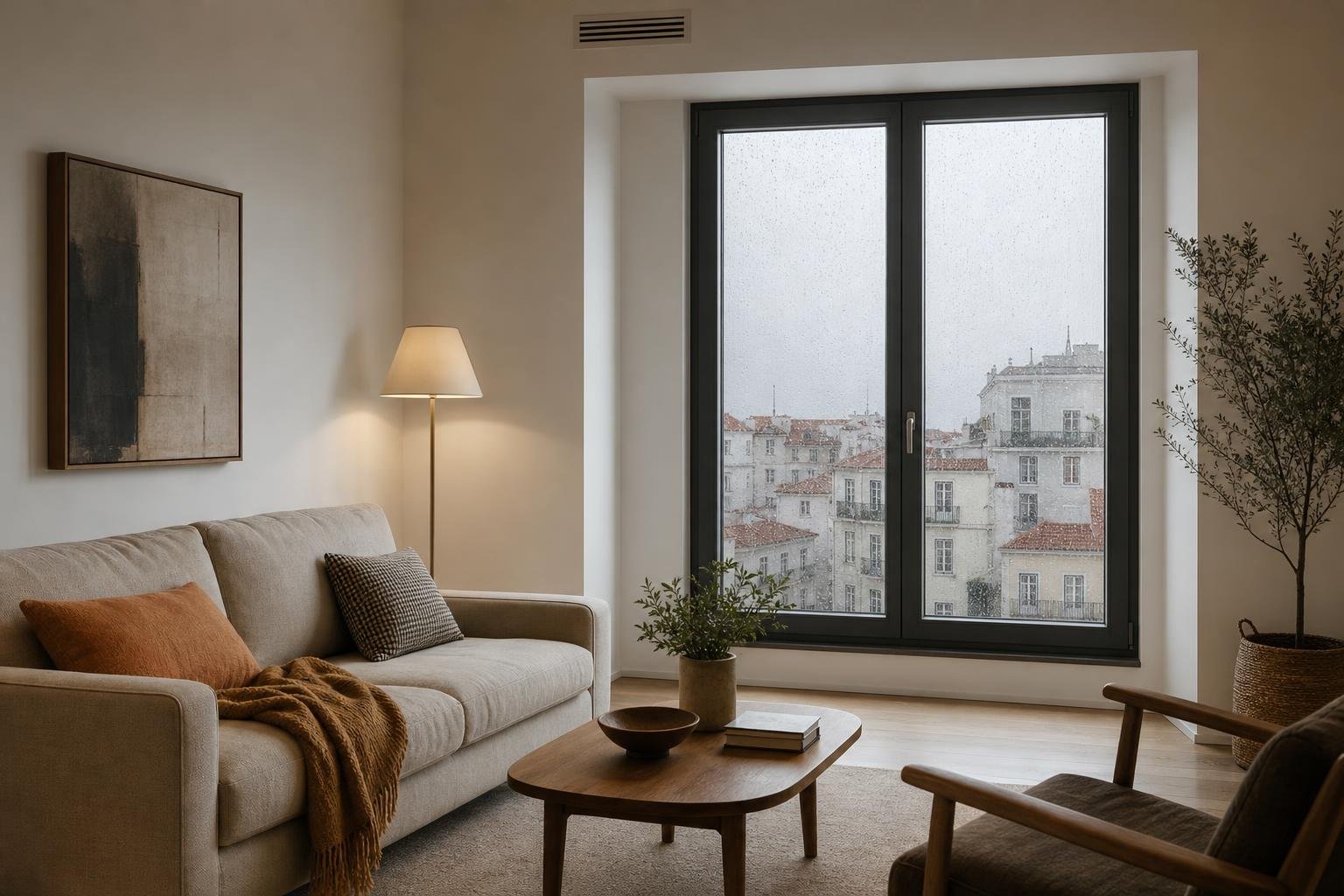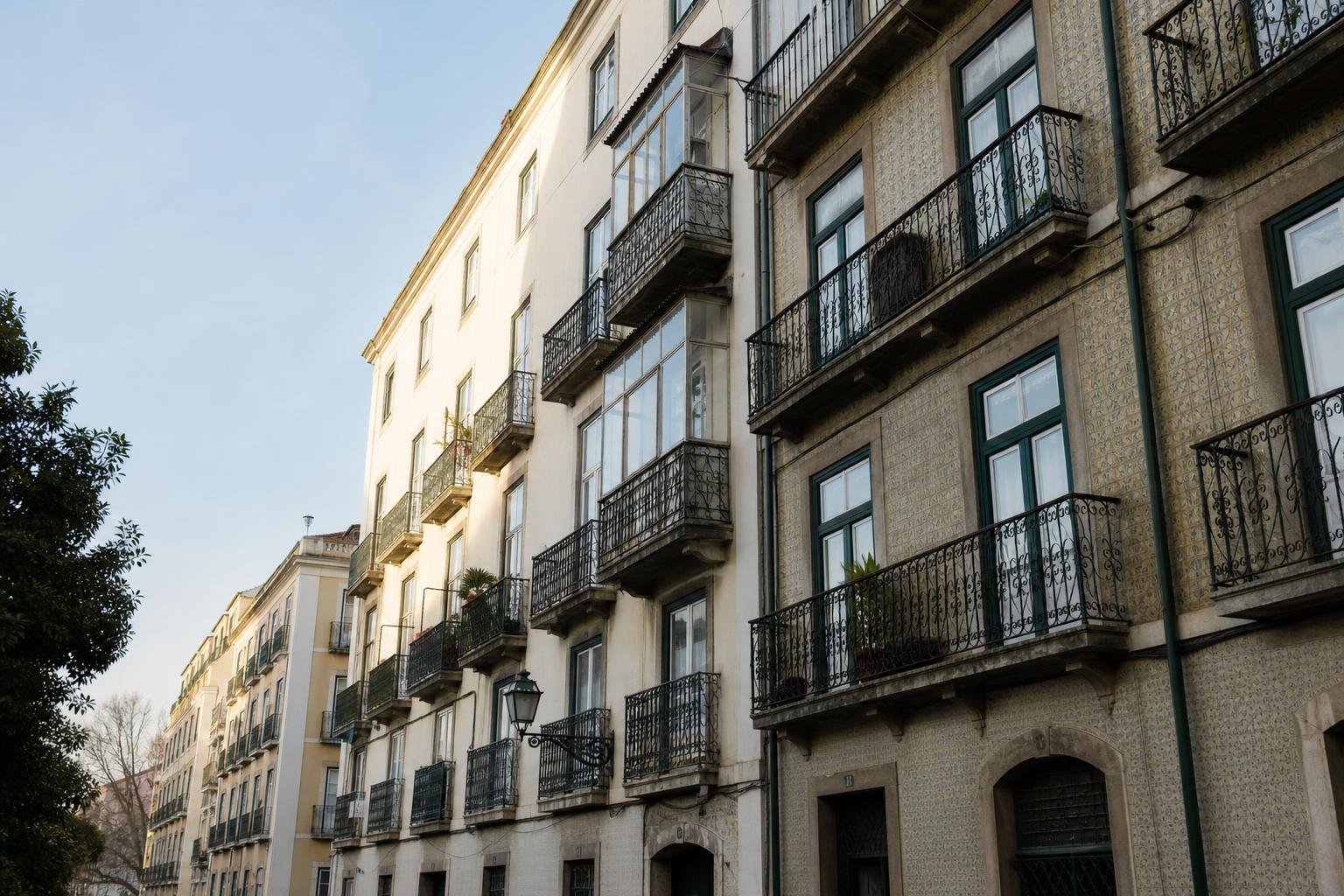

A lighter façade can reduce the solar energy absorbed by a wall, but colour should only be chosen after testing samples in the real orientation and checking the condition of the substrate. In Lisbon, west- and south-facing exposure, render texture, nearby shade and window-frame colours can change the result substantially. Lisbon/Tapada climate data records an average of 112.2 days a year with maximum temperatures of at least 25 °C, so painting is more than a decorative choice for a house in the sun.
Contents
- Why does colour matter on a sun-exposed façade?
- Which walls deserve attention first?
- How to test samples without being misled by shop lighting
- Light, mid-tone or dark: what is the sensible trade-off?
- Before painting, check the substrate and water path
- What is the right order for choosing and appointing the work?
Why does colour matter on a sun-exposed façade?
A dark surface generally absorbs more solar radiation than a light one. That energy first warms the finish and render; then, depending on the wall build-up, insulation and indoor ventilation, part of it can contribute to indoor discomfort. The effect matters most on a large unshaded wall facing south or west, and on a roof edge or parapet exposed for long periods.
Do not expect light paint to replace insulation, external shading or well-specified windows. It is one decision within a wider plan. ADENE explains that an energy certificate can guide comfort improvements, including insulation, windows, ventilation and efficient equipment. Use colour to support that plan, especially where repainting is already needed.
Which walls deserve attention first?
Start with a simple house map: mark north, south, east and west; note the rooms behind each façade; and record where heat is most noticeable in late afternoon. A west-facing wall beside a living room or bedroom normally deserves more thought than a mostly shaded north façade.
- West: often receives the most troublesome late-day sun; consider less heat-absorbing tones and check whether awnings, shutters or planting can protect openings.
- South: assess colour together with overhangs, canopies and seasonal shade.
- East: warming happens early; observe glare and bedroom use.
- North: do not choose a very dark paint simply to “warm” the wall; drying, ventilation and compatibility with the render matter more here.
Mainland Portugal had nine recorded heatwaves by October 2026, according to the IPMA provisional review. That makes it sensible to choose external finishes with prolonged hot spells in mind, rather than judging a house only by how it looks in a photograph.
How to test samples without being misled by shop lighting
Do not decide from a catalogue or a small colour card viewed indoors. Ask for two or three nearby shades, confirm the recommended paint system for the substrate, and apply visible test areas on every important orientation. Do not combine products from different brands or systems within the same test patch.
- Repair cracks, hollow areas, salt deposits, peeling finish and water-entry points before making a sample.
- Apply each colour over preparation equivalent to the proposed work: primer, texture and number of coats.
- Check samples in the morning, mid-afternoon and late afternoon, in clear and overcast weather.
- View them up close and from the street; a restrained shade on a board can look far stronger across a full gable wall.
- Photograph every test with its date, orientation and exact colour name to prevent ordering mistakes.
If you are also replacing windows or correcting reveals, coordinate the decisions. Read window reveals: foam, tape or mortar? before finalising the paint solution, because later reveal repairs can leave visible differences in texture and tone.

Light, mid-tone or dark: what is the sensible trade-off?
Pure white is not automatically the best answer. It can create glare on an exposed street, show runoff marks and clash sharply with existing stone, trims or tilework. At the other end, browns, anthracites and highly saturated colours on exposed elevations absorb more heat and make small imperfections easier to see.
For many Lisbon houses, broken light shades — sand, stone, very pale grey or warm white — are a balanced starting point. Still, check the manufacturer’s colour chart and, where available, the solar reflectance value or suitability note for highly exposed façades. That data can only be compared across equivalent products and conditions; one figure is not a promise about indoor temperature.
If the work includes external insulation, select colour after decisions on the system, thickness, profiles and details. Review what to compare in an insulation data sheet so the finish is not chosen first and then found to be incompatible.
| Choice | When it may work | Main caution |
|---|---|---|
| Very light shade | Large elevations exposed to south or west | Glare, visible dirt and contrast with existing elements |
| Broken light shade | Houses with relevant solar exposure and traditional materials | Confirm the sample, texture and final finish |
| Mid-tone or dark shade | Details, plinths or heavily shaded elevations | Higher solar absorption on exposed walls |
Before painting, check the substrate and water path
New colour does not solve a damp wall. Where there are persistent stains, salts, active cracks, open joints, missing drip details or loose render, finding the water route and repairing the substrate comes first. Painting over those problems can trap moisture, cause early peeling and lead to repeat work.
Inspect the façade after rain and again after several dry days. Look carefully at roof junctions, sills, downpipes, balconies and window reveals. Paint selection should respect vapour permeability and the existing wall type, especially in older construction with lime-based mortars. Do not accept extra paint coats as a substitute for repair.
For the local climate context, see the 1991–2020 Lisbon/Tapada climate normal. It helps frame heat exposure, but it does not replace looking at the specific shade, orientation and defects of your own house.
What is the right order for choosing and appointing the work?
Settle four decisions: substrate diagnosis, solar-exposure map, samples applied on site and a written paint-system specification. In the quotation, ask for preparation, anticipated repairs, primer, finishing product, colour and reference, number of coats, protection to openings and access method.
Avoid approving a colour by message without retaining the complete reference. Where several elevations are involved, mark on a drawing where each shade will be used and where transitions end. This prevents site improvisation, especially when paint is ordered in batches.
If the house overheats, combine paint with measures that stop radiation before it enters: external shading, opening control and sensible shutter routines. For interventions involving motorised blinds or shutters, read automating blinds in a Lisbon flat; the principle of controlling sun before the glass also applies to a house.
Key takeaways
- Always test colour on the actual façade using the preparation and texture planned for the work.
- Prioritise south- and west-facing walls behind the rooms that become hottest.
- Light paint can limit solar absorption, but it cannot correct poor insulation, water ingress or unprotected openings.
- Ask for a written repair and paint-system specification with exact colour references.
If you are painting, insulating or changing windows in a Lisbon house, gather façade photographs, solar orientation and visible defects before requesting a quotation. Obra Lisboa can help organise a coherent intervention, starting with the substrate and details that prevent finishes from having to be redone.
Sources and further reading
- 1991–2020 Lisbon/Tapada climate normal
- IPMA provisional review
- ADENE explains that an energy certificate can guide comfort improvements
Editorial image; it does not depict an Obra Lisboa project.

Obra Lisboa