Regularly cleaning metal cooker-hood filters reduces built-up grease, improves vapour capture and helps prevent lingering kitchen smells. It is a straightforward household task when it is limited to removable filters and accessible surfaces; it should never become an attempt to dismantle the motor, electrical connection or ductwork. Before starting, establish whether the appliance vents outdoors or recirculates air, gather non-abrasive materials and stop if you find signs of overheating, dripping grease or electrical faults.
Contents
- First, what type of cooker hood do you have?
- How often should the filters be cleaned?
- Preparation: what to do before removing a filter
- How to wash a metal filter without warping it
- What cleaning will not fix
- A short routine that makes the kitchen easier to maintain
First, what type of cooker hood do you have?
Open the hood canopy or remove a filter and check the manufacturer’s label. In a ducted hood, air travels through ductwork to the outside; in a recirculating model, it passes through metal filters and usually carbon filters before returning to the kitchen. Metal filters trap grease in both arrangements. Carbon filters are not washable unless the manufacturer expressly says so: they are replaced according to use and the instructions for that model.
This distinction prevents a common mistake: washing a carbon filter as if it were an aluminium mesh. The filter can lose performance, deform or shed material. It also explains why careful cleaning can reduce visible grease without fully removing odours from a kitchen with no external discharge. For the limits of each approach, see Obra Lisboa’s guide to kitchen extraction without a direct outdoor vent.
- Metal filter: a rigid mesh or cassette, usually removable and washable.
- Carbon filter: a dark, lightweight or granular component, usually replaceable.
- Duct: the concealed route that should not be dismantled as a DIY job.
How often should the filters be cleaned?
There is no single interval because it depends on how often you cook, the type of cooking and the appliance itself. Instead of waiting for grease to drip, set a quick check: hold the filter up to the light, run an absorbent paper towel over its underside and notice whether steam is captured as soon as the hood starts. Frying, grilling and daily cooking call for more frequent checks than a kitchen used only at weekends.
Clean before the sticky layer hardens. Old grease needs more scrubbing, increases contact time with cleaning products and may leave the finish dull. Portugal’s Directorate-General of Health recommends maintaining and cleaning ventilation and air-conditioning systems and airing the home every day, especially during activities that release moisture and pollutants, including cooking. Use the DGS indoor-air recommendations as an important reminder: a cooker hood helps, but it does not replace a sound ventilation routine.
If you use gas, take extra care. A dirty hood is never a reason to block permanent vents or alter air inlets in an attempt to stop draughts.
Preparation: what to do before removing a filter
Start with the hob cold and the appliance switched off at its control. If the manual shows an accessible plug, disconnect it before cleaning near lights or the filter housing; do not pull on cables or open electrical boxes. Protect the hob and worktop with a thick cloth or clean cardboard: a metal filter can fall and scratch glass, stainless steel or stone.
- Open a window or ensure fresh-air exchange, especially when using a degreaser.
- Wear gloves if the grease is heavily stuck on or your skin is sensitive.
- Photograph the position of catches before releasing the first filter.
- Support the filter with one hand while operating the catch with the other.
- Set it in a basin or on a cloth; do not stand it upright beside a walkway.
Avoid mixing products. Warm water, washing-up liquid and soaking time solve many household cleaning jobs without creating harsh fumes. Do not use steel wool, blades, highly abrasive pads or drain-unblocking products: they can attack aluminium, remove coatings and damage the mesh.

How to wash a metal filter without warping it
Fill a basin large enough for the filter with warm water and a mild grease-cutting detergent. Leave it to soak until the grease softens, then brush gently in the direction of the mesh using a soft brush. Work through corners, folds and the frame, where grease often collects. Turn the piece over and repeat. If the water cools or becomes very greasy, replace it rather than scrubbing harder.
Rinse thoroughly and allow the filter to dry completely in a position that lets water drain away. Refit it only when there is no moisture in folds, catches or the frame. Residual water can carry dirt back into the appliance and, in some models, drip onto the hob when you next use it.
Some manufacturers allow dishwasher cleaning; others do not. Do not assume every filter will tolerate a hot cycle: aluminium can discolour and certain parts can warp. Your hood manual takes priority over general advice. Wipe the outer surface with a lightly damp cloth, without spraying product directly into lights, buttons, internal grilles or the motor.
What cleaning will not fix
A clean filter will not correct crushed ductwork, too many bends, a blocked outdoor outlet, a flap that will not open or a worn motor. Nor will it turn a recirculating hood into a ducted installation. If the hood remains excessively noisy, vibrates, suddenly loses power, drips grease, trips the electrical panel or smells of burning, switch it off and do not improvise.
In Lisbon, changing ductwork or equipment visible from outside can involve planning rules and, in a condominium building, owners’ approval. The municipal regulation published in the Diário da República states that extraction and ventilation ducts should be integrated into the building, with an outlet at roof level, and refers to condominium authorisation for certain external installations in existing buildings. Cleaning a filter is maintenance; creating a new route through a façade, balcony or roof is a separate decision.
Call a professional where work is needed on the motor, electrical installation, duct or outdoor outlet. IMPIC includes heating, ventilation, air conditioning and refrigeration among the installation and maintenance specialisms for which a company’s qualifications matter. Review the IMPIC information on construction activity and technical maintenance before appointing a larger intervention.
A short routine that makes the kitchen easier to maintain
After cooking, run the hood only for the period specified by its manufacturer and wipe fresh splashes from the underside. Once a month, inspect filters, lights, catches and the edge where grease gathers. Record the last wash date in your phone or inside a cupboard: this works better than judging by appearance when the kitchen is only lightly used.
If you are planning a kitchen renovation, allow real access to filters, controls and future maintenance. A tall cupboard placed too close, a decorative chimney that cannot be opened or ductwork concealed without access creates a problem that cleaning products cannot solve. A renovation company can coordinate these decisions with cabinetry, electrics and ventilation from the outset.
For a kitchen alteration involving extraction, electrical points or adapted cabinetry, get to know Obra Lisboa and prepare a simple brief: the hood model, photographs of the current installation, hob type and the problem you want to solve.
Key takeaways
- Wash only removable metal filters and always follow the appliance manual.
- Do not block vents or alter ductwork to compensate for weak extraction.
- Switch off and seek a technical assessment for burning smells, unusual noise, vibration or electrical faults.
- During renovation, preserve future access to filters, ductwork and the electrical connection.
If cleaning has revealed an extraction, access or installation issue in your kitchen, gather photographs and the appliance details before deciding on work. Obra Lisboa can help plan a renovation intervention that suits the space and the existing services.
Sources and further reading
- DGS indoor-air recommendations
- Diário da República
- IMPIC information on construction activity and technical maintenance
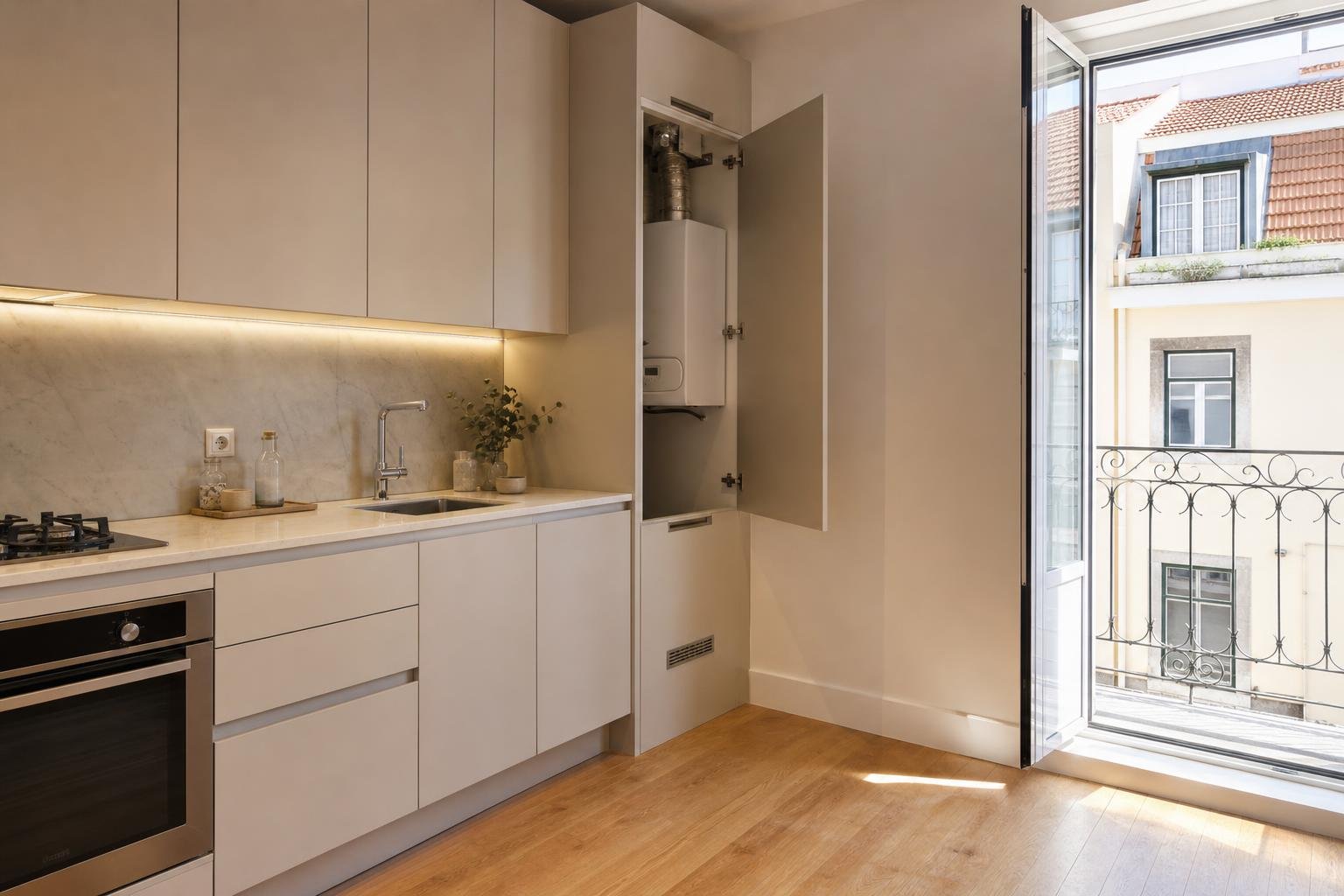
AI-generated editorial image; it does not depict an Obra Lisboa project.

Obra Lisboa