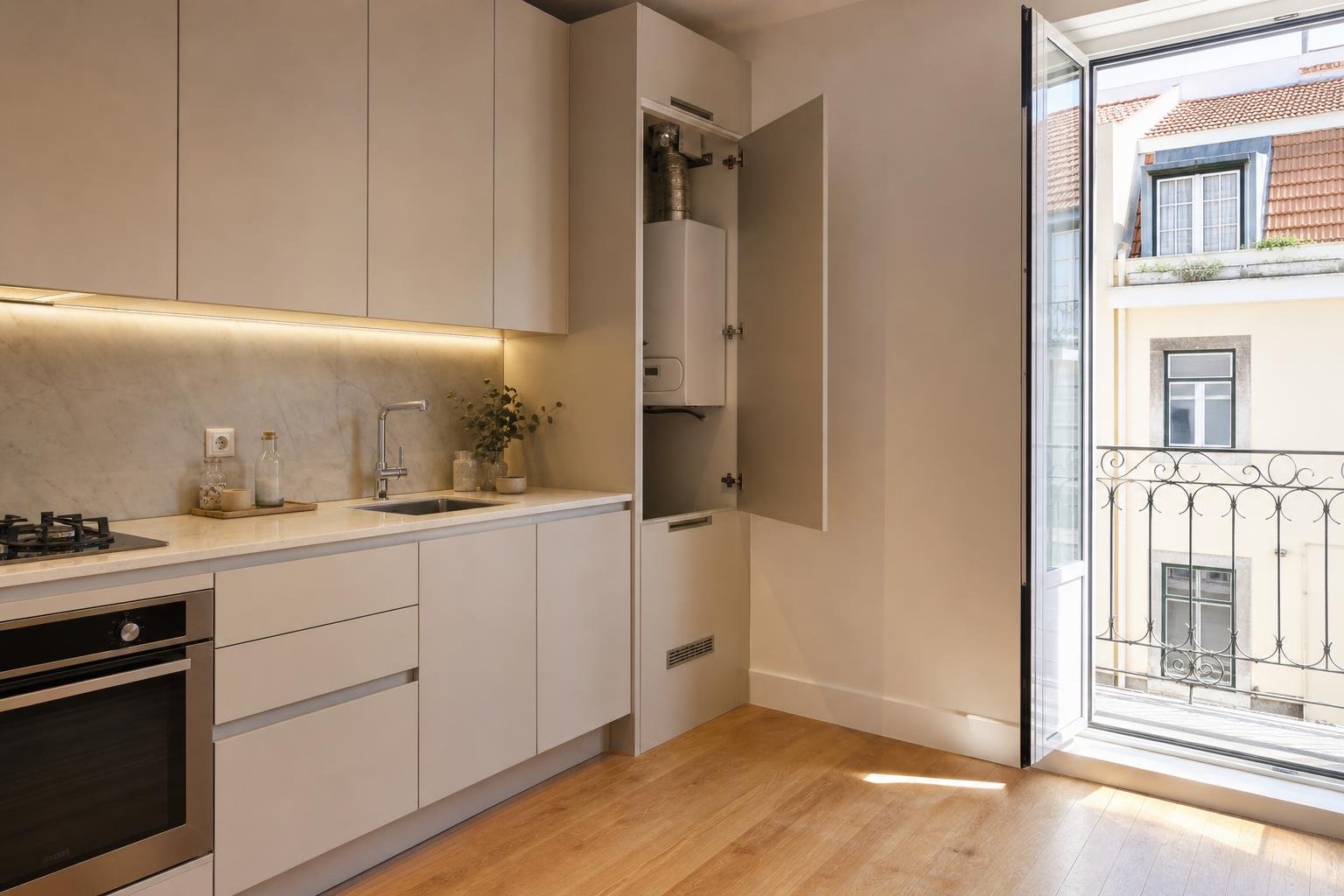

A kitchen with no external window, or no practical route for ductwork to reach outdoors, is common in renovated apartments. It is not automatically a reason to abandon an open-plan layout, an island or a new kitchen arrangement. It does require a clear distinction between two jobs that are often confused: capturing grease and odours and renewing the air in the home. A recirculating hood mainly assists with the first job; it does not replace genuine extraction to the outside.
Before choosing an appliance for its appearance or speed settings, establish the possible air route, the cooking appliance type, the presence of gas equipment and the building’s constraints. Portugal’s Directorate-General of Health advises ventilating while cooking and maintaining ventilation systems, noting that cooking is an activity that worsens indoor air quality. Read the DGS indoor-air recommendations.
Start with a survey, not an appliance catalogue
Begin with the actual condition of the flat rather than a sales drawing. Is there a usable individual duct? Is there a service riser, chimney, lightwell or route established in the original design? Does the grille that appears available really serve the kitchen, or is it part of another system? Measuring, photographing and arranging an inspection before ordering cabinetry prevents a solution that later proves impossible to install or approve.
In apartment buildings, façades, roofs, vertical risers and many ducts are common elements. Creating a new outlet, drilling an external wall or connecting a fan to an existing duct is not simply an interior-design choice. Where work changes technical systems or forms part of works subject to municipal control, specialist coordination may be needed. Lisbon City Council includes ventilation and smoke-extraction systems among the systems covered by specialist design projects.
Also check the fuel source. Induction cooking removes combustion products at the hob, but steam, particles and grease still remain. With gas appliances, the assessment must be more demanding: extraction must not create negative pressure that compromises the safe discharge of combustion gases.
Outdoor extraction and recirculation do different jobs
Where a correctly sized, independent duct to outdoors is available, an extracting hood carries away a proportion of cooking steam, odours, airborne grease and heat. It is normally the more effective solution for intensive cooking. However, a long narrow duct, excessive bends or an unsuitable shared connection can make even a good appliance noisy and ineffective.
In recirculation mode, air is drawn through metal grease filters and usually activated-carbon filters before returning to the kitchen. This can reduce odours and trap grease, but it does not expel moisture or remove heat outdoors. It therefore needs to be complemented by window ventilation, the home’s general ventilation route or another system designed into the building.
A technical reference published in Portugal’s official gazette states that kitchens and kitchenettes should have a hood and mechanical extraction while in use, with airflow not below 180 m³/h, or follow NP 1037 specifications. Use the technical reference published in the Diário da República as a starting point, then obtain advice for the actual renovation, especially in an older building.
How to select a recirculating hood sensibly
If recirculation is the only feasible route, choose a hood explicitly designed for it, with filters that can be reached and replaced locally. Check that the manufacturer confirms charcoal-filter compatibility, whether the kit is included, its recommended replacement interval and its ongoing cost. A striking appliance that requires dismantling a cabinet to change a filter is unlikely to receive proper maintenance.
Advertised airflow is not the only selection criterion. Capture performance at the hob, hood width, permitted mounting height, sound levels and performance at useful everyday settings all matter. A hood that is too small for the cooking zone allows the rising plume to escape; one that is excessively loud will simply be left off.
- Where the model allows it, choose a hood at least as wide as the hob.
- Follow the manufacturer’s minimum clearances, particularly above gas.
- Plan separate task lighting instead of relying on the hood light.
- For an island, allow for electrical supply, secure fixing and filter access.
Kitchen planning should settle these matters before false ceilings are closed or joinery is ordered.

Moisture, replacement air and everyday use
Boiling pasta, using an oven, washing dishes and leaving pans uncovered all add water vapour to indoor air. In an internal kitchen, that moisture does not disappear merely because a recirculating hood is on. When cold surfaces, weak air renewal or permanently closed doors are added, moisture can condense on windows, walls and inside cupboards.
The daily routine is simple but needs consistency: turn the hood on before cooking starts, use lids where appropriate, leave it running for several minutes afterwards and ventilate the home in a way that suits the outdoor conditions and existing system. The DGS advises ventilating while cooking, not blocking ventilation devices and keeping equipment clean. See the DGS guidance on ventilation and maintenance.
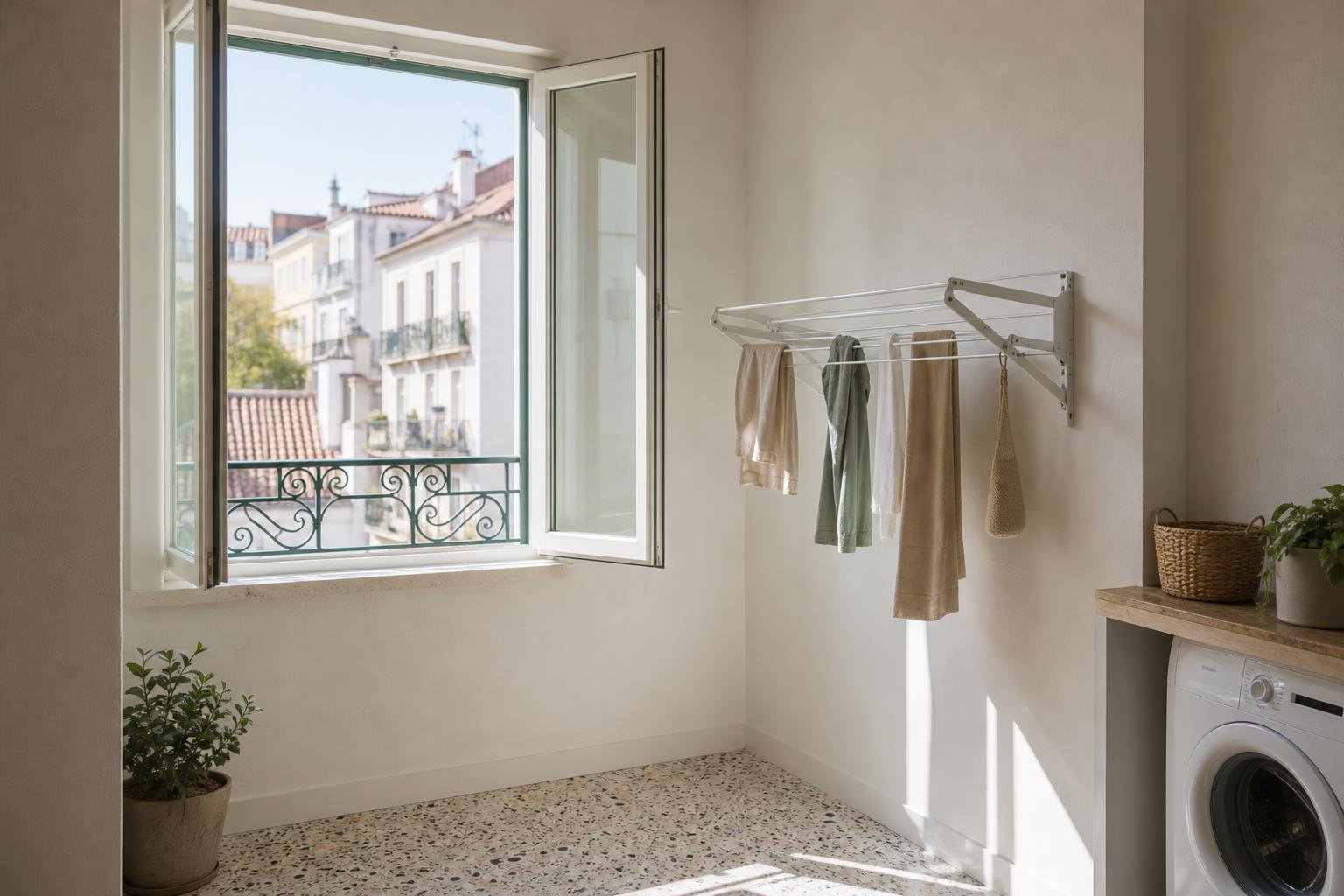
Opening a window is not a universal promise, however. On very humid days, during intense heat, when outdoor smoke is present or noise is severe, the approach should be adjusted. The goal is to reduce pollutants and moisture without creating permanent discomfort.
Maintenance is what makes the arrangement work
Metal filters collect grease. When they become saturated, airflow falls, noise may rise and grease can spread to cabinets and ceilings. Follow the manufacturer’s instructions for hand washing or dishwasher cleaning, and allow filters to dry completely before refitting them. Carbon filters are not washable in most models and should only be replaced or regenerated where the manufacturer specifically provides for it.
Put the installation date and each cleaning date in a calendar. A home where meals are cooked every day needs more frequent maintenance than a weekend property. If odours remain immediately after filters are changed, or there is vibration, reverse airflow, unusual noise or visible grease on the ceiling, do not solve it by constantly using maximum speed: investigate the installation and the home’s overall ventilation.
This routine also supports condensation prevention. For help interpreting mould, surface moisture or musty smells, review ventilation in renovated homes.
Frequent mistakes before and during renovation
The first mistake is presenting recirculation as though it were outdoor extraction. The second is concealing the appliance in joinery without allowing for grilles, clearances, electrical access and filter removal. The third is deciding the hob position after walls and ceilings have been closed, when there is no longer a safe route for cables, ducts or structural fixing reinforcement.
Also avoid connecting a hood to ducts intended for another purpose, reducing an existing outlet without assessment, discharging into a roller-shutter box or creating a façade outlet without validation. In kitchens with combustion appliances, every alteration should be assessed by a competent professional: safety, ventilation and flue-gas discharge are not areas for improvised solutions.
Finally, treat the kitchen as a system. Cabinetry, hob, hood, ventilation, windows, cleaning and user habits work together. A well-coordinated renovation does not promise miracles in a kitchen without direct outdoor venting; it creates a clear, maintainable solution that suits the building.
Redesigning a kitchen in Lisbon? Obra Lisboa can help coordinate the layout, services and construction details so that technical decisions are made before work starts.
Editorial image; it does not depict an Obra Lisboa project.

Obra Lisboa