Before setting a renovation start date, check the company’s authorisation, the agreed scope and its real ability to mobilise labour and materials. In 2026, the number of applications for construction-sector credentials increased, and IMPIC warned that its response times had become longer. For anyone renovating in Lisbon, the practical consequence is clear: an acceptable quote is not enough; the checks and decisions that allow work to start without a first-week stoppage need to be in place.
Contents
- What changed in Portugal’s construction market in 2026?
- Which documents should you check before appointing a contractor?
- How can you tell whether the proposed start date is realistic?
- Where do delays and extra costs usually begin?
- How to prepare an appointment that can withstand market changes
What changed in Portugal’s construction market in 2026?
In information published on 7 October 2026, IMPIC reported a sharp increase in applications for construction-sector credentials. Its stated daily average rose from about 66 applications up to June to 202 per day from July to September. The institute also noted that response times were longer than those seen before 30 June.
This does not mean that every small renovation will automatically be delayed. It does mean that clients should stop treating company checks as an end-stage formality. If a contractor is obtaining, changing or regularising a credential, a promised date may rely on a process outside the project itself. Confirm that position before paying a deposit, moving out, or booking a lift, skip and deliveries.
There is a second practical pressure. Statistics Portugal reported an estimated 7.5% year-on-year increase in new-housing construction costs in August 2026, with increases published for both materials and labour. That index is not a substitute for a renovation quote, because apartment works involve demolition, access constraints, reinstatement and hidden conditions. It does explain why an old proposal, with no expiry date or undefined materials, may no longer be comparable a few months later.
Which documents should you check before appointing a contractor?
Start by identifying the company you will actually contract. The trading name on the quote, the entity issuing the invoice and the entity carrying out the work must be clear. The IMPIC access-to-construction-activity page explains the sector’s entry requirements and links to public searches for authorised companies; use the search to check the company’s status and keep a copy in the project file.
Then turn the quote into a set of documents that can be checked:
- a dated, identified proposal with an expiry period;
- a description by task, material, quantity or measurement basis;
- a programme with intended start date, stages and decision milestones;
- a payment plan tied to completed and accepted work;
- clear exclusions: appliances, permits, waste removal, common-area repairs, unforeseen repairs or fees;
- the contact details of the site decision-maker and the contractual contact.
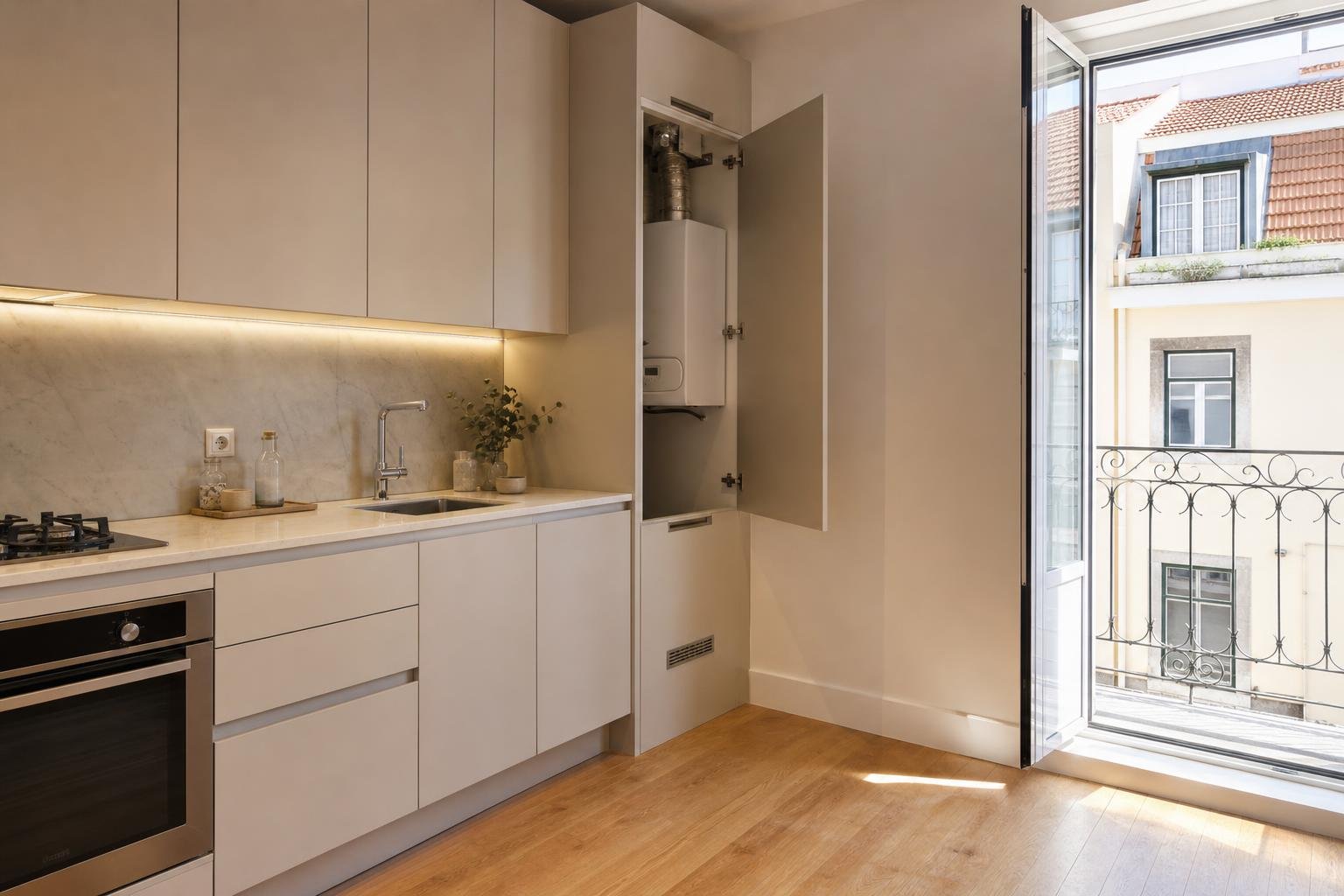
Do not accept phrases such as “full renovation” without a written scope. In a kitchen, for example, that wording can conceal whether dismantling, wall corrections, new water lines, electrical-board work, extraction, worktops, finishes and final fitting are included. To compare proposals without reducing the decision to a final total, see how to compare renovation quotes in Lisbon.

How can you tell whether the proposed start date is realistic?
A date is only useful when it is supported by completed tasks. Ask five direct questions: who will be on site on day one; which materials have already been ordered; which client decisions remain open; which works depend on the condominium or council; and what happens if demolition reveals a defect.
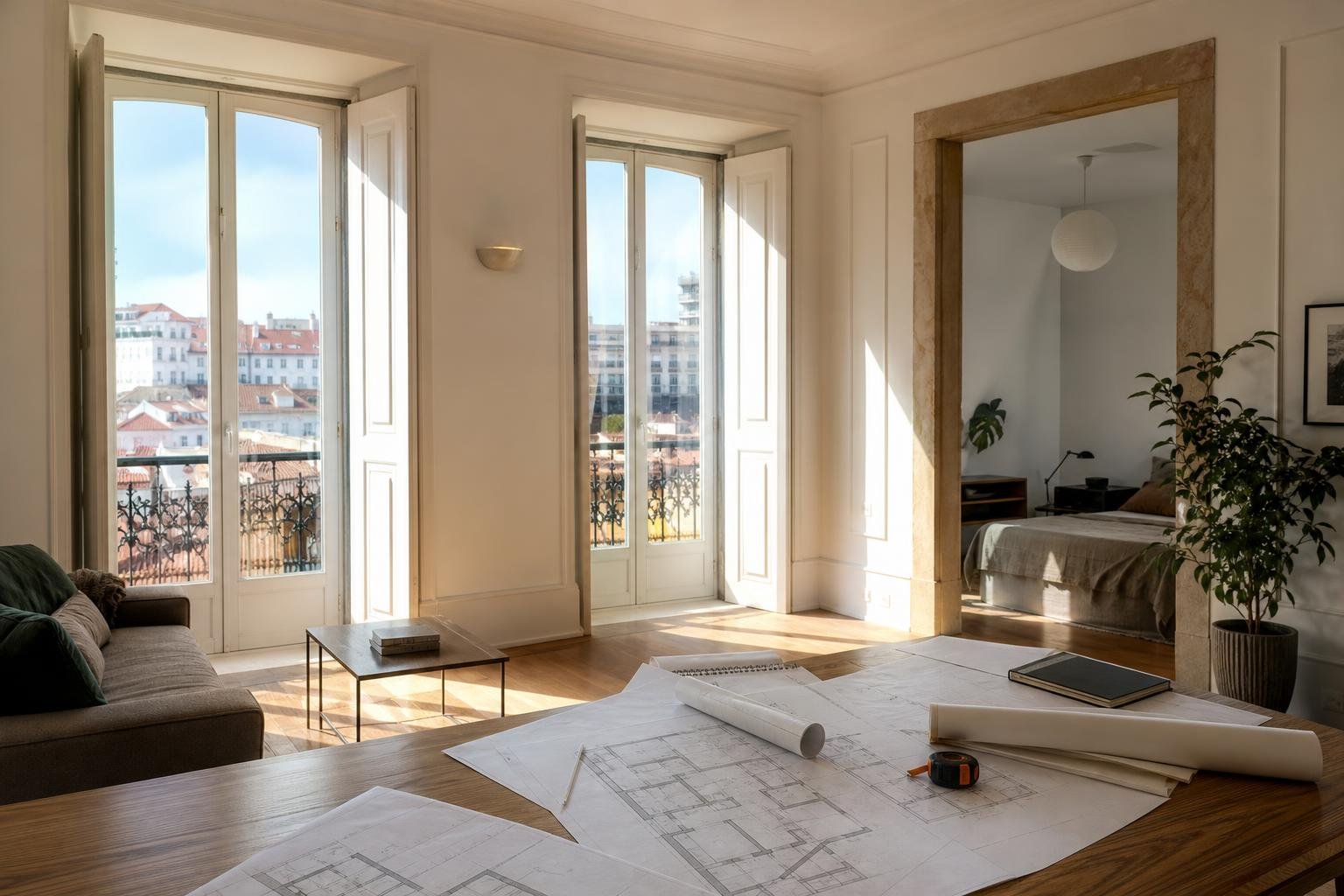
In a Lisbon apartment, the start can fail for unglamorous reasons: the entrance door has not been measured, building management has not received notice, the lift is not protected, the stone worktop has a longer lead time, or the electrician is waiting for the final kitchen layout. These are not minor details. They are dependencies that should be closed before workers and demolition waste are in the property.
Use a short list with an owner and a date:
- approve the survey and final scope;
- select tiles, sanitaryware, taps, doors and lighting that affect dimensions;
- confirm access, working hours and protection for shared areas;
- approve samples and junction details before orders are placed;
- set out in writing how extra work will be approved.
Avoid paying to “reserve a slot” without knowing what the reservation secures. Reserving a team or a specific order can be reasonable; the agreement should state whether that sum is credited to the contract, when it is refundable, and which date or milestone is being held.
Where do delays and extra costs usually begin?
The most expensive delays start when a decision arrives after a work area is ready. A wall may remain open while a concealed tap is chosen; flooring may stop because the selected door needs a different build-up; cabinets may not proceed because socket positions changed. The cost is not limited to the replacement item. It includes remobilising trades, breaking the sequence and sometimes remaking finished work.
The contract should distinguish three situations. The first is a client-requested change, such as changing a finish or moving a door. The second is an unseen condition discovered during the work, such as deteriorated pipework. The third is an execution error. Only the first two may require a discussion of price and time; even then, request a variation proposal before instructing the work, stating the description, cost effect, programme effect and written acceptance.
It is equally important not to confuse urgency with improvisation. If there is an electrical danger, an active leak, a loose element or apparent structural damage, the priority is making the area safe and calling the appropriate professional. For finish choices or layout questions, stopping for a day to confirm drawings and dimensions is often far less damaging than proceeding on an assumption.
How to prepare an appointment that can withstand market changes
A sound appointment protects the project against foreseeable surprises without pretending that every condition can be known in advance. Fix brands and references where the choice has been made; where it has not, establish an allowance, product range and decision deadline. Also define who buys each material, where it will be delivered, who checks its condition on arrival, and who keeps technical data sheets and warranties.
For works in an apartment building, connect the technical programme to logistics: notice to neighbours, lift-use rules, transport route, temporary storage and waste removal. Preparation becomes much more effective with a simple decision plan reviewed weekly. Its purpose is not paperwork for its own sake. It prevents a late choice from blocking several trades.
If you are selecting a team for a renovation, ask for the quote to be explained in a meeting and compare method, sequence and communication alongside price. The Obra Lisboa company page describes its construction and renovation services. The initial discussion should end with a practical next step: the survey, the scope to be priced and the decisions needed before the work is booked.
Key takeaways
- Check the contractor’s authorisation and contractual identity before paying a deposit or fixing a move-out date.
- Treat the start date as a milestone dependent on labour, materials, access and approved decisions.
- Require every variation to state its scope, cost, programme effect and written approval before work proceeds.
- Compare quotes by scope and exclusions, rather than by the final figure alone.
Planning to request quotes for a Lisbon renovation? Gather drawings, photographs, a priority list and any dates that constrain the work; then contact Obra Lisboa to frame the construction or renovation scope before appointing a contractor.
Sources and further reading
- IMPIC reported a sharp increase in applications for construction-sector credentials
- IMPIC access-to-construction-activity page
- Statistics Portugal reported an estimated 7.5% year-on-year increase in new-housing construction costs in August 2026
AI-generated editorial image; it does not depict an Obra Lisboa project.

Obra Lisboa