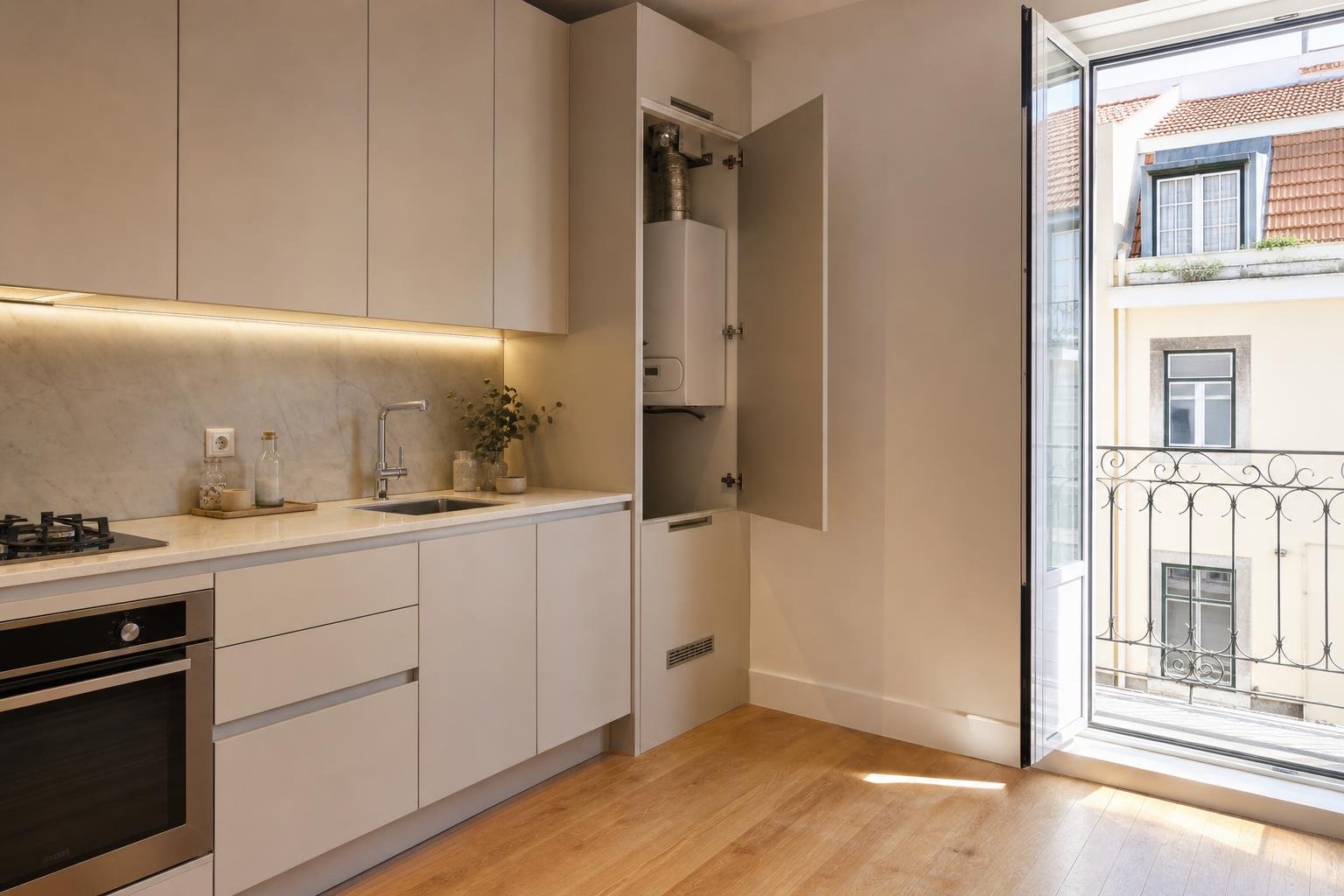
Compare renovation quotes by what each proposal includes, excludes and lets you verify on site; the final total only matters after that review. In Lisbon, two proposals for the same flat can look alike while concealing decisive differences: demolition without disposal, tiles without substrate preparation, kitchens without final connections, or work dependent on public-space occupation. Before accepting, turn each quote into a shared comparison matrix, request written answers and connect payments to clear milestones rather than vague dates.
Contents
- Why are two quotes with the same total rarely the same?
- What should you send to every contractor?
- How do you build a comparison matrix that exposes exclusions?
- Which exclusions deserve particular attention in a Lisbon renovation?
- How should payments be linked to verifiable work?
- How can you decide without turning review into endless negotiation?
Why are two quotes with the same total rarely the same?
A quote is a proposal for scope, materials, labour, logistics and responsibility. When one of those parts is left implicit, comparing only the total becomes a gamble. One proposal may state “complete bathroom”, while another separates demolition, levelling, waterproofing, tiling, sanitaryware, taps, furniture, mirror, ventilation, tests and cleaning. The second is not automatically more expensive; it is easier to check.
Start by splitting the work into three groups. The first covers physical work: demolition, construction, installation and finishing. The second covers supply items: tiles, taps, doors, appliances, lighting and ironmongery. The third covers what keeps the site running: protection of shared areas, transport, waste removal, cleaning, coordination and any permits.
Do not treat “included” as the same as “allowed for”. Ask for quantity, unit, brand or product range where it has already been selected, plus the substitution rule where it has not. Statistics Portugal tracks materials and labour separately in construction costs; that is a useful reminder that a proposal should explain how later selections and price changes are handled, rather than promise an unconditional figure. Read the Statistics Portugal information on construction costs as context, not as a price list for your home.
| Area | Question to ask | Sign of a clear proposal |
|---|---|---|
| Demolition and preparation | What is removed and what condition will the substrate be left in? | It identifies removal, transport, levelling and necessary repairs |
| Materials and finishes | Which product and range are allowed for? | It defines a reference, quantity or capped allowance and an alternative |
| Building services | Does it include alterations, testing and final connections? | It separates water, drainage, electrical work, ventilation and equipment |
| Logistics | Who protects, transports and removes? | It identifies waste, lift use, shared areas and access constraints |
| Completion | What counts as complete? | It allows for cleaning, snagging and handover documentation |
What should you send to every contractor?
The most reliable way to obtain comparable proposals is to give every contractor the same base information. You do not need a lengthy design package to organise useful facts, but you do need to prevent different versions of the same intention.
- Prepare a simple plan showing rooms, known dimensions and elements that will remain.
- Add dated photographs of walls, ceilings, electrical panels, openings, kitchens and bathrooms.
- Write a decision list: whether the kitchen stays or moves, floor type, number of lighting points, equipment to install and items supplied by the owner.
- Flag constraints: condominium hours, stair-only access, lift use, difficult parking, occupied neighbouring flats and dates when the property will be unavailable.
- Request a technical visit before the final version where there is damp, old walls, service alterations or demolition.
In a Lisbon building, logistics can change both time and cost: a delivery with no unloading space, a lift that cannot carry materials or a narrow street all require a separate plan. If a container, scaffold or other site support is needed on the street, public-space occupation may require a licence and occupation plan even for work exempt from prior planning control; check the municipal guidance on public-space occupation for exempt works.
Send this brief in one file and record its date. If you change a choice — replacing a shower tray with a bath, for example — send the update to everyone so that you are not comparing prices prepared for different solutions.
How do you build a comparison matrix that exposes exclusions?
Create a worksheet using the same rows for every proposal. Each column is a contractor and each row is a task or supply item. Do not pursue false precision at the start. First mark each item as included, excluded, to be confirmed, provisional allowance or not mentioned.
Use enough rows for critical areas. In a bathroom, separate waterproofing from tiling. In a kitchen, separate cabinets, worktop, appliances, water, drainage, electrical work, extraction and finishing trims. In an older flat, create one line for substrate repairs and another for unforeseen conditions that can only be assessed after controlled opening-up work.
Then put four questions beside every gap: “who supplies it?”, “who installs it?”, “how is it measured?”, and “what happens if the substrate is worse than expected?”. A stated exclusion can be acceptable; a hidden exclusion usually appears later, when choices are harder to change.
Avoid adding incomplete proposals to an informal estimate. Instead, ask for a revised quotation that incorporates the missing items. For a practical framework of what should be agreed before work starts, read Obra Lisboa’s guide to essential clauses in a Lisbon renovation contract.

Which exclusions deserve particular attention in a Lisbon renovation?
Some exclusions are legitimate because they rely on a future choice, third-party approval or a concealed condition. The issue begins when they are not identified. Ask for them to appear in their own section, with their likely programme impact and approval process.
- Concealed defects: decayed timber, corroded pipes, cracks, damp or substrates unsuitable for a new finish.
- Third-party work: condominium interventions, changes to a shared stack, façade work or connections outside the flat.
- Owner-supplied items: confirm who receives, checks, transports, stores and installs every item.
- Fees and authorisations: identify designs, notices, licences and public-space occupation where relevant.
- Making good: if a wall must be opened, does the price include closing it, levelling, painting and cleaning the area?
Before appointing a contractor, also verify the company’s qualification. IMPIC makes it possible to consult licences, certificates, registrations and recently cancelled titles, while Law No. 41/2015 sets out the framework for private-works contractors. Use the IMPIC public register and read Law No. 41/2015 to check the basic information. This does not replace assessing the proposal, but it avoids treating the contractor choice as a minor administrative detail.
How should payments be linked to verifiable work?
A payment schedule should follow stages that can be seen and recorded. “Mid-project payment” is too vague; “payment after completion and checking of the specified services before walls are closed” lets everyone confirm what is being paid for.
There is no universal percentage that suits every renovation. The useful principle is to link each payment to materials that have actually been ordered or delivered and to completed work that does not need to be redone. Where a deposit is needed to order materials, ask for an identification of what will be bought, the expected lead time and the way this will be recorded.
Attach a short checklist to every milestone: photographs of pipework and cables before closing, level checks before laying flooring, waterproofing checks before tiling, and a snagging list before the final payment. Keep quote versions, approval messages, invoices and photographs in one shared folder. For a daily method of recording decisions and variations, see the guide to digital site logs for a Lisbon renovation.
How can you decide without turning review into endless negotiation?
Choose the proposal that best answers the real scope, access conditions and level of definition you already have. A lower total can still be the right option if its exclusions are known, you have allowed for them and the approval method is clear. A higher total can make sense where it includes preparation, coordination and finishing work that would otherwise emerge later as variations.
Before appointment, close out this list:
- A dated version of the scope, attachments and applicable drawings.
- Defined materials or clearly identified allowances.
- Written exclusions and assumptions.
- Stage sequence, decision deadlines and the impact of owner-caused delays.
- Payments connected to verifiable milestones.
- A simple variation rule: description, price, programme effect, written approval and record.
Do not approve a variation by phone alone when it changes cost or time. Portuguese civil law addresses changes to the agreed work specifically; a clear written record protects the decision on both sides. Obra Lisboa can help turn your flat’s decisions into a coordinated scope before work moves forward.
Key takeaways
- Ask every contractor to price the same list of work, materials and access constraints.
- Compare exclusions and provisional allowances before comparing totals.
- Connect every payment to a visible, recorded stage of work.
- Approve every change in writing with its description, price and programme effect.
If you are preparing a renovation in Lisbon, gather a plan, photographs and your priority list before seeking proposals. To discuss scope and coordination for your project, learn about Obra Lisboa as a construction company in Lisbon and request an initial conversation about the work ahead.
Sources and further reading
- IMPIC public register
- Law No. 41/2015
- public-space occupation for exempt works
- Statistics Portugal information on construction costs
AI-generated editorial image; it does not depict an Obra Lisboa project.

Obra Lisboa