A displaced roof tile should be assessed before rain or strong wind arrives, without climbing onto the roof to put it back. One lifted piece can admit water, fall over an access route or point to failing fixings, battens or flashings. Start by keeping people away from the potential fall zone, take photographs from ground level and arrange a safe inspection if the issue is near an eave, chimney, skylight or a run of several tiles.
Contents
- Which signs point to one loose tile and which suggest a wider roof problem?
- What should you do in the first few hours without making it more dangerous?
- Why do roof tiles move out of place?
- When is a local repair enough, and when should a larger area be reviewed?
- What should you ask before appointing a contractor?
- How can this repair become a prevention routine?
Which signs point to one loose tile and which suggest a wider roof problem?
Look at the roof from the street, garden or a safe window. A tile that is misaligned, rotated or visibly lifted deserves attention; several affected tiles in one course, an uneven ridge or a wavy eave suggest a broader cause. Also look for new ceiling stains on the top floor, peeling paint near outside walls, drips around chimneys and ceramic fragments on the ground.
After wind, a dry interior does not prove that the roof is sound. Water may enter only when rain is driven from one direction. For mainland Portugal, IPMA uses a yellow wind warning for gusts of 70 to 90 km/h; once the episode has passed, that is a sensible prompt for a visual roof check. Review the IPMA weather-warning criteria before planning outdoor work.
- Local sign: one broken or displaced tile, with no visible distortion around it.
- Repeated sign: several tiles out of position, open flashings or tiles slipping near the eave.
- Urgent sign: loose pieces above a route, sounds of moving components or active water ingress.
What should you do in the first few hours without making it more dangerous?
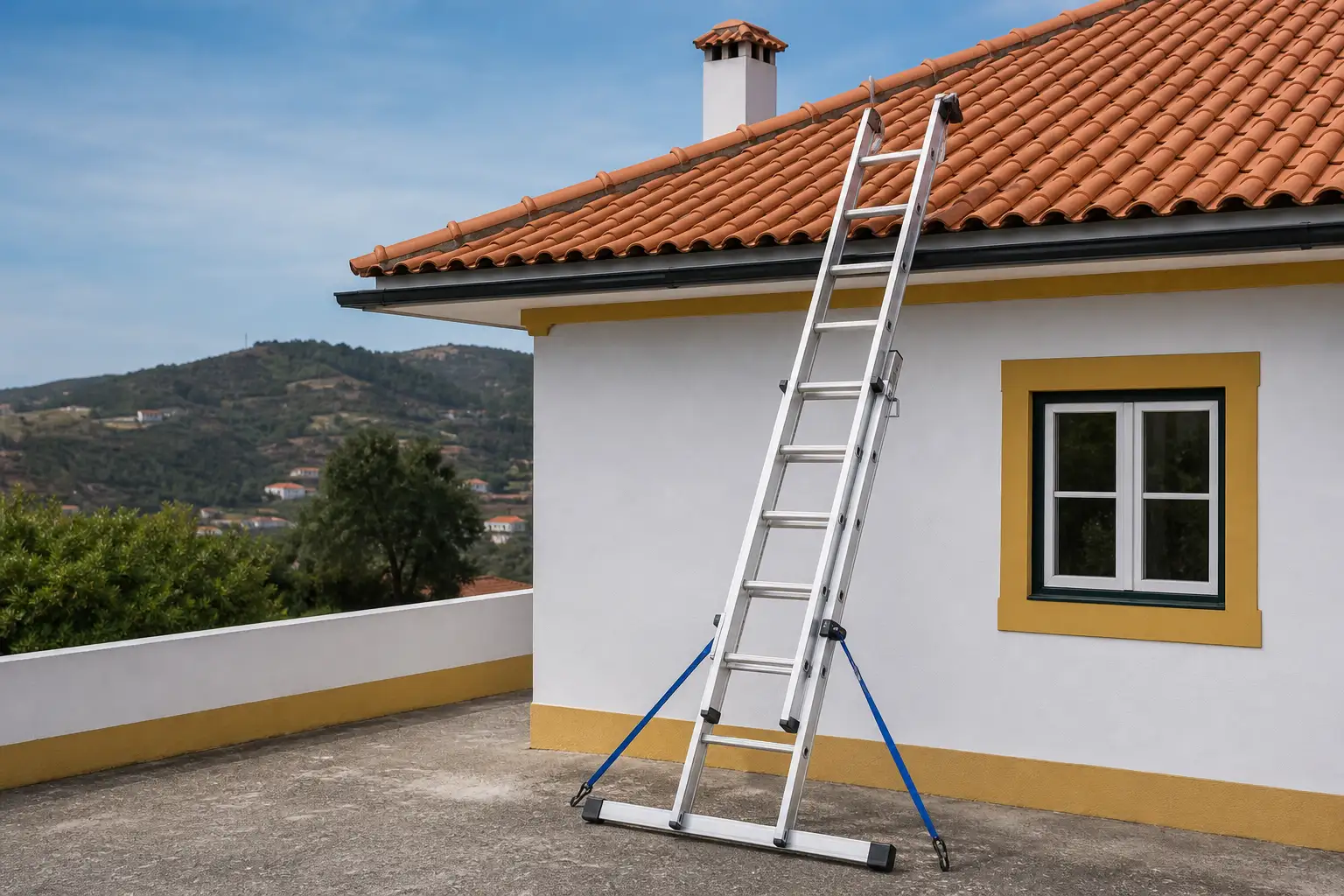
Do not walk on the roof, rest a ladder on a gutter or try to pull a tile into place with a pole or rope. An improvised repair can break more tiles, move a whole course and create a fall hazard. If there is a risk of debris falling onto a pavement, entrance, parking space or terrace, keep the area clear and warn everyone who uses it.
- Photograph the roof from ground level, including a wider shot that shows the location.
- Record the date, recent rain or wind, and any related internal staining.
- Move pots, vehicles and furniture out of the possible fall zone, where this can be done safely.
- If water is entering, protect belongings and keep clear of nearby sockets, light fittings and electrical points.
- Arrange an inspection using access and fall protection suitable for the site.
If the repair needs scaffolding, a skip or another use of the pavement in Lisbon, confirm the municipal process early. The council explains that an occupation plan identifies items such as barriers, pedestrian routes, scaffolding, stored materials and vehicle access. Read the guidance on public-space occupation for works before booking the job.
Why do roof tiles move out of place?
Wind is often the event that makes a fault obvious, but it rarely explains the whole issue. Poorly seated tiles after a previous repair, degraded fixings, ageing mortar at flashings, movement in the timber support, accumulated vegetation and work around chimneys or solar equipment can all leave an area vulnerable. In older houses, partial replacement with incompatible tile profiles can also prevent a proper fit.
It helps to separate the tile covering from the structure beneath it. Replacing a broken tile may be enough when battens, underlay and flashings are dry and sound. Where there is sagging, repeated leaks or darkened timber, the sensible approach is to open a limited area, establish the extent and repair the cause before closing it again.
Regular gutter and downpipe maintenance also helps prevent overflow onto eaves and walls. For that routine, see Gutters and Downpipes: Preventive Maintenance Before Lisbon's Rainy Season.
When is a local repair enough, and when should a larger area be reviewed?
A local repair can be appropriate when the cause is clear and contained: a tile broken by impact, one displaced after a gust, or a single open flashing. The work should still check the neighbouring tiles, the waterproof layer and the drainage path.
Ask for a wider assessment when leaks appear in more than one place, tiles have mismatched colours or profiles, the roof plane is uneven, ridge mortar is loose, the roof void shows signs of decayed timber or the fault keeps returning after recent repairs. The lowest-cost answer often fails when it replaces only the tile that fell while leaving the reason it moved untouched.
In Lisbon, conservation work is intended to maintain the building in its existing condition; changes to the form of the roof or covering need separate planning confirmation. The municipal explanation of conservation works and exempt operations helps distinguish repair from alteration. For a listed property, a property under listing or one in a protected zone, check the constraints before ordering materials.
| What you can see | Prudent response | Avoid |
|---|---|---|
| One broken or displaced tile | Arrange a local inspection and check adjoining tiles | Climbing onto the roof without proper access |
| Several affected tiles, ridge or eave out of line | Assess support, flashings and the repair area | Replacing loose pieces without finding the cause |
| Tiles above an entrance or active water ingress | Restrict access and arrange priority work | Keeping the route open or moving close to inspect |
What should you ask before appointing a contractor?
Ask for the proposal to identify the area to be opened, the tiles to be replaced, the flashings to be treated, the checks to the support and the access method. On an older roof, ask whether existing tiles can be reused and how new ones will be matched. Before, during and after photographs make decisions clearer, especially where the inside of the roof is not visible from the home.
- What is the likely cause: tiles, fixings, flashings, waterproofing or support?
- Is there a risk to the chimney, gutter, skylight or façade?
- What protection will be used for people, finishes and circulation areas?
- What is excluded if opening the roof reveals damaged timber or underlay?
- Will external access, scaffolding or temporary use of public space be needed?
You can also check the contractor’s credentials through the IMPIC construction-company register. It does not replace reading the scope carefully, but it is a useful check before appointing anyone.
How can this repair become a prevention routine?
After the work, keep the photographs, material list and date. Inspect the roof visually after strong wind, after work on aerials or equipment, and before the rainy season. Do that from the ground or another safe location; maintenance at height needs planned access.
Use the same calendar to clear gutters, check downpipes, inspect flashings and look for water marks in the roof void. A roof does not need full renewal whenever one tile fails, but it does need a prompt response that matches the evidence. To place these tasks within a wider plan, read Building Maintenance: What Property Owners Need to Know.
The useful next step is to gather photographs, the exact location of the fault and any leak history before requesting a technical visit. That information reduces guesswork and helps establish whether the work is local or needs a more extensive review.
Key takeaways
- Check tiles and flashings from ground level after strong wind; do not climb onto the roof for a quick fix.
- Restrict access where falling debris is possible, and treat water near electrical fittings as a priority.
- One displaced tile may need only a local repair, but repeated signs justify checking support, flashings and waterproofing.
- Ask for a written scope that explains the cause, safe access and the approach if hidden damage is found.
If your house roof needs a planned repair, Obra Lisboa can help frame conservation and renovation work. Start by sharing safely taken photographs and the precise location of the issue.
Sources and further reading
AI-generated editorial image; it does not depict an Obra Lisboa project.

Obra Lisboa