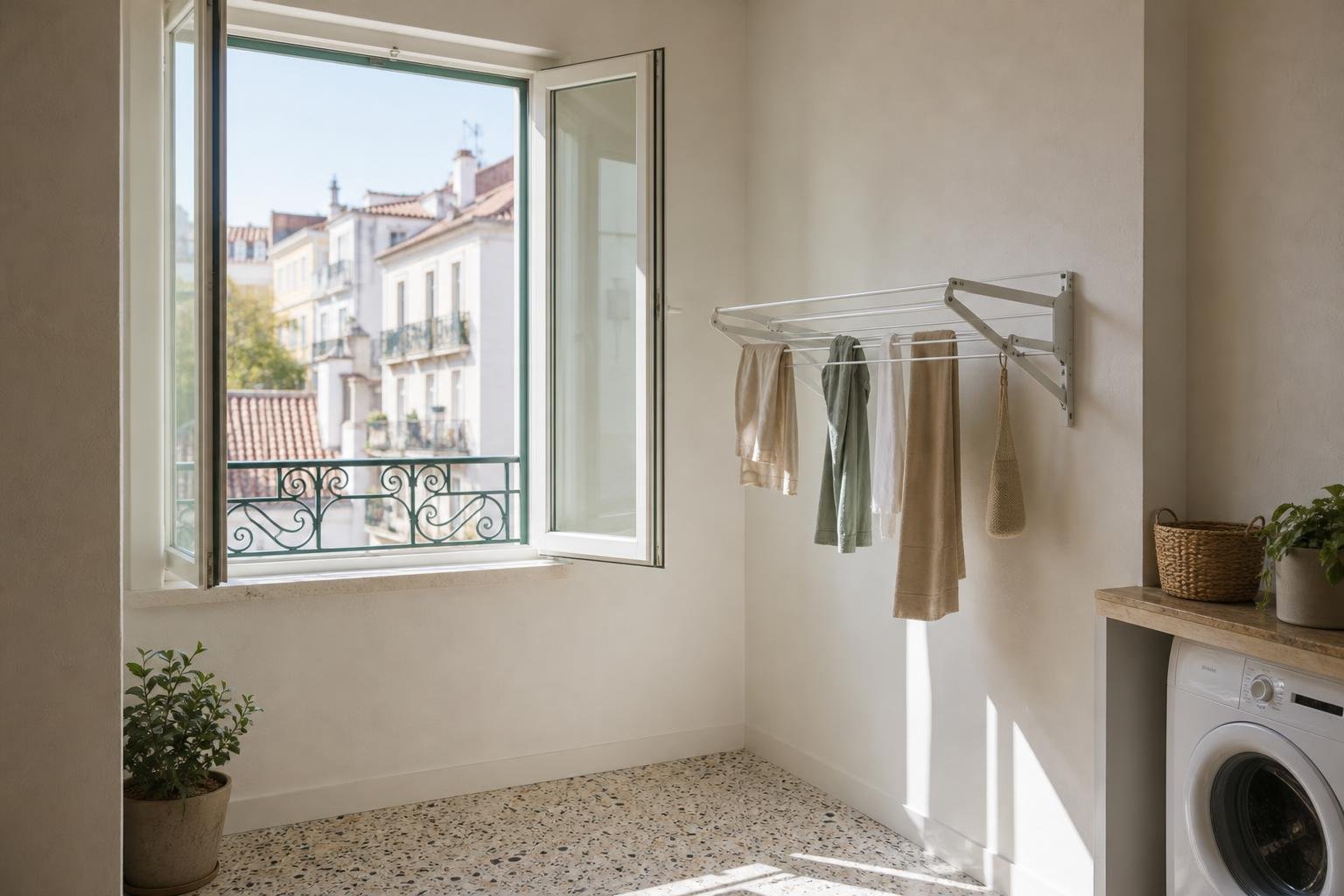
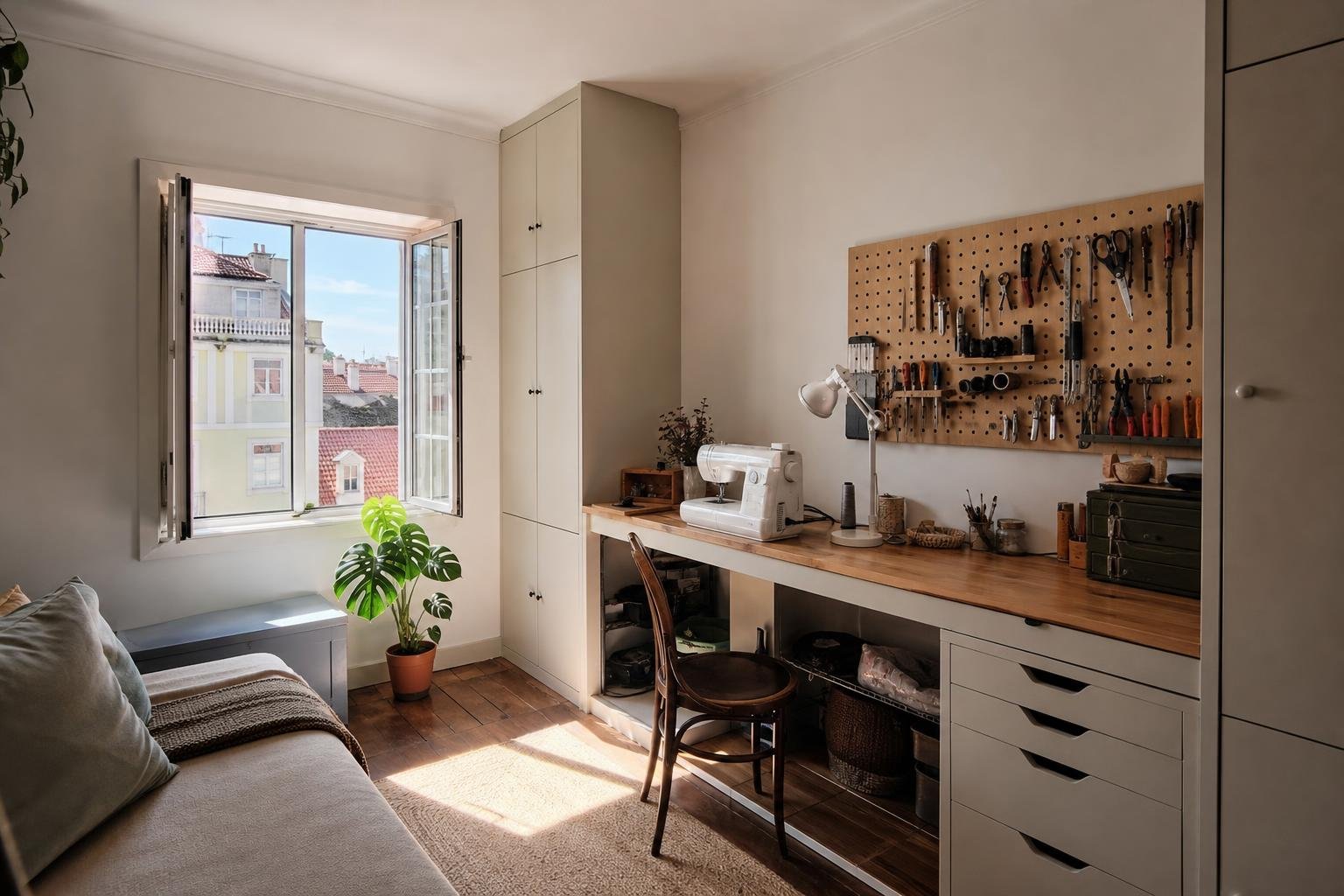
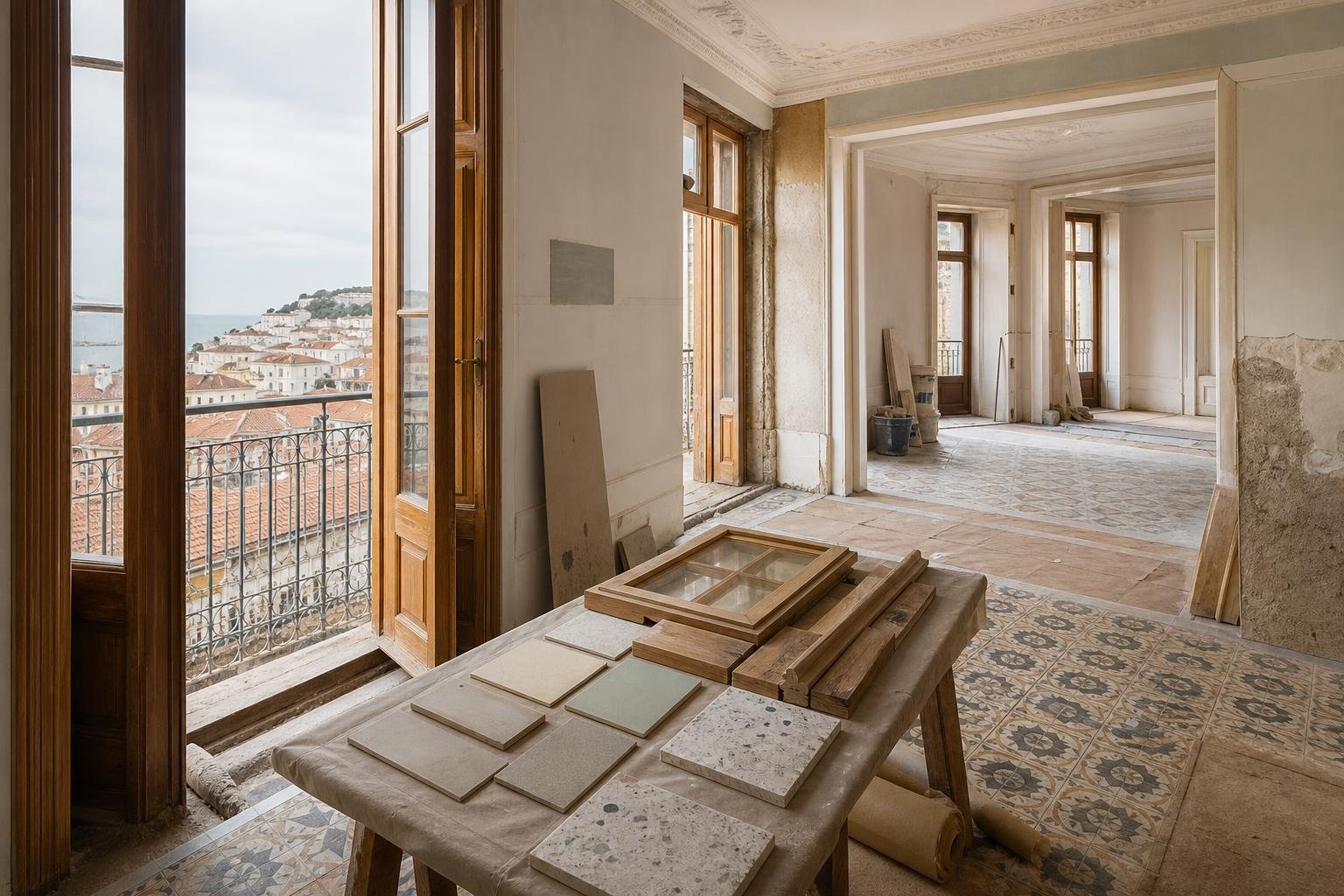
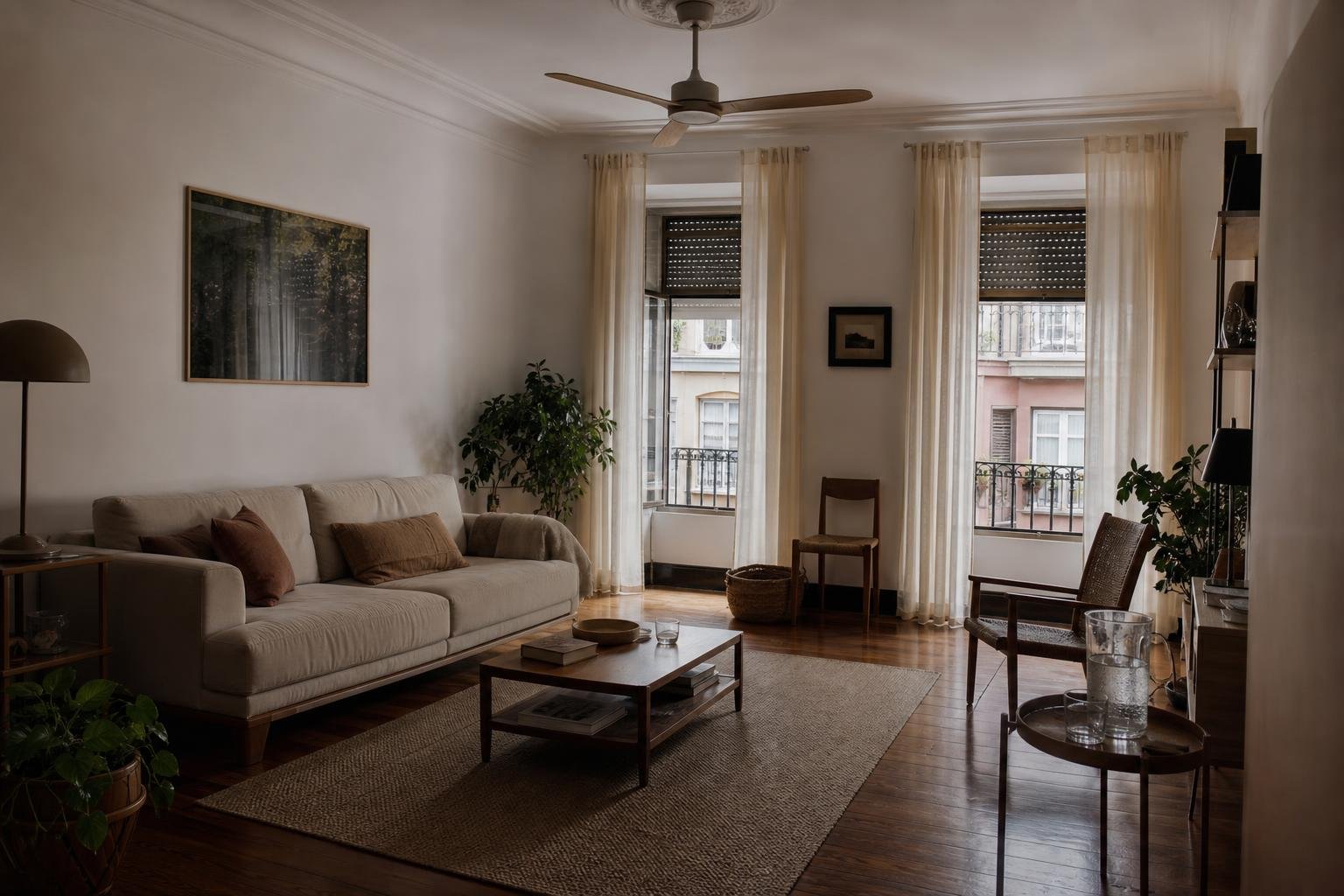
When choosing new windows in Lisbon, start with each façade’s orientation and the route air takes through the home; compare frames and glazing afterwards. A solution that suits a west-facing living room may be too dark, unnecessary or poorly suited to a north-facing bedroom. Replacement work should reduce winter heat loss and summer solar gains while keeping everyday ventilation manageable. This balance is especially important in older buildings.
Contents
- Why is one window specification rarely right for every room?
- What should you ask for beyond “double glazing”?
- Glazing, frame or shading: what comes first?
- How can you keep ventilation after improving airtightness?
- Common mistakes when replacing windows in an apartment building
- What should be decided before you place the order?
Why is one window specification rarely right for every room?
A window is part of the building envelope, yet it works under different conditions from room to room. A large south- or west-facing opening receives more direct sun in late morning or afternoon; a north-facing façade usually needs better control of heat loss and unwanted air leakage. Before asking for quotations, sketch a simple plan and note orientation, opening sizes, existing shutters, nearby building shade and the hours when each room becomes uncomfortable.
This assessment matters more as heat extremes become more frequent. The Portuguese weather service explains how it defines heatwaves in mainland Portugal and records an increase in extreme summer events over recent decades. That is not a reason to specify dark glass everywhere. It is a reason to treat each façade according to its actual exposure.
- North: prioritise airtightness, insulation and useful daylight.
- South: combine glazing with adjustable solar protection because winter and summer sun behave very differently.
- West: address low afternoon sun first; an internal curtain cuts glare but does not stop heat before it passes through the glass.
- East: check whether the bedroom heats too early and whether the blackout solution works with the household routine.
What should you ask for beyond “double glazing”?
“Double glazing” says very little. Ask for the data sheet for the complete window: frame, glazing, opening type, shutter box where applicable and proposed installation. Compare thermal performance, air permeability, acoustic reduction and summer behaviour. The CLASSE+ label is a practical reference: ADENE notes that efficient windows manage the entry of light and air and advises an informed choice using the label.
Do not mistake a good product rating for good site work. A capable window can underperform if it is poorly levelled, if the wall connection is badly sealed or if the shutter box remains the weak point. Where a shutter already exists, ask the quotation to state clearly whether the box will be retained, insulated, replaced or left accessible for repair.
It is also worth checking summer and winter ratings. A window that reduces winter heat loss does not automatically solve overheating on a west-facing façade. In hot living rooms, the key issue is often the amount of solar radiation entering and whether practical external shading is available.
Glazing, frame or shading: what comes first?
In many Lisbon apartments, the answer is not one component but the right order of decisions. First correct air leakage, gaps and degraded glazing. Next provide external or integrated solar control where direct sun reaches the opening. Then make ventilation work with daily use. An external shutter, blind or equivalent intercepts radiation before it enters; an internal curtain helps visual comfort and privacy, but it receives the heat after it has already crossed the glazing.
Portuguese requirements for interventions in glazed openings expressly address solar gains and call for solutions that reduce them where technical or functional constraints apply. Review the official minimum requirements for thermal comfort and energy performance with the designer or technical professional leading the work, particularly when windows form part of a wider renovation.
A useful rule when discussing quotations is this: if a room suffers direct sun from 4pm to 7pm, do not accept “better glazing” as the whole answer. Ask how shading, shutter use, colour and the solar factor of the complete assembly will affect heat and daylight.

How can you keep ventilation after improving airtightness?
Replacing old frames reduces uncontrolled draughts. This improves comfort beside the window, yet it does not remove the need for fresh air. The home needs a route: air supply in dry rooms such as bedrooms and living rooms, then extraction in humid and odorous rooms such as kitchens and bathrooms. Do not block existing vents without understanding their role, and do not expect one tilt-opening window to ventilate an entire flat.
Daily use should follow weather and orientation. In an ADENE interview on summer thermal comfort, the specialist advises limiting solar gains and using natural ventilation mainly at night, when outside air is cooler than indoor air. On a noisy street, during smoke episodes or where security is limited, that routine may not be realistic. In those cases, assess suitable air inlets, mechanical ventilation or a solution designed for the apartment rather than leaving ventilation to chance.
- Identify which windows can safely be opened.
- Confirm where air enters and where it is extracted.
- Plan accessible controls for shutters and high-level openings.
- Test real use before closing finishes and trims.
Common mistakes when replacing windows in an apartment building
The most common mistake is comparing price per window alone. The second is approving colour, pane layout or opening style without checking condominium rules and the façade’s appearance. Other small decisions have long-term effects: a sash that hits a desk, a shutter that cannot be cleaned, a sill without outward drainage slope or a sliding window where an opening window is needed for effective ventilation.
- Do not hide an air inlet behind fixed furniture.
- Do not choose an opening type from a catalogue alone; simulate cleaning, balcony access and daily movement.
- Do not leave sealants, internal reveals and sills outside the contracted scope.
- Do not install external shading without checking fixings, drainage and approval where the façade is a common part.
If the work also includes internal insulation, shutter boxes or thermal-bridge corrections, coordinate it before ordering. Obra Lisboa’s guide to replacing windows during a Lisbon renovation helps organise that sequence, while its article on roller-shutter boxes in a renovation covers a detail that is often overlooked.
What should be decided before you place the order?
Prepare one brief for each room: orientation, opening size, opening method, blackout requirement, solar control, fresh-air provision, privacy, noise, cleaning access and wall finish. Give the same brief to every company pricing the work. Quotations then become genuinely comparable, and it is easier to identify exclusions.
Where the apartment has persistently hot rooms, recurring damp, cold walls or planned façade changes, window selection needs to sit within a wider diagnosis. Do not use new frames to conceal condensation on a wall, roof leakage or insufficient ventilation. The right window improves the whole system; it does not replace work on the underlying cause.
Key takeaways
- Choose by room orientation and use, rather than applying one window model throughout the flat.
- Ask for performance data for the complete assembly: glazing, frame, shutter box, installation and seals.
- On strongly sunlit façades, solve external shading before relying on glazing alone.
- Plan air supply and extraction before making the home more airtight.
If window replacement is part of a renovation, gather photographs of the openings, approximate measurements and a note of the problem in each room. Obra Lisboa can help frame windows, reveals, shading and related building work within one coherent renovation scope.
Sources and further reading
- ADENE interview on summer thermal comfort
- ADENE notes that efficient windows manage the entry of light and air
- official minimum requirements for thermal comfort and energy performance
- Portuguese weather service explains how it defines heatwaves in mainland Portugal
AI-generated editorial image; it does not depict an Obra Lisboa project.

Obra Lisboa