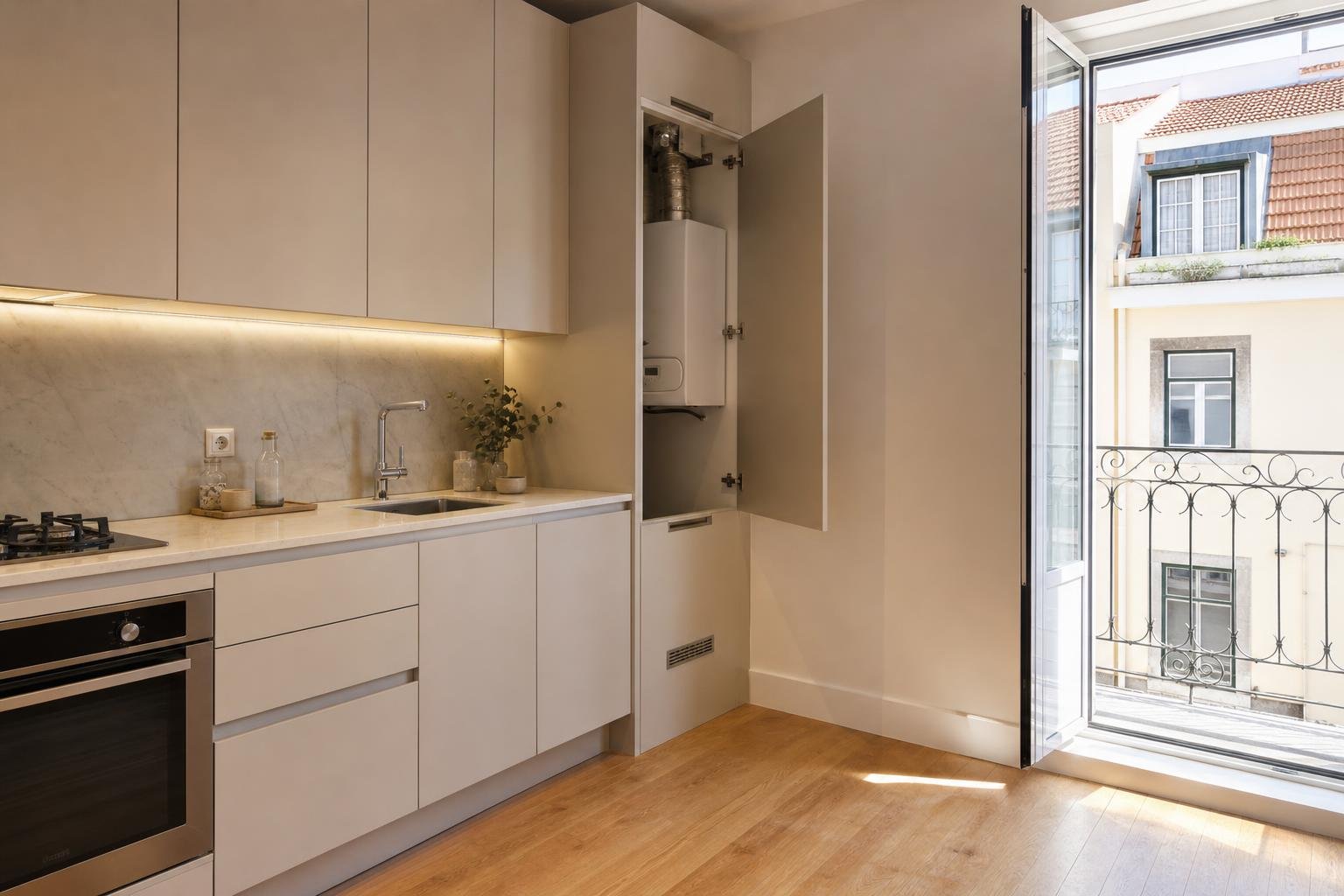
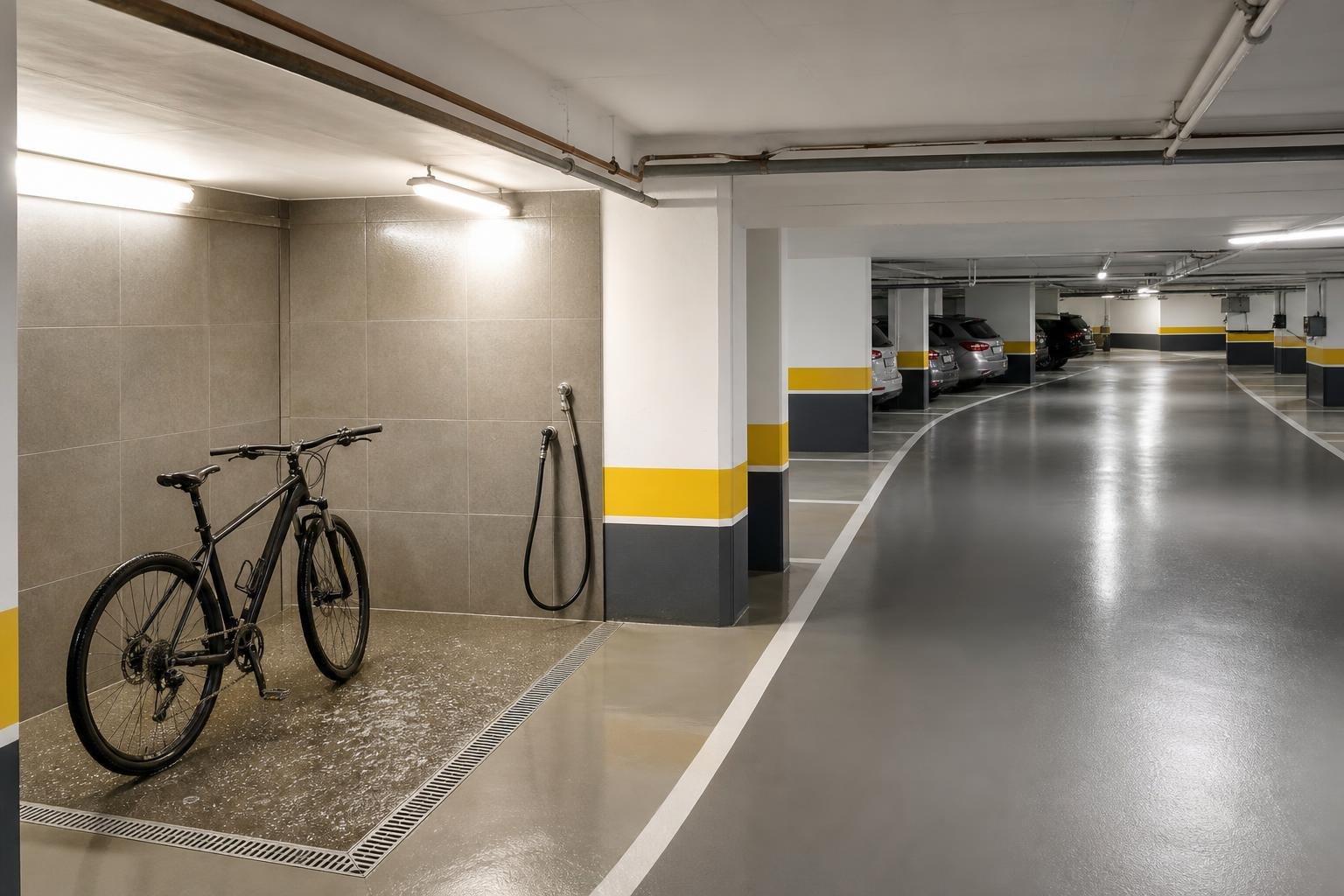
The best place to charge an electric mobility wheelchair is a dry, ventilated indoor or well-sheltered area with a socket installed for that purpose. Do not leave this decision until after the equipment arrives: socket position, clear access, rain protection and the ability to manoeuvre without dragging a lead determine whether charging is safe and easy. In a Lisbon house, a service entrance, ventilated garage or well-planned laundry area will usually work better than an exposed balcony.
Contents
- Start with the daily route, not the socket
- Which room works best in a house?
- Moisture and heat: two issues to design out
- How to prepare the electrics without shortcuts
- Accessibility details that change the daily routine
- When should you call a professional?
Start with the daily route, not the socket
The wheelchair should reach its charging position without steps, difficult thresholds, narrow doors or manoeuvres beside parked cars. Map the route from the street, garage or entrance to the parking point. Mark the full width of the chair, including armrests, footrests and accessories, and leave enough room to reach the socket without twisting or stretching the cable.
A location by the front door can look convenient yet fail if it narrows the route to the kitchen, stairs or an exit. A side wall often works better, allowing the chair to park parallel to the route. If the work also affects the consumer unit, review electrical-panel capacity and dedicated circuits for a house renovation before closing walls or ordering joinery.
- Keep cables out of walking routes.
- Do not treat extension leads as a permanent solution.
- Allow space to open doors, turn and transfer from the chair calmly.
Which room works best in a house?
A garage can work when it stays dry, has clear circulation and does not expose the charging area to vehicle exhaust or washing water. A closed store room is only suitable if it does not retain moisture and is not used as a cluttered dumping ground. A service entrance is often a strong option: it brings the chair close to the outside, can hold covers and support equipment, and can receive durable, easy-clean flooring.
Avoid uninsulated metal sheds, open porches and balconies where wind-driven rain can reach the charger and socket. Lisbon alternates between hot, dry summers and periods of heavy rain; the IPMA climate normal for Lisbon / Instituto Geofísico provides useful context for that pattern. The area needs to handle both: less overheating in summer and genuine water protection in winter.
| Location | When it can work | Main consideration |
|---|---|---|
| Service entrance | There is a direct route and indoor floor area | Keep the route clear |
| Garage | The floor stays dry and ventilation is good | Separate it from vehicles and washing |
| Laundry area | There is clear floor space and organised services | Control steam and splashes |
| Outdoor annex | Only if it is genuinely enclosed and dry | Protect against rain, condensation and heat |
Moisture and heat: two issues to design out
The charger, cable, plug and battery should not sit where there are drips, splashes, persistent condensation or wash water. A low socket beside a floor that can puddle is a poor choice. Equally, do not park the chair against a mouldy wall, a dripping pipe or a poorly sealed outside door.
Portugal’s Directorate-General of Health advises dealing with moisture problems as soon as they appear and notes that damp areas can contribute to fungal growth in a building. Use the DGS general guidance on indoor air and moisture as a rule for this small project: remove the source of water first, then install the charging point.
Do not seal the wheelchair inside an airtight cupboard or place it beside a heat source. A protected area needs ventilation suited to the space, without draughts that bring in rain or dust. When a garage is being altered, review home garage ventilation alongside the new use.

How to prepare the electrics without shortcuts
Use the charger specified by the wheelchair manufacturer and ask a qualified electrician to assess the socket, circuit condition and suitable protection. Charging may be a daily routine, so an old loose socket, or one shared with washing machines, heaters and tools, should not be treated as a long-term answer.
- Identify the charger rating and instructions supplied with the wheelchair.
- Set the chair’s final parking position before opening walls.
- Install an accessible socket that is not hidden behind the chair.
- Route the cable so it does not sit on the floor or cross a walkway.
- Test the real routine: parking, connecting, disconnecting and leaving the area.
Energy efficiency starts by matching equipment and installation to the job rather than compensating for poor planning with adaptors. ADENE’s guidance on energy efficiency in buildings frames efficiency as reducing energy use without sacrificing comfort and quality of life; here, comfort means reliable, accessible charging without wasting valuable space.
Accessibility details that change the daily routine
Plan the whole action rather than the moment the plug is connected. The user needs to see the socket, reach the connector, place personal items down and move away again. A light switch near the entrance, visual contrast between socket and wall, and a small shelf for the charger can remove repeated difficulties.
Where there is a change in level, assess a permanent solution instead of relying on a loose portable ramp. If the chair is stored by a door, make sure the leaf opens without striking it. In a covered external space, include drainage and a threshold that keeps water out, while avoiding a raised edge that makes crossing difficult.
Do not turn the charging area into storage for boxes, bicycles or cleaning products. A clear space makes it easier to spot a damaged cable, a leak or an obstruction before it becomes a bigger issue.
When should you call a professional?
Call an electrician if the socket becomes warm, the consumer unit trips repeatedly, wiring is old, a new circuit may be needed or available capacity is unclear. Call a building professional where there are leaks, damaged flooring, condensation, a threshold to alter or a wall to open. Do not attempt to adapt electrical installations in damp places with extension leads, multi-plug adaptors or improvised boxes.
Before work begins, make a short brief: where the wheelchair enters, where it parks, what equipment charges there, how water is kept away and who can use the point independently. That brief gives the project a practical basis and stops charging from depending on temporary arrangements.
Key takeaways
- Choose a dry, protected place where the wheelchair can park without narrowing circulation.
- Set the chair’s final position before deciding which side and height the socket needs.
- Do not rely on extension leads for permanent charging or share the point with demanding loads.
- Resolve leaks, condensation and wet floors before fitting the charging point.
If you are renovating an entrance, garage or service area, include the charging point in the first review of access, electrics and moisture. Obra Lisboa can incorporate those decisions into a planned residential renovation.
Sources and further reading
- DGS general guidance on indoor air and moisture
- IPMA climate normal for Lisbon / Instituto Geofísico
- ADENE’s guidance on energy efficiency in buildings
AI-generated editorial image; it does not depict an Obra Lisboa project.

Obra Lisboa