
A garage can look like a straightforward room until the door is replaced, a side opening is closed or one corner becomes storage. Then its previous airflow disappears: exhaust smells linger, condensation forms on the metal door and boxes against the wall begin to show mould. In Lisbon, where many garages sit at basement, semi-basement or courtyard level, the answer is not simply to add a grille. It is to plan an air route that still works with the door shut, does not carry pollutants into the home and does not become an opening for wind-driven rain.
This guide is for a house garage or private domestic lock-up. Shared car parks, changes of use and work affecting ducts, façades or common parts should be checked technically and with the relevant planning requirements before materials are ordered.
Separate the four problems before choosing a solution
Ventilation does not solve every issue in the same way. Vehicle exhaust requires reliable removal and should never be treated as a mere nuisance smell. Portugal’s Directorate-General of Health explains that carbon monoxide is colourless, odourless and toxic; it is produced by incomplete combustion and may cause headache, dizziness, nausea and serious effects after prolonged exposure. Read the DGS guidance on health effects of air pollutants.
Damp needs a different diagnosis: it may come from the ground, a leak, wet laundry, a rain-soaked vehicle or humid air condensing on a cold surface. There are also odours and vapours from paint, fuel, cleaning products and equipment. Finally, overheating matters where the garage receives afternoon sun or contains chargers and machinery. Identifying the main issue prevents the installation of a noisy fan that never addresses the cause.
Plan an air path, not just one vent
In a small garage, the practical aim is an inlet and an outlet placed apart. A lower opening can admit replacement air, while a higher opening on the opposite side gives warm air and vapours a way out. If both are beside the garage door, the middle and rear of the room may remain stagnant.
Watch the garage at three times: after parking, on a damp morning and on a windy day. If conditions improve only when the door is open, the space relies too heavily on that single elevation. Permanent grilles need protection from direct rain, leaves and intrusion, but must not be blocked by shelving, cupboards or bags. When arranging tools, keep a clear zone in front of every air inlet and outlet. For other service decisions before finishes close the walls, see Sockets and switches in a renovation.
Do not route garage air into the home
A door between the garage and the home should not be considered part of the ventilation strategy. The intended route is from the potentially polluted garage to outdoors, not towards a utility room, hallway, pantry or stairwell. This is particularly important where the garage connects to a kitchen or where cable penetrations, gaps and grilles occur in the shared wall.
Before lining that wall or building a cupboard against it, locate service penetrations and seal them using products appropriate to the element being crossed. Do not use expanding foam indiscriminately: the correct detail changes where acoustic performance, fire resistance, movement or future access are involved. A properly fitted door helps reduce odours, but it cannot replace external ventilation. If sound transfer is also an issue, pair this decision with Interior doors and acoustic seals.

Damp: establish whether water enters, condenses or cannot dry
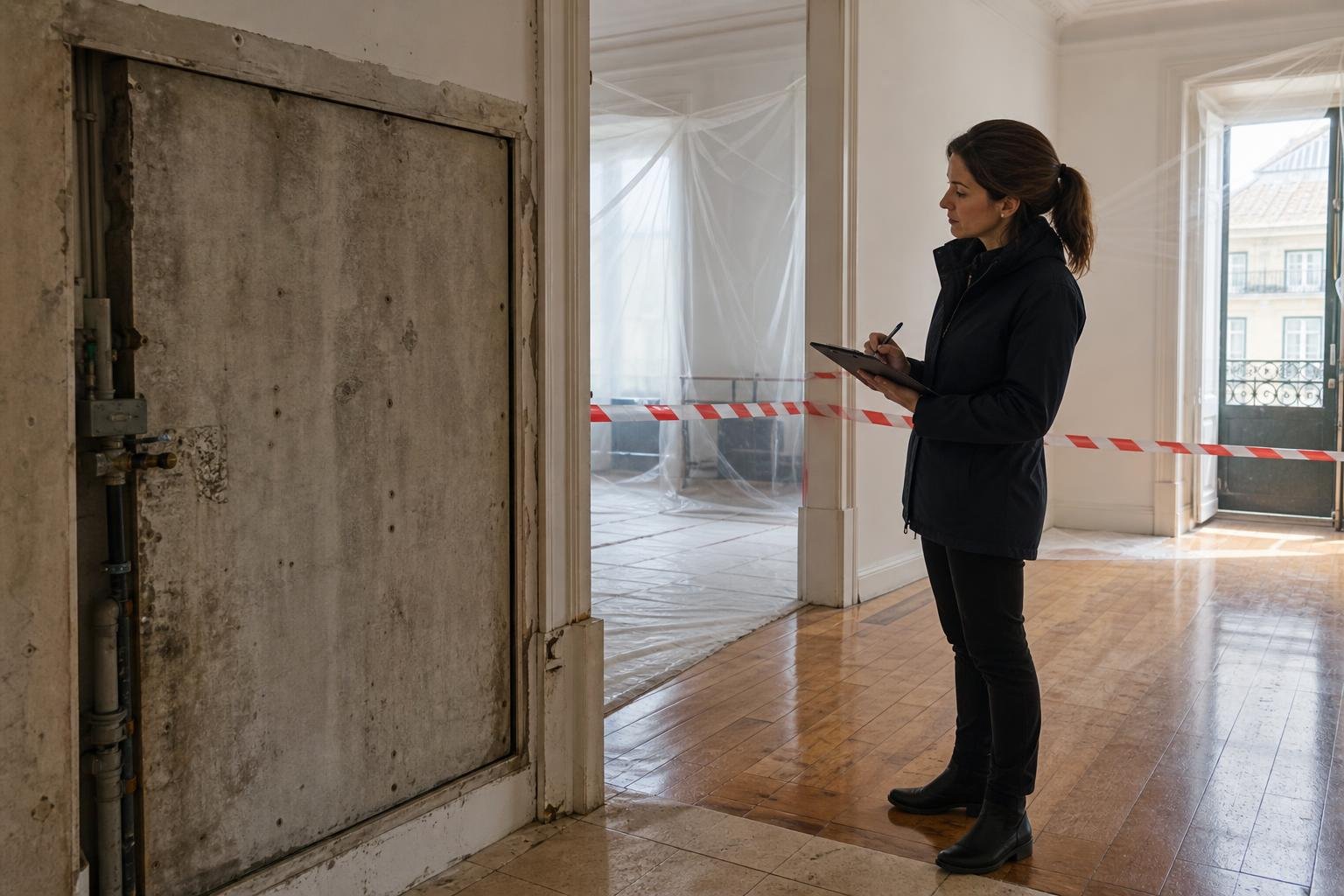
Staining at the bottom of a wall, rust on the door tracks and softened cardboard boxes do not automatically have the same cause. Marks that appear after rain point towards the roof, threshold, outside drainage or a crack. Droplets on the inside of a door on cold mornings suggest condensation. A floor that stays dark beside a wall may indicate ground moisture, a plumbing leak or poor drainage.
Keep a simple two-week record: rainfall, car use, door opening and where water appears. Only then decide whether to repair an ingress point, improve runoff, move storage away from walls or increase ventilation. A dehumidifier can be useful as temporary support, but it should not conceal a leak. To investigate water losses before they become more costly, read How to detect and reduce water losses in an apartment.
When mechanical ventilation is justified
Mechanical extraction may be suitable when the garage is internal, has only one external face, retains odours or cannot achieve cross ventilation. The decision does not start with fan power. Start with the duct route, discharge point, replacement-air path, noise and cleaning access. An extractor with no make-up air is simply working against increasing negative pressure.
Avoid discharging near windows, doors, air intakes or areas where people spend time. In built-up settings, the external integration of ducts and equipment deserves care. A regulation published in the Diário da República illustrates the importance given to sufficient ventilation, integrated ducts and healthy conditions. Always confirm the rules that apply to the property and municipality: what is appropriate for a detached house is not automatically acceptable in a condominium building.
Use equipment and storage without increasing the hazard
Never leave a vehicle engine running in a closed or semi-enclosed garage to warm up the car, charge batteries or open the door. Do not run generators in that space either. The DGS warns of carbon-monoxide risk in garages and notes that open doors or windows do not make generator use safe in an enclosed or semi-enclosed area.
Store paint, solvents, fuel and chemical products according to the manufacturer’s directions, away from ignition sources and outside an escape route. Do not turn the garage into tightly packed storage: items against the door, damp walls or ventilation grilles prevent cleaning, inspection and airflow. Alarms can add warning, but they do not correct a source of fumes or replace ventilation and maintenance. The indoor-air reference values published by the DGS for indoor pollutants show why carbon-monoxide exposure must be taken seriously, although they are not a ventilation design for a domestic garage.
Planning to enclose a garage, replace its door or reorganise the room? Obra Lisboa can help coordinate ventilation, drainage, electrics and finishes before the work begins.
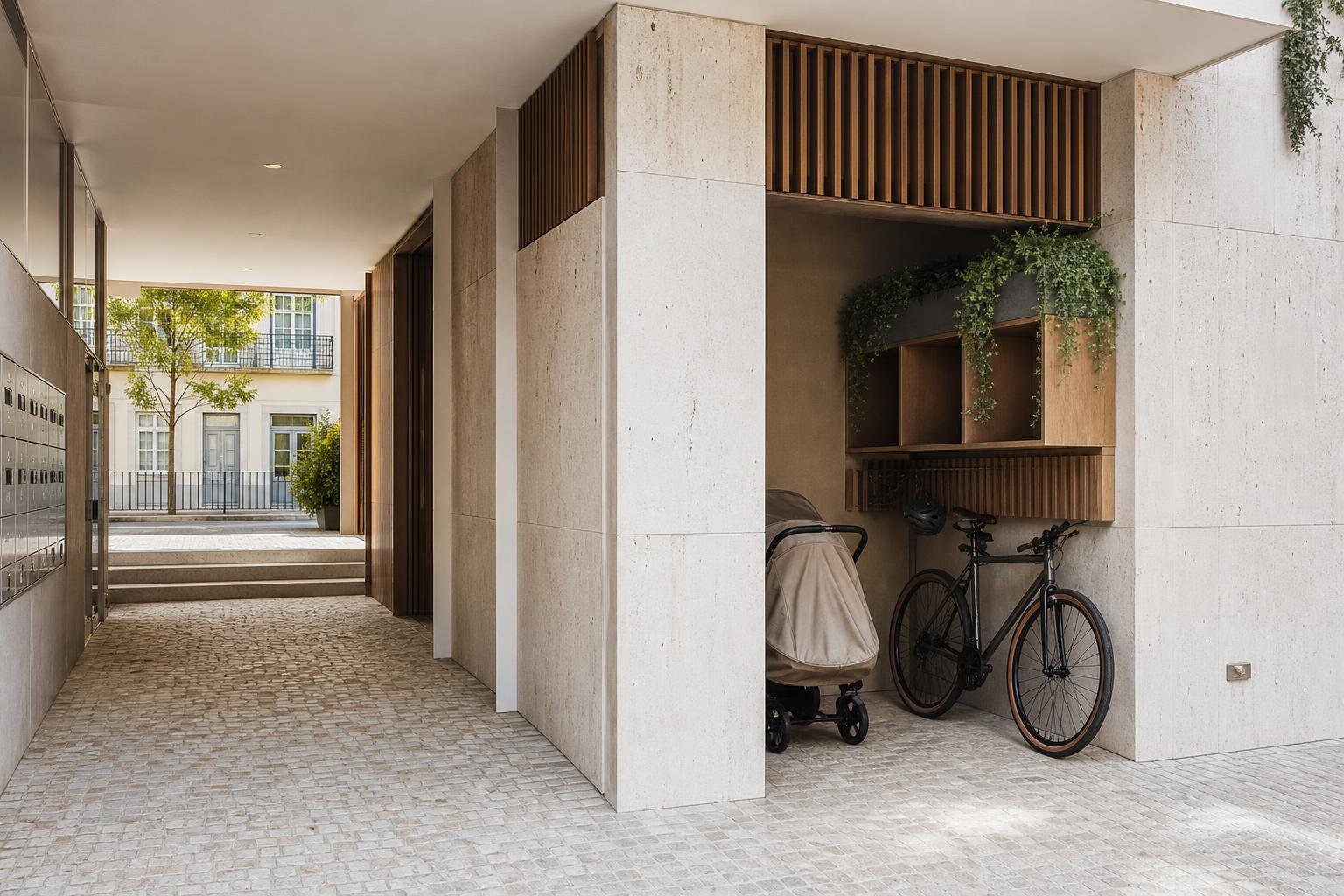
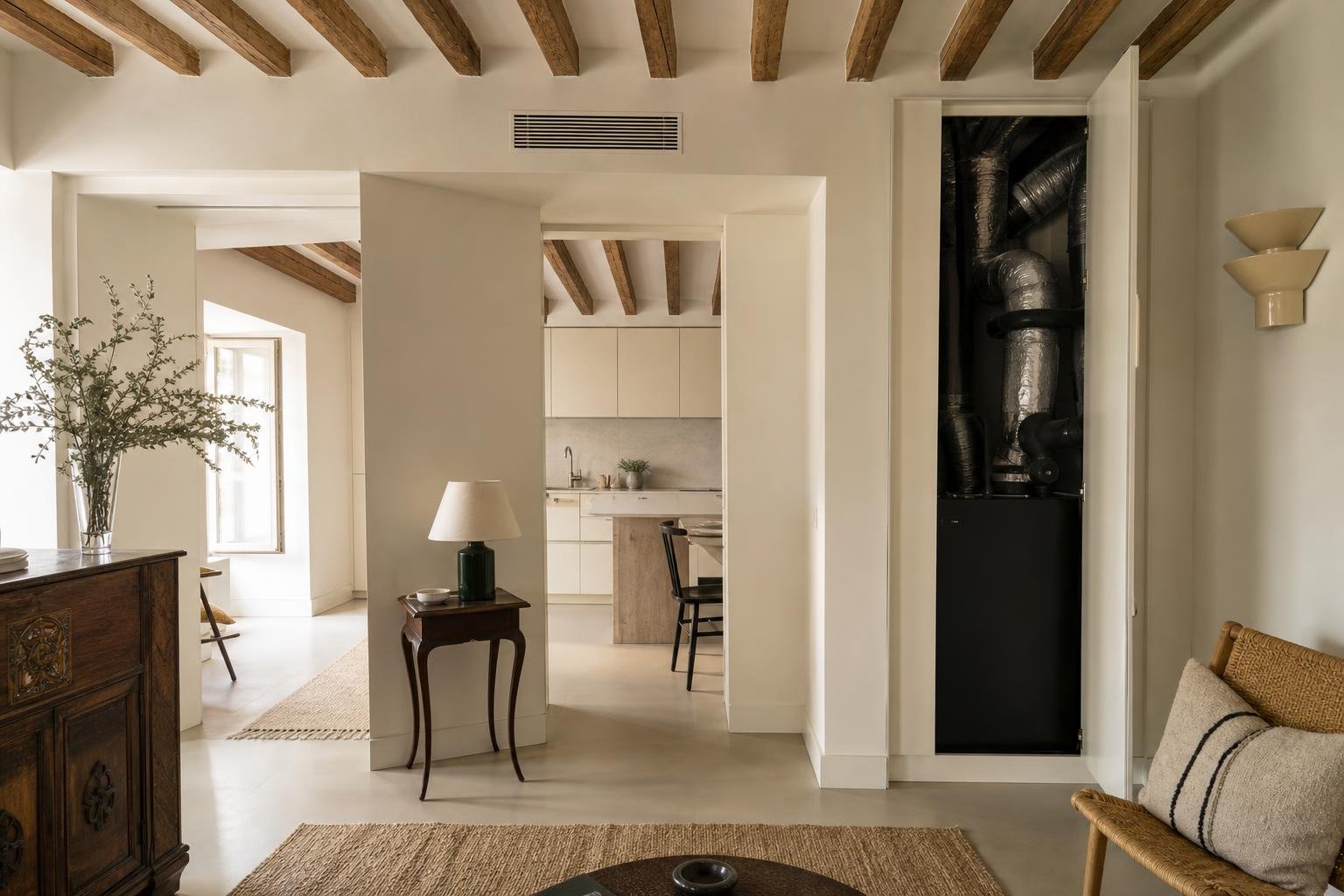
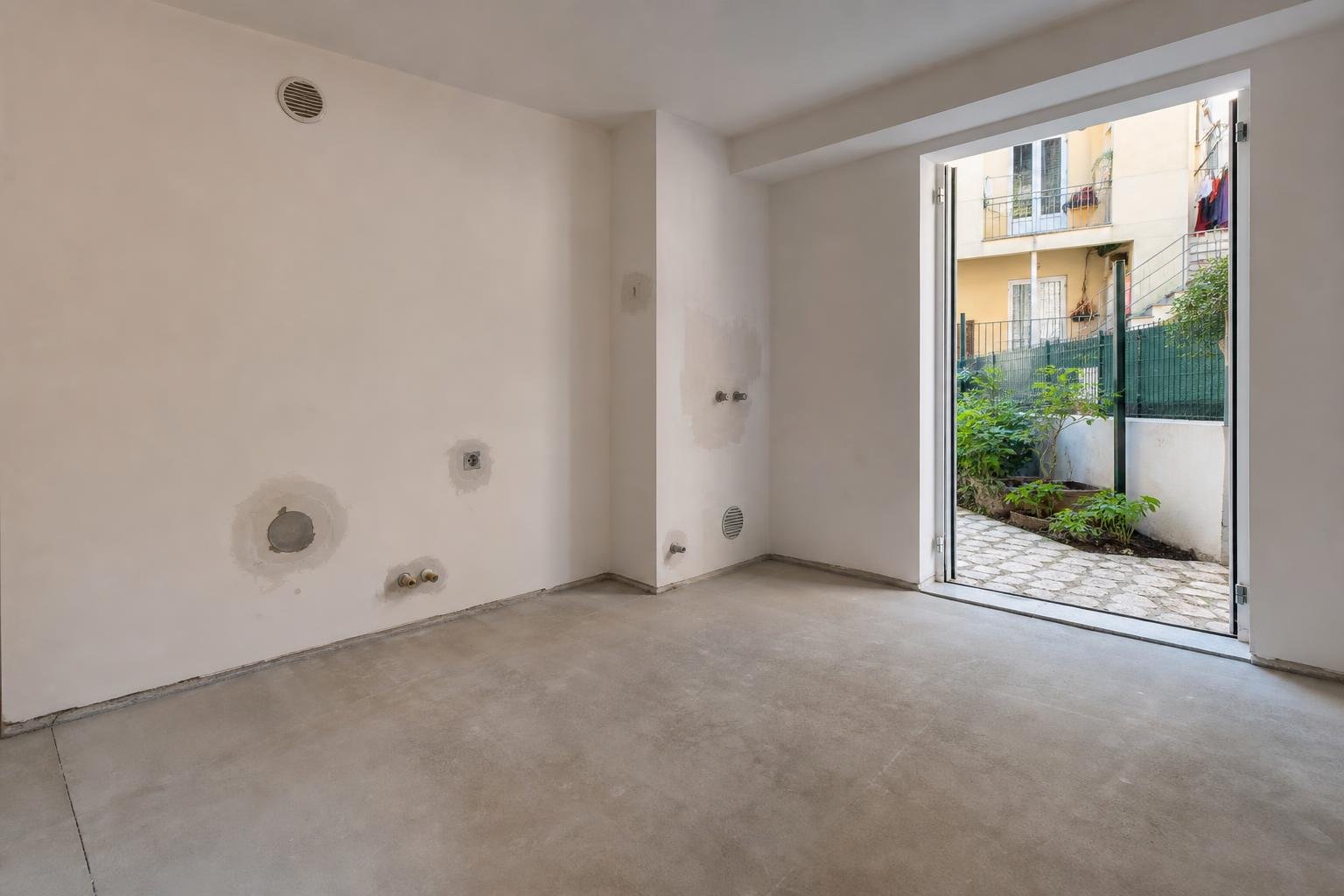
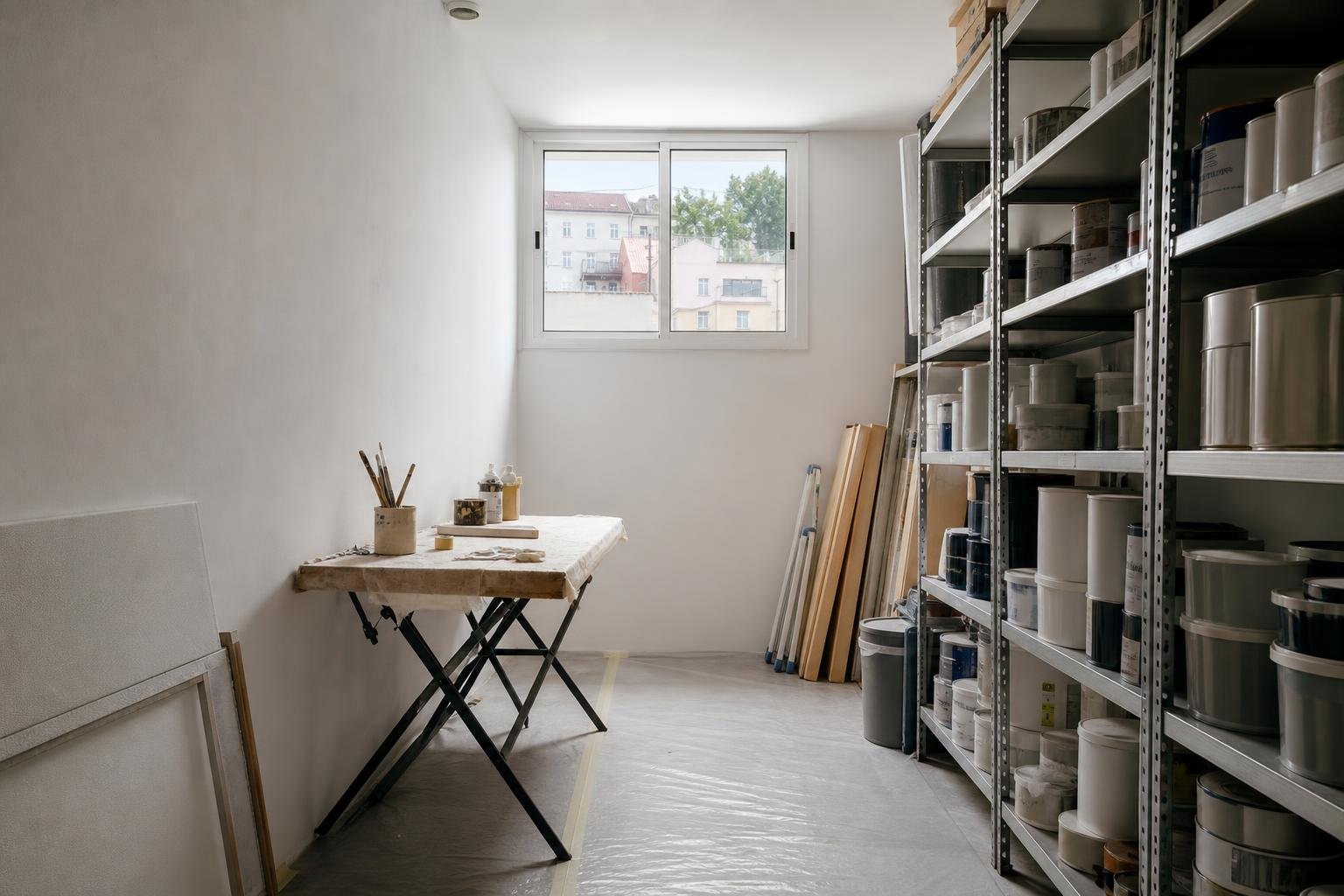
AI-generated editorial image; it does not depict an Obra Lisboa project.

Obra Lisboa