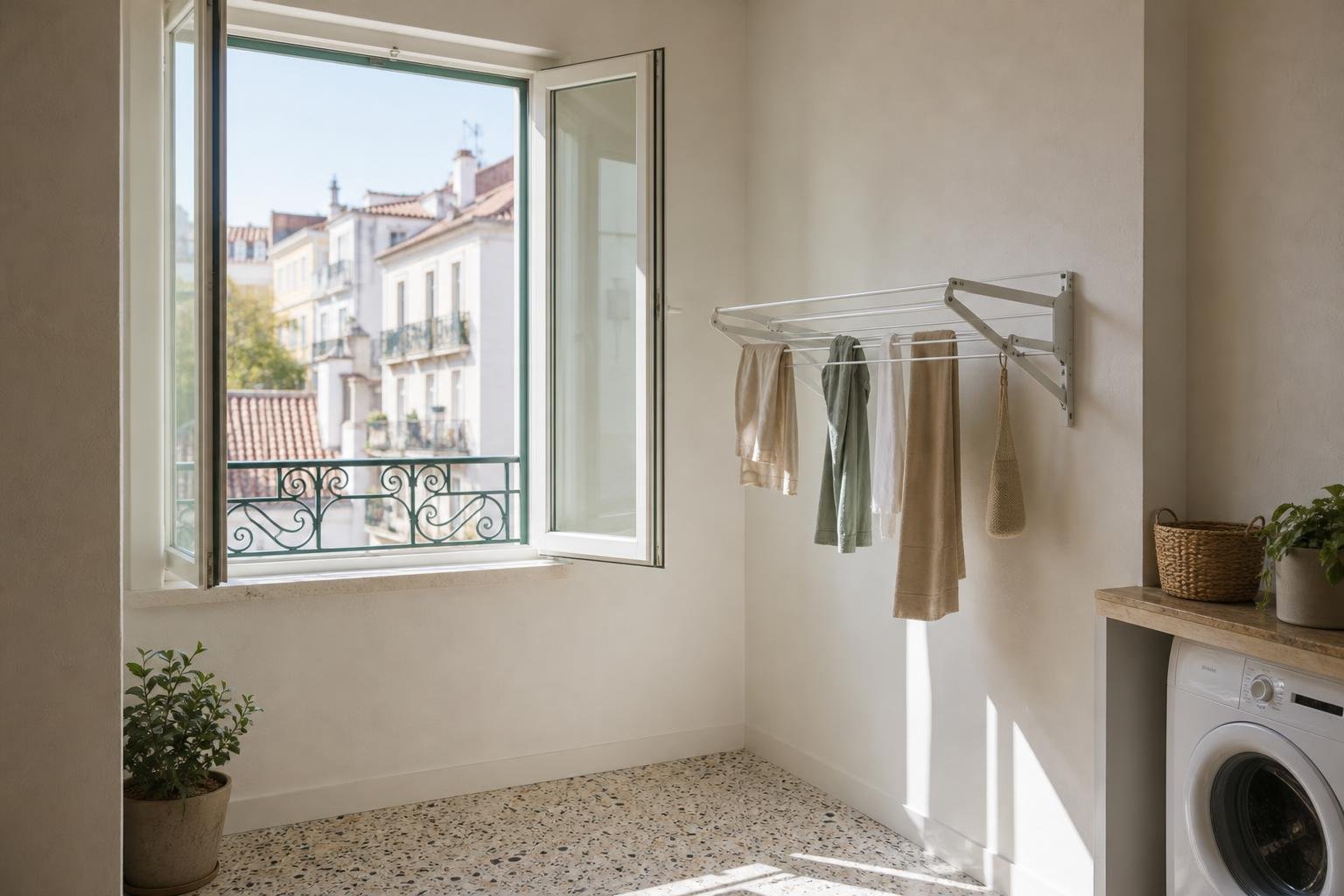
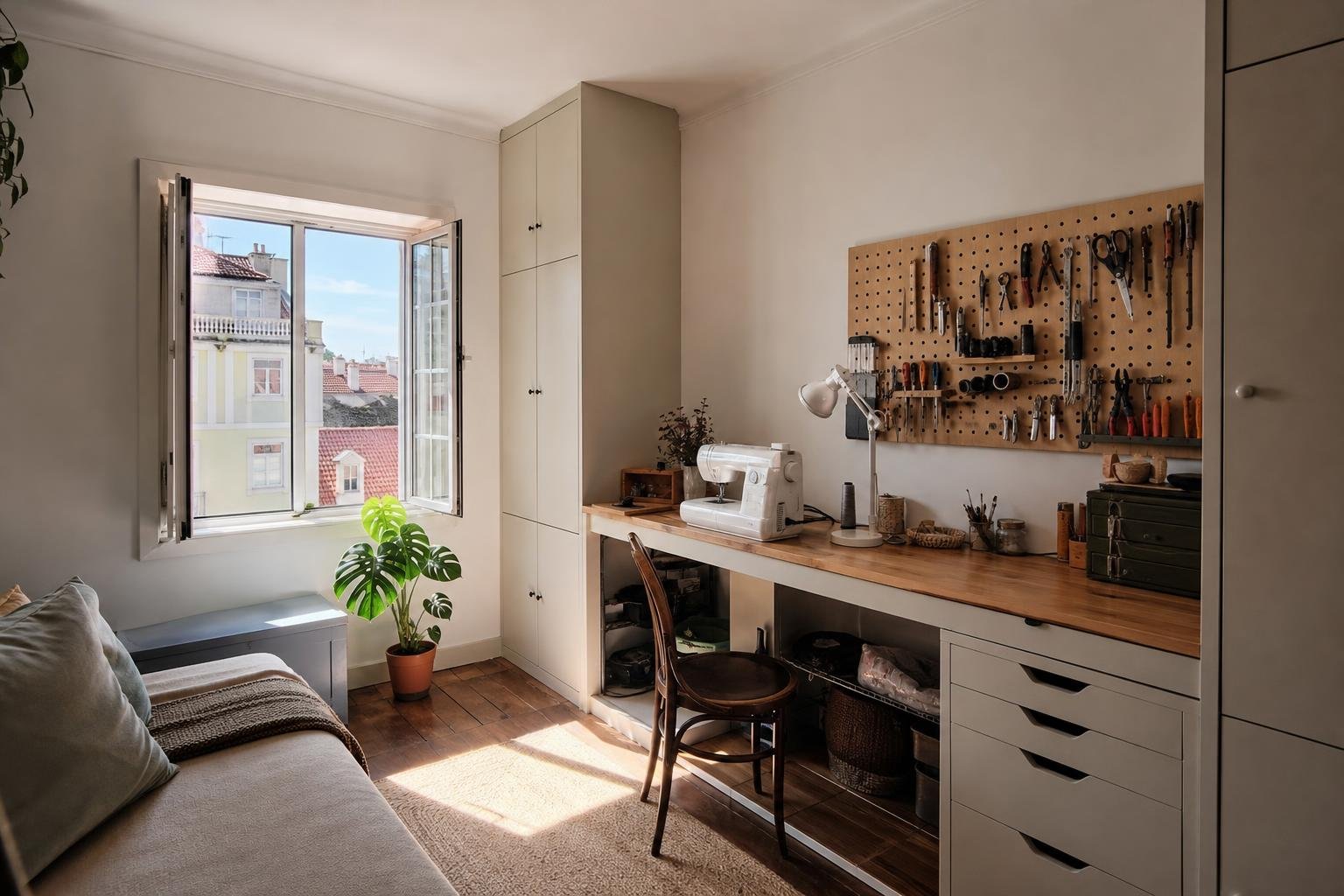
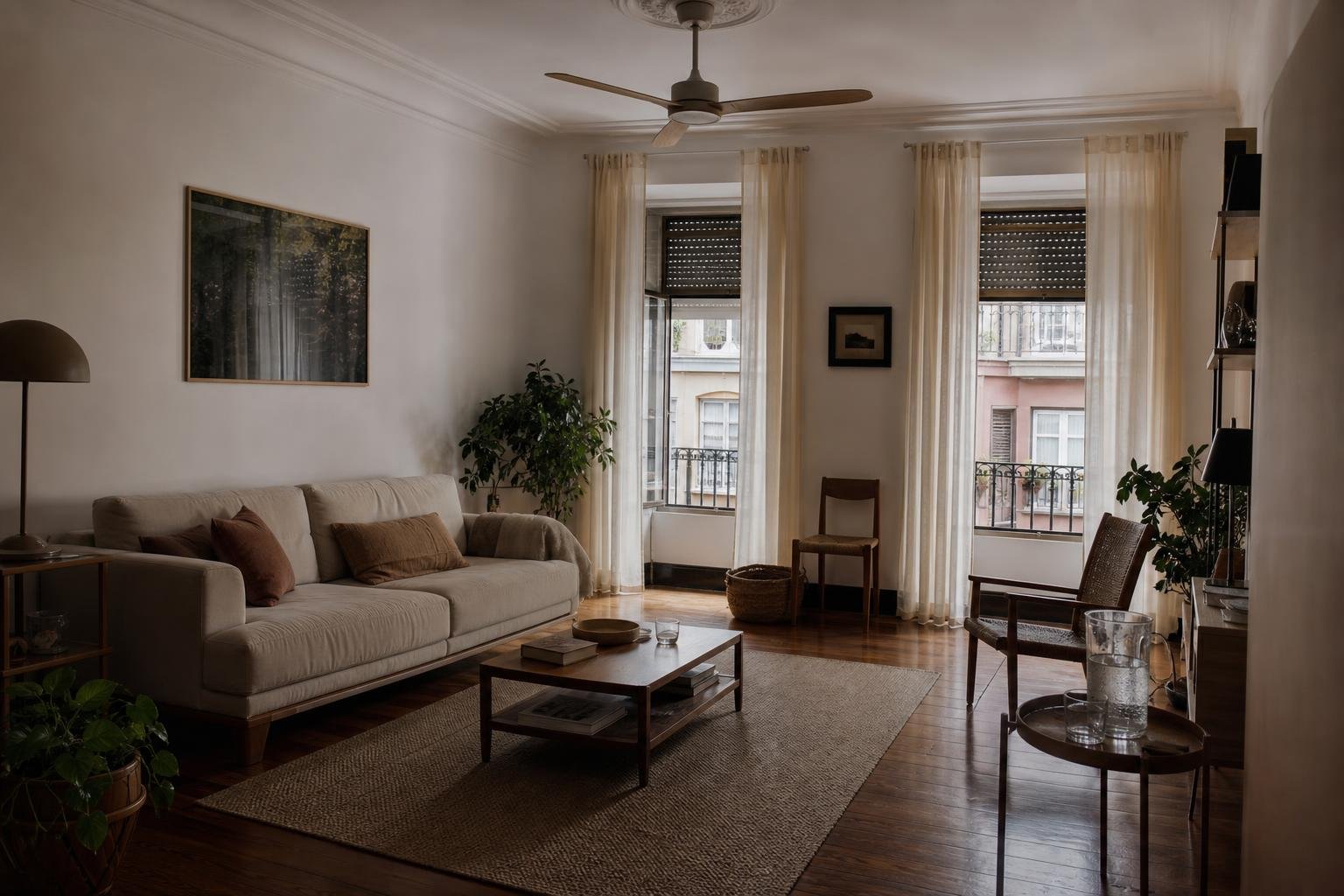
Night ventilation can cool an apartment when the outdoor air has become cooler than the indoor air; on tropical nights, leaving every window open may bring in noise, warm air and little relief. In Lisbon, the decision should be made room by room and hour by hour: keep solar heat out during the day, create a safe air path in the evening, then close up again before the outside warms. This routine does not replace insulation, shading or cooling where those are needed, but it can reduce heat held in walls, floors and furniture.
Contents
- Why opening windows at night can work — and why it sometimes does not
- How to decide on a hot afternoon whether to open windows or wait
- What airflow route should you look for in an apartment?
- Security, noise and outdoor air: the limits of an open window
- What to fix before relying on night ventilation
- A simple routine for hot Lisbon nights
Why opening windows at night can work — and why it sometimes does not
On a hot day, sunlight enters through glazing, heats interior surfaces and is stored in the building’s mass. If the outdoors cools after sunset, incoming air can remove part of that stored heat. ADENE identifies shading to limit solar gains and natural ventilation at night, when outdoor temperature is lower than indoor temperature, as common summer-comfort strategies. See ADENE’s guidance on summer thermal comfort.
The key test is straightforward: ventilate when cooler outside air is available and warm air has a way out. One open window in a bedroom with no second opening, or no connection to an outlet route, mainly admits noise and reduces security. A strong draught is not automatically useful either if it only crosses a corridor and never reaches the room that has stored the heat.
On tropical nights, defined by IPMA as nights when the minimum temperature remains above 20°C, the cooling margin is smaller. In those conditions, use ventilation to avoid stale air, but do not expect it to quickly lower the temperature of walls and ceilings that have been exposed all day.
How to decide on a hot afternoon whether to open windows or wait
You do not need expensive controls to start. Make a short check between late afternoon and bedtime:
- Measure the living room and bedroom temperature with a simple thermometer if possible.
- Compare it with outdoor temperature in a spot protected from direct sun; a very hot balcony or west-facing façade does not represent the wider outdoor air.
- Open windows on cooler-facing elevations first and create an outlet on the other side of the home, or towards a ventilated stairwell, only where this is safe and permitted.
- After 20 to 30 minutes, return to the hottest room. If the air remains stuffy and surfaces still feel hot, keep only the opening that does not compromise sleep, noise control or security.
IPMA explains that extreme heatwaves have become more frequent over the last 30 years in mainland Portugal. Read the criteria and long-term context on IPMA’s heatwave page. It is a reason to set up a routine before summer rather than improvising once the apartment is already overheated.
Close shutters, blinds or internal timber shutters before direct sun reaches the façade. Night ventilation is less effective if the following morning reheats the home immediately. For a practical daily sequence, see shutters and blinds in Lisbon.
What airflow route should you look for in an apartment?
The aim is to bring cooler air into occupied rooms while allowing warmer air to leave. In a typical two-bedroom flat, that may mean partly opening a north- or east-facing bedroom window and an opening in a south-facing living room or kitchen, with internal doors open to link the route. In another flat, the useful pairing may be a courtyard-facing window and a balcony door on the opposite side.
Avoid turning ventilation into an uncontrolled draught. Doors slamming, curtains being pulled into frames and loose papers lifting are signs of excessive speed, not better air quality. Adjust each sash, use opening restrictors and leave doors only as open as needed to form a continuous route.
In older buildings, the route may be broken by very airtight doors, internal corridors with no openings or enclosed balconies. A portable fan can help move air towards the outlet, provided it is stable and clear of curtains and wet areas. Do not use improvised arrangements at a window accessible to children or pets.
If the home has only one façade, true cross ventilation is unavailable. Ventilate in the coolest periods, open internal doors to distribute air and concentrate sleeping in the least exposed room. A dedicated refuge room may be more effective than trying to cool the whole flat; read how to create a heat refuge room.

Security, noise and outdoor air: the limits of an open window
A thermal strategy should never create a fall, intrusion or persistent disturbance risk. On lower floors, beside busy streets or in children’s bedrooms, favour limited openings, suitable safety devices and ventilation while the household is awake. An insect screen is not fall protection.
When rural wildfire smoke affects the Lisbon area, the priority changes. Keep windows and doors closed while outdoor smoke is significant, following official health and civil-protection guidance. Night ventilation should also be reduced when it brings in dust, strong traffic odours or outdoor humidity that causes condensation on cold surfaces.
Be realistic about noise. If road noise wakes you repeatedly, a fully open window may reduce rest even if the room becomes slightly cooler. Try a smaller opening on the noisy elevation and a larger one on the more protected side, or ventilate more strongly before bed and partly close later.
For larger alterations, make sure the approach respects the thermal and ventilation requirements that apply to homes. Portuguese building-performance regulations treat the envelope, ventilation, prevention of building defects and heating and cooling needs as connected parts of energy performance; consult the Building Energy Performance Regulation.
What to fix before relying on night ventilation
Night ventilation is an operating measure, not a cure for excessive solar gain or poorly controlled air leakage. Before buying equipment, look at what happens through the day:
- Direct sun on glass: give priority to external shading or a façade-compatible solution.
- A hot shutter box with air leakage: assess insulation, sealing and access for maintenance.
- A bedroom beneath the roof: investigate the ceiling build-up and condition, roof ventilation and solar exposure.
- A window that is difficult to use: repair hardware, seals, drainage and opening restrictors before depending on it every night.
- Stale air all year: do not treat the problem as heat alone; a permanent ventilation strategy may be needed.
In flats with strong sun exposure, external shading can stop heat before it passes through the glazing. Its selection, fixings and condominium rules should be checked before ordering; see Obra Lisboa’s guide to external shading for apartments.
A simple routine for hot Lisbon nights
Use a short sequence and repeat it on hot days:
- In the morning, close shading on elevations that will receive sun.
- During the hottest hours, keep external openings and doors closed, except where fresh-air needs or safety require otherwise.
- In late afternoon, compare indoor and outdoor conditions and prepare two openings that can form an air route.
- Ventilate more strongly before bed, once outdoor temperature has fallen and noise allows.
- Overnight, reduce the opening if outdoor air is hot, smoky or wet, if rain can enter, if wind is strong or if security is compromised.
- At dawn, close up again before sun reaches the glazing.
If this routine does not improve comfort after several days, do not simply extend the time that windows remain open. Record which elevations, hours and rooms are most problematic. That map of the home makes it easier to choose between shading, windows, insulation, mechanical ventilation or cooling, with less repeat work.
Key takeaways
- Open windows for cooling only when outdoor air is cooler than indoor air.
- Keep solar heat out during the day; night ventilation works better in a home that has not reheated.
- Create a safe route with an inlet and an outlet instead of opening one random window.
- On tropical nights, during smoke events or with heavy noise, adapt the approach and prioritise safety and sleep.
If the same rooms overheat repeatedly, gather façade photographs, sun-exposure times and any signs of condensation before setting the scope of work. Obra Lisboa can help bring shading, windows, ventilation and renovation work together in a coherent intervention plan.
Sources and further reading
- ADENE’s guidance on summer thermal comfort
- IPMA’s heatwave page
- Building Energy Performance Regulation
AI-generated editorial image; it does not depict an Obra Lisboa project.

Obra Lisboa