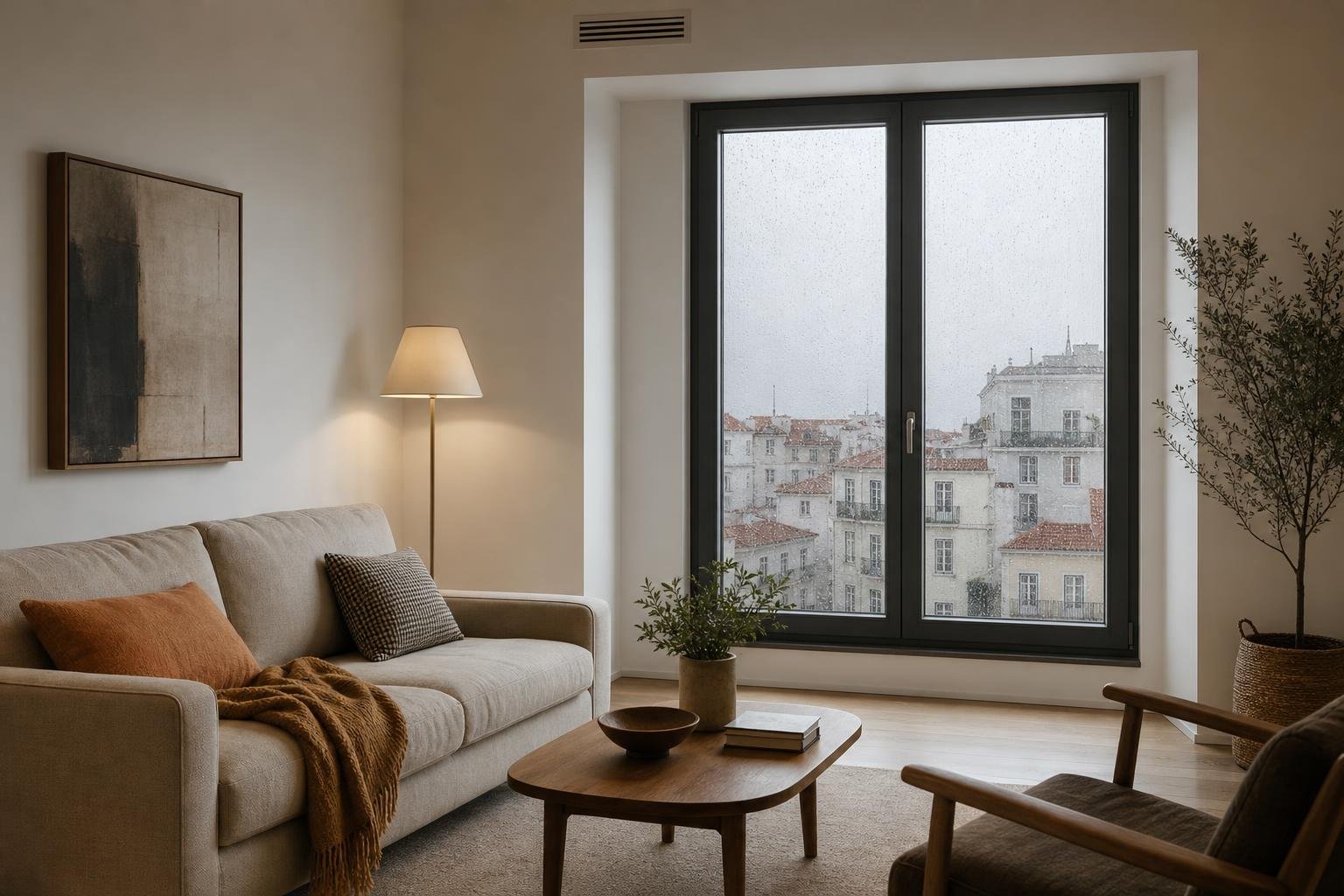
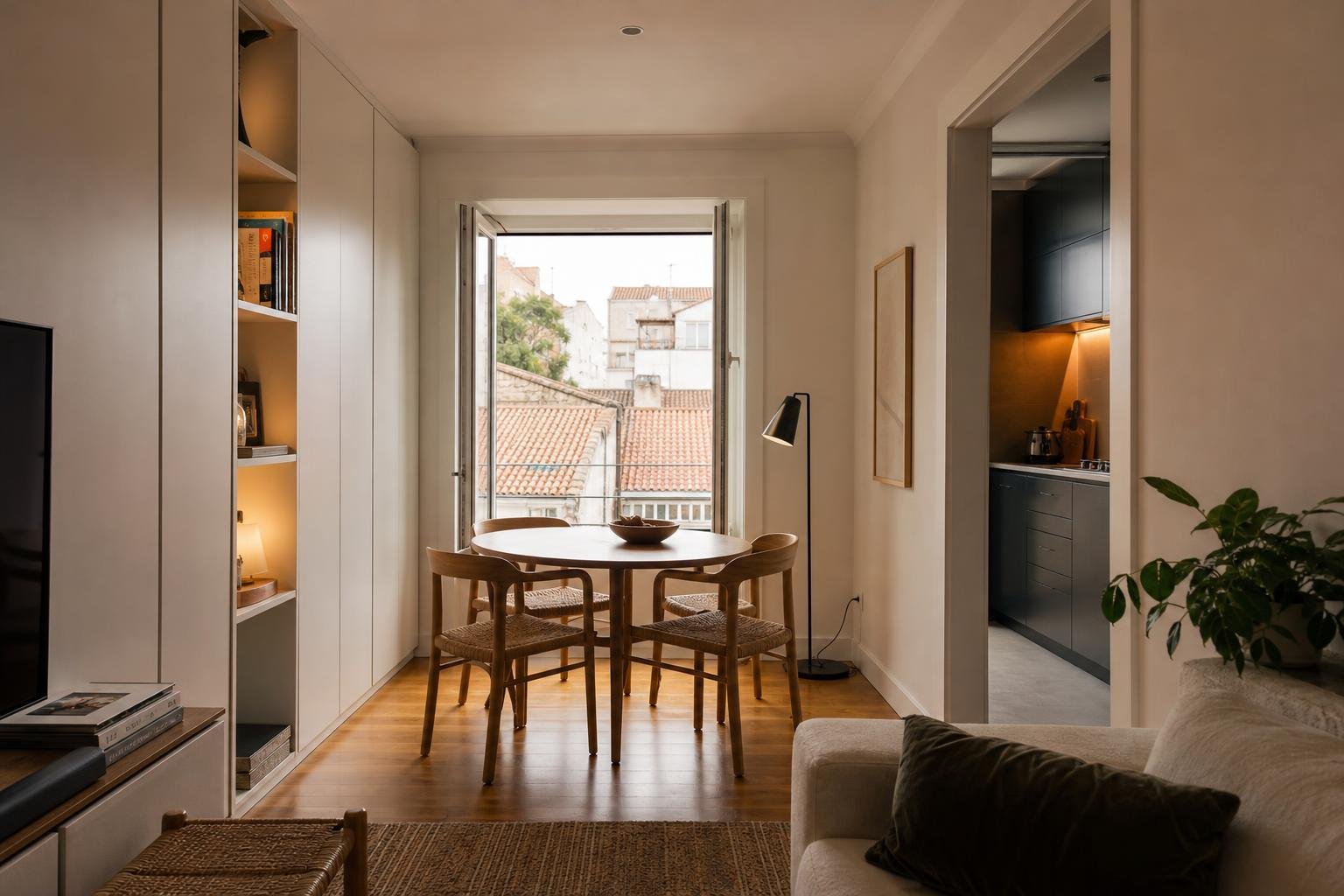
To cook without filling your home with steam, switch extraction on before heating the pan, use lids and renew the air during and after cooking. In a small kitchen or one open to the living room, moisture from soup, boiling pasta or a dishwasher can settle on glazing, cold corners and fabrics when it has no clear route out. In Lisbon, damp months often coincide with days when windows stay shut, so the practical answer is to control the source and use short, deliberate ventilation.
Contents
- Why does cooking steam end up on windows and walls?
- What routine works while you cook?
- Does the hood extract air or only filter it?
- How can you air the kitchen without wasting too much heat in winter?
- Which renovation decisions are worth making in a kitchen?
- Run one simple test this week
Why does cooking steam end up on windows and walls?
Cooking adds water vapour, grease particles and odours to indoor air. Portugal’s Directorate-General of Health notes that cooking degrades indoor air quality, while excess moisture can condense on cold surfaces and encourage mould.
The pan is seldom the only issue. A closed kitchen, a hood that recirculates rather than extracts, clogged filters, closed internal doors or a cold external wall can all keep moisture indoors for longer. In a one-bedroom flat with an open-plan kitchen, that moisture can travel into the living area and bedroom through normal air movement.
Climate data explains why a reliable routine matters: Lisbon/Tapada climatological normals show higher average rainfall from October to March. Use the IPMA climatological normal for Lisbon/Tapada as background, but respond to actual conditions: fogged glass, a lingering smell and damp surfaces need immediate action.
- Windows steaming up soon after cooking points to indoor moisture build-up.
- A local stain, flaking paint or water appearing when nobody has cooked may point to a leak or rain ingress.
- Recurring mould behind cabinets calls for a check of air movement and whether the wall is cold or wet.
What routine works while you cook?
Start with the sequence rather than leaving a window fully open for an hour. Switch on the hood or extractor before putting the pan on the heat; extraction then starts as soon as steam and grease aerosols are created. Keep lids on pans whenever the recipe allows, leaving them slightly ajar where needed to prevent boiling over.
- Open the available air inlet: a nearby window slightly, a purpose-made vent or a door to another room with a window, without blocking circulation.
- Switch extraction on before cooking.
- Use rear hob zones where the hood captures that area more effectively.
- Keep lids on during sustained boiling.
- After turning off the heat, leave extraction running for a few minutes and air the room briefly.
The DGS general recommendations specifically say to ventilate the home while cooking. That does not mean cooling the whole flat. On a cold evening, a short, effective opening near the kitchen is usually preferable to a window left slightly open for hours.
Where the kitchen opens directly onto the living room, keep bedroom doors closed during cooking. Once finished, open the kitchen window and, where the layout allows, another opening farther away for a few minutes. That air path removes moisture before it settles into fabrics and cold surfaces.
Does the hood extract air or only filter it?
This distinction changes the result. A hood ducted outdoors removes moisture-laden air; a recirculating hood returns air to the kitchen after filtration. Recirculation may reduce some odours and grease, depending on the appliance and its maintenance, but it does not remove the water vapour produced by boiling. It therefore needs additional ventilation.
Before renovating, check the duct route, outlet point, filter-cleaning access and compatibility with gas appliances. Portugal’s General Urban Building Regulation provides for efficient permanent ventilation in kitchens without combustion appliances and treats cross-ventilation of the dwelling as the rule. Read the relevant provisions in the RGEU text published in the Diário da República; in an existing building, the specific solution should be assessed on site.
Avoid three common mistakes:
- Choosing a hood only for its width or appearance, without checking extraction, airflow and installation.
- Turning it on only after the smell has reached the living room.
- Covering air inlets to stop draughts.
In an apartment building, do not improvise a visible façade duct or an outlet into a service shaft without checking condominium rules, design requirements and applicable permissions.
| Option | Main benefit | Limit to consider |
|---|---|---|
| Outdoor-ducted cooker hood | Steam, odours and particles near the hob | Depends on a suitable duct, installation and maintenance |
| Recirculating cooker hood | Some odours and grease | Does not remove moisture created by cooking |
| Window opened for a few minutes | Quick replacement of humid air | May be insufficient as the only measure for intensive cooking |

How can you air the kitchen without wasting too much heat in winter?
Closing everything to retain heat may feel sensible, yet it leaves the moisture produced indoors. The balanced approach is to shorten the opening period and improve source extraction. Cook with the hood running, air the room briefly afterwards and close up again once the air no longer feels visibly laden.
Do not turn the kitchen into an isolated damp room. Air should enter through dry areas such as living rooms and bedrooms, then leave through service areas such as kitchens and bathrooms. For rainy-day window-opening habits, see ventilating a Lisbon flat when it rains.
On very cold days, heat the room moderately before or while preparing food instead of allowing walls and glazing to remain cold for many hours. Less-cold surfaces are less likely to turn vapour into droplets. Do not use the hob flame, an open oven or brazier to heat the home: they do not solve ventilation and can introduce combustion and air-quality risks.
A hygrometer can help reveal patterns, but it is not a diagnosis. If windows are still wet in the morning, there is a musty smell or marks develop despite careful habits, review extraction, leaks, thermal bridges and clothes-drying routines.
Which renovation decisions are worth making in a kitchen?
Plan ventilation while ducts, sockets and cabinetry can still be altered. Keep filters accessible, avoid cabinets that prevent maintenance and decide where make-up air will enter when extraction runs. An open-plan kitchen should not receive a decorative hood without confirming what it actually does.
Include in the quote request: extraction type, duct route and material, external grille, weathering details, electrical supply, controls, cleaning access and any ceiling or cabinet reinstatement. If you are changing finishes, worktops or hob position, coordinate these items before ordering. The guide to requesting comparable quotes for a renovation helps turn them into checkable scope items.
Older homes need particular care where gas appliances and mechanical extraction may interact. Do not close ventilation openings, reduce ducts without technical assessment or alter gas connections as DIY work. Call a qualified professional if combustion fumes return to the room, you smell gas, flames are yellow, the extractor is unusually noisy, grease drips from the unit or condensation appears inside cabinets.
Run one simple test this week
Choose a meal that normally creates a lot of steam and observe the air route. Start extraction before boiling water, keep a lid on the pan, leave a controlled air inlet open and check the glazing fifteen minutes after cooking ends. Repeat on another day without extraction to understand the difference, but do not make that second test your routine.
Write down what you find: a greasy filter, a blocked grille, a window that barely opens, a door that stops air moving or steam reaching the living area. These are useful facts for improving habits immediately and for defining works without buying equipment on impulse.
The aim is straightforward: remove steam as it is made, without creating a cold home or a kitchen kept permanently shut.
Key takeaways
- Start extraction before cooking and leave it running for a few minutes after turning off the heat.
- A recirculating hood does not replace ventilation for removing cooking moisture.
- Use pan lids and short airing periods to reduce steam without leaving windows open for hours.
- If condensation persists, investigate extraction, leaks and cold surfaces before concealing the problem.
If you are renovating your kitchen, bring the extraction route, air inlets and maintenance access into the first works discussion. Obra Lisboa can frame those decisions within the renovation scope before ceilings, cabinetry and finishes are closed.
Sources and further reading
- DGS general recommendations
- Directorate-General of Health notes that cooking degrades indoor air quality
- IPMA climatological normal for Lisbon/Tapada
- RGEU text published in the Diário da República
Editorial image; it does not depict an Obra Lisboa project.

Obra Lisboa