The T or Test button on a residual-current device should switch the circuit off when pressed; if it does not, arrange an electrician’s inspection without delay. This simple check does not replace a technical test or put an old installation right, but it shows whether the trip mechanism responds at that time. Prepare first: know what will lose power, save computer work and never open the consumer unit or touch its conductors.
Contents
- What is this device, and why does it matter?
- How to press the T button without causing problems at home
- What if the RCD will not trip, reset, or keeps tripping?
- When should you test, and what should you record?
- What to ask an electrician in an older home or after renovation
What is this device, and why does it matter?
A residual-current device, often marked ID, DR, RCD or with a T button, compares the current going out with the current returning. A difference can indicate leakage to earth; when it detects an abnormal condition, it disconnects to reduce electric-shock risk. Portuguese technical rules refer to high-sensitivity residual-current protection up to 30 mA in situations including Class I equipment in bathroom zones. See the Portuguese Low-Voltage Electrical Installation Technical Rules for the technical framework.
Do not confuse an RCD with a miniature circuit breaker. The breaker mainly responds to overload or short circuit; the RCD looks for earth-leakage current. A home may have both, and each deals with a different fault.
During a renovation, this distinction should be clear in the consumer-unit labels. The article on choosing wall primers before painting concerns a different stage of work, but the principle is similar: prepare and label before closing or finishing work to avoid needless disruption later.
| Device | Main purpose | Does the T button check it? |
|---|---|---|
| Residual-current device | Earth-leakage current | It only checks the test response mechanism |
| Circuit breaker | Overload or short circuit | Not applicable |
| Main switch | Manual isolation of the supply | It does not check protections |
How to press the T button without causing problems at home
Choose a time when a power cut will not interrupt a call, a washing cycle, cooking or sensitive equipment. Depending on the layout of the consumer unit, the test may switch off several circuits or the whole flat.
- Look at the consumer unit without removing covers or touching internal parts.
- Save computer work and switch off equipment that should not restart unexpectedly.
- Tell everyone at home and make sure nobody is relying on essential electrical equipment at that moment.
- Briefly press the RCD’s T button.
- Check that its lever has moved to the off position. Reset it once only, with dry hands and a dry floor.
- Check that circuits have returned to normal operation.
The button creates an internal test condition. It is not an experiment to repeat several times, nor a way to find out whether a socket has been wired correctly. The technical rules require equipment to be installed so that periodic checking, testing and maintenance are possible; they do not permit DIY work inside the consumer unit. Read the maintenance section in the RTIEBT published in the Diário da República.
What if the RCD will not trip, reset, or keeps tripping?
Three outcomes require different decisions. If pressing T does not trip the device, treat the RCD as potentially unreliable and ask a qualified electrician to inspect it. Do not work around it by moving appliances to another socket, replacing the device without diagnosis or forcing the lever.
If it trips during the test and resets easily, the mechanism has responded to the test, but that alone does not certify the earthing, actual trip value, condition of sockets or every connection in the installation. Electrical work and safety tests belong to installation companies or responsible technicians, as set out in the legal regime for electrical installations.
If it will not reset, unplug equipment from affected circuits without dismantling anything. Try resetting once. If it trips again, leave it off and call a professional. If it tripped without you pressing T, especially after using a washing machine, water heater, oven, air conditioner or outdoor equipment, note the time and what was in use; that information helps the diagnosis.
A burning smell, a hot consumer unit, crackling, dark marks, water close to the panel or an electric shock from an appliance are reasons to isolate the supply if it is safe and seek urgent help. For broader home-fire preparation, read where to keep a home fire extinguisher and when to leave; if there is fire or smoke, leaving and contacting emergency services comes first.
When should you test, and what should you record?
Start with the frequency stated by the device manufacturer and any installation maintenance plan. In homes left vacant, after electrical work, water ingress, consumer-unit alterations or repeated nuisance tripping, do not use the T button as proof that everything is sound: arrange a professional inspection.
A short record prevents uncertainty months later:
- the date and identity of the device tested;
- whether it tripped and reset normally;
- circuits or appliances that lost power;
- any unprompted trip, damp around the panel or abnormal sign observed.
Photograph only the outside of the consumer unit and its labels, never its interior. If a renovation changed circuits, keep the handover documents as well. Rules for new installations and alterations support a dedicated consumer unit with residual-current protection in each dwelling; see the regulatory reference in the 2022 published legal instrument.
In a Lisbon flat, keep the consumer unit accessible. Do not conceal it behind fixed cupboards, stored boxes or a locked door whose key cannot be found. Access also matters during a water leak, when nearby equipment may need to be isolated quickly.
What to ask an electrician in an older home or after renovation
Ask for an assessment of the consumer unit and circuits, rather than a simple replacement of the device that tripped. Provide the approximate age of the installation, completed works, any power-capacity change, major new loads and any water leak or damp close to sockets. In a renovated kitchen or bathroom, the assessment should include circuit protection, earthing, socket and enclosure condition, and compatibility between new equipment and the existing installation.
If the work included new air conditioning, confirm how circuits were separated and protected. Outdoor units can also involve condominium and façade decisions; see what to approve before installing air conditioning on a building façade.
After a general supply failure, avoid switching every large load back on at once. ADENE advises disconnecting breakers serving sensitive parts of the home during an outage to limit damage when supply returns; adapt that action to your installation and consult ADENE’s guidance on power outages.
Your useful next step is to locate the RCD, check the labels in the consumer unit and book an inspection if the T button does not operate, tripping repeats, or electrical alterations lack clear documentation.
Key takeaways
- The T button checks the RCD response; it does not certify the entire electrical installation.
- If the RCD does not trip during testing or will not reset, leave diagnosis to an electrician.
- Never open the consumer unit or handle conductors to investigate a trip.
- Keep a simple record of tests, trips and electrical work.
If you are planning a renovation or need to organise electrical remedial work in your flat, ask Obra Lisboa for a proposal that sets out the scope, circuits to review and checks to complete before walls or finishes are closed.
Sources and further reading
- Portuguese Low-Voltage Electrical Installation Technical Rules
- legal regime for electrical installations
- 2022 published legal instrument
- ADENE’s guidance on power outages
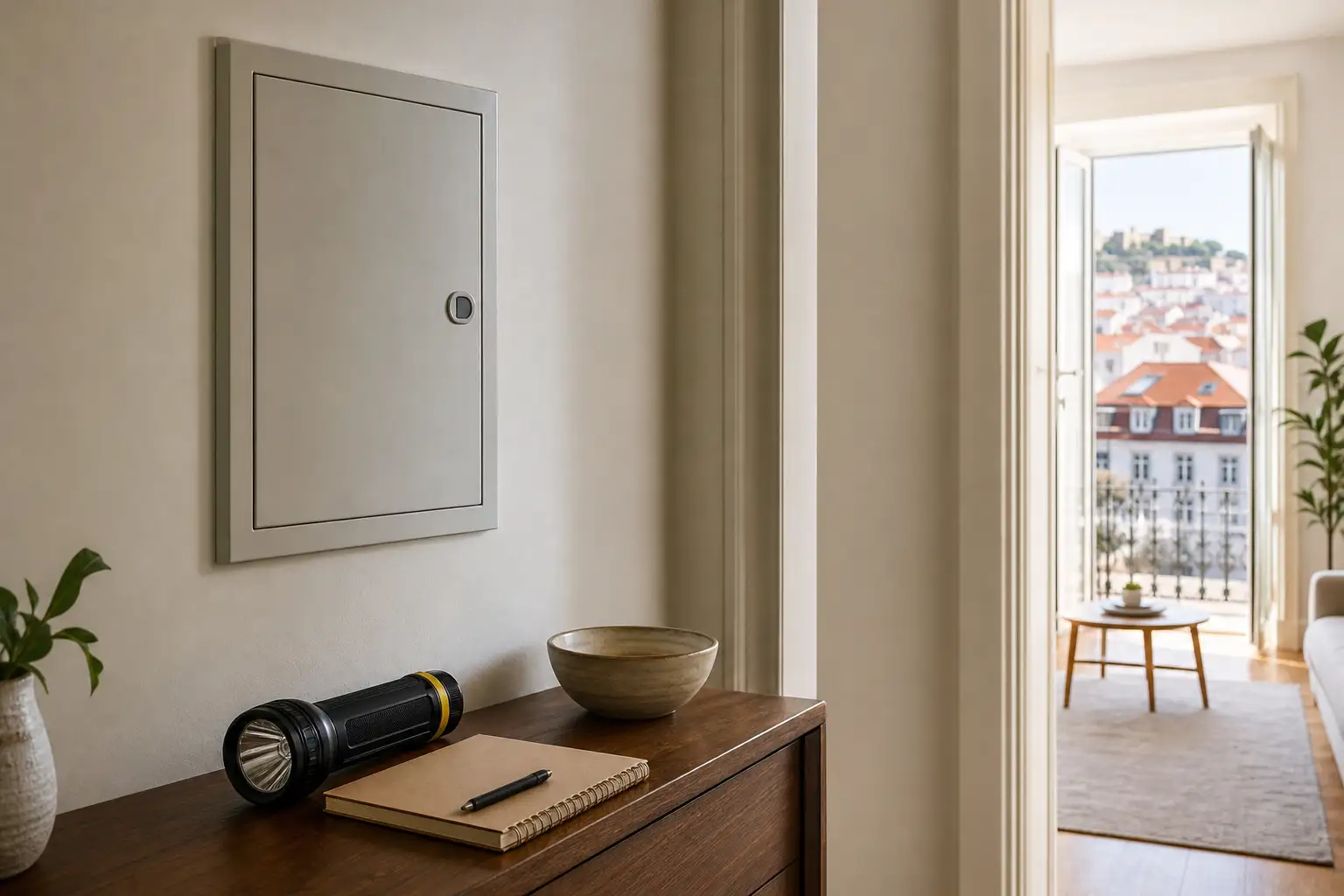
Editorial image; it does not depict an Obra Lisboa project.

Obra Lisboa