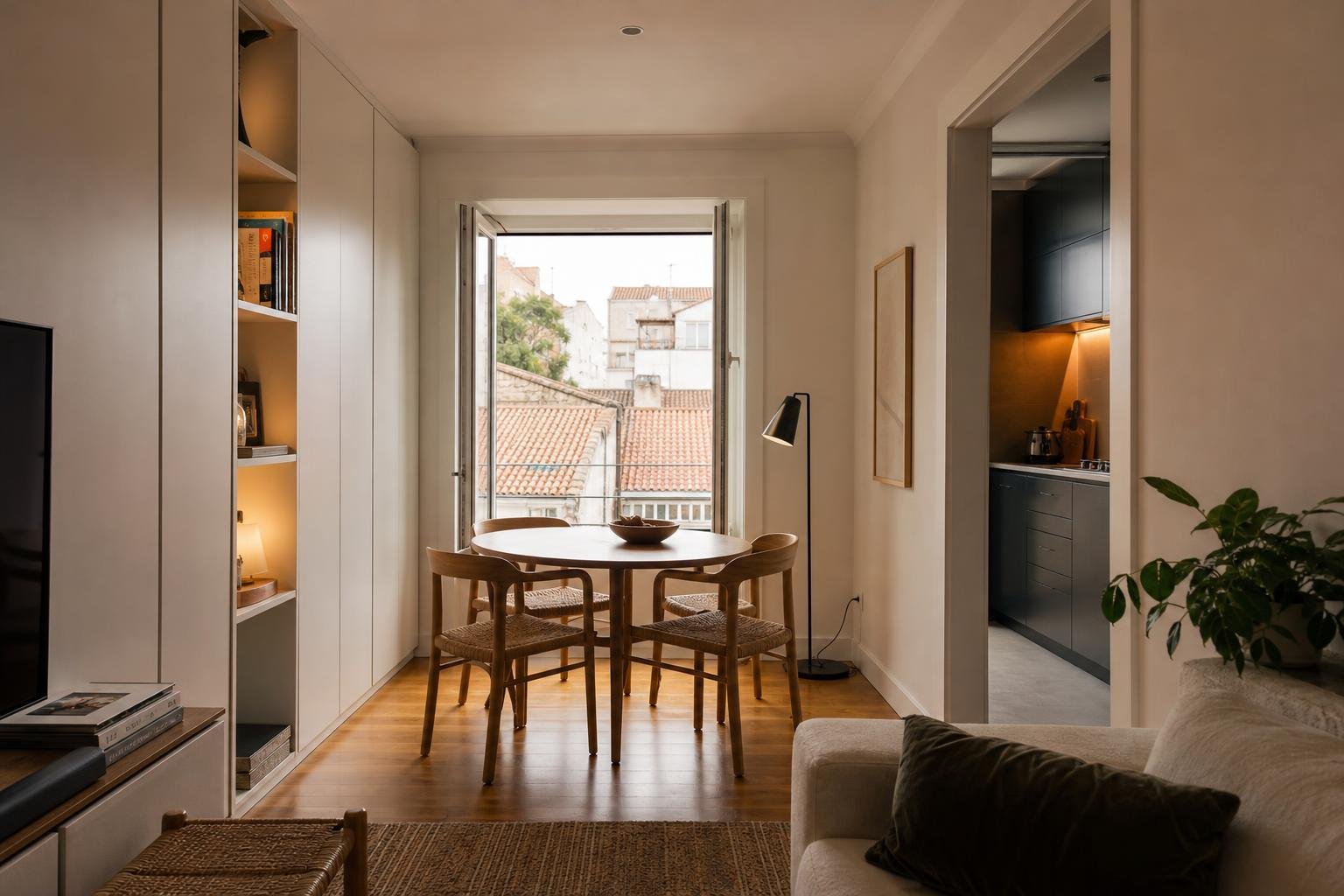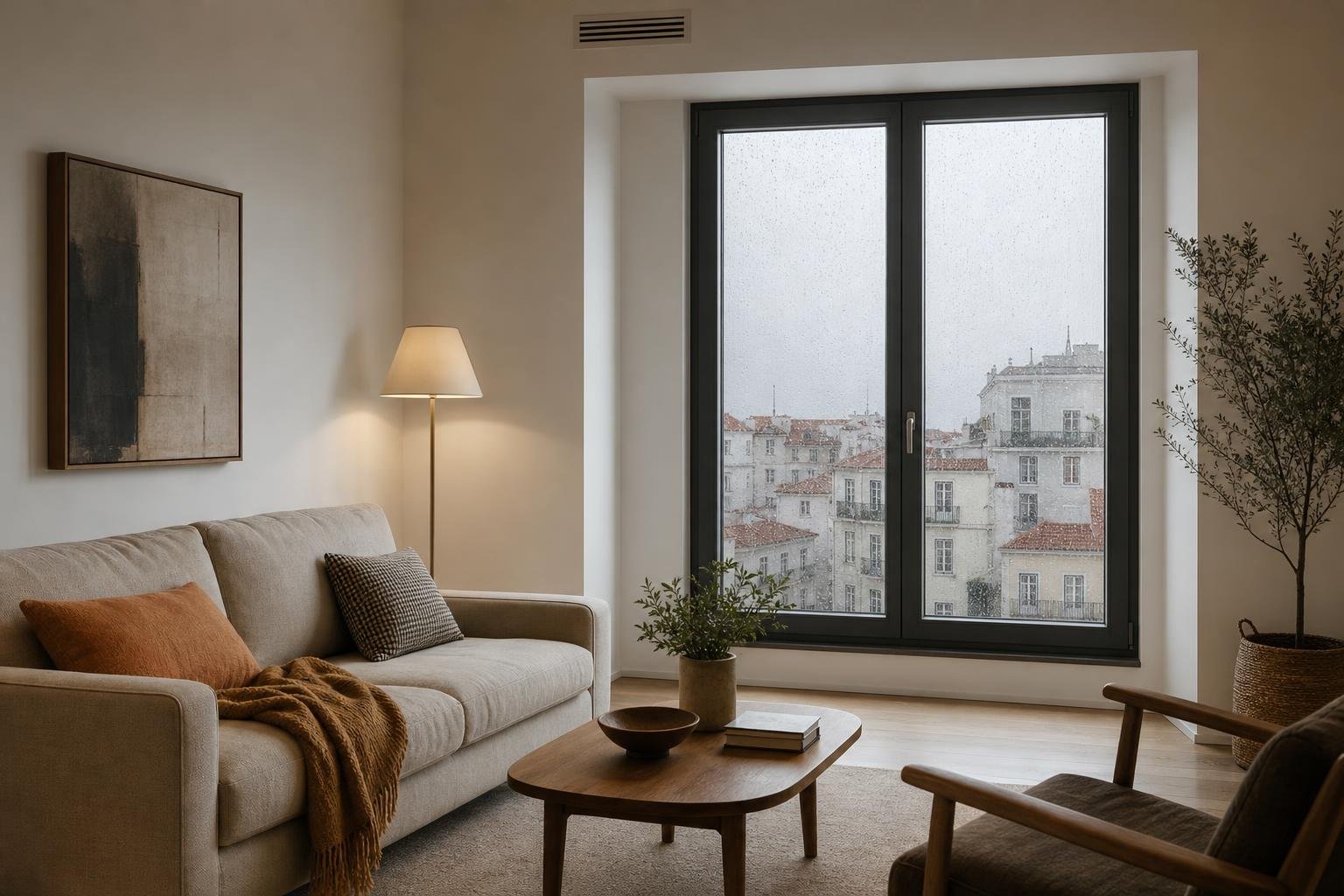
On rainy days, ventilate in short, controlled periods, keeping air entry in bedrooms and living rooms and extraction in the kitchen and bathrooms instead of leaving an exposed window ajar for hours. Cooking, showering and drying laundry still add moisture to the home; sealing the flat completely can concentrate it, while opening the wrong window can wet sills, walls and furniture. In Lisbon, where winter rain often comes with mild temperatures, ventilation, weatherproofing and drainage need to be treated as connected decisions.
Contents
- Why does rain not remove the need to ventilate?
- Which windows should you open, and for how long?
- What should you check on frames, sills and vents?
- How can you remove kitchen and bathroom moisture without wasting heat?
- When are changed habits enough, and when is work needed?
Why does rain not remove the need to ventilate?
Rain calls for care; it does not remove the need for fresh air. Portugal’s Directorate-General of Health recommends ventilating the home daily and while cooking, cleaning, washing or drying laundry indoors, as well as during and after bathing. Those are the activities that add the greatest amount of water vapour to a flat.
If that vapour reaches a cold wall, a corner behind a wardrobe or poorly insulated glass, it can condense. The health authority links excessive moisture to condensation on cold surfaces and mould growth. So when rain keeps the windows shut, the answer is not to place a heater beside a stain or paint over it. Remove moisture where it is generated and check that air has a route out.
The technical rule for renovated homes is straightforward: fresh-air entry should be through principal rooms, with extraction through service rooms. Read the ventilation requirements in the Portuguese regulation published in the Diário da República. In everyday terms, avoid moving humid bathroom air into the bedroom: keep the door closed while showering, use extraction and air the room in a directed way afterwards.
Which windows should you open, and for how long?
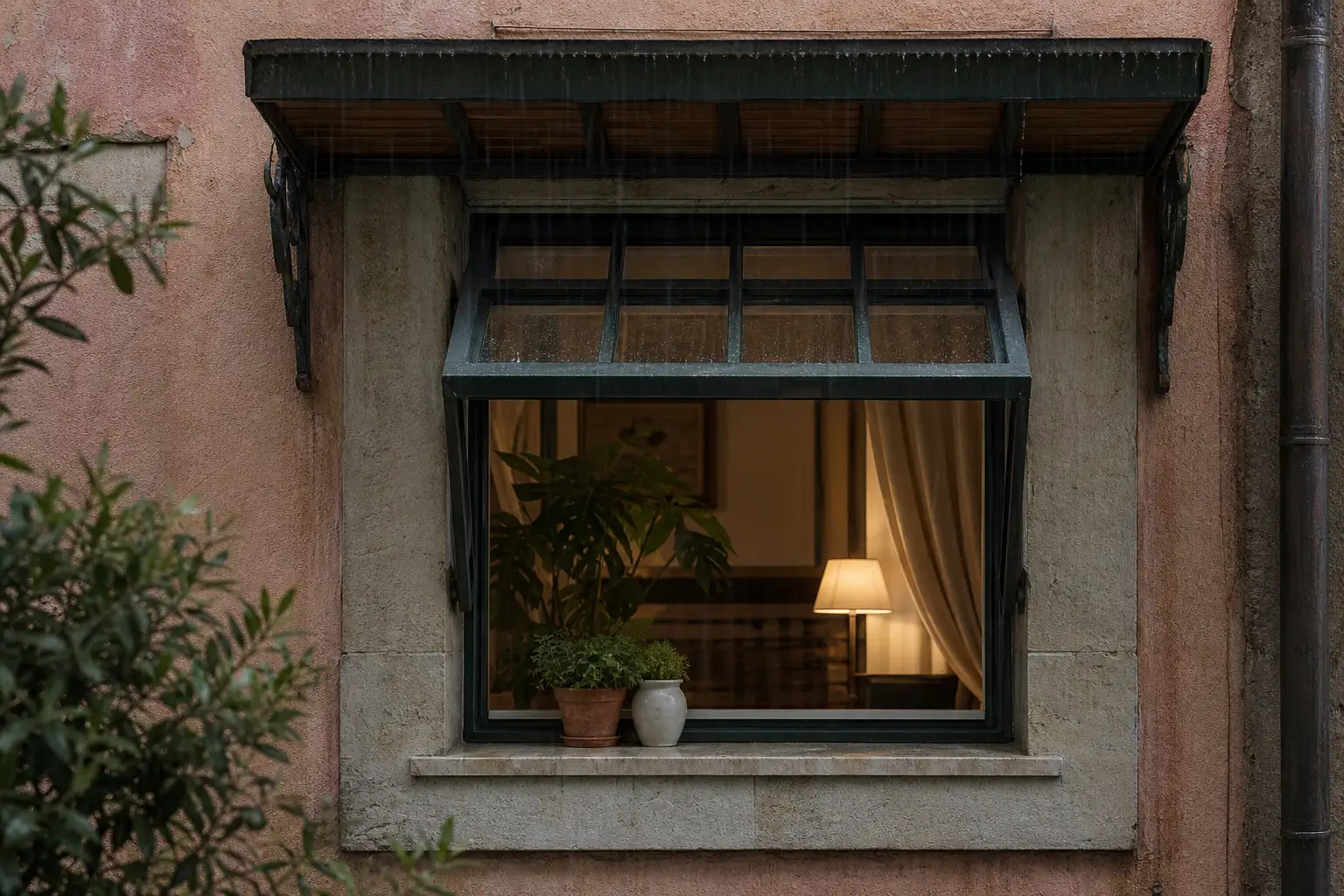
Start with windows that are less exposed to rain and wind. In a flat with two façades, open a protected window in a living room or bedroom and make sure the kitchen or bathroom extraction route is clear. If rain blows directly through the opening, do not persist: an opening that wets the sill, reveal or floor adds water to the very problem you are trying to solve.
Choose two or three short air-change periods during the day, especially after moisture-producing activities, rather than leaving one sash ajar from morning to night. Open fully only when rainfall and wind direction allow it; a small opening is not automatically safe from wind-driven rain. Check that curtains, internal blinds and furniture are not pressed against the opening where they can hold moisture.
The IPMA climate normal for Lisbon/Tapada records a cool, wet winter pattern, which helps explain why the strategy of one permanently open window often fails. The aim is not to chill the home; it is to replace stale indoor air without exposing finishes to rainwater.
- Open the protected window first, not the one receiving slanting rain.
- Use the kitchen and bathroom as air-exit points, not routes into the rest of the home.
- Close the window if water reaches the inner face of the frame or wall.
What should you check on frames, sills and vents?
A rainproof window is not the same as an airtight home. The opening needs sound seals, drainage and hardware; ventilation needs its own planned solution. When those roles are confused, people resort to poor fixes: taping over every vent to stop draughts, or holding a window in a micro-opening during downpours.
Carry out a simple check on a dry day. Clean accessible drainage channels in the window frame without pushing in wire or sealant; check that the sash closes smoothly; look for lifted paint, swollen timber, detached sealant or water marks beneath the opening. A damp internal sill after rain may point to water entering at the window-to-wall junction rather than to inadequate ventilation.
When replacing windows or adding internal insulation, plan the reveals and sills so that cold edges are not left behind. See how window and internal-insulation details prevent cold edges. Glass, orientation and solar control must also work in summer and winter; this guide to low-E glass in Lisbon helps frame that decision.
How can you remove kitchen and bathroom moisture without wasting heat?
In the kitchen, turn on the extractor before generating steam and leave it running for a few minutes once cooking is finished. Use pan lids where appropriate and avoid carrying damp laundry into bedrooms. In the bathroom, keep the door closed during showers, run the existing extractor and dry surfaces that remain wet repeatedly.
If there is a grille, duct or extractor, do not block it to deal with cold, noise or draughts. The Directorate-General of Health notes that bathrooms are a major source of moisture and that ventilation and air-conditioning systems need maintenance and cleaning. Its indoor-air guidance also calls for ventilation during activities that generate vapour.
An air-conditioning unit may heat or cool, but it does not automatically provide outdoor-air supply. Clean filters according to the manufacturer’s maintenance plan and use this safe method for cleaning home air-conditioning filters. If an extractor is noisy but moves no air, odours return or condensation continues despite sound routines, arrange a diagnosis before replacing only the visible grille.
When are changed habits enough, and when is work needed?
Some signs call for building work rather than another dehumidifier: water entering around a window; damaged paint or plaster beside an opening; mould returning in the same place; persistent bathroom odours; or repeated condensation despite properly used extraction and ventilation. After rain, the health authority recommends keeping the home ventilated and watching for leaks and damp, which encourage microorganisms. Read the DGS advice for adverse weather conditions.
During a renovation, record each symptom before walls are closed or windows are ordered: which façade it appears on, whether it follows rain or only occurs in the morning, whether the opening gets direct wind and whether the mark changes after showering. That record distinguishes a drainage or sealing defect from condensation and avoids specifying a blind solution.
ADENE’s energy-saving campaign includes opening windows for efficient ventilation, closing shutters or blinds and addressing gaps and draughts as complementary measures. See the ADENE Save Energy Together action plan. The useful order is: prevent rain ingress, ensure extraction where vapour is made, then improve airtightness and insulation.
Key takeaways
- Do not leave a rain-exposed window open for hours; use short periods and protected openings.
- Moist air should leave through kitchens and bathrooms rather than travel into bedrooms and living rooms.
- A wet sill, damaged paint and recurring mould require a diagnosis of the window, wall and ventilation route.
- Rainproofing and fresh-air renewal are separate systems that must be coordinated.
If your renovation includes windows, insulation or ventilation, collect photographs of the damp areas and note when they appear. Obra Lisboa can help structure those decisions within the design and delivery of the works, before walls are closed or new windows are ordered.
Sources and further reading
- Portuguese regulation published in the Diário da República
- indoor-air guidance
- DGS advice for adverse weather conditions
- IPMA climate normal for Lisbon/Tapada
- ADENE Save Energy Together action plan
Editorial image; it does not depict an Obra Lisboa project.

Obra Lisboa