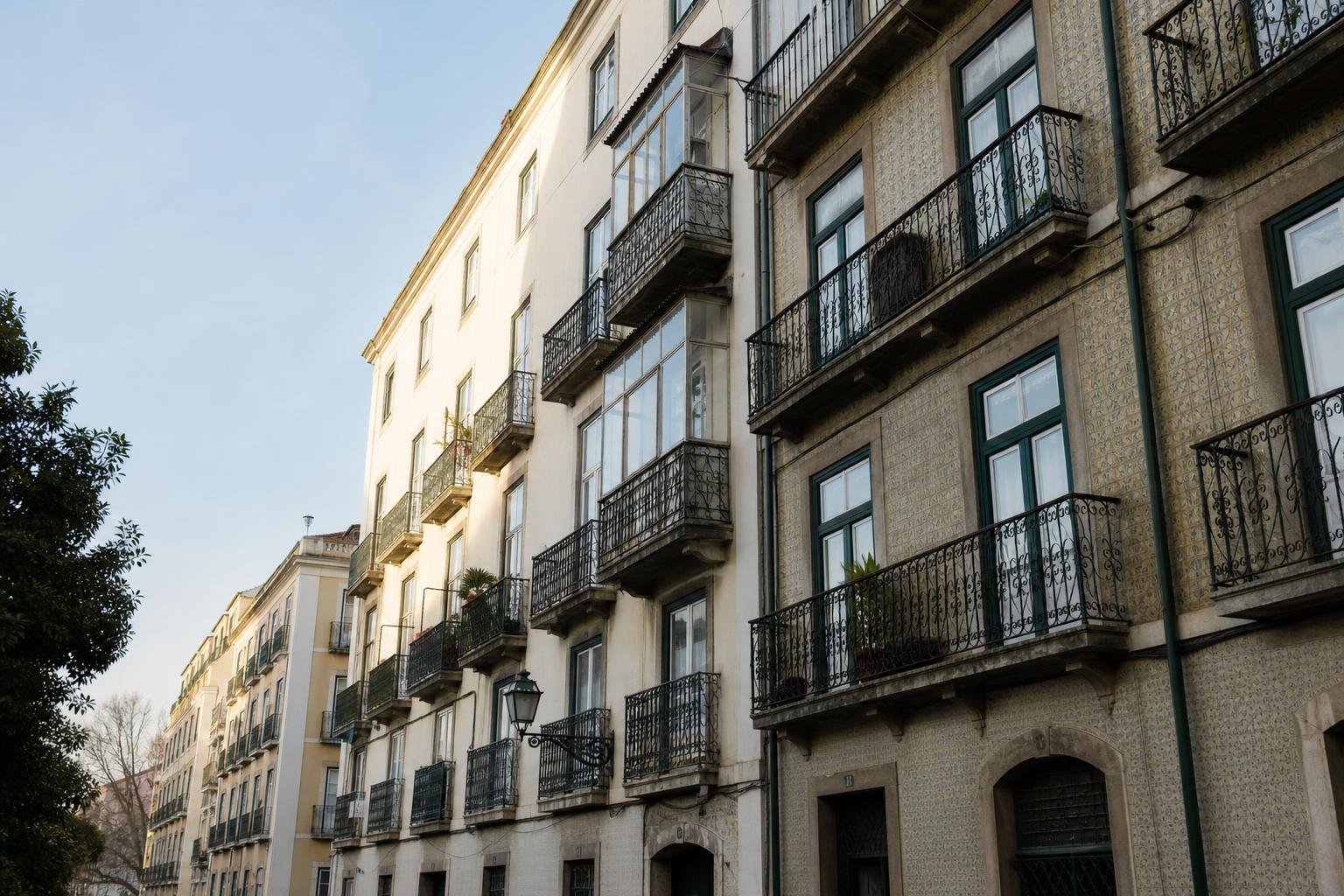
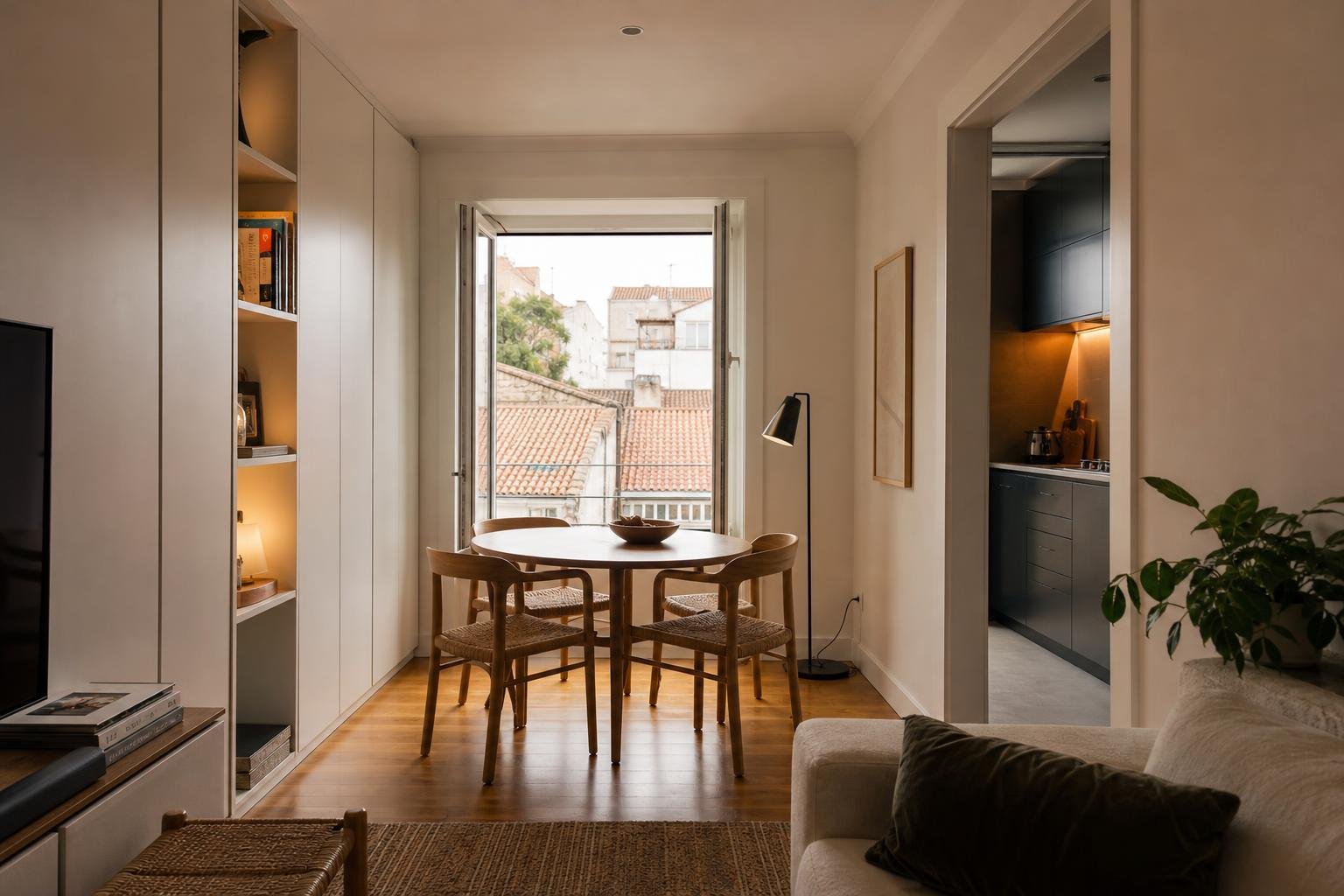
A renovation contingency should be a named budget allowance with clear rules for approval and use, not permission to spend without control. In a Lisbon flat, opening a ceiling, lifting a floor or removing a kitchen can expose worn pipework, uneven substrates or poorly documented earlier alterations. The aim is not to predict every problem. It is to decide in advance who assesses it, who approves it, what evidence is recorded and how each discovery affects cost and programme.
Contents
- Why a contingency does not replace a proper quote
- Which risks deserve their own allowance
- Set the allowance by risk areas, not by an automatic percentage
- Use a simple procedure for discoveries
- Stop the contingency paying for choices and coordination failures
- Close the project with an explained balance and organised records
Why a contingency does not replace a proper quote
A contingency covers residual uncertainty; it cannot repair a vague scope of work. Before assigning any allowance, make sure the quote describes demolition, protection of common areas, substrate preparation, services, materials, finishing details, cleaning and waste removal. A broad line such as “bathroom renovation” leaves far too much open to interpretation.
Start by separating three situations:
- Included work: shown or described in the agreed scope and delivered for the contract price.
- Excluded work: deliberately left out, such as furniture or appliances supplied by the client.
- An unforeseen condition: something revealed only after opening or testing an area that prevents correct or safe work.
This distinction makes a pack for requesting comparable renovation quotes much more useful. If different contractors treat the same unknown in different ways, ask them to state it as an assumption, exclusion or provisional item. Do not allow it to vanish inside a final total that cannot be compared.
Which risks deserve their own allowance
Set money aside for matters that cannot be confirmed without intervention, especially in older buildings or flats that have had partial works in the past. Concealed pipework, redundant electrical connections, uneven floor bases, moisture-affected areas and walls hiding ducts are common examples. A choice that remains undecided — whether to replace all kitchen units, for example — is not an unforeseen condition. It is an outstanding decision and should sit outside the contingency.
The contingency should not quietly fund delays caused by late material choices either. In September 2026, Statistics Portugal estimated a 7.4% year-on-year increase in new-housing construction costs, with materials up 7.2% and labour up 7.7%. These figures do not set the price of an individual renovation, but they support prompt decisions and ordering. Check the latest Statistics Portugal construction-cost data before assuming an older quotation remains valid.
In Lisbon, include access risks as well: a small lift, narrow staircases, delivery hours, protection for the entrance hall and limited routes for removing waste. Once the site is known, these are foreseeable costs and should not arrive as a late surprise.
| Situation | How to treat it | Required record |
|---|---|---|
| Tile stated in the finishes schedule | Included in the contract price | Approved specification or sample |
| Leak found when a cabinet is removed | Assess as an unforeseen condition | Photos, diagnosis and proposal |
| Finish changed at the client’s request | Requested variation | Price, programme effect and written approval |
| Delay caused by late tap selection | Outstanding client decision | Decision deadline and order confirmation |
Set the allowance by risk areas, not by an automatic percentage
There is no universal percentage that makes an uncertain project safe. A limited project involving paint, floating flooring and furniture carries different risks from one that moves a kitchen, renews services and removes old finishes. Rather than starting with a round number, list the areas that have not yet been seen: stacks, shower bases, floors beneath tiles, the electrical board, suspended ceilings, walls by façades or areas with staining.
Ask the contractor to identify what can be checked before appointment and what will only become known on site. The contingency can then be held as a client allowance, separate from the contract price, with its own financial cap. A discovery is therefore not treated as automatic permission to spend the entire available amount.
Where works require prior communication, design documents or technical responsibility, the necessary paperwork and appointments should be in place before work begins. Lisbon City Council states that works under prior communication can only begin after the procedure has been correctly submitted and the required fees have been paid. Review the requirements for building-work prior communication before mistaking an on-site discovery for a planning change.

Use a simple procedure for discoveries
The key moment is when a team finds something requiring a decision. “Do whatever is needed” is not a useful answer, and neither is leaving a workfront idle while messages circulate. Agree a short sequence before work starts:
- Stop only the affected workfront and protect the area.
- Record photos, location, date and the consequence of doing nothing.
- Receive a proposal separating labour, materials, removals and added time.
- Confirm in writing whether the work is necessary, whether alternatives exist and which option is chosen.
- Update the contingency balance and the programme.
A request should state, for example, whether the solution requires waterproofing to be redone, a delivery to move or a substrate to dry. Avoid approving a number in a message with no description. Handover records and evidence are far easier to organise when changes have left a clear trail from the day they were approved.
Stop the contingency paying for choices and coordination failures
Some costs look unforeseen because they arise halfway through the work, although they began with an avoidable decision. Examples include selecting a WC after its service box has been closed, ordering a door before confirming the finished opening, or accepting a worktop without checking sockets and water points. These should be treated as scope changes or coordination errors, as appropriate, rather than silently consuming the contingency.
Hold a short check before closing walls, levelling floors or ordering made-to-measure pieces. Confirm final dimensions, approved models, tap heights, socket positions, extract routes, valve access and coordination between trades. Where work affects showers, balconies or other water-sensitive areas, also confirm the sequence for membranes and finishing details. Waterproofing a balcony before replacing the floor explains why this decision should not be left until after the finish has been installed.
The same discipline reduces programme pressure, which matters when team availability still requires advance planning. See also how to protect a renovation programme as construction labour is scheduled in 2026. Do not use the contingency to compensate for an artificially low initial price. If the proposal omits necessary preparation, protection, transport or finishing work, correct the scope before appointing the contractor.
Close the project with an explained balance and organised records
At the end, ask for a contingency summary: starting amount, each approval, approved value, amount actually invoiced and remaining balance. An unused allowance is not a planning failure; it is money that did not need to be spent. If a solution costs less than expected, record the final amount instead of automatically converting the difference into another upgrade.
Keep every approval with photographs, invoices, technical sheets and, where relevant, updated drawings. This makes handover and future repairs easier, particularly when changes are hidden behind finishes or ceilings. For private works contracts over the applicable legal threshold, IMPIC notes that the contract must be in writing and include items such as scope, value, duration and payment arrangements; review its guidance on private construction contracts.
Finally, compare what happened with the original risk list. If most spending came from an area that could have been inspected earlier, make that inspection a compulsory check on the next project.
Key takeaways
- Keep genuine unforeseen conditions separate from included work, pending choices and coordination failures.
- Approve every discovery with a description, photographs, price, programme impact and written confirmation.
- Hold the contingency outside the base contract price and update its balance after each approval.
- An unused contingency is a positive result, not spare money to spend at the end.
Before appointing a contractor, ask for a clear scope, visible exclusions and a written process for newly discovered work. If you are planning a renovation in Lisbon, speak with Obra Lisboa about defining the scope and organising the project.
Sources and further reading
- guidance on private construction contracts
- Statistics Portugal construction-cost data
- building-work prior communication
Editorial image; it does not depict an Obra Lisboa project.

Obra Lisboa