In Lisbon, changing a building’s use without construction work may proceed through a time-limited prior notice, but only after confirming that the intended use is permitted and that the unit is suitable for it. The 20-day rule is not an automatic licence and does not replace proper due diligence. Before signing a purchase, agreeing a lease or ordering fit-out items, check the existing title, urban setting, building rules and the evidence a qualified professional will need to declare.
Contents
- What is current and why it matters
- When a time-limited prior notice may be the right route
- Planning checks to complete before signing a contract
- The professional responsibility statement is substantive
- Mistakes that delay opening or weaken a purchase
- A safe sequence before committing significant costs
What is current and why it matters
Lisbon City Council updated this service information on 3 June 2026. For a change of use without a prior urban development operation, the stated route is the time-limited prior notice for a change of use. The submission must demonstrate two matters: that the proposed use complies with the applicable rules, and that the building or autonomous unit is suitable for that purpose.
Once a complete application is submitted, the intended use may begin after 20 days unless the municipality orders an inspection during that period because the professional responsibility statement is incomplete or there are serious indications that the property is unsuitable. The deadline helps with planning, but it should never be treated as commercial certainty before planning feasibility has been checked.
This route matters to owners considering a different function for an existing unit without changing the structure, façade or internal layout in a way that triggers planning control. It also matters to buyers: a space marketed for a proposed activity may still hold a title for a different use.
When a time-limited prior notice may be the right route
Start with the correct question: is this solely a change of use, or does it require works that alter relevant parts of the property? Where there is no prior urban development operation, the time-limited prior notice may be the appropriate route. Where the plan includes construction, external alteration, extension or other work under the RJUE, a different procedure may apply. The municipal page on building works subject to prior notice explains that certain works depend on the applicable subdivision, planning framework or execution unit.
Do not decide from the apparent scale of the intervention. Removing a partition, installing extraction, adapting toilets, changing access or increasing electrical capacity can expose technical requirements that no longer fit within a “no works” change of use. Ask the professional to distinguish in writing between the use change, the building works and any specialist design requirements.
- Prudent example: a unit that is already physically suitable, needs no building work, but requires its registered use to change.
- Reason to pause: the operation depends on a new flue, façade alteration, structural strengthening or a layout change affecting safety or accessibility.
| Situation | Practical reading | Initial decision |
|---|---|---|
| No works and a permitted use | It may fit the time-limited prior notice route | Prepare technical and document checks |
| Works subject to planning control | A change of use does not settle the works procedure | Define the applicable planning route first |
| Proposed use is incompatible with the area or building | The deadline does not override planning and municipal rules | Review the deal or obtain technical advice before investing |
Planning checks to complete before signing a contract
The municipal plan and local rules do not treat all buildings in the same way. The city’s guidance identifies residential, tertiary, tourism, industrial, logistics, equipment and agricultural uses, and explains that a change depends on the urban setting, the intended change and the uses of other units. Specific restrictions apply in areas including Alfama/Colina do Castelo, Bairro Alto/Bica, Madragoa and Mouraria for new establishments.
Read the municipal rule published in the Diário da República on compatible uses. It links a change of use to the municipal plan, the building’s function, parking, access and effects on the surrounding area. Noise, fumes, odours, dust, waste, deliveries and traffic are not details to leave until after completion.
Before paying a deposit, prepare a short file: the current use title, land registry and horizontal-property records, available plans, the exact activity proposed, hours, ventilation needs, waste arrangements, deliveries and accessibility. If the decision affects common parts or the façade, add condominium resolutions. To organise this work, see which condominium documents to request before renovating.

The professional responsibility statement is substantive
The submission includes a professional responsibility statement signed by a legally qualified professional who may author a project. It declares both compliance of the proposed use and the property’s suitability for that purpose. The professional therefore needs complete information; an outdated plan and a broad description such as “services” are rarely enough.
Provide a clear operational brief: the activity to be carried out, usual occupancy, deliveries, equipment, ventilation, sanitary arrangements and any public access. This reduces the risk of a mismatch between the advertised use, everyday operation and the documents submitted.
If changes become necessary during the intervention, do not assume they can be left undocumented until the end. The city explains that certain changes made during construction require an amendment to a licence or prior notice, depending on the case. Record decisions, drawings and approvals in a digital renovation folder, particularly when the change of use includes small fit-out works.
Mistakes that delay opening or weaken a purchase
The most expensive mistake is treating the prior notice as proof that any deal can proceed. The 20 days run after submission, not before the information has been gathered, the professional has prepared the file or missing documents have been corrected. A unit may look suitable for an office, small shop or service business yet fail on compatible use, its existing title, building operation or requirements attached to the activity.
- Signing an operating agreement before checking the current use and applicable restrictions.
- Pricing works without separating exempt work, controlled work and adaptations required by the activity.
- Ignoring noise, extraction, deliveries, waste and customer circulation as if they were only operational issues.
- Assuming condominium approval replaces the municipal procedure, or the reverse.
- Keeping scattered versions of plans and statements without one identified final version.
In a residential building, assess the effect on common areas as well: access, lifts, staircases, doors, delivery times and protection of finishes. A legally possible option can still be impractical if its logistics do not fit the building.
A safe sequence before committing significant costs
Use this order before making a meaningful financial commitment:
- Confirm the use shown on the title and the unit’s records.
- Describe the real activity without simplifying it to fit a generic label.
- Obtain a technical reading of the municipal plan, urban setting and the property’s suitability.
- Check condominium rules, access, existing services and any works required.
- Define the applicable procedure before fixing the purchase, rent or construction timetable.
- Submit the application and keep a programme that allows for the 20-day period and the possibility of an inspection.
This sequence is especially valuable when buying or renting for a specific use: the property price should not absorb a planning risk that has not been measured. If work is needed, request quotes with a clear scope; this guide to requesting comparable renovation quotes can help structure the brief.
Key takeaways
- The 20 days start after submission; they do not replace due diligence on the property.
- Compatibility depends on the proposed use, planning rules, urban setting and building operation.
- Keep the change of use separate from any works that may require another procedure.
- Before buying or leasing, verify the current title and the real operating conditions.
If a change of use will include an internal fit-out, first gather the title, plans and a clear description of the activity. Obra Lisboa can help structure a renovation proposal with a defined scope, phases and technical decisions before work starts.
Sources and further reading
- time-limited prior notice for a change of use
- building works subject to prior notice
- changes made during construction
- Diário da República on compatible uses
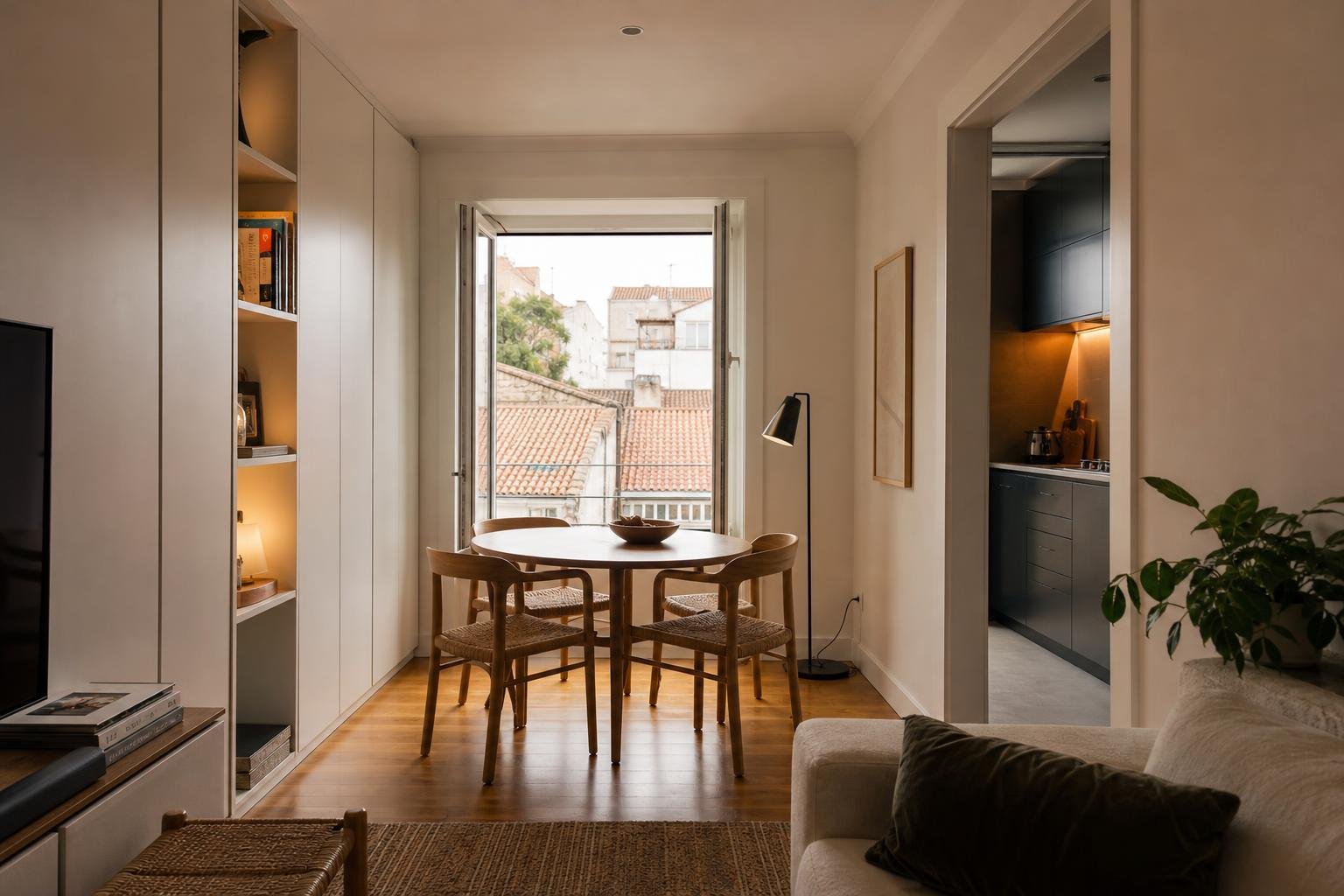
Editorial image; it does not depict an Obra Lisboa project.

Obra Lisboa