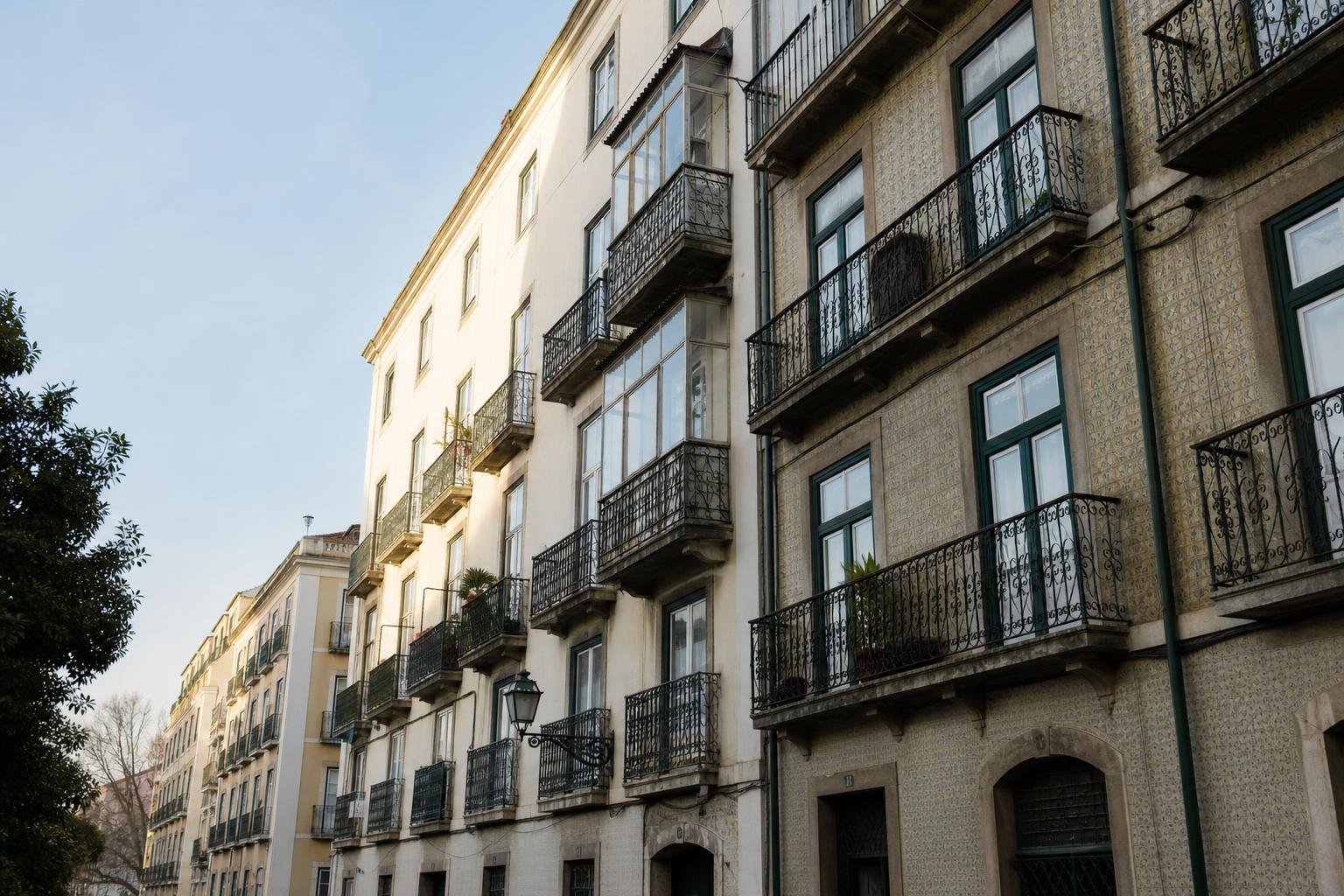
A low-level grille in a façade or beside the pavement may be the only air route for a basement, storage room or garage; covering it without understanding that route can worsen damp, odours and safety risks. In Lisbon, these details are common in older buildings, converted shops, technical basements and parking areas. A renovation may call for a neater or more robust finish, but first establish what room the opening serves, how air moves through it and whether the façade, condominium or public pavement is affected.
Contents
- What do these grilles actually ventilate?
- Why basements need closer attention
- How to tell whether a grille can be replaced
- Rainwater, leaves and litter: the detail that changes the outcome
- Façade, condominium and pavement: who needs to decide?
- When to stop and call a professional
What do these grilles actually ventilate?
Not every grille near ground level does the same job. Some bring air to a basement, storage room or garage; others protect an intake or discharge point for a mechanical system. There may also be openings connected to technical rooms, light wells or chambers where water must be kept away from the façade.
The underlying principle is straightforward: air needs a route. If it enters through one opening with nowhere to leave, the room is likely to become stale; if an extract grille is covered, the installation may lose capacity. Portugal’s health authority notes that humidity, temperature, occupancy, cleaning products and activities such as cooking all affect indoor air quality. Read the DGS guidance on indoor air before treating a ventilation opening as a purely decorative detail.
During the first site visit, record the position of every grille and ask: what room lies behind it? Is there a duct? Is there a fan? Can you smell mould, fuel or sewage? This basic reading prevents painting or cladding work from interrupting an unseen but necessary function.
Why basements need closer attention
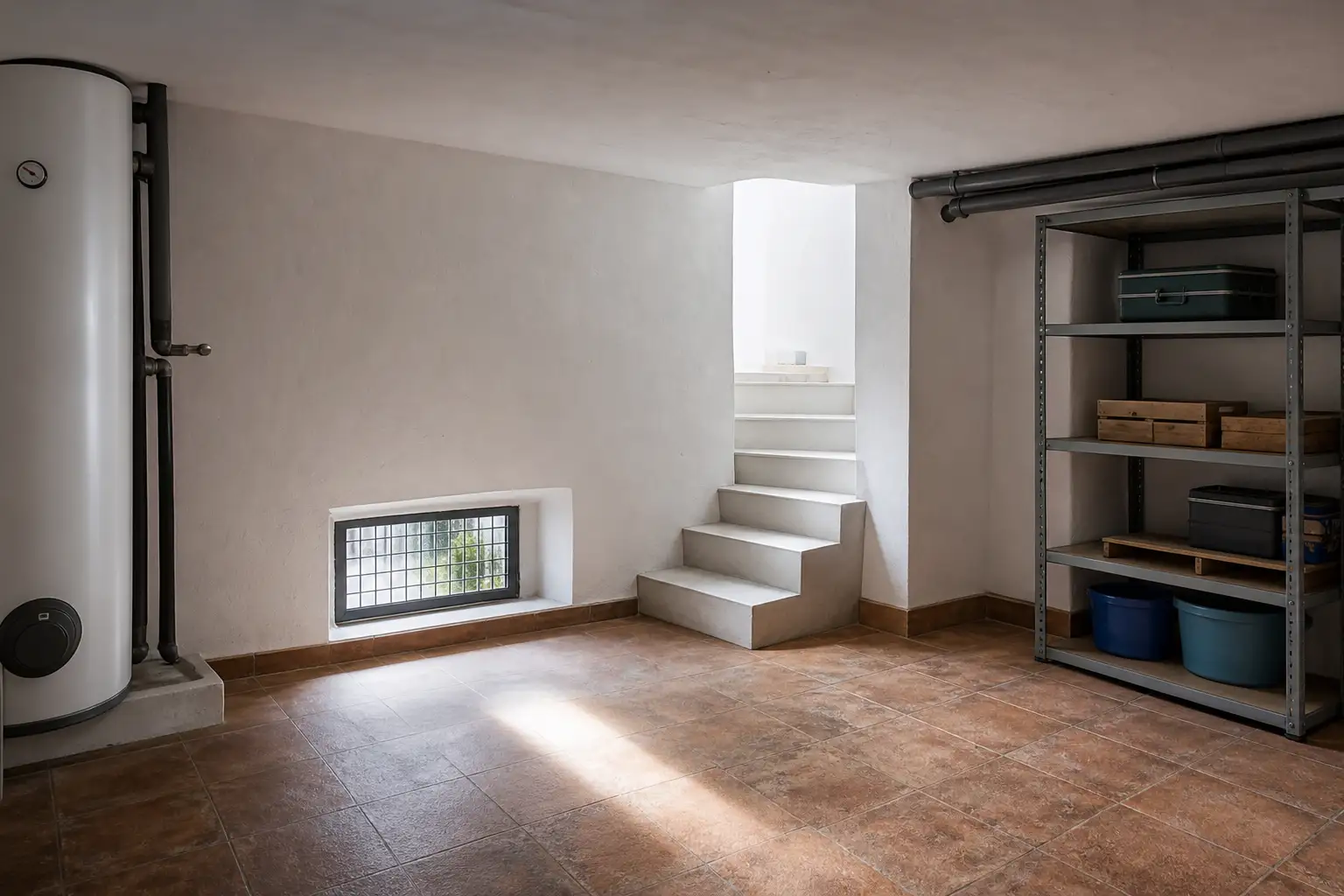
A basement sits below street level or against the ground. It receives less daylight, dries more slowly and can accumulate water vapour, dust and odours. Where it is used as a garage, storage area or technical room, there may also be particular sources of pollution and heat. Ventilation does not cure a water leak, but a correctly designed system helps remove humid or contaminated air.
Lisbon’s Municipal Urbanisation and Building Regulation frames local rules alongside national requirements. Where works alter uses, rooms or building services, do not assume an old opening is redundant simply because it looks dated. Consult the published Lisbon municipal building regulation and obtain advice from a qualified professional when the work affects a façade, basement or ventilation system.
It is equally important to separate symptoms. Condensation on walls, water entering after rain and a constant sewer smell have different causes. Closing a grille may stop a draught, but it does not remove the source of moisture or repair a failed trap or waterproofing defect.
How to tell whether a grille can be replaced
Replacement is different from removal. A corroded, noisy or litter-prone grille can be changed for one with suitable mesh, angled blades, a durable frame and cleaning access. The design must retain the free area needed for airflow and avoid creating a point where rainwater collects against the wall.
- Photograph the opening inside and out before removing anything.
- Measure the opening and locate nearby ducts, cables, pipes and equipment.
- Check whether the room has another air inlet and an effective outlet.
- Observe its behaviour after rain and during periods of heavier use.
- Obtain technical confirmation before reducing the free area or moving the opening.
When work includes mechanical ventilation, smoke extraction or air conditioning, the city treats these as building-services design matters. Lisbon City Council’s page on specialist design projects lists ventilation, smoke extraction and climate-control systems among the technical specifications to coordinate with the works.
Rainwater, leaves and litter: the detail that changes the outcome
A grille at pavement level faces another challenge: rainwater, leaves, cigarette ends and dust. Covering it with a solid plate may appear to be a quick defence, yet it can obstruct both airflow and drainage. Very fine mesh also clogs quickly; overly open mesh lets in debris and small animals.
The solution needs to separate three functions: prevent direct water entry, allow the intended airflow and permit cleaning. A small canopy, inclined blades and an internal chamber with a downward route may help, provided they do not reduce ventilation or form a water pocket. If there is a new threshold, wall finish or paving layer nearby, coordinate slopes and junctions with the way rain actually runs.
This is closely related to the façade details covered in Obra Lisboa’s guide to drip edges and drip grooves: water should be led away rather than returned to the wall face. Never push mortar, expanding foam or sealant into an opening whose purpose has not been identified.
Façade, condominium and pavement: who needs to decide?
A grille visible in the façade may affect a common building element even when it serves one particular unit. Before changing its material, colour, size or position, check the horizontal-property title, condominium rules and any previous decisions affecting the façade. In protected buildings or streets with a sensitive urban character, visual compatibility carries additional weight.
If the work requires scaffolding, hoarding, material storage or activities that occupy the pavement, site logistics must also be planned. Lisbon City Council regulates public-space occupation associated with building work and site equipment; this does not turn every grille replacement into a large project, but it prevents improvised obstruction when work reaches the public walkway.
Prepare that discussion with photographs, measurements, existing drawings and building records. Obra Lisboa’s guide on which condominium documents to request before renovating helps organise what should be checked before materials are ordered.
When to stop and call a professional
Cleaning the outer face of a grille can be reasonable; altering the system is another matter. Stop and seek an assessment if there is a smell of gas or fuel, a fan that has stopped working, signs of water backflow, structural corrosion, exposed cables, persistent staining, recurring mould, or an opening connected to a garage, boiler, plant room or drainage system.
Do not use foam, silicone or a fixed cover to “solve” a draught or noise problem in a basement without finding the source. The DGS advises people not to block grilles or ventilators and stresses the need for ventilation during activities that add humidity and pollutants. See the DGS general recommendations for indoor air.
The practical next step is a detail designed for that specific opening: a defined purpose, preserved airflow area, protection from water and litter, façade-compatible fixings and future cleaning access. It is a small component, yet it can determine whether a basement remains dry, usable and safe.
Key takeaways
- Do not cover a low-level grille until you know which room, duct or piece of equipment it serves.
- Separate ventilation, drainage and water-ingress problems: one opening may be involved in more than one function.
- If replacing a grille, retain airflow and provide cleaning access without reopening the façade.
- Visible façade and pavement changes should be coordinated with the condominium, design team and site logistics.
If your renovation involves a basement, storage room, garage or façade alterations, speak with Obra Lisboa before closing openings or ordering grilles. A well-prepared technical visit can bring ventilation, drainage and façade junctions into one practical work plan.
Sources and further reading
- published Lisbon municipal building regulation
- DGS guidance on indoor air
- DGS general recommendations for indoor air
- specialist design projects
Editorial image; it does not depict an Obra Lisboa project.

Obra Lisboa