A portable heater should be plugged directly into a suitable wall socket, set on a firm clear surface, and switched off before you leave or go to sleep. That rule prevents many winter hazards at home: overloaded electrics, fabrics placed too close, burns and improvised heating. Before buying or reusing a stored appliance, check the socket, cable, clear space around it and how the room is ventilated.
Contents
- What should you check before switching a heater on?
- Wall socket, extension lead or power strip?
- Where should it go in a living room or bedroom?
- Why are an oven, cooker or brazier unsafe ways to heat a home?
- How do you choose one without treating excess power as comfort?
- When should a portable heater stop being the temporary answer?
What should you check before switching a heater on?
The risk is rarely in the appliance alone. It comes from the combination of power demand, electrical installation, cable, furnishings and everyday habits. Portugal’s Directorate-General of Health advises switching heating systems off before sleeping or leaving home, while maintaining adequate ventilation even when you are trying to retain warmth. Read the DGS winter safety guidance before relying on a heater in an enclosed room.
Start by moving away clothes, curtains, blankets, baskets, packaging and low furniture. A heater beside a sofa may seem harmless for a few minutes, yet heat can build up in fabric and restrict the airflow expected by the manufacturer. Do not dry clothes over the heater or place it on a chair to direct heat towards a bed.
Where there are children, pets or a narrow route through the room, choose a position outside the usual path. Keep the cable visible and never run it beneath rugs, doors or furniture. DGS lists loose electrical cords among household hazards to remove, alongside good lighting and clear routes, in its guidance on accident prevention.
Wall socket, extension lead or power strip?
For a portable heater, the prudent choice is a sound wall socket. Coiled extension leads, adaptors and power strips add connections and may overheat before the problem is obvious. This matters particularly in older flats, where a socket that appears to work may have worn contacts or deteriorated connections.
Do not put the heater on the same power strip as a television, router, chargers or vacuum cleaner. If a room has only one poorly placed socket, the lasting answer is to review the circuit and plan a suitable outlet during future work; it is not to add more adaptors. See also when extension leads and power strips stop being safe.
Switch the appliance off and stop using it if you notice any of the following:
- a plug or socket that feels hot;
- a smell of plastic, dark marks or crackling;
- the circuit breaker tripping repeatedly;
- a cracked, crushed or tape-repaired cable;
- a plug that sits loosely in the socket.
Do not try to solve these warnings by forcing the plug, changing only the socket cover or using another adaptor. An electrician should assess the socket, circuit and protection before a high-demand appliance is used again.
| Situation | Safe decision | Why |
|---|---|---|
| Firm wall socket with no sign of heating | May be used, following the manual | Avoids unnecessary intermediate connections |
| Shared power strip or extension lead | Do not use it for the heater | Demand may overheat contacts and cables |
| Hot, discoloured or smelly socket | Switch off and arrange an inspection | May indicate a poor connection or fault |
| Cable under a rug or door | Reposition the appliance | Avoids concealed damage and trip hazards |
Where should it go in a living room or bedroom?
Place the heater on a level, rigid and dry floor where it cannot tip over. Keep clear the zone specified by the manufacturer; if the manual has been lost, take a cautious approach and keep the appliance away from fabrics, furniture and walls. A small living room will be warmer if you deal with door gaps, window seals and draughts rather than putting the heater close to a curtain or leaving it hidden behind furniture.
In a bedroom, warm the room before going to bed and switch the appliance off before sleeping. DGS specifically advises warming a bedroom before bedtime if you cannot heat the whole home. Do not leave a fan heater directed at a bed, cot or desk where cables and papers can fall in front of the air outlet.
Do not improvise in a bathroom. Water, steam and sockets require specific decisions about zones, equipment and electrical protection. A standard portable heater should not be taken beside a shower or basin. During a renovation, it is better to plan heating and equipment that suit the room.

Why are an oven, cooker or brazier unsafe ways to heat a home?
An oven and cooker are not space-heating systems. DGS expressly says that gas cookers, ovens and charcoal braziers should not be used to heat a home. Combustion equipment used without suitable ventilation and flue arrangements can release carbon monoxide, a toxic gas that cannot be seen or smelled.
Fireplaces, stoves and gas appliances need correct ventilation, maintenance and use in line with the installed equipment. Portuguese fire-safety rules set specific conditions for autonomous heating appliances and their fuels; consult the regulation published in the Diário da República where gas or a fixed installation is involved.
If someone develops a headache, dizziness, nausea, confusion or unusual drowsiness in a room with combustion equipment, stop using it, move into fresh air and seek urgent help. Do not remain in the room to see whether the symptoms improve.
How do you choose one without treating excess power as comfort?
Start with the room and the pattern of use: an occupied living room, a bedroom being warmed before bed, and a desk beside a cold wall call for different solutions. Energy labelling for local space heaters distinguishes direct heaters, which release heat into the room air, from indirect systems that transfer heat to a fluid in a closed circuit. The ADENE energy-label guide explains these categories.
A more powerful appliance will not fix a poorly sealed window, a draughty door, or persistent damp. Before increasing power, check whether cold air enters through a window frame, whether condensation forms on the glass, or whether the room remains closed for hours. For wet days, see how to ventilate a Lisbon flat when it rains without turning fresh-air renewal into a continual cold draught.
Use the appliance thermostat, where provided, to limit running time. Close shutters in the evening, keep curtains away from radiators or heaters, and focus heating on occupied rooms. These simple measures reduce the need to leave a heat source running for hours.
When should a portable heater stop being the temporary answer?
A portable heater is for occasional, supervised use; it should not compensate for faulty electrics, leaks, lack of insulation or a room that never reaches basic comfort. If a circuit breaker trips, a socket gets hot, or the home relies on extension leads every winter, the issue needs a technical diagnosis.
It is also time to review the wider strategy when mould recurs, condensation is heavy or ventilation seems impossible without losing all the heat. Overheating a damp home can hide discomfort for a few hours without dealing with the cause. A well-planned intervention can combine electrical improvements, sealing, ventilation and insulation in the right locations.
Before a renovation, record existing sockets, the planned equipment loads, dedicated circuits and the condition of walls near windows. Where work involves several trades and teams, read about safety and health planning for an apartment renovation to organise risks before work starts.
Key takeaways
- Plug a portable heater directly into a firm, sound wall socket.
- Keep cables, fabrics, laundry and walking routes clear of the appliance.
- Switch it off before sleeping, leaving home or leaving the room unattended.
- Hot sockets, burning smells or tripping breakers mean stop and arrange a technical check.
If winter comfort depends on extension leads, hot sockets or heaters in several rooms, include a review of circuits and ventilation options in the renovation scope. Obra Lisboa can help structure a residential intervention around clear technical decisions before walls are closed or work is appointed.
Sources and further reading
- DGS winter safety guidance
- accident prevention
- ADENE energy-label guide
- regulation published in the Diário da República
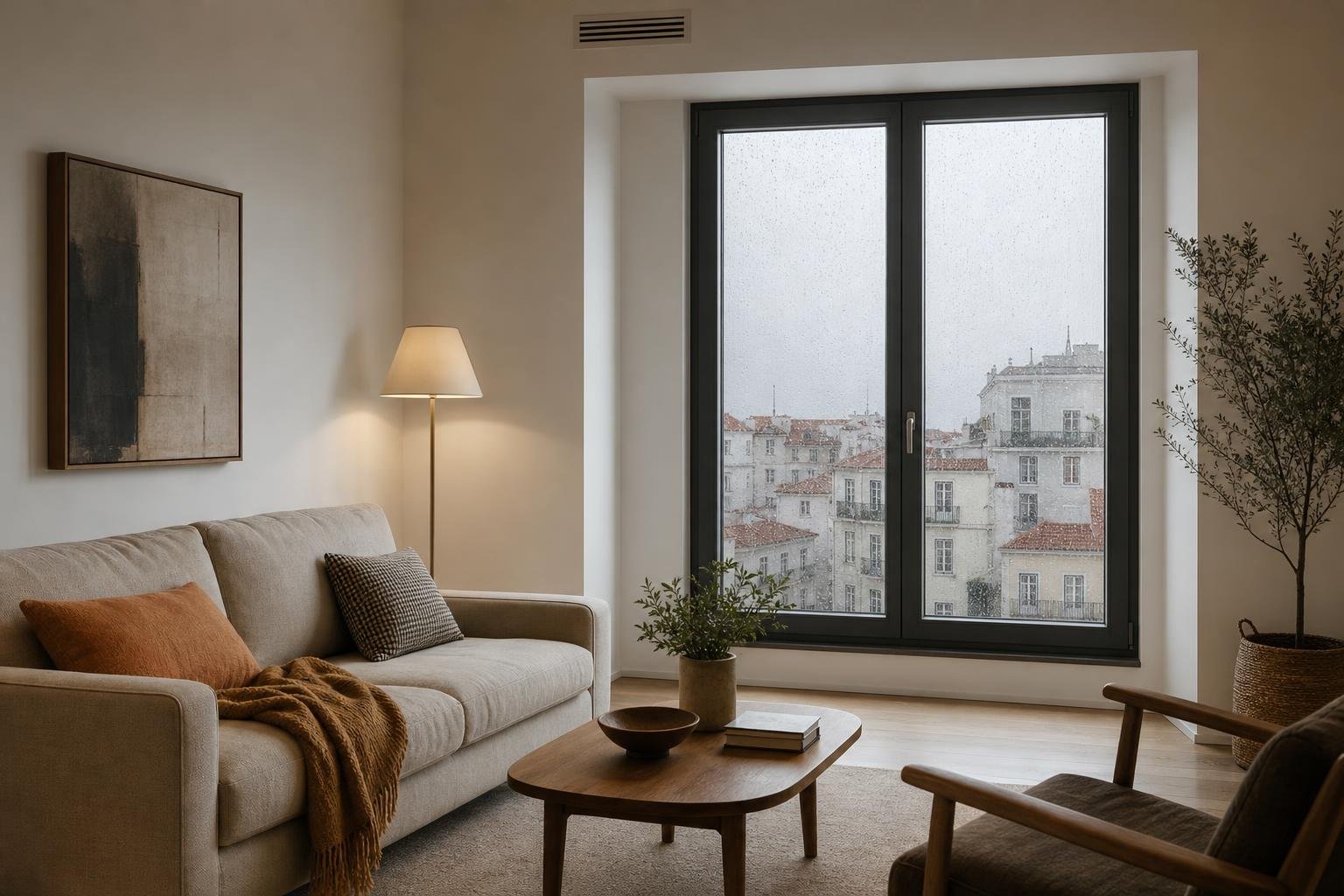
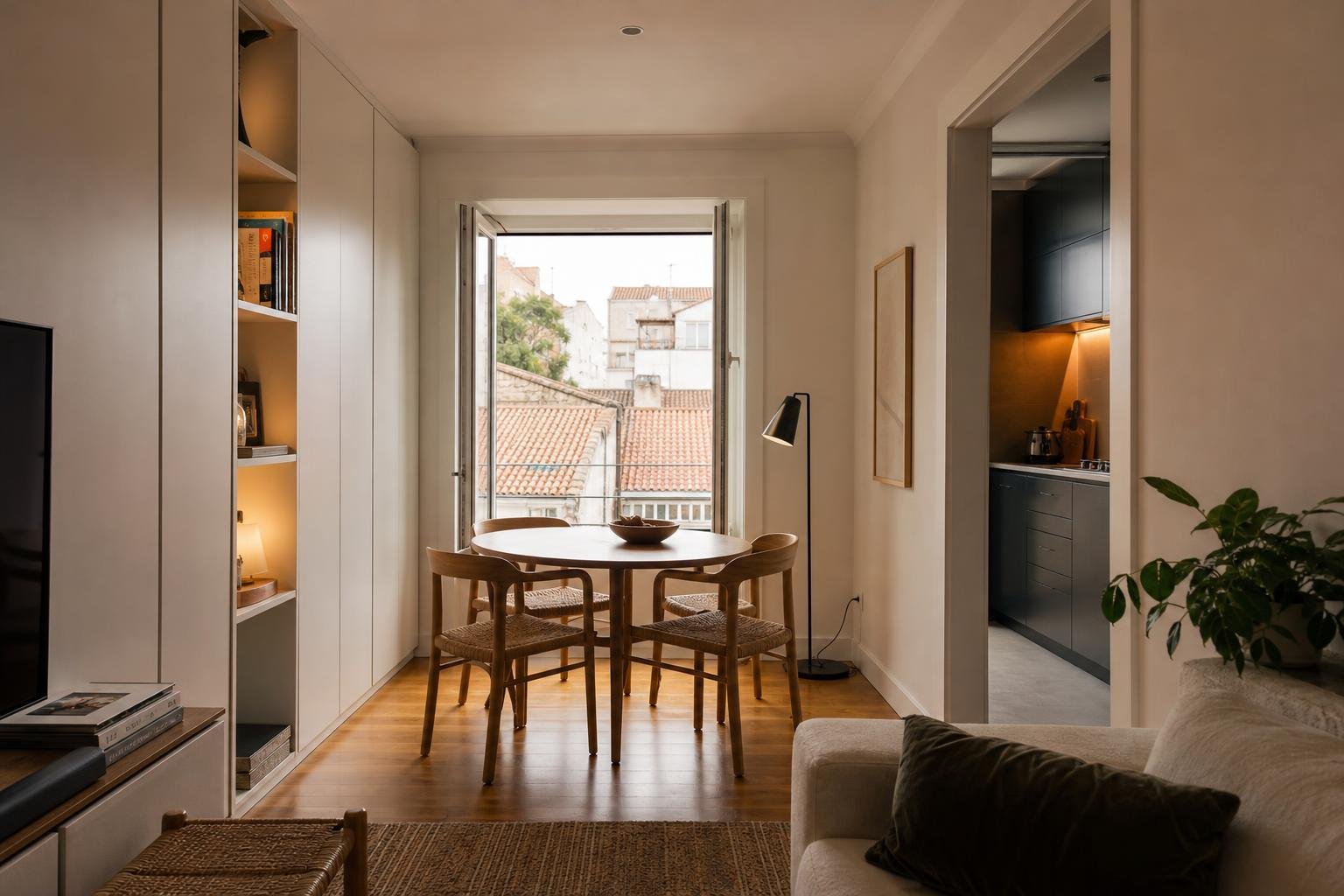
Editorial image; it does not depict an Obra Lisboa project.

Obra Lisboa