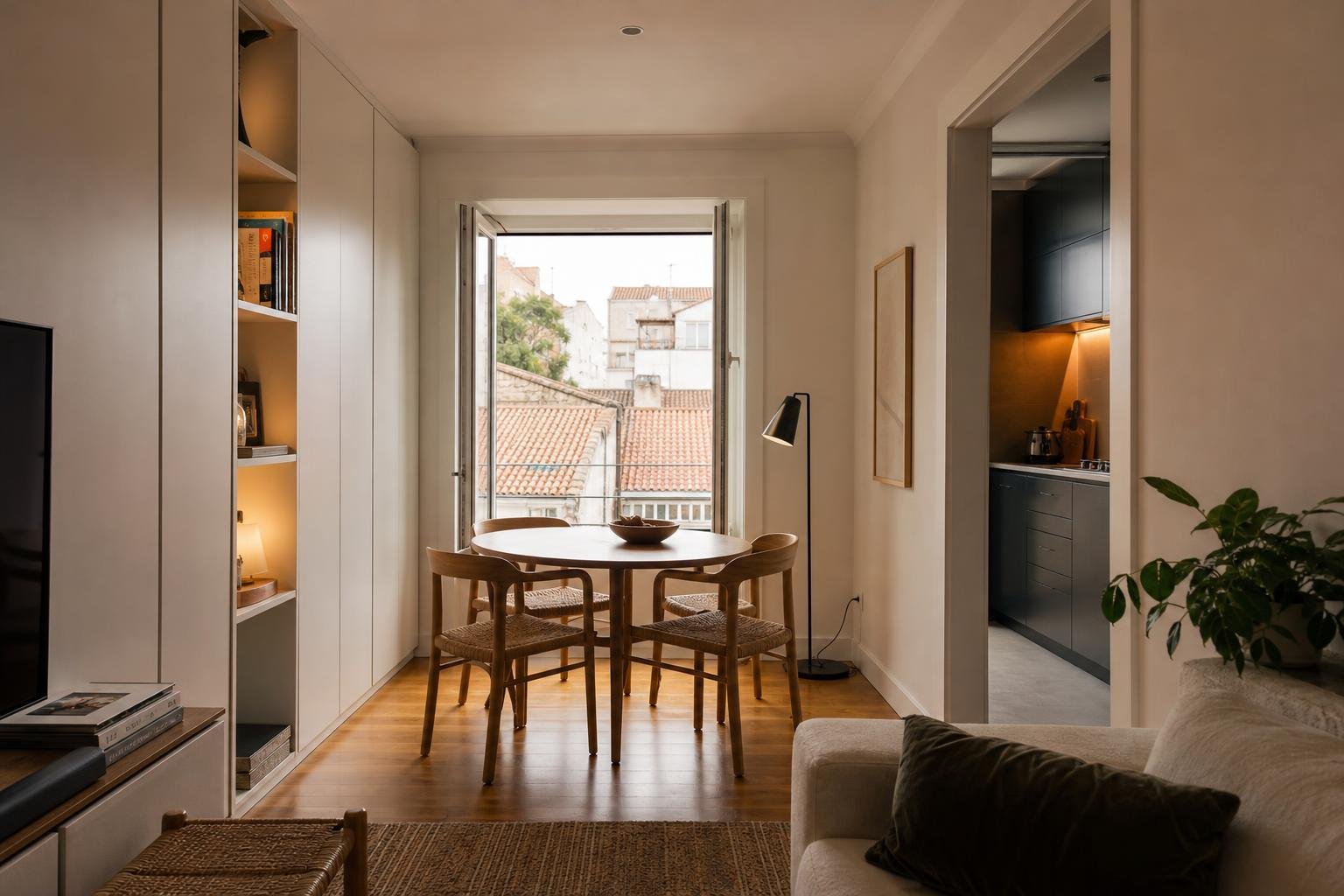
Do not cover a radiator with full-length curtains, sofas or enclosed furniture: heat becomes trapped, takes longer to reach the room and the system runs for longer. In many Lisbon flats, the radiator sits below the window, exactly where a floor-length curtain or sideboard may seem most natural. Before changing the room, check how warm air moves, keep straightforward clearances and adjust heating without sealing the home against ventilation.
Contents
- Why are so many radiators placed below windows?
- How much clearance should there be around a radiator?
- Which curtain works best with a radiator below the window?
- How can you heat the room without overheating the whole flat?
- Does winter ventilation cancel out the heating?
- When is this a decorating issue, and when should you call a professional?
Why are so many radiators placed below windows?
A window is usually one of the coldest surfaces in a room during winter. Positioning an emitter below it helps counter the sensation of cold air around the glazing: warmed air rises, mixes through the room and reduces discomfort in that area. This does not make every installation efficient on its own; draughty frames, a poor roller-shutter box or a cold wall still need attention.
The issue starts when a radiator is boxed in. A heavy curtain falling in front of it sends heat behind the fabric and towards the window. A sofa pushed against it interrupts air movement and absorbs heat that should serve the room. ADENE’s heating guidance states that furniture and curtains in front of radiators can increase heating costs by up to 12%.
Start by watching the air path on a cold day: air enters below the radiator, warms up, rises across its face and spreads near the ceiling before descending again. The room layout should allow that circuit to work.
How much clearance should there be around a radiator?
There is no single dimension for every emitter, but one practical rule is dependable: do not rest anything on the radiator and keep its front clear. If curtains run to the floor, they should be drawn beyond the radiator while heating is on; if that is not practical, choose a length that ends above it.
- Curtains: keep the fabric away from the emitter’s front. A wider track lets the panels stack beyond the window.
- Sofa or sideboard: leave an obvious gap for air to rise; do not press furniture against the grille or valve.
- Laundry, clothes or towels: do not dry them directly on the radiator. The released moisture worsens condensation and restricts circulation.
- Decorative cover: consider one only if it has properly designed air inlets and outlets for the appliance; check with a technician before commissioning it.
A narrow shelf above a radiator may be compatible with normal use if it does not close off the warm-air outlet or obstruct access to valves and bleed points. Avoid bespoke solutions that turn a small leak or routine bleeding job into demolition work.
Which curtain works best with a radiator below the window?
Choose the position before choosing the fabric. Thermal curtains can reduce the sensation of cold from glazing when closed, yet they lose part of that benefit if they trap radiator heat. For a window with an emitter below, three common approaches work well: a short curtain ending at the sill; floor-length curtains that open fully to the sides while heating is on; or a well-fitted internal blind that does not touch the appliance.
At night, close the window treatment after the room has warmed up. Open it in the morning to use daylight, especially in south- or west-facing rooms. For help with fabric, tracks and wall clearances, see floor-to-ceiling curtains in a small living room.
Do not improvise with blankets over a radiator, exposed foam panels or stuck-on film without checking the material and heat resistance. The priority is to keep the emitter accessible, clean and able to release heat into the room.

How can you heat the room without overheating the whole flat?
Before raising the thermostat, make sure the radiator is genuinely heating the room. Open its valve, remove objects from its front, check whether there is air in the circuit and set internal doors according to how you use the home. ADENE notes that reducing room temperature by 1 °C can cut heating costs by around 6%; this is not a reason to accept discomfort, but a reason not to compensate for poor heat distribution with excessive settings.
Portugal’s Directorate-General of Health recommends keeping homes between 19 °C and 22 °C in cold weather and using a visible thermometer. Read the DGS cold-weather guidance and measure where people sit or sleep, rather than beside the radiator, window or kitchen.
If you have thermostatic valves, use them to match each room to its occupancy. Do not hide them behind curtains or furniture: the sensor may read a pocket of warm air and shut down before the rest of the room is comfortable.
Does winter ventilation cancel out the heating?
Ventilation remains necessary in a heated home. Cooking, showering and drying laundry release water vapour; if it builds up on cold walls and glazing, condensation and mould become more likely. The DGS advises airing the home for at least ten minutes a day, as well as during or after cooking, cleaning, indoor laundry drying and bathing, in its indoor-air recommendations.
Rather than leaving a window slightly open for hours while the radiator runs, air the home briefly and decisively: turn heating down or off temporarily, open windows on opposite sides when possible, then close them and return to normal settings. This limits continuous heat loss while addressing moisture at its source.
Where opening windows is not enough, or where renovation work already involves external walls, assess whether heat-recovery ventilation in a flat suits the layout, façade and daily use of the home.
When is this a decorating issue, and when should you call a professional?
Moving curtains, pulling a piece of furniture away and carefully removing surface dust are simple tasks. Stop and seek technical help if there is water on the floor, significant corrosion, an unusual smell, a radiator that is cold across part of its surface, repeatedly falling system pressure, or any need to alter pipework and valves. In a wet central-heating system, opening connections without proper isolation can cause damage and pressure loss.
Before ordering made-to-measure furniture by the window, run through this check:
- Photograph the radiator, valves and pipes.
- Mark the area that must remain clear on the floor.
- Test temporary curtain positions through several heating days.
- Confirm that the emitter can be bled, cleaned and replaced without dismantling joinery.
During a renovation, show these clearances on the interior drawing before finalising curtain, joinery and socket dimensions. It is a small coordination step that prevents an attractive room becoming difficult to heat.
Key takeaways
- Keep the radiator’s front and upper area clear so warm air can circulate.
- Draw curtains to the sides while heating; do not leave heavy fabric covering the emitter.
- Measure temperature in the occupied part of the room and adjust the system before raising the thermostat.
- Ventilate briefly and purposefully to control moisture without wasting heat.
If you are renovating a living room or bedroom with radiators, add curtain positions, furniture, valves and ventilation to the decision schedule. Obra Lisboa can help coordinate these choices as part of renovation planning and site coordination.
Sources and further reading
Editorial image; it does not depict an Obra Lisboa project.

Obra Lisboa