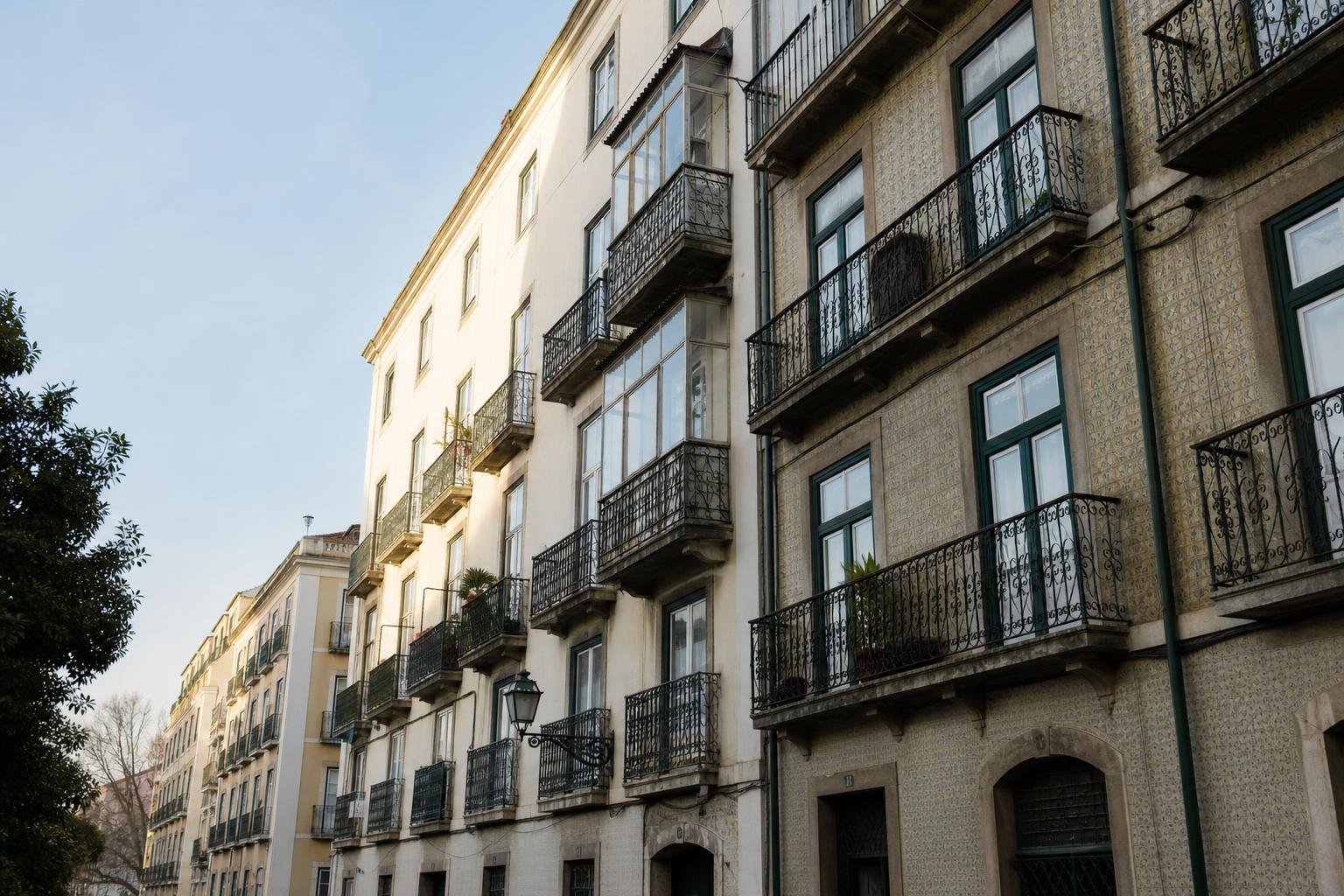
An enclosed balcony should be treated as a planning and condominium check before it is included in your offer price. It may be a comfortable improvement, yet it can also mean an unapproved façade change, an area that does not match the documents, or a solution that is hard to regularise. In Lisbon, the sound approach is to separate what you see at the viewing from what is authorised, recorded and accepted by the condominium.
Contents
- Why does an enclosed balcony change the purchase analysis?
- What can you check before making an offer?
- Which Lisbon municipal rules matter?
- Do condominium minutes solve the issue?
- When should regularisation be treated as a real cost?
- How to turn uncertainty into a cautious offer
Why does an enclosed balcony change the purchase analysis?
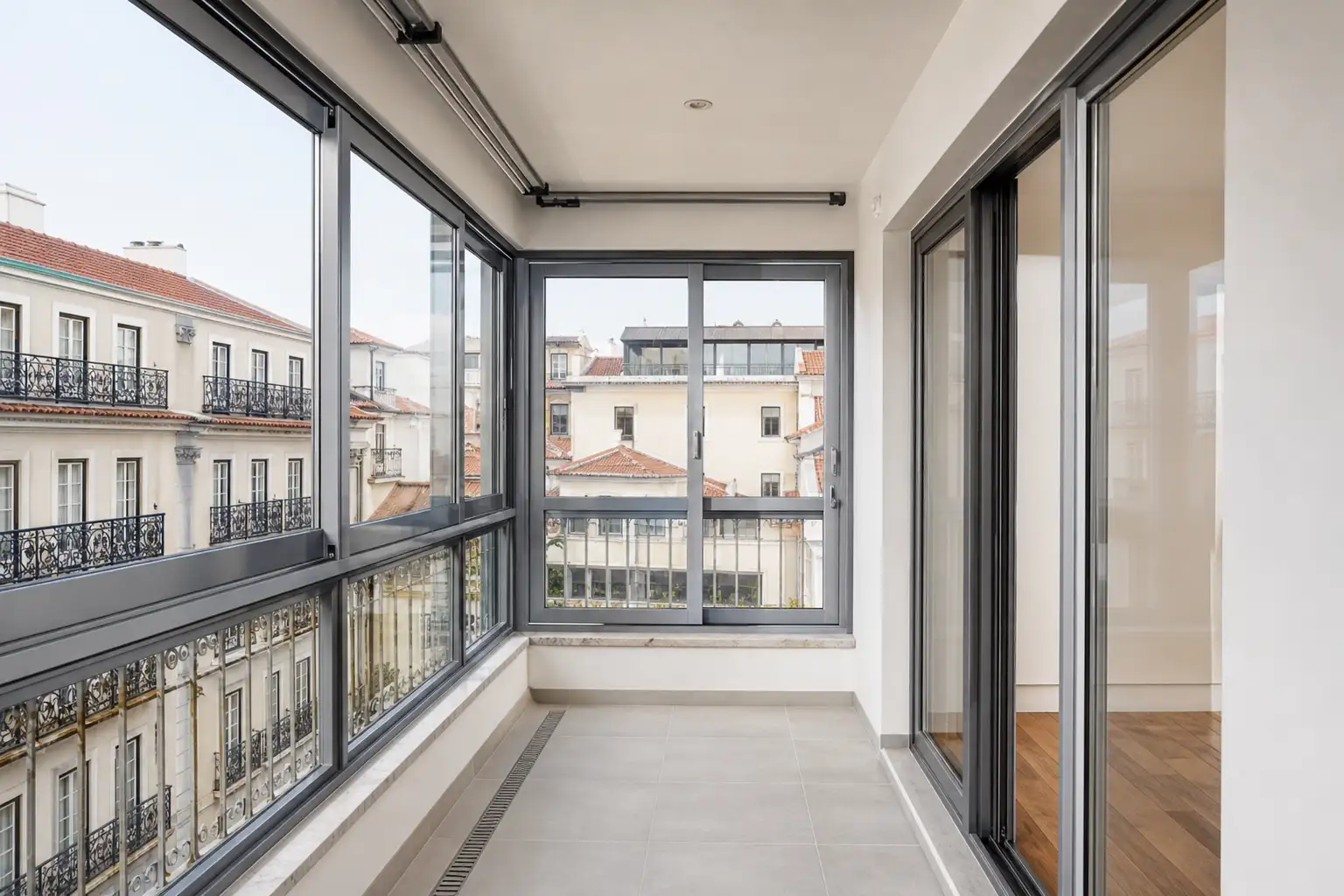
Closing in a balcony can look minor beside a full renovation, yet it affects the building’s exterior appearance, ventilation, weatherproofing and sometimes the advertised use of a room. A glazed enclosure may make a kitchen more usable or shelter a wind-exposed living room. It does not automatically turn that space into habitable floor area, nor does it guarantee that it can remain as it is.
There are three separate risks:
- Planning risk: the solution may not comply with rules applying to the building, the location or the façade.
- Condominium risk: façades and balconies are usually common parts; an old verbal or informal approval is not verifiable evidence.
- Financial risk: if removal, redesign or regularisation is required, the buyer inherits a cost and timeline that may not have appeared in the listing.
Do not value the flat only by the feeling of extra square metres. Value it by the arrangement you can document and by the arrangement you would be prepared to retain or correct after completion.
What can you check before making an offer?
Start by asking the seller or agent for objective evidence. Old photographs or the phrase “every neighbour has one” are not enough.
- Request the tax record, land-registry record and technical housing file where one exists.
- Compare the available plan with the viewing: check whether the balcony is shown as open, absorbed into the kitchen or living room, and whether doors, frames or guards were changed.
- Ask for condominium minutes from recent years and look for decisions on façades, enclosed balconies, leaks or equivalent works in other flats.
- Ask whether there is a municipal file, licence, prior communication or regularisation application linked to the work.
- Check whether the advertised area distinguishes gross private area, dependent area and usable area. An enclosed balcony should not be added to internal space without a clear explanation.
This document comparison should happen before negotiating a discount. Our article on why licence data misses many Lisbon interior renovations explains why the absence of a public record alone does not prove that work is compliant.
Which Lisbon municipal rules matter?
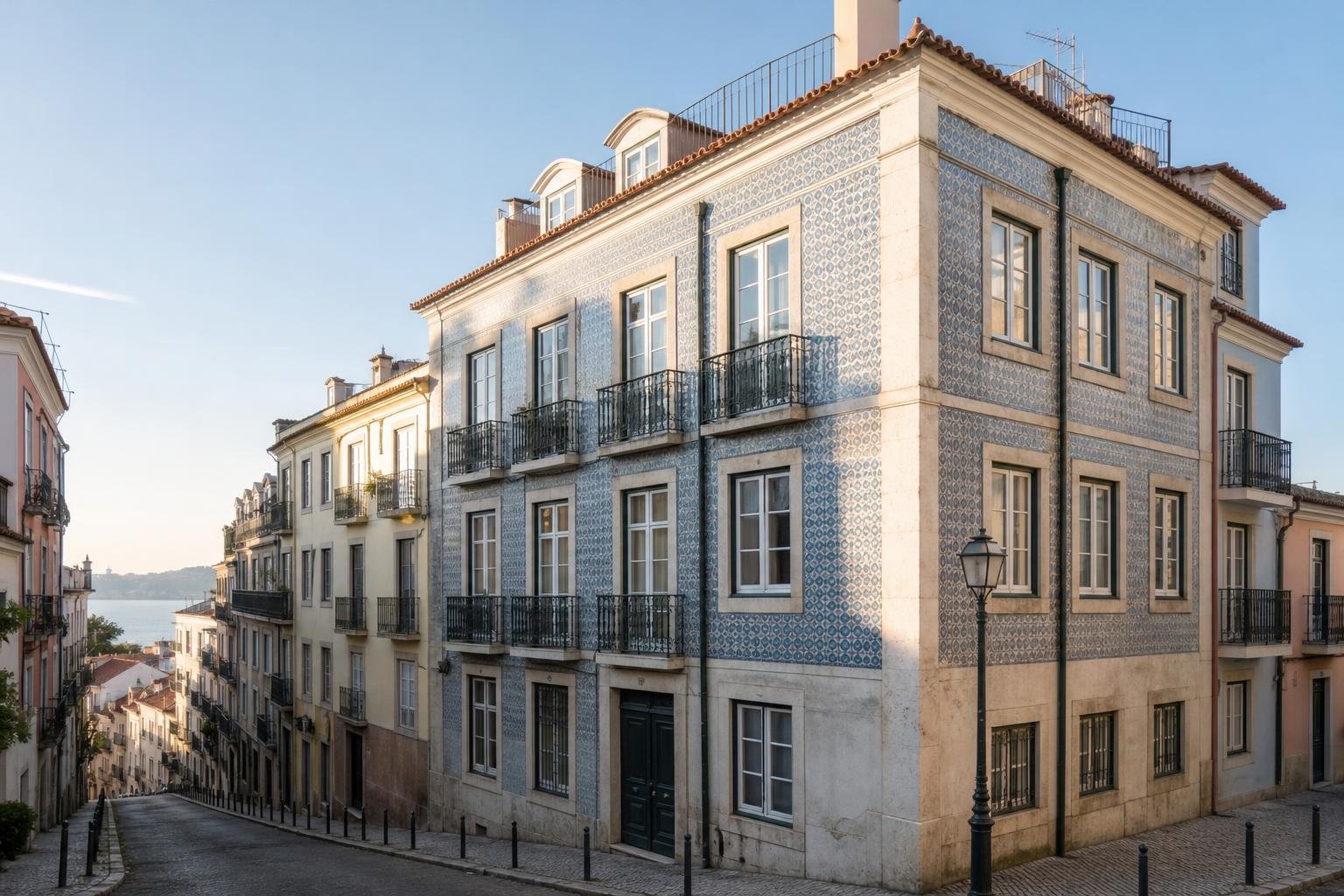
Lisbon’s Municipal Urbanisation and Building Regulation treats the enclosure or glazing of balconies as a sensitive façade issue. In some cases, it calls for a whole-façade solution in design and materials, demonstrable thermal performance and ventilation, plus condominium minutes recording awareness and agreement. In buildings or groups listed in the Municipal Built and Landscape Heritage Charter, enclosure is generally prohibited except in the stated exceptions.
Read the Lisbon municipal regulation itself, rather than inferring feasibility from neighbouring window frames. Several similar enclosures may point to a long-standing pattern; they do not prove that each was approved or that a future replacement can follow the same design.
If the building lies in a protected area or has heritage interest, add that check from the start. See our guide to buying in a heritage protection area before assuming that an exterior alteration will be straightforward.
Do condominium minutes solve the issue?
Favourable minutes matter, but they do not replace municipal verification or automatically make incompatible work compliant with planning rules. Equally, years without condominium objection do not necessarily amount to a clear decision approving that particular arrangement.
Look for minutes that identify the flat, describe the enclosure, state the approved design or materials and record the result of the vote. Also check whether there has been discussion of water ingress, frame maintenance or uneven treatment across the façade. Law No. 8/2022 on the horizontal-property regime illustrates the formal importance of signed minutes where changes involve common parts and the constitutive title.
For a purchase, treat condominium records as evidence to cross-check against the plan and the visible condition of the façade. If future work to the balcony could require authorisation, the origin and approval of work already carried out should not be ignored.
When should regularisation be treated as a real cost?
Treat it as a real cost when documents are missing, the enclosure clearly changes the façade design, the building is protected, there are complaints about water ingress, or you intend to replace the frames, sell soon, or seek finance based on a configuration that differs from the registered one.
Regularisation is only possible where the work can comply with current legal and regulatory provisions. It is not an automatic process or confirmation that everything already built can remain. Lisbon City Council makes that limit explicit on its works regularisation service page.
Before proceeding, ask an architect or appropriately qualified professional to review the façade, plan, ventilation and drainage. An enclosure with ageing profiles, incorrect falls or water-entry points may require more than an administrative decision. Where there are cracks, corrosion or signs of water, do not make “we will see later” part of the purchase strategy.
How to turn uncertainty into a cautious offer
A cautious offer does not need to declare the balcony unlawful. It should recognise what remains unverified and avoid paying as certain for a benefit that might disappear or require investment.
- Base the valuation on clearly documented area and treat the enclosed balcony as a conditional attribute.
- Ask for the reservation or promissory contract to identify the documents the seller will provide and what happens if they are not supplied.
- If the layout is central to the purchase, make the decision conditional on technical and document review within a defined period.
- Keep a contingency for removal, making-good, waterproofing, replacement frames and façade reinstatement if required.
The council allows requests for information on regularisation and planning conditions through its right to planning information. For work needing prior control, consult its building-work licensing service as well. The aim is not to obtain an impossible guarantee before buying; it is to identify the questions, records and costs that should not be left outside the offer.
Key takeaways
- Do not count an enclosed balcony as internal floor area without confirming its documents and authorised configuration.
- Ask for minutes, plans and information on municipal files before negotiating price or paying a deposit.
- Condominium approval helps, but it does not replace planning compliance.
- If the balcony is essential to the deal, make technical and document review part of the offer conditions.
If you are assessing a flat for renovation, ask Obra Lisboa for a review of the proposed work scope and visible risks before finalising decisions on layout, window frames or façade work.
Sources and further reading
- Lisbon municipal regulation
- right to planning information
- works regularisation service
- building-work licensing service
- Law No. 8/2022 on the horizontal-property regime
Editorial image; it does not depict an Obra Lisboa project.

Obra Lisboa