Fitting an outdoor air-conditioning unit to a Lisbon flat may require a condominium decision and an urban-planning check before anyone drills the façade. What looks like a simple installation can alter the building’s appearance, affect a common part, create noise or discharge condensate onto a balcony, courtyard or public street. Set the location, fixing method and drain route first; only then obtain quotations and book the work.
Contents
- Why is an outdoor unit not simply a decision for one flat?
- Where can the equipment be placed in Lisbon?
- When should you speak to Lisbon City Council?
- How to prepare a request the condominium can actually decide
- Drainage, noise and vibration: the details that cause disputes
- Who should install it and what should be recorded at handover
Why is an outdoor unit not simply a decision for one flat?
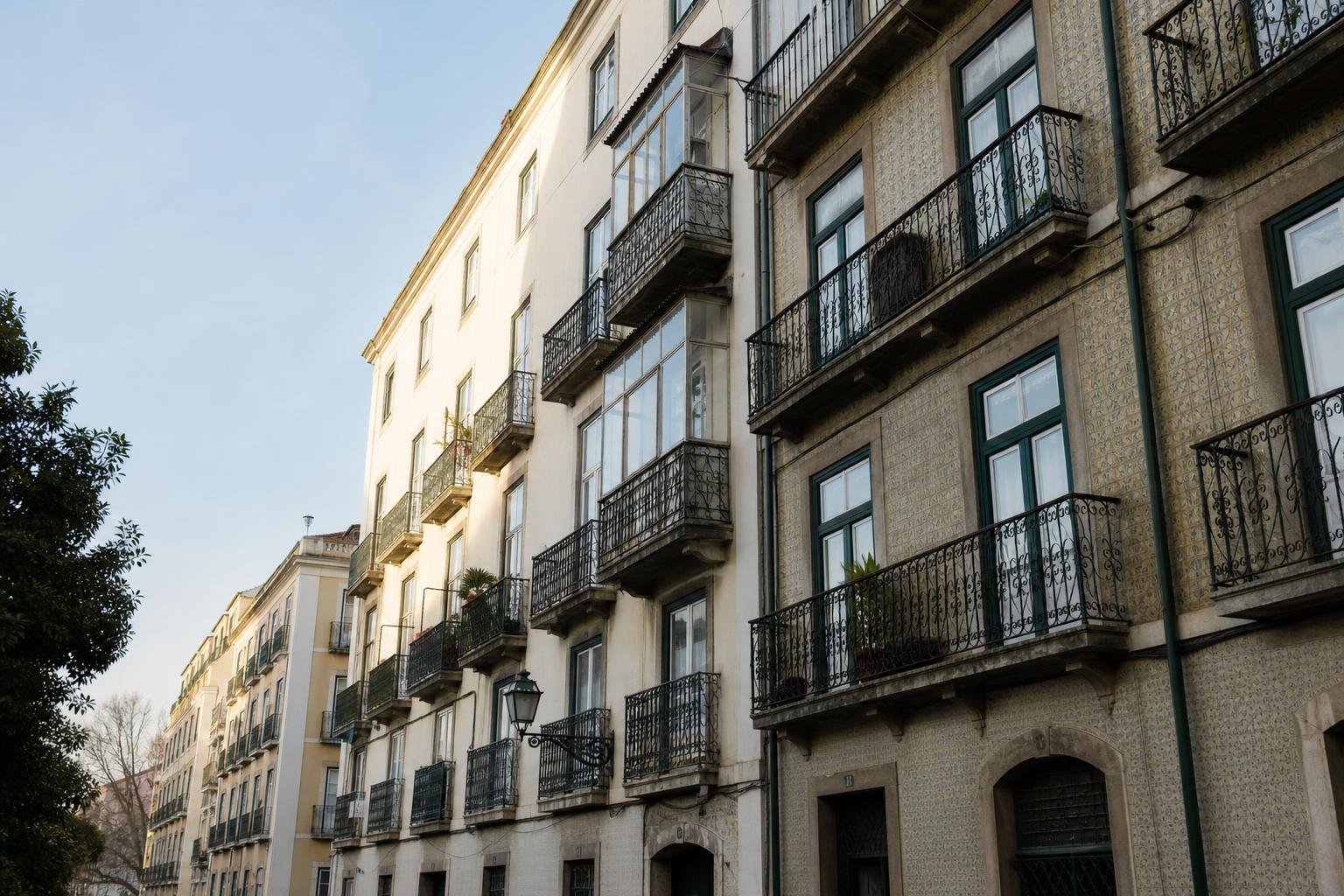
The façade, roof and many technical elements of a building are not freely controlled by one flat owner. Even where the equipment serves one apartment only, brackets, drillings, grilles, cables and pipework can alter the appearance of the whole building and affect common parts.
Portugal’s Civil Code allows works that change a building’s architectural line or aesthetic arrangement when the owners’ meeting gives prior approval by a majority representing two thirds of the building’s total value. Check the Civil Code rules on horizontal property, then read the deed of horizontal property and your condominium regulations: they may contain specific rules for façades, roofs, balconies or visible equipment.
Do not treat a verbal agreement as the end of the matter. Ask for the resolution to be recorded in the minutes, stating the location, external treatment, maintenance responsibility and the duty to make good finishes if the unit is removed.
Where can the equipment be placed in Lisbon?
Lisbon’s municipal regulation sets out a clear preference: small air-conditioning units should sit inside the building or balcony without being visible externally, on roofs, or on rear and side façades protected by suitable grilles. The same regulation prohibits exposed ducts, cables, boxes, equipment and machinery on building façades and roofs.
Read the Lisbon Municipal Urbanisation and Building Regulation before choosing a wall facing the street. A rear-façade position may be less exposed, yet it still needs a location that allows maintenance, a support that manages vibration and a proper route for condensate drainage.
If the building lies in a heritage protection area or is subject to particular planning constraints, the assessment may be stricter. Do not assume that a similar installation on a neighbouring building establishes what is acceptable for yours. If the proposal includes an exterior grille, also check what applies to window security grilles in a Lisbon flat, because changing the façade still requires condominium coordination.
| Issue | Practical question | Useful document or decision |
|---|---|---|
| Condominium | Does the unit alter the façade, roof or a common part? | Minutes recording the location, external treatment and maintenance conditions |
| City Council | Is there heritage protection or another planning constraint? | Check of the property’s planning context and, where applicable, a municipal procedure |
| Drainage | Where will condensate water go? | Concealed route, with fall and a suitable connection |
| Noise and vibration | Who is near the unit and how will vibration be isolated? | Technical sheet, position and support solution |
| Installer | Is the company qualified for the work? | Confirmation of the company and technician before appointment |
When should you speak to Lisbon City Council?
Not every installation has the same legal setting. An external alteration, work to a protected property, or a solution that falls outside applicable rules may require municipal control. Lisbon City Council explains that licensing covers, among other situations, external alteration works and interventions on listed buildings, buildings under listing, or properties in protection areas.
Use the City Council page on building works subject to a licence as a starting point, but do not treat it as confirmation for your particular case. Give the designer or municipal service a short, precise description: address, flat, proposed façade, photographs, equipment drawing, fixings, grille, pipe route and condensate destination.
One distinction matters: work may not require a municipal procedure, yet it can still need to comply with condominium rules, the municipal regulation, safety requirements and neighbours’ rights.

How to prepare a request the condominium can actually decide
A vague request — “I want to install air conditioning” — invites questions and delay. Bring a proposal that can be assessed and compared. Include:
- a photograph of the façade, balcony or courtyard with the exact position marked;
- the unit model, dimensions, declared sound level and weight;
- the bracket type and measure proposed to limit vibration;
- the route for refrigerant lines, cables and drain, identifying what will be concealed;
- how cleaning and repair access will work without entering a neighbour’s flat;
- a commitment to pay for installation, maintenance, damage and future reinstatement.
If several owners want air conditioning, a shared approach is worth proposing: repeated positions, matching grilles, defined technical routes and rules for future units. It prevents a sequence of misaligned machines, improvised holes and exposed drains.
Where the renovation already includes new walls or a suspended ceiling, coordinate the route with a renovation interface map. It is safer to plan passages and access before finishes are closed.
Drainage, noise and vibration: the details that cause disputes
Condensate must not drip onto the street, the balcony below or a façade. Lisbon’s regulation requires solutions that direct condensate discharge to a suitable network and discourages visible exterior elements. A hose left in sight may look like a quick fix, but it ages poorly, stains surfaces and creates predictable complaints.
Ask for a continuous route, sufficient fall and a discharge point considered from the outset. If it connects to an existing network, confirm compatibility and future cleaning access. This is similar to the issue of concealed pipes and wall crossings: what disappears behind finishes still needs to be maintainable without unnecessary demolition.
For noise, do not choose solely by cooling output. Compare the sound data sheet, keep the unit away from bedrooms where possible, avoid flimsy metal brackets and do not fix equipment to elements that can transmit vibration through slabs, walls or balustrades.
Who should install it and what should be recorded at handover
Ask for the company’s identification, a written quote, equipment brand and reference, warranty conditions and a description of connections. IMPIC states that companies carrying out installation, repair, maintenance, technical assistance or decommissioning of fixed refrigeration, air-conditioning and heat-pump equipment containing fluorinated greenhouse gases must hold the appropriate qualification. Check the IMPIC guidance on HVAC and fluorinated gases before appointing the installer.
At the end, keep photographs of routes before walls are closed, invoices, technical sheets, maintenance instructions and the condominium minutes. If interior work is also involved, check that the intervention remains consistent with what has been communicated to the condominium; this guide to exempt apartment works in Lisbon helps distinguish planning exemption from building coordination duties.
Bring in a qualified technician before proceeding where the solution needs fixing to a degraded façade, roof, balcony guard, structural wall, heritage area or existing drainage system. This is not a task to resolve with brackets chosen on the day and a drain taken outside.
Key takeaways
- Obtain a condominium decision recorded in the minutes before drilling a façade or roof.
- In Lisbon, favour discreet solutions without exposed cables, ducts or drainage pipes.
- Design drainage, maintenance access, noise and vibration control as one installation.
- Keep the quote, technical sheet, photographs and installer documents for future repairs.
If you are including climate control in a renovation, ask Obra Lisboa for a proposal that coordinates the outdoor unit, technical routes and finishes before walls are closed or equipment is ordered.
Sources and further reading
- Lisbon Municipal Urbanisation and Building Regulation
- building works subject to a licence
- Civil Code rules on horizontal property
- IMPIC guidance on HVAC and fluorinated gases
Editorial image; it does not depict an Obra Lisboa project.

Obra Lisboa