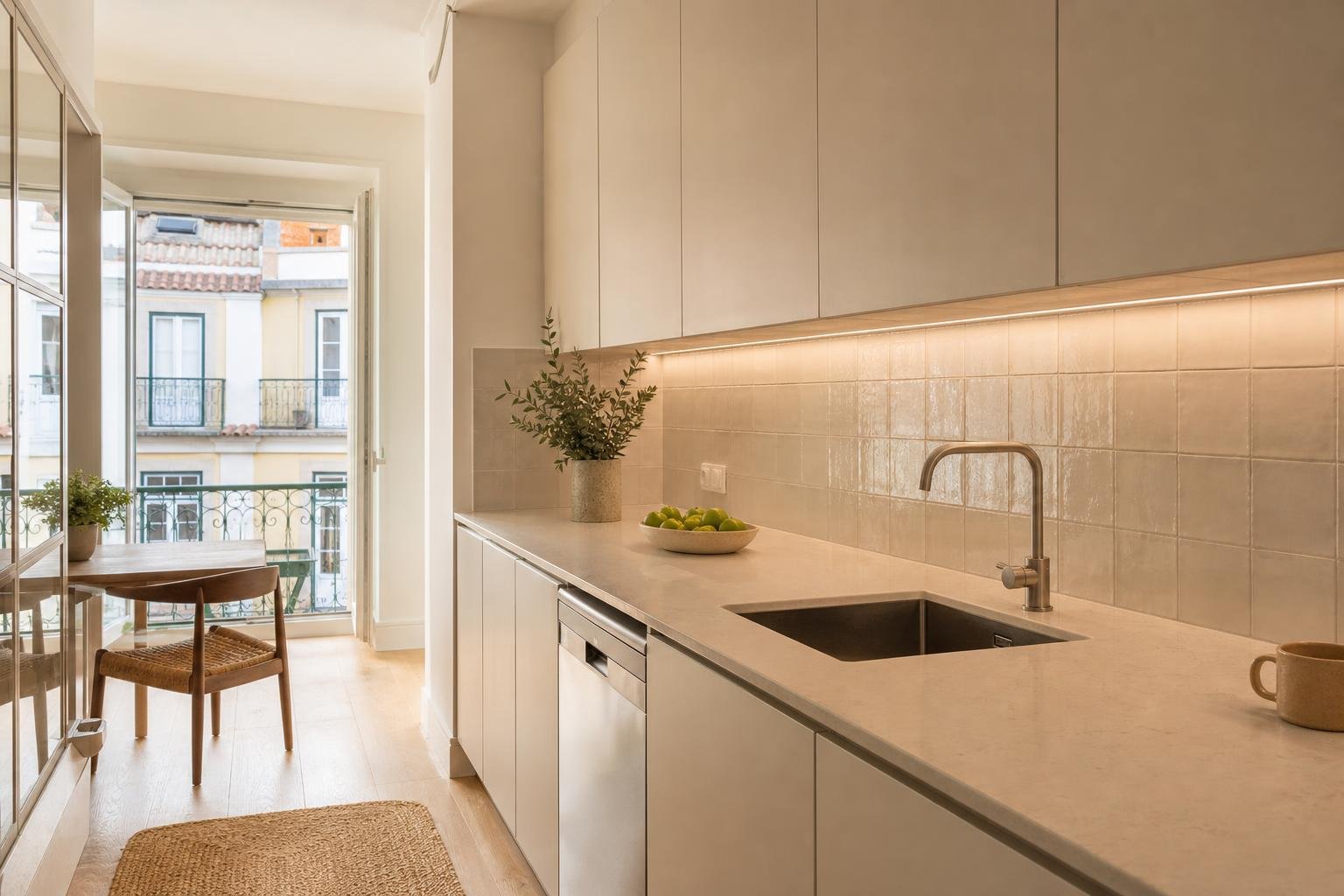
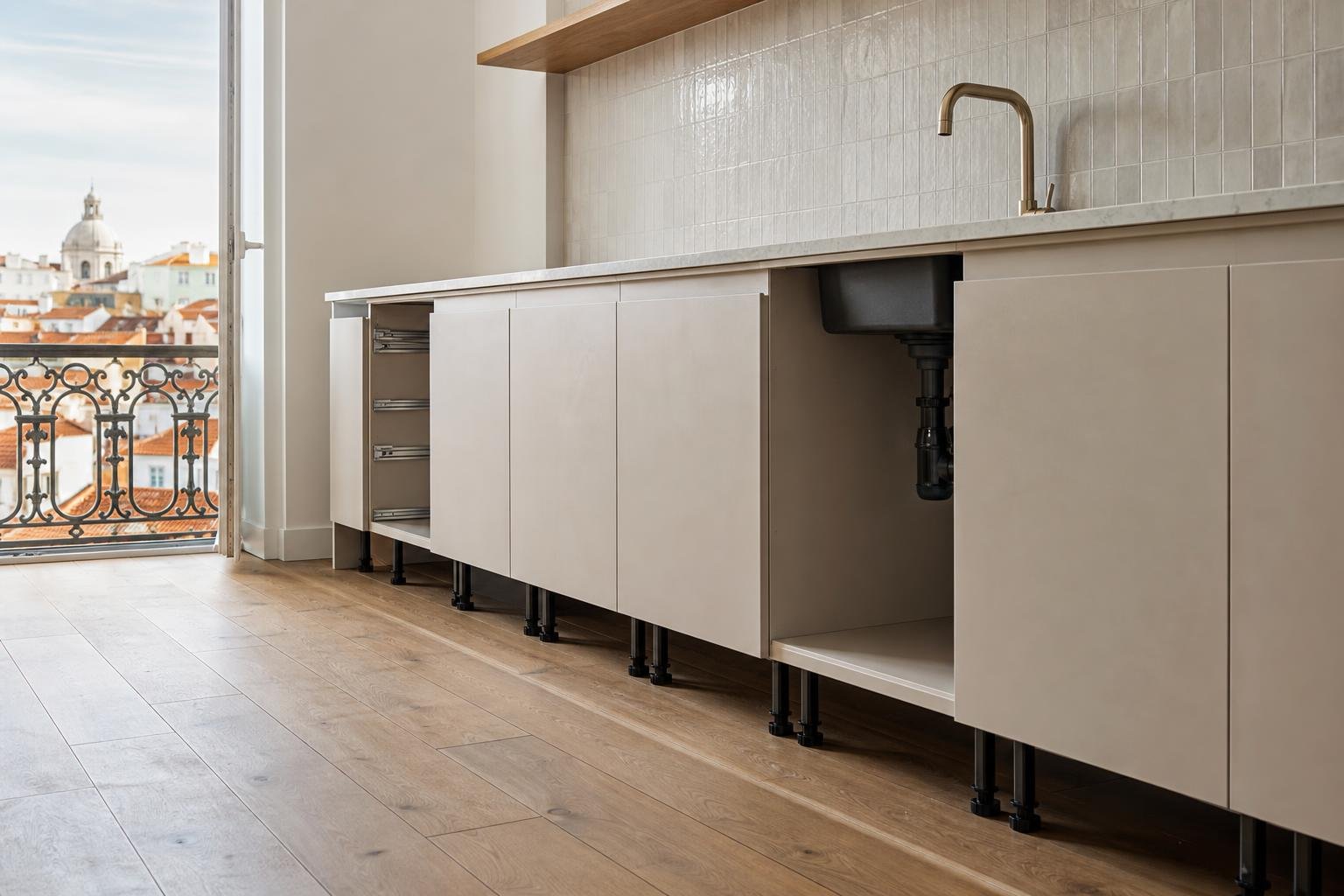
In a kitchen, the most frustrating problems rarely begin with a cabinet door or worktop. They begin close to the floor: an uneven base, a badly fitted plinth, water left after mopping, or a small leak beneath the sink. Adjustable legs and plinths are quiet but essential parts of a kitchen’s stability, cleanability and long-term durability.
These details should be decided before installation begins. A kitchen can look flawless on day one while concealing awkward access, misaligned fronts or materials exposed to moisture. Water efficiency belongs in the same conversation: ADENE’s AQUA+ information identifies taps, washing equipment and water networks as relevant elements in assessing a home’s water performance. A well-planned cabinet base makes it easier to spot and deal with issues before they become expensive replacements.
Why kitchen cabinets should not sit directly on the floor
Base cabinets need a stable, adjustable support that keeps them separate from the finished floor. Adjustable legs compensate for small variations in the slab, flooring or grout lines and allow cabinets to be levelled accurately. That matters because doors, drawers, integrated appliance fronts and the worktop must operate as one coordinated assembly, without unusual gaps or concentrated stress.
Placing chipboard or MDF cabinetry directly on the floor creates an obvious risk: water retained at the base can be absorbed through exposed edges, causing swelling, surface failure and distortion. Even a floor that appears level can contain enough variation to encourage improvised packers. Those tend to age poorly and make cleaning harder.
Legs are not a way to conceal poor workmanship. They should be used for final adjustment within the manufacturer’s intended range, after the finished-floor level has been checked. Before ordering cabinets, coordinate dimensions, circulation, appliances and services through a proper kitchen planning process. A few centimetres can determine whether the plinth runs continuously and whether an appliance door clears the cabinet beside it.
A plinth is more than a finishing strip
A plinth visually closes the gap between the floor and the cabinets, but it also limits the build-up of dust, food debris and splashes beneath the units. It should withstand routine cleaning and be fitted continuously, without unnecessary gaps at joints, corners or exposed end panels.
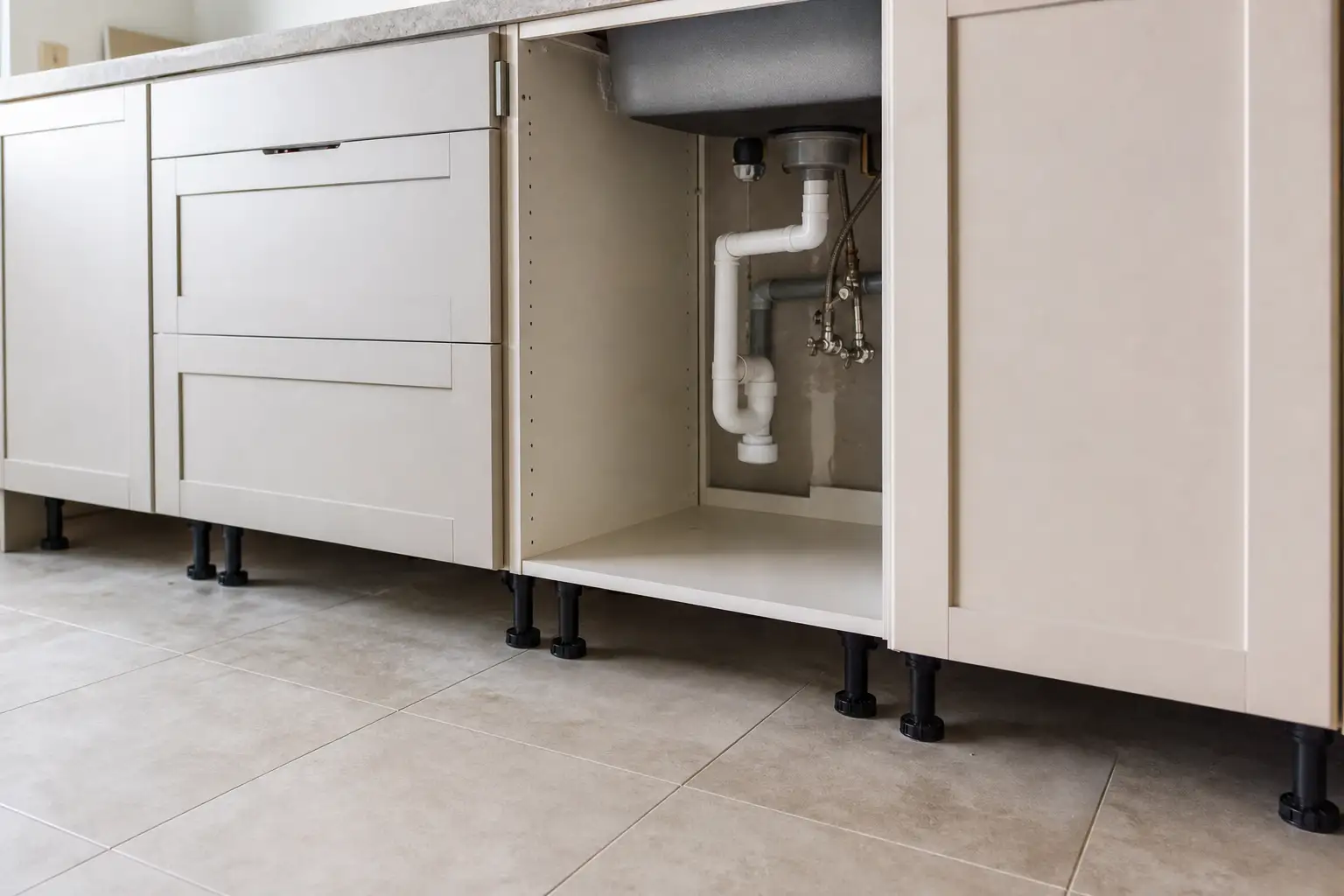
In most homes, a removable plinth is more useful than a completely sealed solution. It gives access to the legs, allows the floor condition to be checked and makes it possible to inspect service routes without dismantling cabinets. This is particularly valuable beneath the sink, where traps, valves, appliance connections and supply pipes need occasional attention.
Access does not mean leaving a permanent opening. Gaps must be controlled, and the plinth should be securely held by clips or fixings designed for the system. In the event of a leak, it should be removable without breaking the material; in everyday use, it should not shift when the floor is vacuumed or mopped.
Water, cleaning and ventilation are connected decisions
The lower kitchen zone is exposed to water from several sources: floor washing, condensation, spills, appliance cleaning and slow leaks. Choosing a washable plinth and corrosion-resistant legs helps, but it does not replace regular inspection. After cleaning the floor, do not leave pooled water along cabinet bases. If you notice a persistent smell, swelling or darkened plinth material, investigate the cause rather than simply clipping it back into place.
Portugal’s Directorate-General of Health recommends maintaining and cleaning ventilation or air-conditioning systems and ensuring proper extraction of combustion gases from equipment such as cookers and water heaters. Its general indoor-air recommendations are useful context for managing humidity and ventilation. Effective extraction will not fix a leak, but it can reduce the vapour load that worsens condensation in enclosed areas.
Do not block vents or create sealed enclosures around equipment that requires ventilation. The correct solution depends on the appliance, the manufacturer’s instructions and the conditions of the specific installation.
Planning access to valves and pipework
A well-designed plinth should allow fast access to relevant valves, especially around the sink and dishwasher. Regulations used by water-management entities commonly require a safety valve upstream of kitchen and bathroom devices so those rooms can be isolated from the rest of the supply network; one example appears in a regulation published in Diário da República. Always confirm the layout and requirements that apply to your particular installation with a qualified professional.
The practical principle is straightforward: do not hide an essential valve behind a plinth that can only be removed after moving an appliance, or behind a fixed drawer. Mark valve locations in the project documentation and test access before final handover. Taking photographs while services are exposed, before cabinetry and finishes are closed, also creates a useful record for future work.
When plumbing is being altered, appearance is only one part of the decision. Read our guide to sewer and plumbing systems before renovation to coordinate drainage, water supply, traps and maintenance access.
A handover checklist for the completed kitchen
Before treating the kitchen as finished, carry out a slow, practical inspection. Open every door and drawer, check that fronts line up, make sure the plinth follows the cabinet line and look for areas rubbing on the floor. Confirm that the worktop is level and that the dishwasher, oven and refrigerator have the clearances specified by their manufacturers.
- Ask to see the adjustable legs before the plinth is fitted.
- Confirm that each plinth section can be removed without damaging fronts, flooring or walls.
- Test access to valves, the sink trap and dishwasher connections.
- Run water at the sink and through the appliance, checking inside the cabinet and across the floor.
- Clean a small area beside the plinth to understand how the material and joints cope with normal maintenance.
- Keep records of the materials, clips, legs and finishes for future replacements.
These details may not make a kitchen look more dramatic in a photograph, but they make daily use far more predictable. That predictability is what reduces rushed repairs and protects the investment over time.
Planning a kitchen renovation in Lisbon? Obra Lisboa can help coordinate dimensions, services, cabinetry and finishes so that the hidden details work as reliably as the final look.
AI-generated editorial image; it does not depict an Obra Lisboa project.

Obra Lisboa