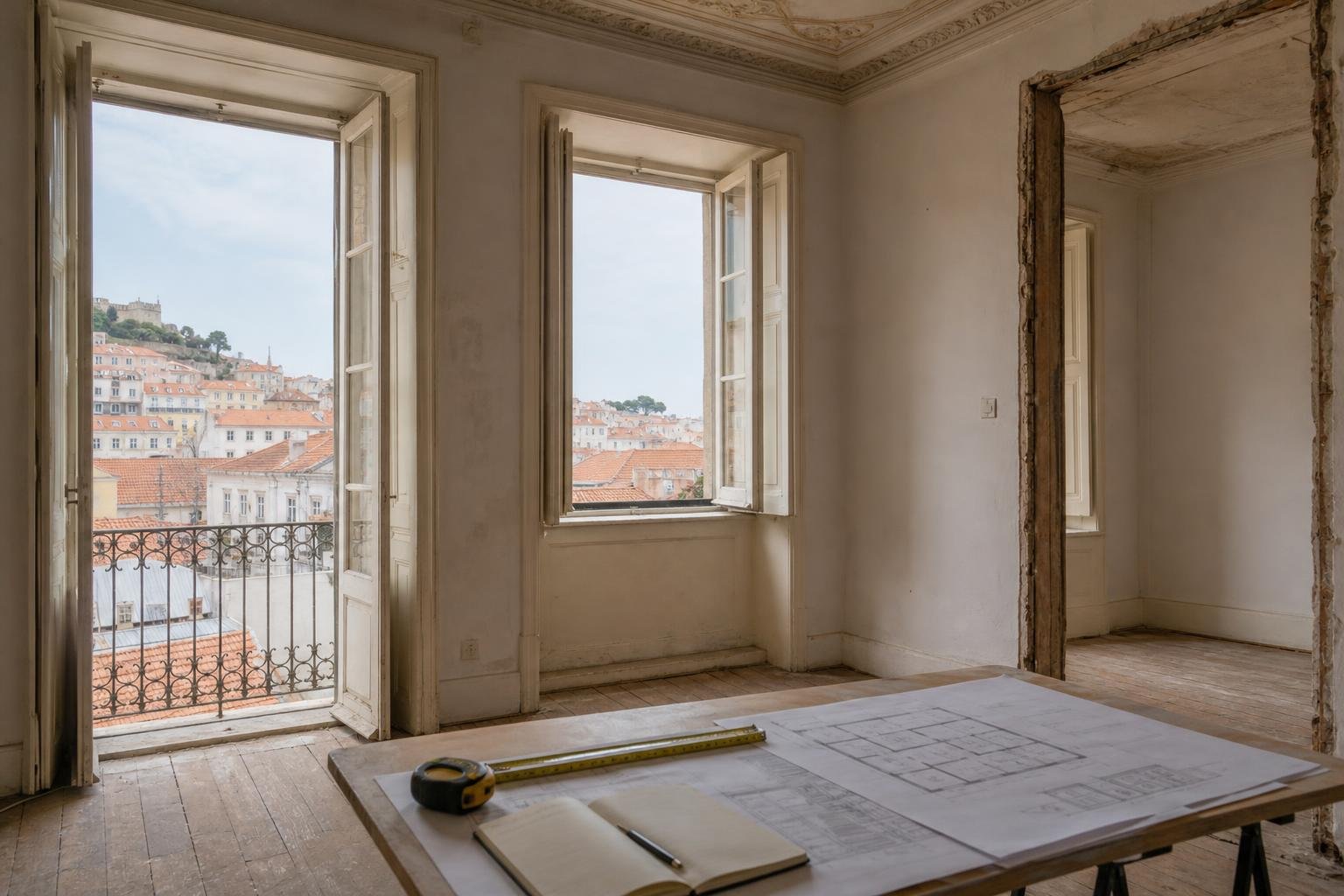
A fluted-glass interior door can bring daylight into a dark hallway without putting the home on display between rooms. It works best when the glass is treated as a light route rather than a decorative add-on: decide where the light comes from, what remains visible at close range, how the leaf opens and where cleaning or future repairs will be needed. In a Lisbon flat with an internal hall, this can avoid a new partition, an impossible rooflight or lights switched on throughout the day.
Contents
- What does a fluted-glass door actually solve?
- Which rooms suit it — and where should you avoid it?
- How to settle the glass design before ordering
- Which dimensions and hardware prevent an awkward door?
- How to finish the lighting without creating hallway shadows
- What to confirm with the joiner and before work starts
What does a fluted-glass door actually solve?
Fluted glass blurs the view while allowing light through. That makes it useful between a bright living room and a hall, between a windowed kitchen and a circulation area, or in a study door that needs daylight without displaying a screen, clutter or the person on the other side.
Do not expect complete privacy, however. Nearby silhouettes, strong movement and a light switched on behind the door remain noticeable. A sensible rule is to view the proposed door from both sides before ordering it: if the bathroom, bedroom or dressing area needs full visual privacy, use a smaller glazed area, set it higher in the leaf or choose an opaque solution.
Light also has a safety role. The Portuguese health authority recommends good lighting in every room and on stairs. In a hallway, translucent glass helps make the route legible during the day, but it does not replace properly placed electric lighting at night.
Which rooms suit it — and where should you avoid it?
Start with the daily route through the home. A fluted door works well at the entrance to a living room, kitchen, study or laundry space when there is a window beyond it and the room does not need absolute acoustic or visual separation. In a long two-bedroom-flat hallway, a fixed glazed transom above the door may be enough; it avoids changing the leaf while carrying light deeper into the hall.
Avoid repeating the same detail on every door. Using it for bedrooms, bathrooms, storage and living areas can create reflections, reveal shapes where privacy is wanted and increase cleaning. In a bathroom, humidity and splashes close to the leaf call for durable hardware and careful sealing; where the shower is nearby, review the waterproofing build-up described in cement board or moisture-resistant gypsum board in a shower.
In older Lisbon buildings, also check whether the existing frame is plumb. A well-designed new leaf will not on its own correct a twisted jamb, an uneven threshold or hinges fixed into weakened timber.
| Option | Light transmission | Best use |
|---|---|---|
| Clear fluted glass | High, with a blurred image | Living rooms, kitchens, studies and halls |
| Fluted glass with film or a soft tint | Moderate | Doors near storage or work areas |
| Opaque panel or frosted glass | More controlled | Bathrooms, bedrooms and areas needing greater privacy |
How to settle the glass design before ordering
Set the clear opening first, then design the glazing. A narrow vertical panel lights the handle and the floor by the door; a high horizontal band uses daylight without exposing the room; several small panels add rhythm but also add joints, beads and cleaning points. If the door swings, check where the light falls when it is open: an attractive panel may be hidden behind a cupboard or cause glare for someone entering.
Vertical fluting usually makes a door appear taller and suits the generous ceiling heights found in many older flats. Horizontal fluting emphasises width and can make a low leaf feel heavier. Choose a restrained frame when there are already decorative skirtings, plasterwork or original doors to retain; an overly assertive frame competes with those elements.
Take a real sample to the flat and look at it in daylight and under electric light. The DGS guidance on wellbeing in the home highlights the importance of light, airing and pale colours in how interiors are experienced. Wall tone, frame finish and light colour therefore change the result far more than a catalogue photograph suggests.

Which dimensions and hardware prevent an awkward door?
Measure the finished opening, wall thickness, skirting positions and clear space on both sides. Do not order solely from the old leaf size: the passing width may already be reduced by the frame, deep architraves or the swing radius. The regulation for tourist accommodation, which refers back to RGEU circulation dimensions, is a reminder that circulation areas need checking on plan; a narrow hall does not become workable simply because the door looks lighter. Read the official text published in the Diário da República before treating a layout change as decoration alone.
Where the hallway has little spare room, a pocket sliding door can free floor area, but it needs clear wall space and early coordination of sockets, switches and pipes. A surface-mounted sliding door avoids opening the wall, although the leaf remains visible and acoustic sealing is weaker. In a renovation with a suspended ceiling, coordinate lighting, the door frame and any tracks in advance; the same principle applies to a recessed curtain track, where light, blackout and maintenance access must be planned together.
Choose handles that are easy to grip and adjustable hinges. Glass adds weight; do not retain tired hardware simply to save money on a component used every day.
How to finish the lighting without creating hallway shadows
The door borrows light, but it does not solve the evening or a grey winter day. Plan a soft general light in the hallway and orientation lighting near a change of direction, steps or bathroom doors. A wall light that washes the surface reduces the tunnel effect; a spotlight aimed straight at the glass creates reflections and shows more of the next room.
If the hall has wardrobes, mirrors or very smooth walls, test the light with the glazing fitted or with a large sample. Fluting breaks up reflections and can produce a pleasant glow, but an overly cool lamp makes the arrangement feel harsh. In homes with dark floors, retain enough contrast between leaf, handle and wall for the doorway to be easy to read.
Do not use the glazed door as a reason to close off ventilation or block the only window in the brighter room. DGS guidance states that home windows should contribute to suitable lighting and airing; borrowed light is an added benefit, not a replacement for ventilation.
What to confirm with the joiner and before work starts
Give the contractor a simple drawing showing the swing direction, glass location, finish, handle, hinges, architraves and paint colour. Ask whether the glass will be toughened or laminated when it is in a busy route, near children or exposed to impact. It is also worth deciding who protects the floor, who carries out paint touch-ups and who removes the old leaf.
An internal alteration that does not affect structural stability, façades, roof form or façade tiles may fall within the category of works exempt from prior control described by Lisbon City Council, but this depends on the actual scope. Check the municipal guidance on exempt internal works when the intervention goes beyond changing a leaf, especially if it involves opening or altering a doorway.
Finally, photograph the frame and floor before dismantling. In older flats, minor damage to plasterwork, mosaic tiles or skirting boards is easier to put right when their original condition is clearly recorded.
Key takeaways
- Use fluted glass to borrow daylight for halls, kitchens and studies, while allowing for incomplete visual privacy.
- Choose panel position and height after studying the route, swing direction and views from both sides.
- Measure the finished opening and confirm hardware, skirtings and circulation space before ordering.
- Coordinate the door with electric lighting; diffused daylight does not make a route safe at night.
If your renovation combines doors, lighting and finishes, ask Obra Lisboa to include this choice in the initial survey. It helps prevent a good-looking door from conflicting later with circulation, architraves or concealed services.
Sources and further reading
- official text published in the Diário da República
- DGS guidance on wellbeing in the home
- Portuguese health authority recommends good lighting in every room and on stairs
- municipal guidance on exempt internal works
Editorial image; it does not depict an Obra Lisboa project.

Obra Lisboa