An LPG gas bottle should stand upright, remain accessible, stay away from basements and heat sources, and never be treated as an item to hide away. In a Lisbon flat, the immediate decision is to check that its location allows ventilation and safe access to the shut-off valve before enclosing it in a cabinet, glazed balcony or storage room. A tidy installation can still be unsafe if leaked gas cannot disperse or nobody can turn the supply off quickly.
Contents
- Why does the bottle location matter so much?
- What should you inspect before connecting or changing a bottle?
- Ventilation is not a decorative grille
- Which signs mean you should stop and seek help?
- What changes during a kitchen renovation?
- A short routine that prevents a growing problem
Why does the bottle location matter so much?
LPG is heavier than air. If it leaks, it tends to collect at low level rather than rise and escape through a window. That is why the technical rules published in the Portuguese Official Gazette gas-installation regulation do not permit the use or storage of gases heavier than air in basements. This matters in lower-ground storage rooms, garages, under-stair spaces and rooms with sunken floors.
In a flat, also avoid placing the bottle against radiators, ovens, hobs, sockets, extension leads or combustible materials. Do not conceal it behind curtains or wedge it between furniture. It should remain upright on stable flooring, with enough room to see the valve, read the label and replace the regulator without pulling the hose.
An enclosed balcony may seem convenient because it frees up kitchen space, but it can be a poor choice when air renewal is limited, the threshold is high or floor drains lead towards internal areas. The issue is not simply room size; it is whether leaked gas has a safe route away.
What should you inspect before connecting or changing a bottle?
Never test a connection with a flame. Before using the appliance, follow a short, methodical visual check:
- Check that the bottle is upright and that the regulator is properly seated.
- Inspect the hose along its full length: it should not be crushed behind the cooker, kinked at the connection, brittle or touching hot surfaces.
- Make sure the shut-off valve remains accessible once cabinets and appliances are in place.
- Look for improvised work, including unidentified adaptors, adhesive tape, unsuitable clips or connections that twist the pipe.
Technical rules refer to rigid or flexible metal pipe connections for appliances such as cookers, water heaters and fixed heating equipment. This is not an area for improvised parts: consult the rules for gas-appliance connections and always follow the instructions for the appliance and regulator.
After a kitchen alteration, a bottle is often moved into a cabinet. If that is planned, have ventilation, access cut-outs and the hose route resolved before plinths and cabinet backs are closed.
Ventilation is not a decorative grille
Blocking a grille to stop draughts can compromise the air renewal needed by combustion appliances. Portugal’s Directorate-General of Health advises maintaining adequate ventilation where gas equipment is used and warns about harmful gas build-up and carbon-monoxide risk. Read the DGS guidance for cold periods before turning a kitchen or utility room into a fully sealed compartment.
Do not use an oven, cooker or charcoal burner to heat the home. It does not solve the room’s comfort problem and increases exposure to combustion products. If the kitchen receives new windows, an extractor hood or a more airtight door, check that the change does not remove air inlets intended for the installation.
A kitchen extractor hood removes vapour near the hob; it does not automatically replace ventilation required for a gas appliance or correct a defective flue. In older flats, that distinction prevents a refurbishment that improves the finish while reducing safe day-to-day use. Read why air conditioning does not ventilate your home and should not be confused with the ventilation a dwelling needs.

Which signs mean you should stop and seek help?
A gas smell, a yellow or unstable flame, soot around the appliance, unusual condensation near a flue outlet, headaches, dizziness, nausea or drowsiness while the appliance is running are reasons not to carry on. Carbon monoxide has no colour or smell; the DGS explains that it is dangerous because of its toxicity and its effect on oxygen transport in the blood.
If you suspect a leak, do not strike matches, turn switches on or off, or operate electrical equipment in the room. If it is safe, close the valve, open doors and windows, move everyone away and contact the appropriate services. If symptoms suggest poisoning or there is immediate danger, go outside and call 112.
Do not try to repair a leak, replace a damaged hose or alter flue discharge with DIY fixes. Inspection rules place responsibility for visible parts of the installation, ventilation and combustion-product extraction on the user, while requiring defect repairs to be carried out by an accredited installer. See the gas-installation inspection and maintenance rules.
What changes during a kitchen renovation?
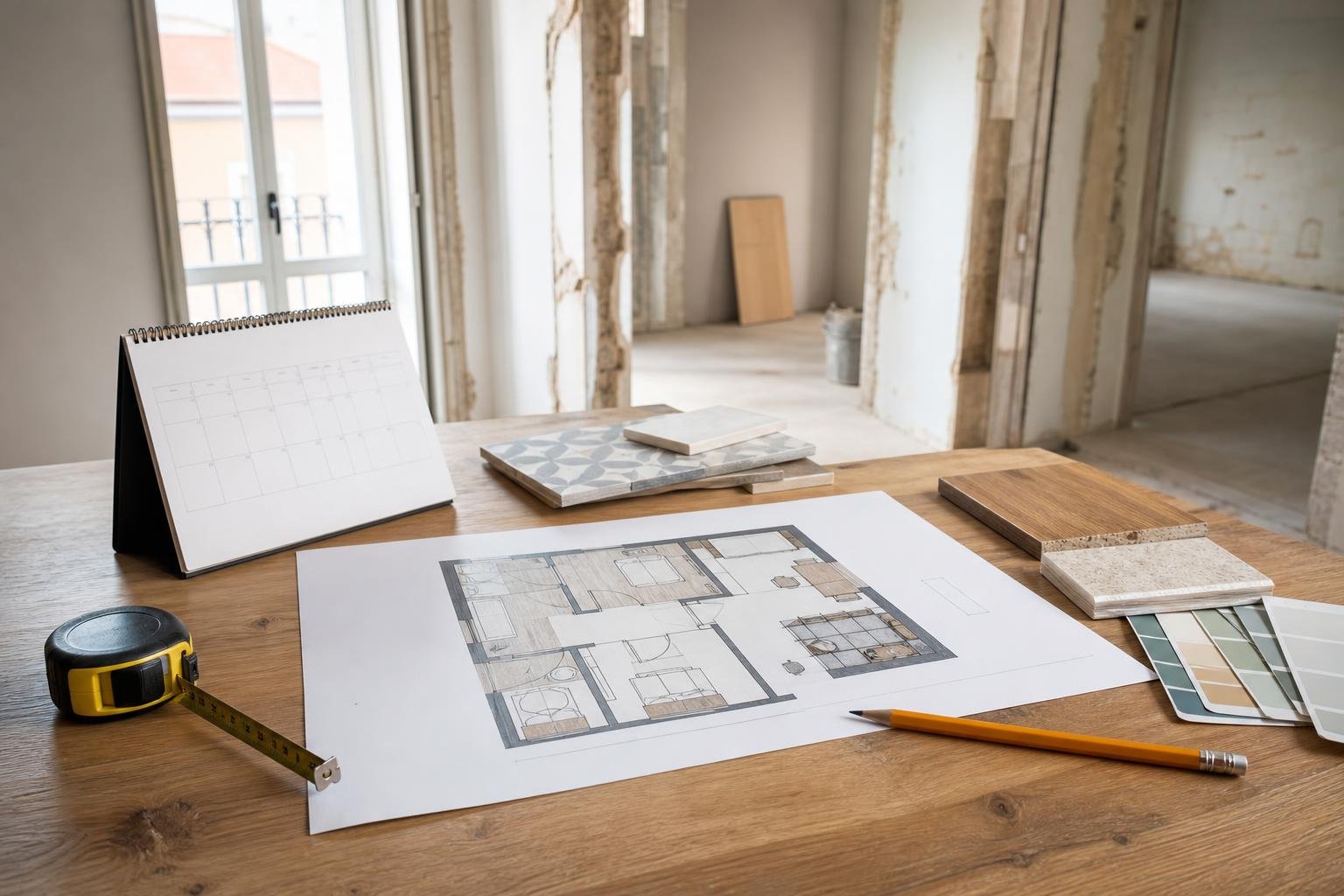
Before ordering cabinets, mark four elements on the plan: the bottle or piped-gas position, the shut-off valve, existing grilles or air inlets, and the combustion-product discharge route where relevant. Only then decide on drawer fronts, side panels and built-in appliances.
Avoid these recurring mistakes:
- leaving the valve behind a dishwasher or refrigerator;
- routing the hose through a hot zone beside the oven;
- covering a grille during painting or wall finishing;
- enclosing a balcony containing a combustion appliance without reassessing ventilation;
- accepting an appliance move without checking whether the connection and flue arrangement remain suitable.
Where work includes a gas network, branch, appliance or alteration, appoint a company with the proper qualification. The IMPIC construction qualification information identifies the category covering gas networks, installations and appliances, which is a useful check before appointing a contractor. Before work starts, also check insurance and responsibilities before a renovation, especially where technical installations are being altered.
A short routine that prevents a growing problem
Set aside a few minutes at the start of the colder season and after any furniture move. Check that the bottle remains upright, the valve is clear, the hose has not been pinched and the grilles are still unobstructed. When cleaning the kitchen, do not cover air inlets with cloths, boxes or recycling bags.
If you want to improve comfort without over-sealing the home, read our guide to window weatherstripping that keeps ventilation working. If your flat has an older appliance or the renovation will alter kitchen walls, finishes and cabinetry, plan infrastructure and safety first; finishes follow.
A gas bottle should never require you to dismantle a kitchen to shut off the supply. That is the practical test of a well-resolved arrangement.
Key takeaways
- Do not store LPG in basements, low-level spaces or places where a leak can collect.
- Keep the bottle upright, the valve visible and the hose away from heat and crushing.
- Never block ventilation grilles simply to stop draughts.
- A gas smell, abnormal flame or physical symptoms mean stop, leave and seek help.
If you are renovating a kitchen or reorganising technical services in a Lisbon flat, ask Obra Lisboa for a proposal that coordinates gas, ventilation, cabinetry and maintenance access before walls and furniture are closed.
Sources and further reading
- DGS guidance for cold periods
- Portuguese Official Gazette gas-installation regulation
- gas-installation inspection and maintenance rules
- IMPIC construction qualification information
Editorial image; it does not depict an Obra Lisboa project.

Obra Lisboa