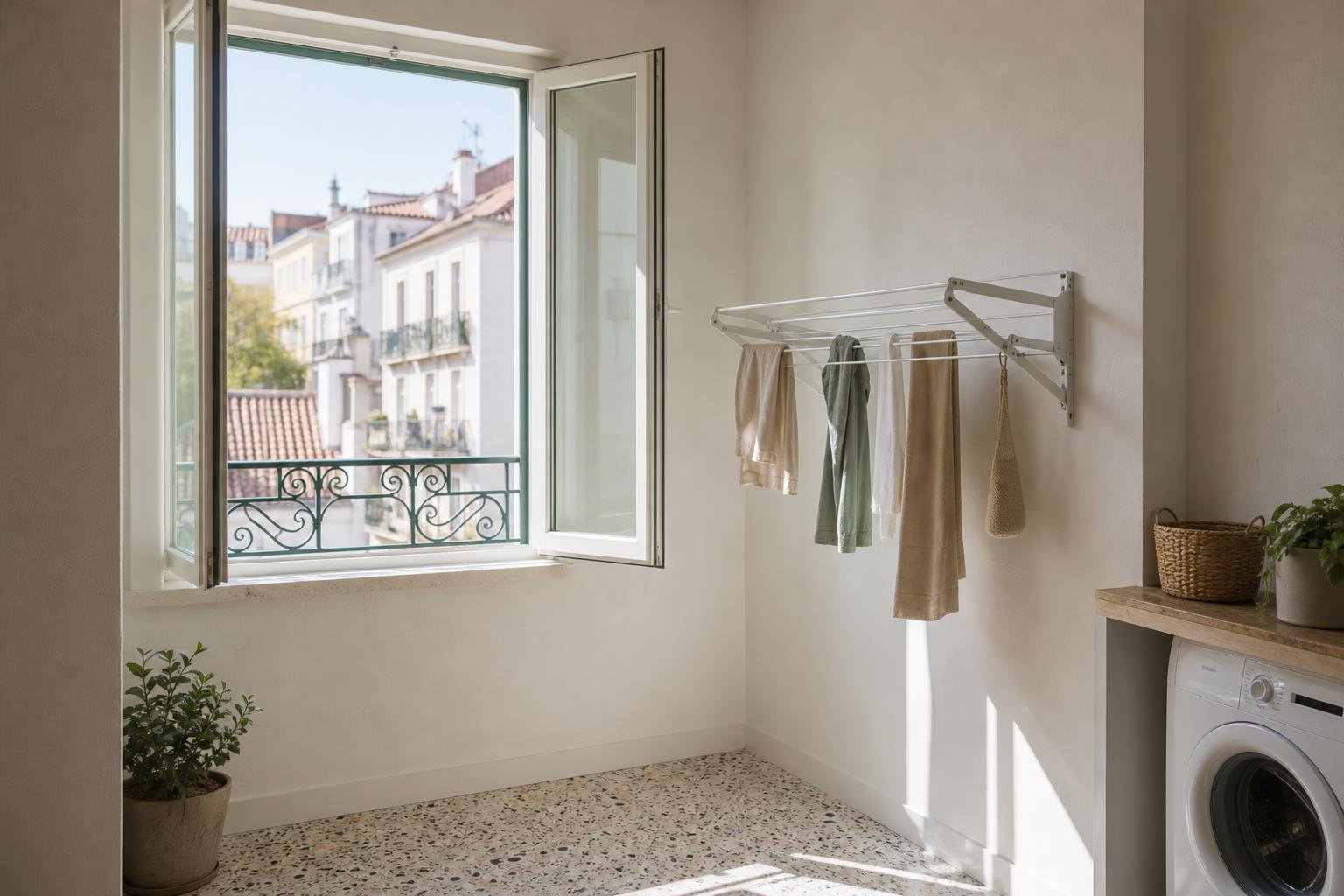

Outdoor flooring can seem like a purely aesthetic decision until the first winter shower, the first patio wash-down or the first rushed arrival home with wet shoes. On balconies, terraces, patios and home entrances, safety depends less on picking the “roughest” finish and more on coordinating grip, slope, drainage, joints, cleaning and transitions between surfaces.
In Lisbon, long sunny periods, short spells of heavy rain, urban dust and, in some areas, moisture influenced by the river or coast all affect how a surface performs. A successful finish does not have to be harsh, dark or heavy-looking. It needs to give reliable footing in dry and wet conditions, move water away without directing it indoors, and remain manageable to clean over time.
This guide turns material selection into a process you can check before work starts. It is also useful to understand how materials, budget and workmanship connect in building quality and durability.
Start with use, not appearance
The first question is who will use the space and under what conditions. A small covered balcony has very different demands from a patio used as a daily entrance, a place to wash bicycles or an area for large planters. A sloping route to the front door needs clearly readable edges, effective drainage and stable footing; beside a pool, water and treatment products create another specific set of risks.
Make a short list before choosing: is the area exposed to rain? does it remain shaded for long periods? will children, people with reduced mobility or pushchairs use it? is it a daily route, dining area or service area? The answers establish the balance between grip, barefoot comfort, wear resistance and ease of cleaning. For outdoor routes on a slope, guidance published in the Portuguese Official Gazette on pavement replacement refers to non-slip characteristics where the gradient exceeds 5%.
Do not choose from a photograph or a dry sample alone. Ask for the technical data sheet, examine the surface in side light and, where possible, see a wet tile. Texture should provide grip without being so open that it traps dirt, leaves or grout residue.
Grip does not replace slope and drainage
A surface with good grip can reduce slipping risk, but it cannot solve standing water. Puddles at a threshold, constantly damp joints or water running towards a façade point to a geometry problem, not a lack of texture. Flooring should be designed as part of a system: prepared substrate, waterproofing where required, slope towards drainage, accessible outlets and properly executed perimeter details.
Before removing an existing finish, check the levels at doors, drains and adjoining areas. What looks like a minor change in tile and adhesive thickness can reduce clearance at a door or reverse the drainage direction. Our guide to courtyard and patio drainage in Lisbon is also helpful when preventing a visually attractive solution from concealing future leaks.
At entrances, abrupt changes between materials or a poorly positioned channel drain can become a trip hazard. The aim is for water to leave by gravity, without crossing the walking route and without the system relying on constant cleaning to work.
Compare materials by real-world performance
Outdoor porcelain tile is a common choice because it provides many formats and strong surface resistance, but it must have an outdoor-suitable finish and be installed over a compatible base. Natural stone can perform very well when its porosity, strength and finish are understood; polished or very smooth stones may be unsuitable in wet areas. Brushed concrete, outdoor timber and composite decking also require their own decisions about texture, expansion, fixing and maintenance.
The product name matters less than whether it is suitable for the intended location. Ask about wet-floor performance, frost resistance where relevant, water absorption, format, thickness and the recommended installation system. With large-format pieces, an almost smooth surface can reveal unevenness; with deeply textured pieces, cleaning can become more demanding.
In shaded patios, do not select by colour alone. Very light finishes reveal pollution marks, while very dark ones can become uncomfortably hot in direct sun. Keeping samples in the actual location for several days helps assess glare, heat and how well they work with walls, window frames and planting.
Joints, edges and thresholds determine durability
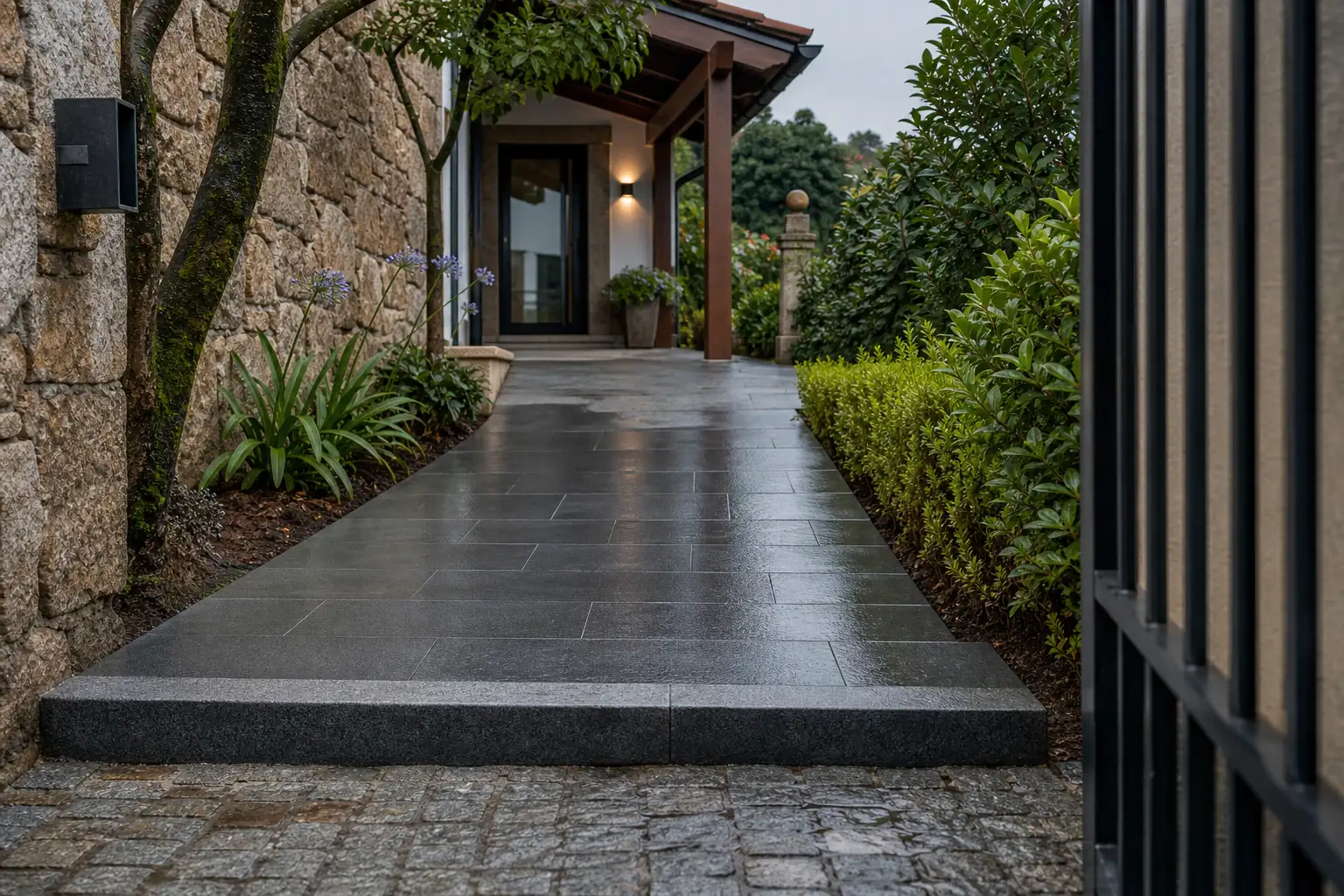
Many failures begin at the perimeter: where flooring meets a wall, around a door, at corners, beside drains and where materials change. Joints are not a visual flaw. They accommodate movement, support drainage and protect finishes from stresses that could lead to debonding or cracking. Repeating the narrow joint pattern of an indoor floor outside is a common mistake, especially in sunny areas.
Plan perimeter and movement joints according to the layout, substrate and manufacturer’s system. Do not bridge them with rigid mortar, fixed furniture or planters built over the top. At thresholds, check the continuity of waterproofing and provide a detail that directs water outward without creating an uncomfortable barrier for people entering or leaving.
If the work affects a balcony, façade, roof or another common part of a building, Lisbon’s municipal documentation indicates that condominium authorisation minutes may be required. Review the Lisbon municipal building-work document list before ordering materials or starting on site.
Everyday safety: lighting, contrast and upkeep
A safe floor must also be easy to read. At night, lighting should reveal steps, level changes, thresholds and balcony edges without glare. Moderate contrast between floor, step and wall is generally more useful than overly intense decorative light. On exterior stairs, use side or integrated lighting that defines each tread and keeps the route visible when the surface is wet.
Cleaning is part of the specification. Mud, algae, barbecue grease, decomposing leaves and poorly rinsed detergents can quickly cancel the grip available on the day the work is completed. Set a cleaning routine that suits the material: sweep before washing, use non-aggressive products, keep drains clear and avoid waxes or coatings that form a slippery film.
Inspect the area after heavy rain: look for standing water, open joints, hollow-sounding tiles, stains beside walls and slow drains. Addressing a small drainage failure early is usually far easier than repairing damaged waterproofing. This approach sits alongside effective preventive property maintenance.
When to involve a designer and qualified contractor
Replacing a few loose tiles may be a straightforward repair. Changing levels, waterproofing, drains, guardrails, stairs, thresholds or the external appearance of a building deserves technical assessment before work begins. The same applies to terraces above occupied rooms, where a failure may emerge months later on a neighbour’s ceiling or inside your own home.
Ask for a quotation that clearly separates substrate preparation, repairs, waterproofing, slope formation, flooring supply, joints, perimeter details, drainage and final cleaning. Compare equivalent scopes, not just price per square metre. A brief quotation that omits critical details can leave major choices to be made midway through the work.
For private construction work in Portugal, the contractor responsible for execution must hold a qualification covering the overall value of the work, according to IMPIC guidance on construction activity. Beyond checking this, record the approved material, finished levels, drainage points and acceptance criteria in writing before installation starts.
Planning to renew a balcony, patio or outdoor entrance? Obra Lisboa can help assess the substrate, drainage, materials and installation details before construction begins.
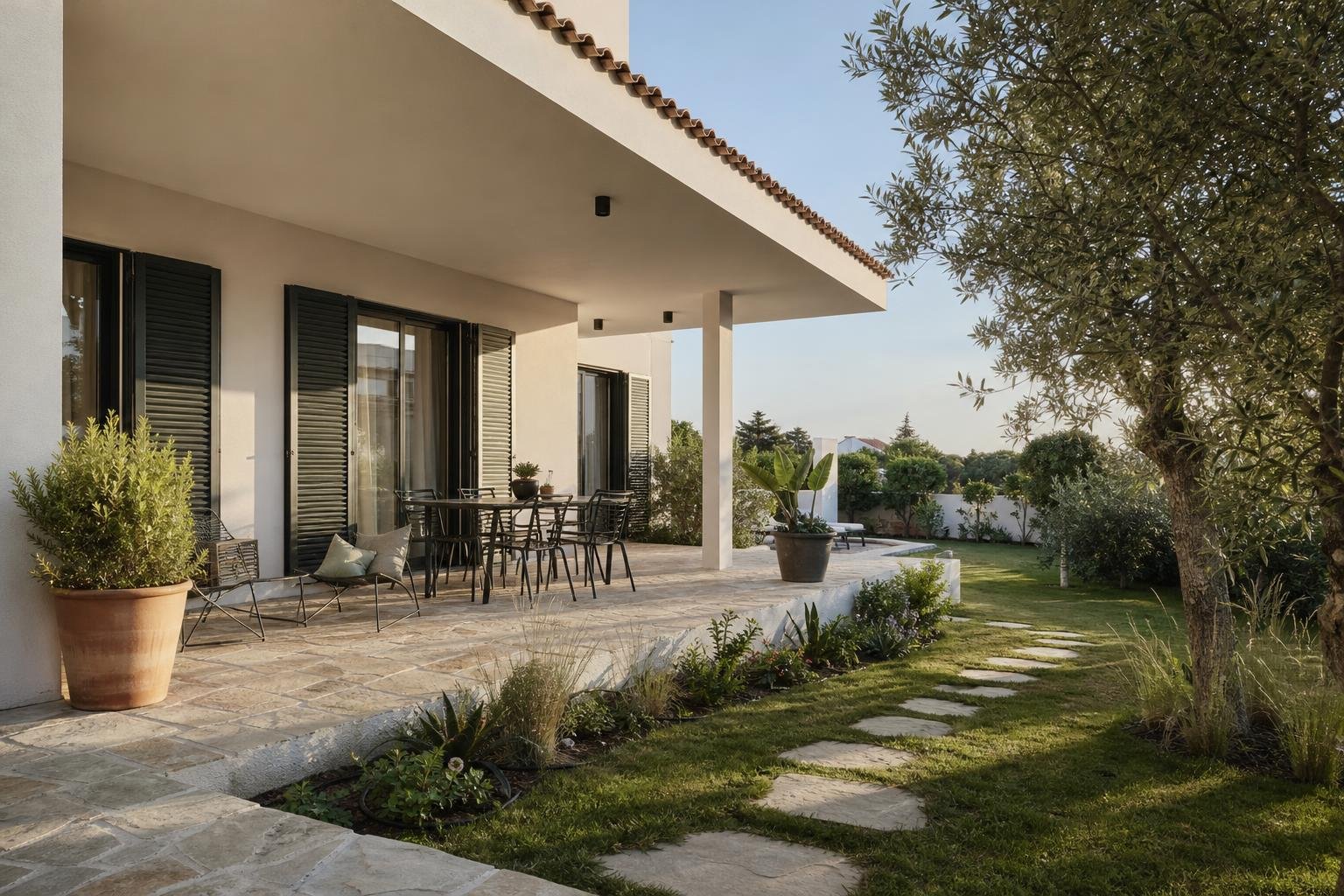
Editorial image; it does not depict an Obra Lisboa project.

Obra Lisboa