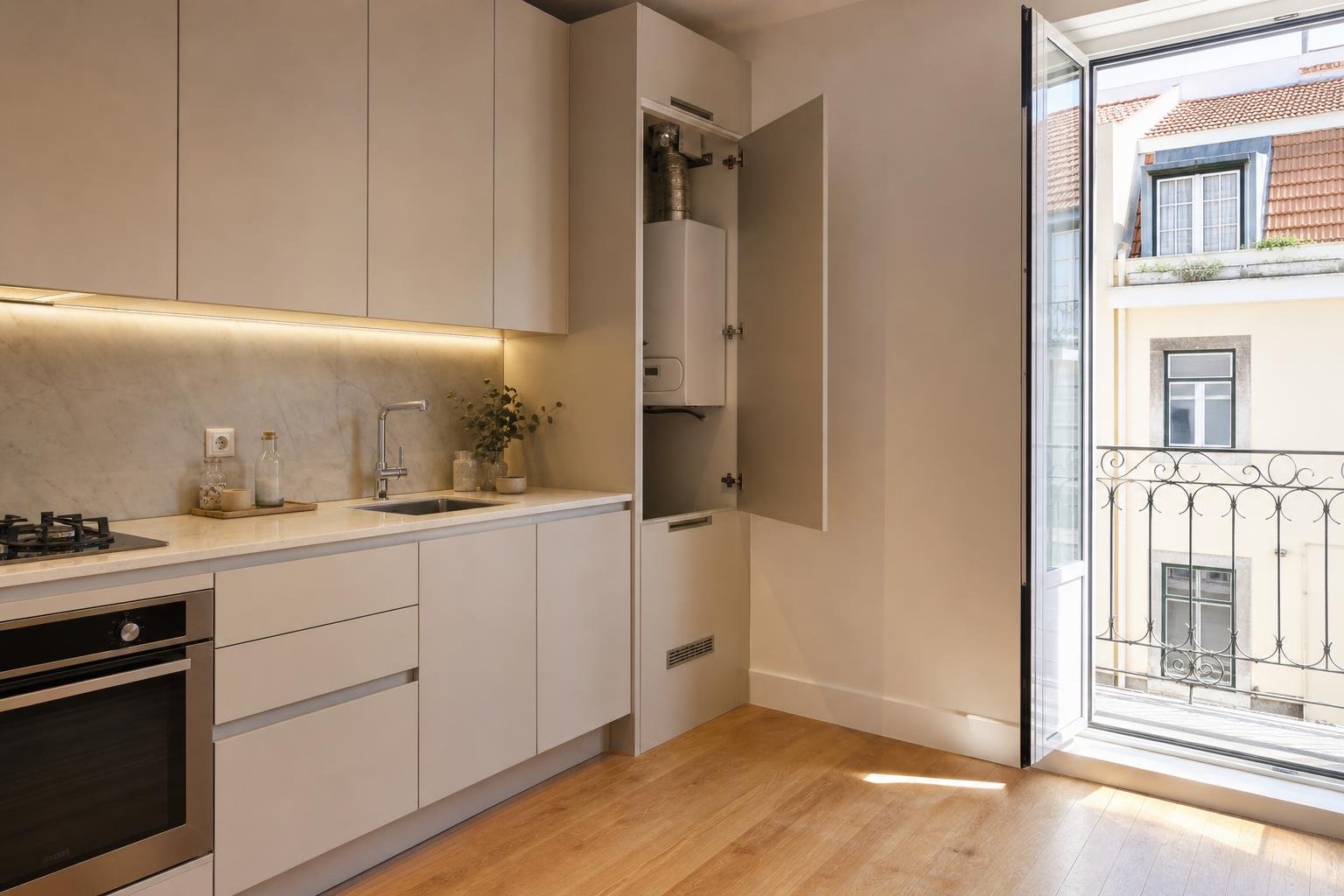
If your hot-water cylinder drips from its safety valve, do not cap or block it: first establish whether the discharge is occasional and safely routed. If it is constant, heavy, or comes with noise, corrosion or water inside a cabinet, arrange a technical inspection. The valve exists to limit pressure in the appliance. The priority is not simply stopping the drip; it is finding out whether it comes from normal heating, excessive mains pressure, a worn valve or another installation fault.
Contents
- Why does a hot-water cylinder need a safety valve?
- Is a small discharge normal or already a fault?
- What can you check without interfering with safety?
- What commonly causes a persistent discharge?
- When should you switch off and call a professional promptly?
- How to reduce damage risk during a future installation or renovation
Why does a hot-water cylinder need a safety valve?
A storage water heater warms water inside a closed tank. As the water heats, it expands and pressure can rise. The safety valve is the component that releases water when required to protect the appliance and the installation. Portuguese technical rules require a safety valve on the supply branch to storage water heaters; see the technical rules for the safety of hot-water appliances.
That is why plugging the outlet, forcing the valve shut or tightening it to “stop wasting water” is unsafe. Nor should the discharge be routed into an unprotected cupboard: a small recurring leak can swell particleboard, encourage mould and reach sockets or extension leads.
In a Lisbon flat, the appliance may be hidden in an enclosed balcony, laundry area, kitchen unit or ceiling void. Hiding it does not remove the need for visual access to the valve, pipe connections and drainage point.
Is a small discharge normal or already a fault?
A brief discharge during a heating cycle can happen. It becomes a concern when water keeps coming out long after heating has finished, when there is flow with the appliance switched off, or when the discharge repeats with no clear link to hot-water use.
Make a simple observation without dismantling anything: dry the outside, place a temporary container under the outlet only to understand the volume, and note the time. Then check whether water appears mainly while the unit is heating. Do not turn or dismantle the valve unless you know the manufacturer’s procedure.
| What you see | Cautious interpretation | Next action |
|---|---|---|
| A few drops while heating | May be pressure relief caused by heating | Check that it stops and that the discharge is safely routed |
| Constant dripping or a steady trickle | May point to high pressure, debris or valve failure | Arrange a technician’s inspection |
| Water outside the discharge pipe | May be a leaking joint, valve body or tank | Switch off electrical supply if water could reach electrics, and request assistance |
| Rust, brown marks or a damp base | There is deterioration or a persistent leak | Do not postpone inspection |
What can you check without interfering with safety?
Start by tracing the water. The valve outlet should discharge where it cannot wet walls, furniture or electrical areas. Look for moisture on the floor, skirting board and visible joints. Also check that the cold-water isolation valve is accessible, without treating it as a permanent fix.
- Confirm the source: make sure water is leaving through the valve pipe rather than from a threaded joint or the bottom of the tank.
- Watch the pattern: note whether it happens during heating, after showers or throughout the night.
- Protect the area: move boxes, laundry, cleaning products and extension leads away.
- Keep useful information: a photo of the rating plate, the unit’s approximate age and a record of its behaviour help diagnosis.
Building water systems should include suitable isolation, non-return and safety valves. The Portuguese technical rules for building water networks describe those functions and provide for pressure-reducing valves when supply pressure requires them.

What commonly causes a persistent discharge?
There are four usual possibilities. First, cold-water mains pressure may be high. Second, the safety valve may be worn or affected by mineral deposits and no longer seal properly. Third, there may be a temperature-control problem or overheating. Fourth, a leak may appear to come from the valve while actually starting at a nearby connection or in the tank itself.
Do not choose a remedy by trial and error. Replacing only the valve may not solve anything if incoming pressure remains unsuitable; fitting a pressure reducer without checking the whole installation can also affect flow. A technician should assess the appliance, pressure, valve, any expansion provision and discharge route together.
If you are planning renovation work, allow maintenance access and specify a water-resistant finish around the technical area. Review the wider principles of building maintenance before enclosing equipment behind fixed cabinetry.
When should you switch off and call a professional promptly?
Seek urgent help if water is near electrical components, there is a burning smell, an electrical breaker trips, the tank is distorted, taps deliver unusually hot water, there is abnormal noise, or the leak cannot be safely contained. If there is an immediate electrical risk, do not touch wet parts; switch off power at the consumer unit only if you can do so safely, then contact a professional.
A unit in a home left empty for weeks also deserves careful attention. Stored hot water and aerosol-producing outlets such as showers should be maintained and used responsibly. The Portuguese health authority guidance on Legionella prevention and control highlights maintenance, avoiding stagnation and temperature management in water systems.
Avoid three mistakes: blocking the valve, connecting its outlet to a sealed container, and ignoring recurrent damp because it is “only a drip”.
How to reduce damage risk during a future installation or renovation
Ask for the arrangement to be planned before walls or cabinetry are closed. The appliance needs inspection access, a visible and safe discharge route, an identifiable isolation valve and enough room to replace components without dismantling the cupboard. In kitchens and laundry rooms, protect cabinet bases and keep sockets away from any likely water path.
Choosing a hot-water system also involves energy use, maintenance and compatibility with the home. ADENE’s residential water-efficiency information includes hot-water production and distribution among the elements that affect a home’s performance. Treat a leak as a reason to correct access, drainage and protection around the technical space.
Key takeaways
- Never block or remove a safety valve to stop a drip.
- Check whether discharge occurs only while heating or continues constantly.
- Water outside the outlet pipe, rust, noise or electrical risk call for prompt assistance.
- During renovation, retain access, safe drainage and water protection around the appliance.
If you are replacing a hot-water cylinder, reorganising a laundry area or repairing leak damage, include service access and drainage in the scope from the outset. Learn about Obra Lisboa as a construction company in Lisbon and request an assessment of the work required.
Sources and further reading
- technical rules for the safety of hot-water appliances
- Portuguese technical rules for building water networks
- Portuguese health authority guidance on Legionella prevention and control
- ADENE’s residential water-efficiency information
AI-generated editorial image; it does not depict an Obra Lisboa project.

Obra Lisboa