In a rented apartment, do not start permanent work until you have checked the tenancy agreement and obtained the landlord’s written approval. In Lisbon, a project may look like a simple interior update while involving shared building elements, construction noise, deliveries, pavement occupation or an alteration that goes beyond routine maintenance. Separating repairs, improvements and alterations from the start helps avoid disputes at handover, delays on site and unnecessary conflict with the condominium.
Contents
- Who can approve work in a rented home?
- Urgent repair or improvement: what is the difference?
- When does the condominium become part of the decision?
- Which interior works may require contact with Lisbon City Council?
- How should access, noise and waste be organised?
- Checklist before accepting the quotation
Who can approve work in a rented home?
Start with the tenancy agreement. Under the Portuguese Civil Code, conservation work required by law or by the purpose of the tenancy is generally the landlord’s responsibility. A tenant may only carry out work where the agreement allows it or where the landlord gives written permission. In practical terms, a phone call, a casual exchange of messages or advice from a concierge is not a substitute for approval that identifies the work and its conditions.
Ask the landlord for a short, dated and specific agreement. It should identify the apartment, describe the proposed work, state who appoints the contractor and pays, record the approved materials or finishes, say whether the improvement remains in place, and define what happens at the end of the tenancy. The legal framework appears in the Civil Code provisions on permitted deterioration and works in rented property.
There is a meaningful difference between hanging a picture, replacing a curtain rail and fitting a new kitchen. Minor deterioration needed for comfort or convenience may be permitted, yet the tenant will usually need to make good before returning the property unless another arrangement is agreed. Repeated drilling into finishes, removing tiles, changing doors or moving plumbing requires a documented decision.
- Landlord: conservation work, approval of improvements and decisions affecting the property.
- Tenant: careful use, prompt notice of defects and compliance with the written agreement.
- Contractor: clear quotation, protection of the building and work within the agreed scope.
Urgent repair or improvement: what is the difference?
An active leak at a water connection, an electrical board showing fault signs or a window allowing rainwater into the home should not automatically become a full renovation opportunity. First, record the issue: dated photographs, a short description, its location and written notice to the landlord. This makes it easier to separate essential repair work from optional improvements requested by either party.
Where a repair is urgent and delay is incompatible with the situation, the tenant may be able to arrange it and seek reimbursement under the conditions set out in Article 1036. The same legal text explains that, where the matter cannot wait, the landlord should be notified at the same time. Check the official provisions on urgent repairs and reimbursement in a tenancy before accepting costs or offsetting any amount against rent.
Two common decisions make the final account harder to resolve:
- Replacing a failed component with a more expensive option without the owner’s approval.
- Using a repair as a reason to alter layouts, finishes or services without separating the additional work.
- Keeping only the final invoice, without the quotation, photographs and evidence of notice.
If the source of the defect is shared — a riser, roof, common pipework or water entering from another apartment — the landlord needs to deal with the building manager. The tenant should report it quickly, provide necessary access and avoid covering damp signs with paint while the cause remains unresolved.
When does the condominium become part of the decision?
A landlord can approve work inside the apartment, but that approval does not override the building’s rules. Before ordering materials, check the building’s constitutive title, condominium regulations and the practical requirements set by the administrator: permitted hours, lift use, protection of shared areas, waste routes and delivery arrangements.
Some work is no longer simply “inside the flat”. The façade, roof, risers, general services and other elements may be shared property. In addition, work that changes the building’s architectural line or visual arrangement requires prior authorisation from the condominium assembly, approved by a majority representing two thirds of the building’s total value, under the property-horizontal regime published in the Diário da República.
For a rented apartment, the useful sequence is straightforward: the tenant presents the plan to the landlord; the landlord asks the administrator for the relevant documents and confirms whether an assembly resolution is needed; the technical solution is only fixed after that. This can apply to an external unit, a new extraction outlet, visibly altered window frames or work requiring the opening of shared elements.
A notice to neighbours remains worthwhile even where a formal resolution is unnecessary. Include contacts, expected dates, working hours, material routes and the person responsible on site. For this stage, see how to notify and coordinate an apartment renovation in a condominium.

Which interior works may require contact with Lisbon City Council?
Not every interior project requires a planning licence or prior urban-planning notice. Lisbon City Council identifies as exempt from prior control interior alterations to buildings or apartments that do not affect structural stability, change building height, façades, roofs or coverings, or involve the removal of façade tiles. Urban-planning exemption does not replace the landlord’s approval or the obligations owed to the condominium.
Read the Council’s criteria for exempt works and public-space occupation in Lisbon before deciding that a project is merely decorative. Demolishing a wall may affect stability; moving a kitchen can involve ventilation, drainage and common services; enclosing a balcony or installing equipment outside is more clearly an alteration.
Where there is doubt over structure, façade, permitted use, heritage protection or common elements, stop before appointing the contractor and obtain technical assessment. An existing-layout drawing, photographs of the proposed areas, a note of walls to be removed and service routes give the designer or engineer a proper basis to assess the real scope. They also help prevent a project that began as painting work from requiring drawings, shared-area reinstatement or condominium approval.
How should access, noise and waste be organised?
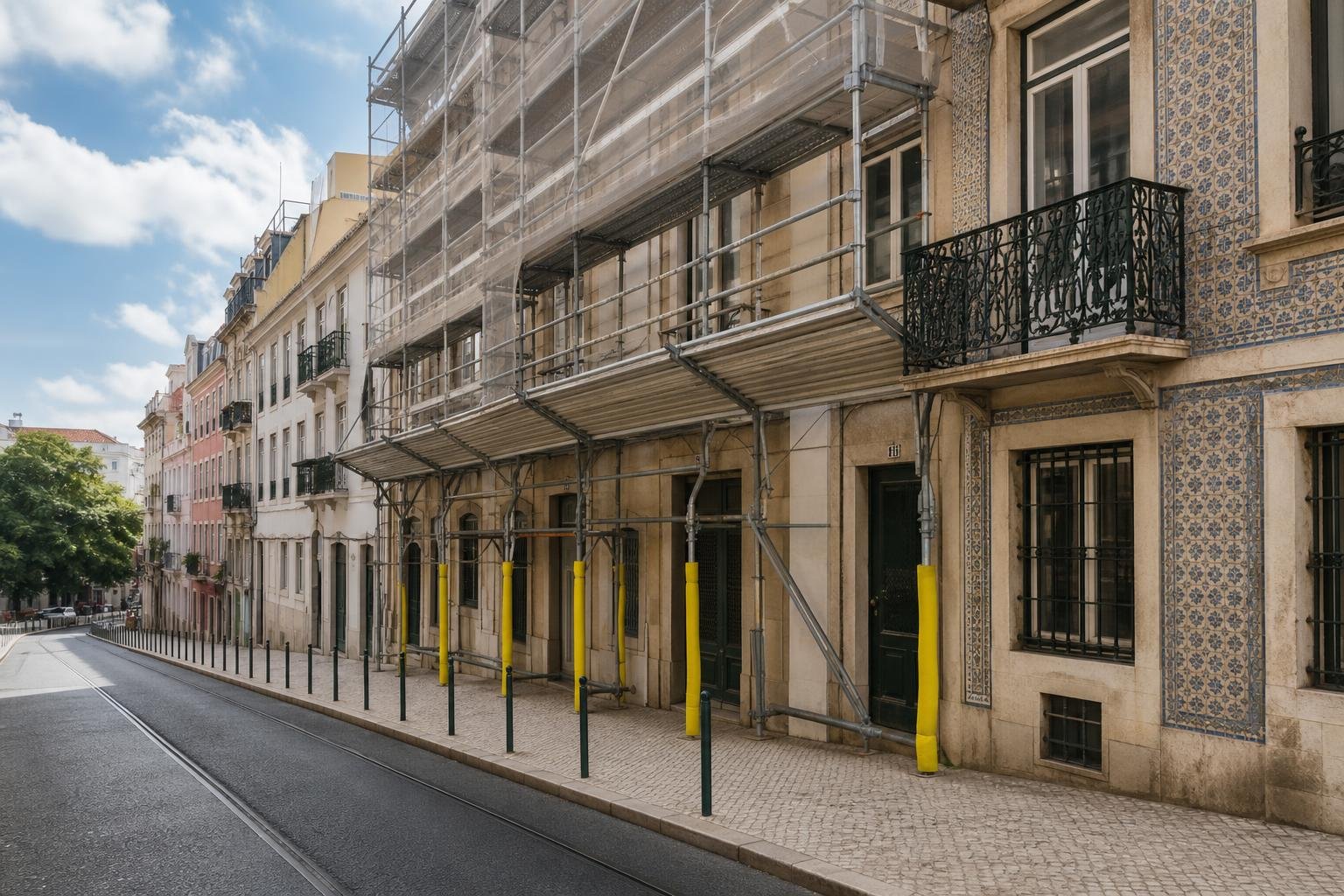
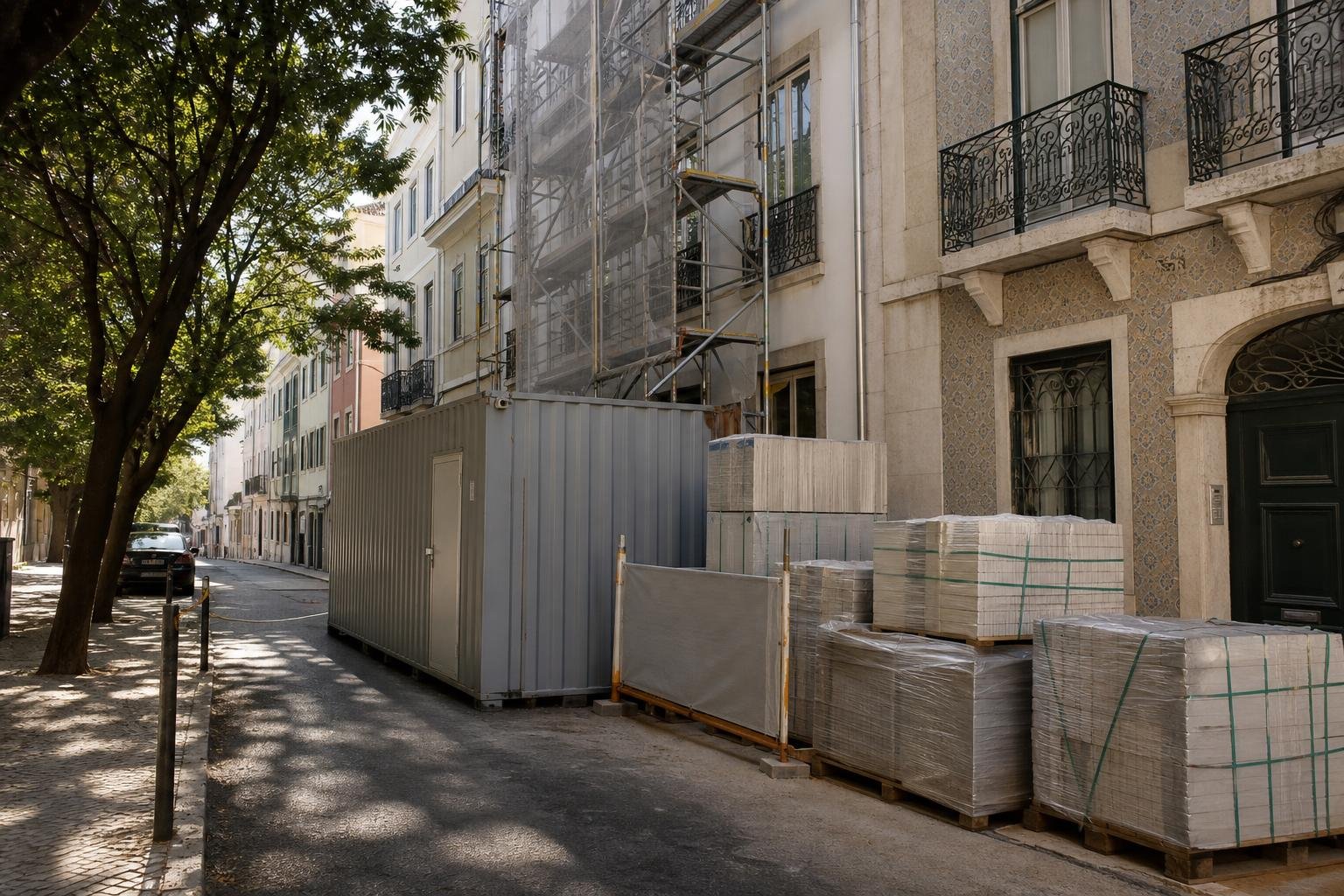
Logistics are often where a small project creates the greatest friction. Even exempt works may need a skip, delivery area, hoarding, scaffolding or pavement space. In Lisbon, public-space occupation has its own rules; do not assume that a contractor can leave bags, pallets or waste outside the entrance.
The City Council states that the promoter must notify its intention to start work and identify the person responsible for its execution up to five days beforehand, applying this communication to works both with and without prior control. Check the relevant process and conditions on the Council’s page for notification of work commencement.
Before the first delivery, prepare a one-page coordination note covering:
- working days and hours accepted by the condominium;
- contact details for landlord, tenant, site lead and building manager;
- rules for the lift, stairs, parking and daily cleaning;
- protection planned for common floors, walls and doors;
- waste removal arrangements and any public-space occupation.
Do not let the written authorisation stop at “work is permitted”. It should address responsibility for damage during deliveries, making good shared areas and removing waste. A detailed contract reduces uncertainty between owner, tenant and contractor; see the key points in renovation contracts in Lisbon.
Checklist before accepting the quotation
A rented-apartment renovation can proceed safely when each approval matches the decision it is meant to support. Resolve the right to carry out the work first; then address the condominium, City Council and site logistics. Do not reverse that order simply to secure a material discount or a contractor’s available date.
- Read the tenancy agreement and check clauses on works, reinstatement and notice.
- Send the landlord a written request with drawings or photographs, scope, quotation and programme.
- Obtain written approval before appointing work that changes finishes, services or rooms.
- Check with the building manager for common elements, working hours or assembly approvals.
- Confirm whether public-space occupation, building protection or a start notice is required.
- Keep the accepted quotation, invoices, before-and-after photographs and approvals in one file.
If there are signs of electrical danger, an active leak, apparent structural damage or a need to alter common elements, the boundary for DIY ends before work starts. In those situations, arrange technical assessment and coordinate the intervention through the landlord and condominium.
Key takeaways
- Obtain the landlord’s written approval for work that goes beyond minor reversible changes.
- Urgent repairs should still be reported and documented, even when they cannot wait.
- Landlord approval does not remove condominium rules or possible municipal requirements.
- Set out in writing who pays, who reinstates and who is liable for damage to shared areas.
If the landlord has approved the intervention and you need to turn that decision into a clear work plan, Obra Lisboa can help define the scope, phases and practical coordination of the renovation.
Sources and further reading
- Civil Code provisions on permitted deterioration and works in rented property
- property-horizontal regime published in the Diário da República
- exempt works and public-space occupation in Lisbon
- notification of work commencement
AI-generated editorial image; it does not depict an Obra Lisboa project.

Obra Lisboa