A fine, stable crack may only affect the finish, while a crack that widens, crosses several building elements or appears with distortion should be assessed before any repair is made. Lisbon apartments combine older masonry buildings, concrete structures and many layers of past alterations. Painting over the mark may remove useful evidence. Start by recording its pattern, look for related signs and check whether recent works, water ingress or changes elsewhere in the building could be involved.
Contents
- Crack, gap or joint: what are you actually looking at?
- Which signs require prompt action?
- How to monitor a crack without concealing it
- Why do cracks appear after renovation?
- When can the crack be repaired?
- Make a safe decision before the next stage of work
Crack, gap or joint: what are you actually looking at?
Begin by describing the mark rather than naming its cause. A hairline crack is often narrow and limited to the finish. A gap or wider crack is more visible and may run through plaster, masonry or areas around doors and windows. A very straight line where two materials meet may be an intended joint, or simply an interface that moves differently.
Check whether the mark is only in the paint, whether it appears on both sides of the wall, whether it continues across the ceiling or floor, and whether similar marks exist on other levels. In older buildings, it also matters whether the wall is lightweight partitioning, masonry or part of the structural arrangement. Lisbon City Council notes that narrow cracks, particularly vertical ones, may not be serious but should be monitored; wider gaps call for specialist assessment. See the council’s guidance on cracks and seismic safety.
Avoid two shortcuts: calling every vertical mark “settlement”, or deciding that a diagonal crack is structural from a photograph alone. Direction can guide an inspection, but it cannot replace an understanding of the building, its materials and its alteration history.
| Observed sign | What it may indicate | First decision |
|---|---|---|
| Fine line in paint only | Movement or shrinkage in the finish | Photograph and monitor before touching up |
| Mark at a material junction | Different movement between substrates | Check for a joint or earlier repair |
| Gap that widens or extends | Ongoing movement or deterioration to diagnose | Request technical assessment |
| Crack with damp, rust or distortion | Associated defect requiring investigation | Do not repair or load the area |
Which signs require prompt action?
Do not wait for a condominium meeting or planned refurbishment if the opening has increased quickly, if loose pieces are present, if you can see settlement, doors or windows suddenly stop working properly, repeated cracking sounds occur, reinforcement is exposed, water is entering, or floors and ceilings are visibly distorted. Keep people and belongings away where there is a risk of falling render or fragments.
On balconies, enclosed verandas, basements and places where cracking accompanies corrosion or detachment, the immediate priority is restricting use and making the area safe. The city’s information on building defects explains that moisture can degrade timber elements and encourage fungal attack, while deflection or distortion can point to inadequate capacity for current loads. Review the examples in the guide to building pathologies and anomalies.
If the issue concerns a party wall, façade, roof, stairwell or another element that may affect other homes, notify the condominium management in writing. Include dated photographs and the precise location. A patch inside one flat will not solve a cause originating in the roof, a stack pipe, the façade or an alteration made on another floor.
How to monitor a crack without concealing it
Make a simple record over several weeks or months, unless urgent signs are present. The purpose is not to diagnose the problem yourself. It is to establish whether the mark remains stable or changes, and to give a professional organised information.
- Photograph it straight on, in good light, with a scale reference beside it.
- Record date and location: room, wall, and approximate distance from a door, window or corner.
- Note changes: heavy rain, water ingress, works in the building, vibration, a change of use or doors becoming difficult to close.
- Repeat the picture from the same point and angle. Compare opening and length rather than relying on memory.
Do not widen the crack with tools to “see inside”, inject filler or foam, or apply tape that prevents you from seeing whether it changes. Do not chase electrical channels or hang heavy loads in the area before the substrate is understood. If refurbishment is planned, add a crack map to the initial survey; it belongs alongside checking the building before renovation in Lisbon.

Why do cracks appear after renovation?
A crack that becomes visible after works was not necessarily caused at that moment. Removing wallpaper, thick paint or finishes can expose older marks. Yet works can introduce new stresses through opening up walls, cutting into partitions, changing loads, replacing floors, vibration, mortar drying or rigid connections between materials that move differently.
In Lisbon’s older buildings, compatibility between the existing system and a new solution needs careful attention. Lisbon City Council explains that floors in older buildings are often timber and can be more flexible in their behaviour; later alterations that change the original arrangement may matter to the way a building responds. Read the council’s principles for earthquake-resistant construction in existing buildings.
Before removing a wall, making an opening or placing a heavy screed over an older floor, have the proposed solution checked on site. Sequence matters: investigate, define the intervention, carry it out, then close surfaces and paint. For related planning, see what to check before removing apartment walls in Lisbon.
When can the crack be repaired?
Repair only once the cause has been resolved, or once an assessment finds that the mark is stable and superficial. The method must suit the substrate: a stucco wall, plasterboard lining, older masonry wall and the junction between two materials do not automatically take the same filler and reinforcing tape.
A sound repair removes loose material, prepares the edges, deals with any moisture, uses compatible products and allows appropriate drying time before painting. Where salts, mould, water ingress or corrosion are present, final paint belongs at the end of the process. On older walls, a repair that is too rigid can crack again or interfere with the way the existing fabric performs.
The common mistake is filling, sanding and painting in one day. Another is making an active crack look smooth while keeping no record of what existed. Save the photographs and a short description of the intervention. They are useful if the mark returns or if the condominium later needs to connect the issue with works elsewhere in the building.
Make a safe decision before the next stage of work
Create a short record now: photographs, location, date and associated signs. If marks are fine, unchanged and unaccompanied by other warning signs, continue to monitor and schedule repair at the right stage. If there is movement, damp, distortion, loose material or uncertainty about an altered wall, pause work that could worsen the issue and seek technical assessment.
During a renovation, diagnosis should be included in the work scope before paint colours and finishes are selected. This helps prevent quotes that only treat symptoms and sets clear boundaries for demolition, strengthening or local repairs.
Key takeaways
- Photograph and date a crack before repairing it; change over time is more useful than one image.
- Widening gaps, damp, distortion or loose material require prompt professional assessment.
- Do not demolish, chase walls or install heavy fixings near an unexplained defect.
- For common elements, notify condominium management in writing and retain the record.
If you are planning an apartment renovation and have found cracks, include the survey and repair decision in the early scope. Obra Lisboa can help organise renovation work so that decisions are made before walls are closed and finishes are chosen.
Sources and further reading
- guidance on cracks and seismic safety
- guide to building pathologies and anomalies
- earthquake-resistant construction in existing buildings
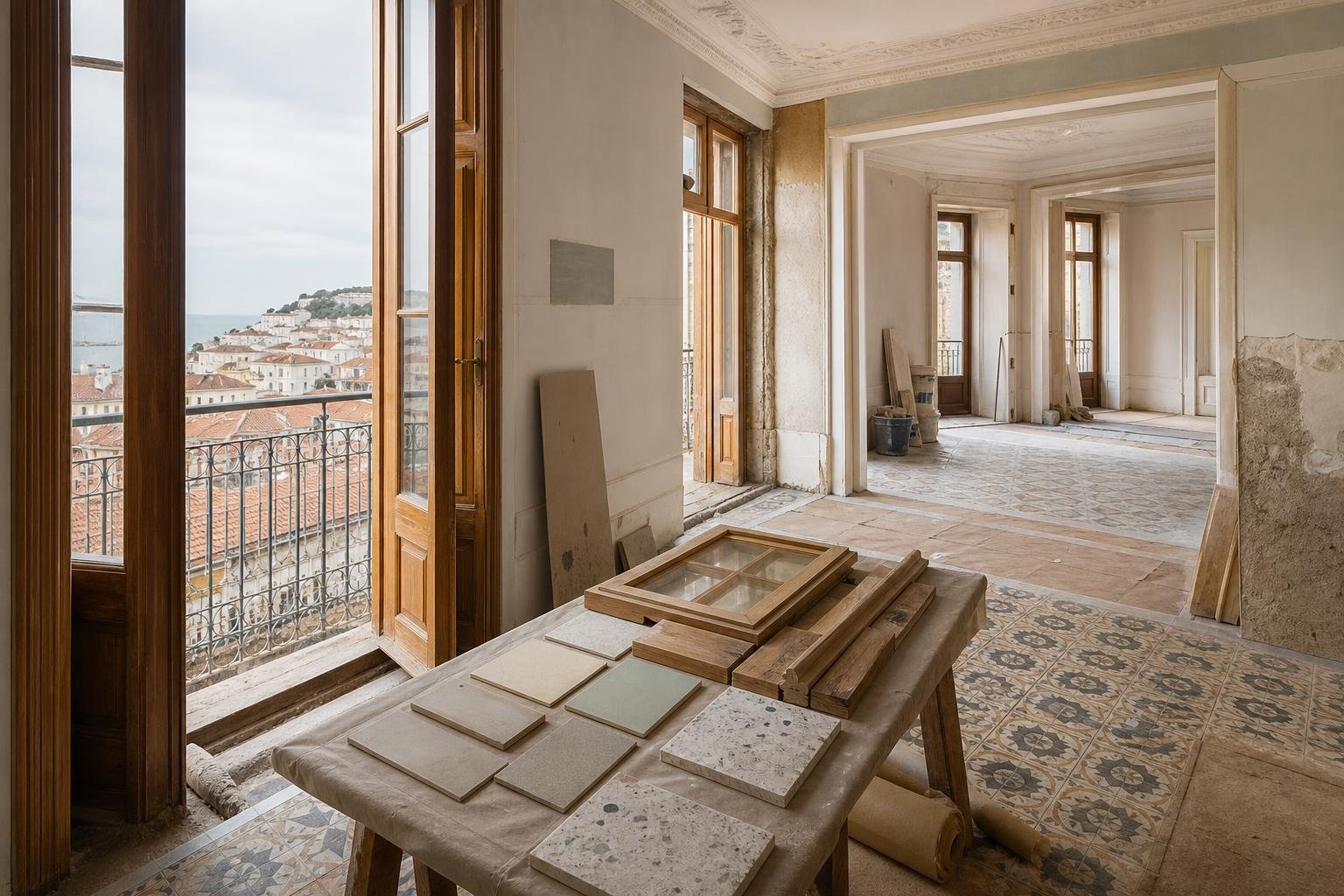
AI-generated editorial image; it does not depict an Obra Lisboa project.

Obra Lisboa