A dark patch beside a window, a crack following a cornice or small pieces of render on the pavement can look like finishing defects. On a street-facing façade, they can quickly become a safety issue. In Lisbon, many buildings combine older walls, repeated repairs and wind-driven rain. Painting over the visible mark often only postpones the next failure.
The useful question is straightforward: is the finish simply weathered, or has it lost its bond with the wall behind it? The answer decides whether local maintenance is enough, whether areas need opening up for investigation, or whether the condominium should treat the matter as urgent. This guide separates warning signs, immediate action and the steps needed for a repair that does not conceal water ingress.
Tell a surface crack from loss of bond
Not every crack means immediate danger. Very fine cracks in paint can result from ageing, thermal movement or poor application. They still deserve monitoring, especially around window sills, downpipes, roof details and joints between dissimilar materials.
The concern rises when there are bulges, lifted edges, hollow-sounding areas under a light tap, layered render or fragments on the ground. A finish can look intact while already detached from the wall behind it. Do not strike it hard, push tools into it or try to pull loose material away from a window.
Record the location, height, date and any change with photographs taken from a safe position. If the façade sits above a building entrance, lower balcony, bus stop or narrow pavement, report it immediately to the building manager or owner.
For Lisbon’s framework on conservation works and their practical conditions, consult the municipal page on public-space occupation for works exempt from prior planning control. A straightforward wall repair may still require careful arrangements where pedestrians need protection.
Read the clues around the damaged patch
The place where render falls is rarely the source of the defect. Look above and beside it for overflowing gutters, cracked downpipes, open metal flashings, poorly sloped sills, failed window sealant or cracks that allow water behind the finish.
There is a common pattern in older buildings: water enters through a top-floor detail, travels behind render and becomes visible several metres lower down as salts, blistering paint and detachment. Repairing the visible patch alone leaves the wall exposed again when the next wet season arrives.
On north-facing or heavily shaded façades, algae and darkening can indicate slow drying; they do not, on their own, prove a leak. Vertical marks below pipes, stonework or sills point more strongly to repeated run-off. Rust marks near metal components also call for a check of corrosion and failed protection.
Before ordering paint, place the issue within a wider programme of building maintenance, covering the roof, drainage, windows and sealant joints.
When people may be at risk, safety comes before speed
If pieces have fallen, render is hanging loose or there is visible deformation above a route used by people, keep clear of the area. Do not put a ladder beneath it, park close to the wall or improvise a net, tape or scaffold. Protection needs to be stable and suited to the setting.
In a condominium building, notify the manager in writing, with photographs and the precise location. If the condition threatens public space, the response may require professional cordoning-off, municipal communication and suitable access equipment. Lisbon City Council notes that public-space occupation may require a licence or notice and, where applicable, an information board.
The legal framework gives municipalities powers to require conservation works and, in serious cases, act on buildings that endanger people or property; see the published Diário da República reference on powers relating to conservation works. This does not replace a technical assessment. It explains why falling materials onto the street should never be treated as routine.

Get the right diagnosis before commissioning repairs
A technical visit should identify the wall substrate, the existing finish, the likely extent of hollow areas, water-entry points and access constraints. On a building with traditional render, the repair may need compatible mortars and controlled drying. On a more recent façade system, layers, fixings and edge details should be confirmed before work begins.
A quote limited to “remove loose material and paint” is not enough. Ask for separate items for protection and access, removal of unbonded material, substrate repair, treatment of moisture causes, reinstatement of layers, finishing and cleaning. It should also state what happens if additional hollow areas appear once the façade is opened.
Where there are wide cracks, movement, deformation or questions around structural components, do not treat the issue as decoration. A qualified professional may need to assess the wall, balconies, railings, parapets or cornices. For interior finishes, see our guide to repairing cracks in Lisbon stucco walls without concealing the cause. The rule is the same: diagnose first, close up afterwards.
Plan around rain, wind and safe access
External repair depends on weather, drying time and safe work at height. Avoid scheduling sensitive removal or application work during persistent rain, strong winds or extreme heat. The IPMA meteorological warning service provides district and hazard information, which is particularly useful before installing scaffolding, platforms or façade protection.
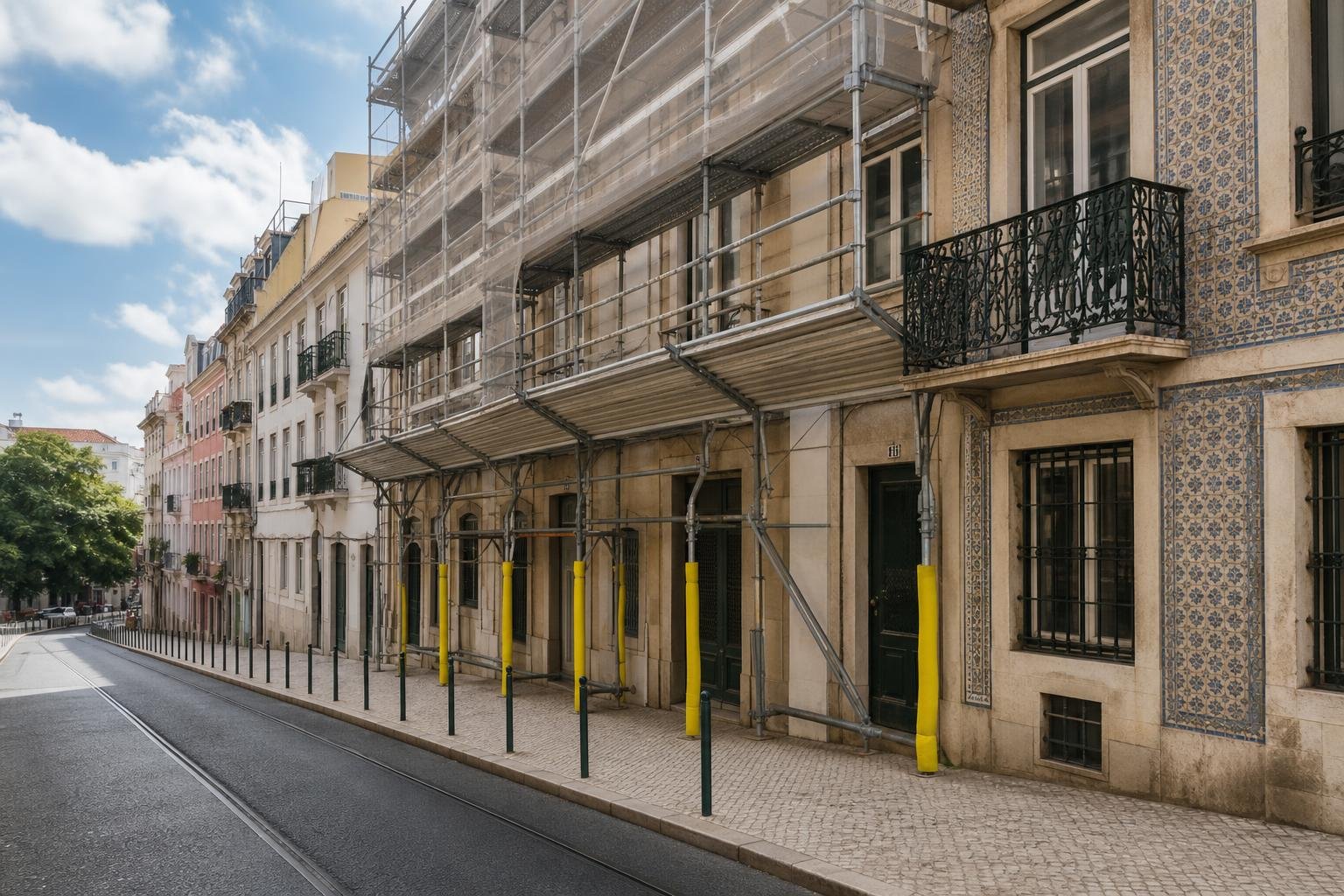
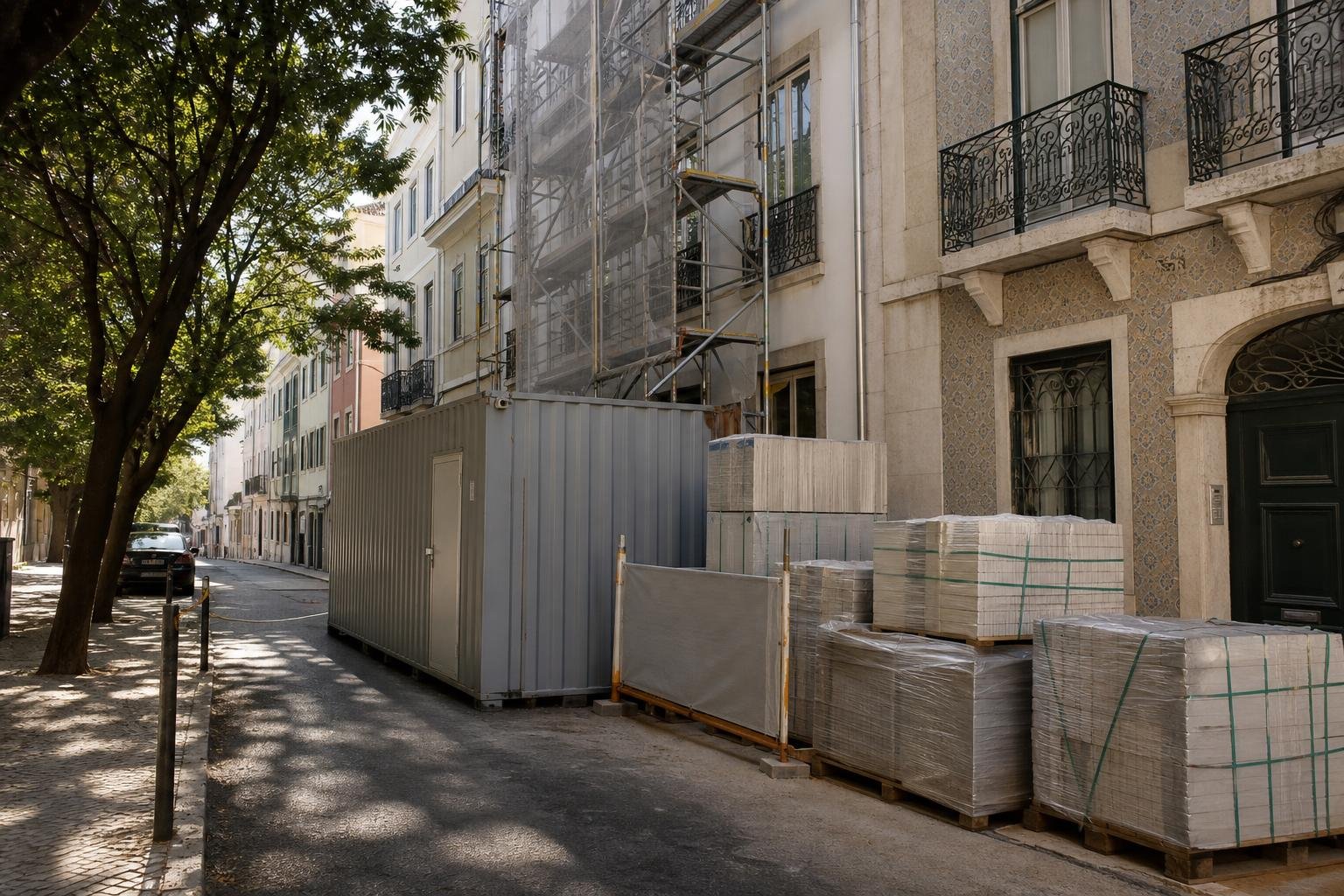
Confirm where scaffolding will stand, how the pavement will be protected, which access residents and businesses will retain, and how waste will be removed. On streets with narrow pavements, garage entrances or nearby stops, these details affect the working method. The repair may be brief, while the preparation is what keeps materials and daily circulation safely apart.
Where a building has tiles, stone, mouldings or other heritage features, add an early survey of components to preserve. Do not accept broad removal simply because it is quicker. The method should make unsafe areas secure while retaining material that remains sound.
Avoid repairs that fail again next winter
The repeated mistakes are familiar: filling cracks without dealing with water; applying a rigid finish to an old wall that needs compatible materials; painting before the substrate has dried; blocking drainage joints; or repairing a small patch without checking the bond of the surrounding finish.
After completion, ask for photographic records of concealed stages, the materials used and a short annual inspection list. Check the façade after wind-driven rain: are there new streaks, marks below sills, water escaping outside downpipes or blistering paint? The earlier a failed detail is corrected, the smaller the area that will need opening later.
If you are preparing a larger intervention, Obra Lisboa can help organise diagnosis, sequencing and protection details so the façade can perform properly again without putting residents or passers-by at risk.
Have you noticed loose material on a façade, balcony or gable wall? Contact Obra Lisboa before ordering paint or attempting an improvised repair.
AI-generated editorial image; it does not depict an Obra Lisboa project.

Obra Lisboa