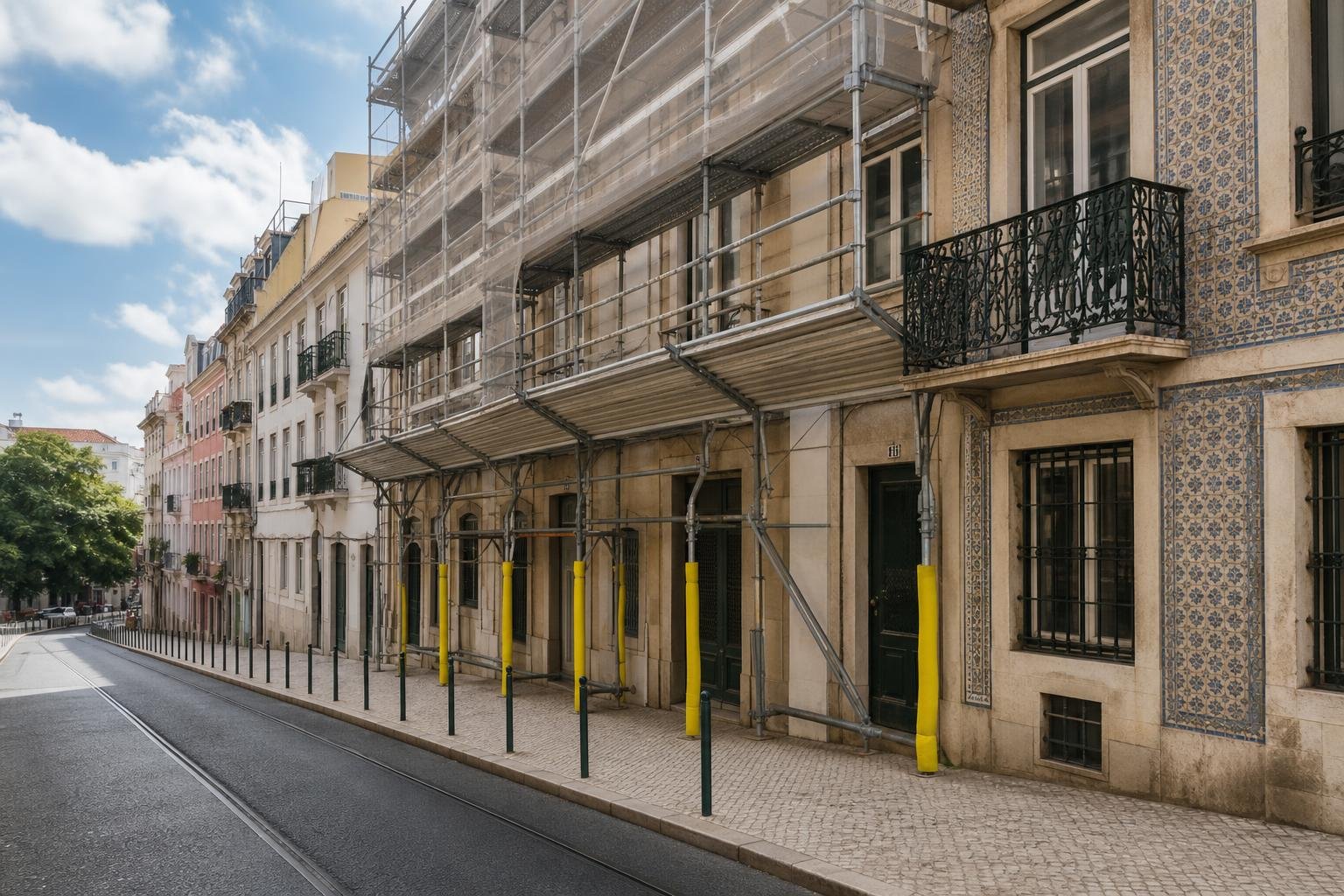
When an apartment-building façade in Lisbon has cold walls, recurring marks and tired render, external thermal insulation can solve more than discomfort inside the flats. ETICS adds a continuous layer over the existing wall, reducing thermal bridges and protecting the substrate from temperature swings. It only works, however, when it is specified as a complete system: boards, adhesive, fixings, profiles, mesh, base coat, primer and finish must be designed to work together.
The usual early question is EPS or mineral wool? The answer depends on the existing wall, fire-performance requirements, façade condition, exposure to driven rain and window design. In Lisbon, where many elevations face strong sun and wind-driven rain, details around windows, sills, parapets and balconies matter as much as insulation thickness.
Portugal’s energy-performance framework places the building envelope at the centre of home performance; the Decree-Law 101-D/2020 on the energy performance of buildings helps explain why walls, roofs, openings and technical systems should be planned together. For the window side of the same decision, read our guide to replacing windows during a Lisbon renovation.
What ETICS solves — and what it does not
ETICS is a composite external thermal insulation system. Because it is installed outside, it keeps the existing wall in a more stable thermal condition and can reduce the risk of internal surface condensation. It is particularly useful on plain gable walls, façades with deteriorated render that already need work, and buildings where owners do not want to lose floor area inside each flat.
It is not a shortcut for concealing moisture. Before boards are bonded to the wall, the team needs to identify leaks from the roof, active cracks, failed flashings, leaking downpipes, poorly sloped sills or balconies with inadequate drainage. Installing ETICS over a damp, friable or contaminated substrate simply moves the fault behind the new finish. Proper preparation includes cleaning, local repair, checking flatness and adhesion testing where the substrate is uncertain.
Insulation also needs to be kept separate from ventilation. A warmer wall reduces condensation risk, but it does not replace proper extraction in kitchens and bathrooms or lower-moisture habits. See how these issues connect in our article on ventilation in renovated homes.
EPS or mineral wool: compare the installation, not only the price
EPS is lightweight, easy to cut and widely used in ETICS. It can be an efficient choice where the design needs good thermal resistance within controlled thicknesses and the façade geometry is straightforward. Some versions perform better thermally than standard white EPS, but comparisons should be based on each product’s technical data and specified thickness, not simply on board colour.
Mineral wool is often selected where fire behaviour and acoustic performance carry more weight. It is denser, needs careful handling and cutting, and can make installation more demanding, especially where lines must remain true. It should not be treated as a like-for-like board substitution: adhesive, fixing pattern, moisture behaviour, weight and system rules may all change.
ADENE has brought ETICS insulation into the CLASSE+ product-labelling framework, reinforcing the value of comparing materials through verifiable technical information rather than sales claims. Read ADENE’s update on ETICS insulation in CLASSE+. Ask for declarations of performance, documentation for the whole system and explicit confirmation that every component is compatible.
The right thickness starts with the existing wall
Choosing 40, 60 or 100 millimetres because it is “usual” is an expensive way to make a decision. Thickness should follow an assessment of the wall, orientation, space around window openings, the relationship with shutters, railings and downpipes, and other projecting elements. On a narrow façade between buildings, additional thickness may require redesigned junctions; on a heavily exposed gable, a modest solution may fall short of the comfort target.
Ask the designer to draw a section for every repeating condition: window opening, sill, reveal, roof junction, balcony junction and the lower zone at ground level. These drawings show early on whether the new build-up blocks vents, makes sills too shallow or leaves an obvious thermal bridge at a shutter box. In older apartment buildings, this preparation prevents each flat from receiving an improvised answer.
If the work includes more elements, the energy certificate can help sequence priorities across walls, roofs, windows and systems. Our guide on turning an energy certificate into a renovation plan explains how to use that information without treating the rating as an isolated decision.

The details where water gets in
Water rarely enters through the middle of a properly installed insulation board. It enters at the boundaries: the façade top, window junction, sill, pipe penetration, awning fixing, railing connection or roof intersection. ETICS therefore needs level starter tracks, drip profiles where water must fall clear, diagonal reinforcement at opening corners and mesh correctly embedded in the base coat.
Window sills require a clear decision. They need enough projection to take water beyond the finished face and an outward slope. If existing sills are retained, check that their depth remains adequate once insulation and finish have been added. The same care applies to shutter boxes, external equipment and brackets: drilling through the finished façade without a planned detail can compromise weather resistance.
Do not accept a quotation that only says “external insulation, finish and paint”. Request the brand and reference of every component, the application sequence, the junction details and the party responsible for compatibility across the assembly.
Cracks, impacts and maintenance after handover
An ETICS façade is not a solid masonry wall. An impact near an entrance, a bicycle leaning against it or an unprotected ladder can mark the finish and sometimes damage the reinforced layer. In low zones exposed to foot traffic, trolleys, bins or parking, a more impact-resistant finish or a purpose-designed protective solution may be worth including.
Fine cracks should be monitored rather than simply painted over. Some come from movement in the substrate; others may relate to insufficient mesh, poor overlaps, unsuitable curing or rigid junctions where movement allowance was needed. Keeping dated photographs and locations helps show whether a defect is stable or progressing. Maintenance includes gentle cleaning when needed, checking joints and repairing impacts early, before water reaches the inner layers.
The final finish is not merely decorative. Its colour, solar absorption, texture and vapour permeability need to comply with the specified system. Very dark colours on a highly exposed façade can increase thermal stress, so the selection should be confirmed by the system manufacturer.
Condominium decisions, design and planning control in Lisbon
On an apartment building, the façade is a common part. The decision needs condominium approval, comparable quotations and a clear definition of which elevations will be treated. Before materials are ordered, confirm whether the building is in a protected area, subject to townscape rules or requires an urban-planning procedure for external alteration. Lisbon City Council explains that external alteration works may require prior communication, with architecture and specialist designs, contractor documentation and site-management information. See the council page on building works under prior communication.
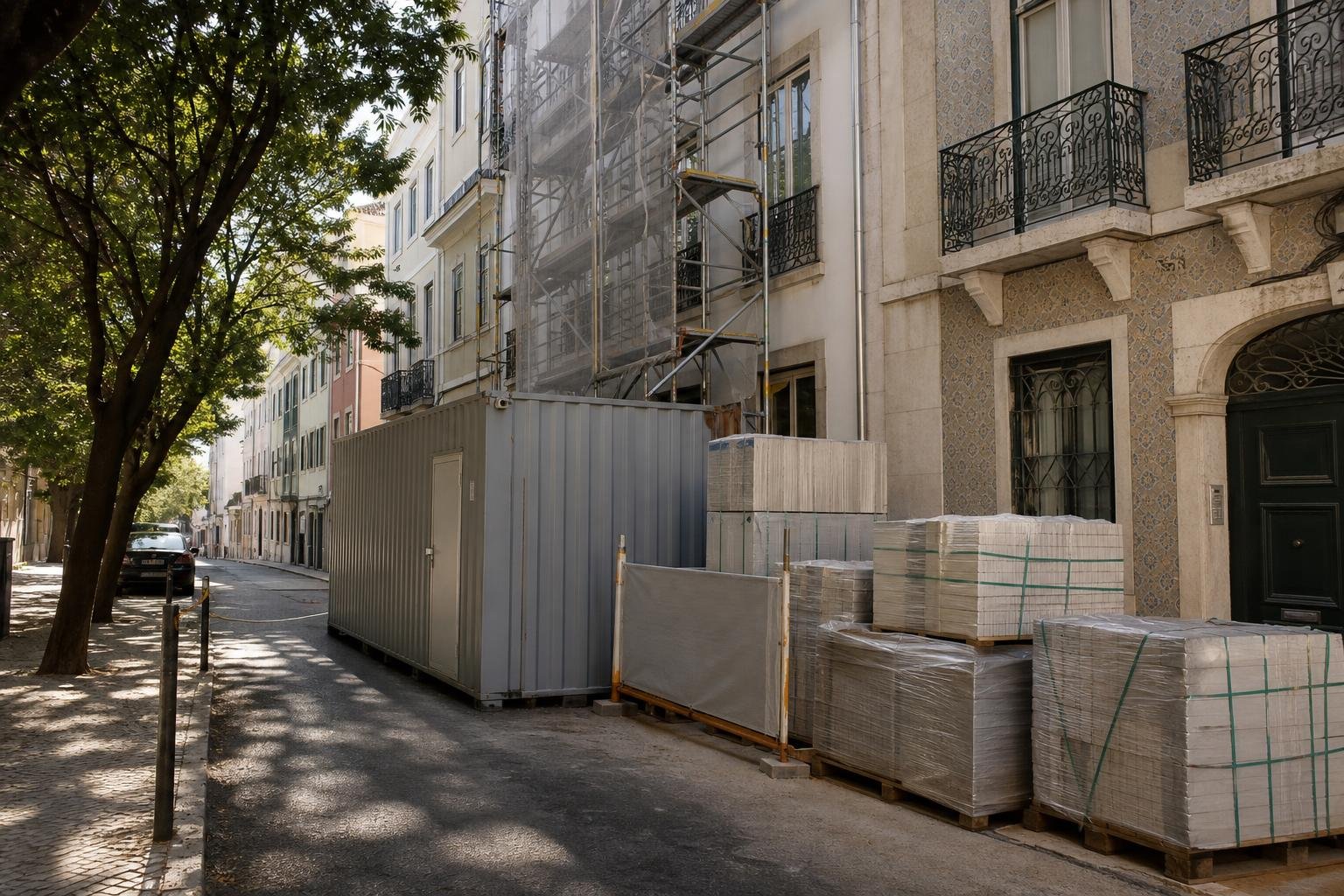
The specification should state the system, thickness, substrate preparation, crack treatment, scaffolding, window protection, applicable tests or checks, final cleaning and warranty. During the work, inspect before layers are covered: board alignment, number and position of fixings, reinforcement around openings, mesh continuity and sill junctions. These are the stages where sound construction supervision prevents expensive corrections at the end.
Planning a façade upgrade in Lisbon? Obra Lisboa can help turn the survey, junction details and contractor quotations into a clear work plan before construction begins.
AI-generated editorial image; it does not depict an Obra Lisboa project.

Obra Lisboa