A housing project does not automatically qualify for 6% VAT: before appointing a contractor, confirm whether the contract is eligible and record the property’s use, scope of work and invoicing rule in writing. Decree-Law no. 97/2026, published on 20 May 2026, introduced housing-focused tax measures and changed the treatment of certain construction and rehabilitation contracts. For a homeowner in Lisbon, the practical decision is straightforward: do not compare quotes only by the total; compare what each quote includes, the VAT rate shown, the assumptions behind it and who is responsible if the tax treatment has to be corrected.
Contents
- What changed in 2026, and why does it matter if you are planning works?
- Could your project qualify? Start by separating three situations
- Which clauses should be added to the building contract?
- How should invoices, deposits and variations be handled?
- Why should you check the contractor’s authorisation?
- Final checklist before signing or accepting the first invoice
What changed in 2026, and why does it matter if you are planning works?
The starting point is the 2026 legislative change affecting certain construction or rehabilitation contracts for housing. The decree added item 2.42 to List I of the Portuguese VAT Code and also created a partial VAT refund regime for some individuals building their own permanent home. The conditions, limits and timing are not captured by the word “renovation” alone; they depend on the type of operation, the intended use of the property and the records supporting the project.
From 1 July 2026, the reverse-charge VAT framework also became more relevant for covered contracts. The IMPIC clarification on the new VAT rules explains that the issue can affect businesses and purchasers with different tax positions. For a private owner renovating a home, the safe approach is to request written confirmation of the VAT treatment for the specific case, rather than assuming that a reduced rate stated in a quote is final.
There is also a market effect. Following the change, applications for construction-activity authorisations increased. That makes an early contractor check particularly useful when a project has a tight programme.
Could your project qualify? Start by separating three situations
Before discussing percentages, identify the real situation. Work on a flat for your own use, rehabilitation promoted for sale and work connected with rental housing have different conditions and supporting documents. The law sets separate requirements for contracts concerning a permanent primary residence, a sale within the statutory thresholds or qualifying residential rental housing. The legal test is tied to the property’s intended use, rather than to the visual nature of the work.
Use this screening process before accepting a quote:
- Define the purpose: permanent primary residence, sale, rental or another use.
- Request the basis in writing: ask for the legal item relied on, the proposed rate and the facts supporting it.
- Confirm the contract boundary: construction and rehabilitation work are different from separate purchases of materials, loose furniture or services outside the contract.
- Keep the records: contract, progress certificates, invoices, payment evidence and, where relevant, documents concerning the start of use.
A common but weak formula is: “we apply 6% to everything”. A well-prepared quote identifies what is included, what is supplied separately and what remains subject to tax confirmation. Where there is a material uncertainty, obtain accounting or legal advice before making the first payment.
Which clauses should be added to the building contract?
A contract does not replace tax analysis, but it prevents a VAT dispute from appearing once work is under way. Alongside price, programme and payment terms, include a clear clause setting out the tax treatment assumed on the signing date.
- Full identification of the client, property and declared purpose.
- An attached description of the works, with measurements or a bill of quantities where available.
- The intended VAT rate for each item and the legal assumption behind it.
- Which materials or equipment are invoiced within the contract and which are separate purchases.
- A process for variations: written proposal, approval before execution and stated rate in the variation.
- A rule for correcting invoices if a competent authority concludes that the stated treatment does not apply.
This discipline also makes quotes easier to read. See our guide on comparing renovation quotes in Lisbon before choosing the lowest total. Two quotes can show the same final figure while concealing important differences: excluded demolition, protection of shared areas, waste removal, design services, permits or finishes with no defined model.

How should invoices, deposits and variations be handled?
The invoice should follow the contract, rather than repair a poorly defined appointment. At every stage, check that the description of work matches the progress record, that the property is correctly identified where relevant and that the VAT rate reflects the agreed treatment. Do not leave the reconciliation of quote, variations and tax documents until completion.
Deposits require the same care. Before payment, request the payment document and check the rate used. Then file it with the approved quote, payment evidence and final or interim invoice. If an alteration to the kitchen, an additional bathroom or unforeseen strengthening becomes necessary after walls are opened, handle it as a written variation: description, price, programme impact, VAT impact and dated approval.
For a project of any scale, keep a simple four-column register: contracted item, appointed value, approved variation and invoice received. It is a modest step that reduces duplicate payments and makes it clear when an “extra” was already part of the original scope. For a practical method, read our article on approving extra work without losing control of cost and time.
Why should you check the contractor’s authorisation?
IMPIC states that, for the reverse-charge treatment referred to in the new rules, construction services must be provided by legally authorised entities. Authorisation is not decorative paperwork: it should be compatible with the activity and the value of the work being appointed.
On 7 October 2026, IMPIC reported that the monthly average of new applications for construction-activity authorisations was more than double in July, August and September compared with the first half of the year, following the 2026 change. The same notice says the higher volume increased processing times. Review the figures in the IMPIC update on authorisation applications.
Before appointment, search the business through IMPIC’s official company consultation area. Check the legal name and tax number used in the quote, the type of authorisation and, where relevant, the class appropriate to the project value. If the entity signing the contract is different from the one issuing the invoice, request a documented explanation before proceeding.
Final checklist before signing or accepting the first invoice
Use this sequence. First, confirm the housing purpose of the property and whether you have the information required for the stated regime. Second, require a detailed quote and a contract with appendices. Third, verify the contractor through IMPIC. Fourth, make each deposit, progress certificate and invoice follow the same contractual logic. Fifth, treat every variation as a new decision, rather than an informal message during the build.
Do not try to resolve a tax question with a handwritten note on a quote or a verbal promise. The risk is not limited to a possible tax difference: it is also the difficulty of reconstructing what was agreed months later, once several payments have been made, materials have been ordered and work has been completed.
A well-prepared renovation still needs technical decisions, coordination and site control. VAT treatment is one more reason to settle the scope before demolition, orders or payments begin.
Key takeaways
- Do not assume every housing renovation receives 6% VAT; request a written assessment for the property and contract.
- Keep the contract, progress certificates, deposits, variations and invoices in one control record.
- Check the entity that contracts and invoices through IMPIC before appointment.
- Resolve any material VAT uncertainty before the first payment, rather than on the final invoice.
If you are preparing work in Lisbon, gather the plans, the intended property use and the scope you want to carry out. Obra Lisboa can help structure a renovation proposal with clearly defined works, phases and technical decisions.
Sources and further reading
- IMPIC clarification on the new VAT rules
- IMPIC update on authorisation applications
- company consultation area
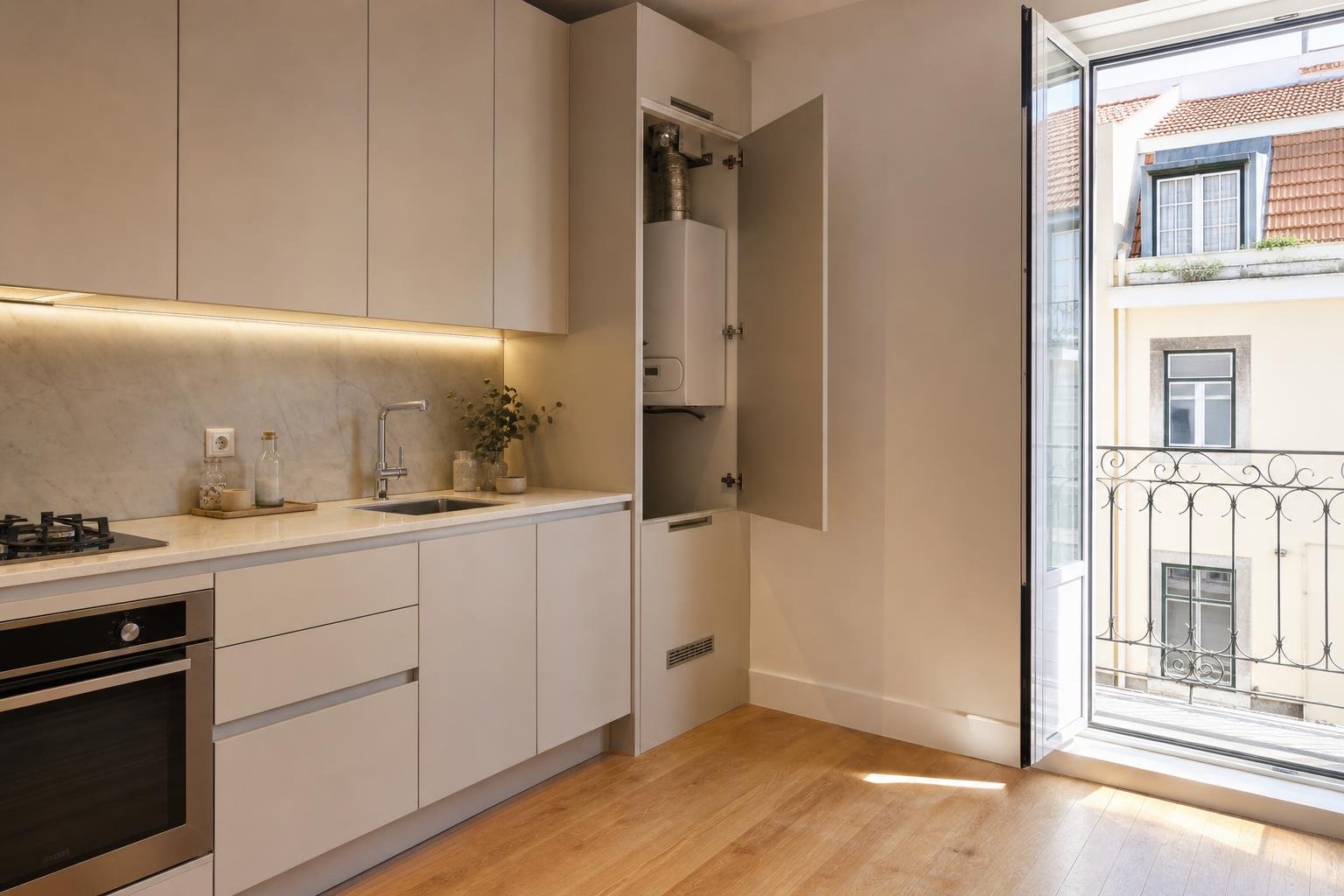
AI-generated editorial image; it does not depict an Obra Lisboa project.

Obra Lisboa