In a studio flat, the most effective way to separate the bed is to create enough privacy without blocking daylight, ventilation or everyday movement. Rather than building a wall immediately, start with the route to the window, the place where you get dressed and the way fresh air reaches the sleeping area. A lightweight solution can make the bed less exposed to the living space without turning the home into a series of dark compartments. The right choice depends on window position, ceiling height, noise and daily routines.
Contents
- Start with what the sleeping area needs to do
- Which type of divider works best?
- How to keep daylight while protecting the bed
- Ventilation: what a divider must not hide
- Storage that divides without making the flat feel tighter
- When it becomes building work, and what to check in Lisbon
Start with what the sleeping area needs to do
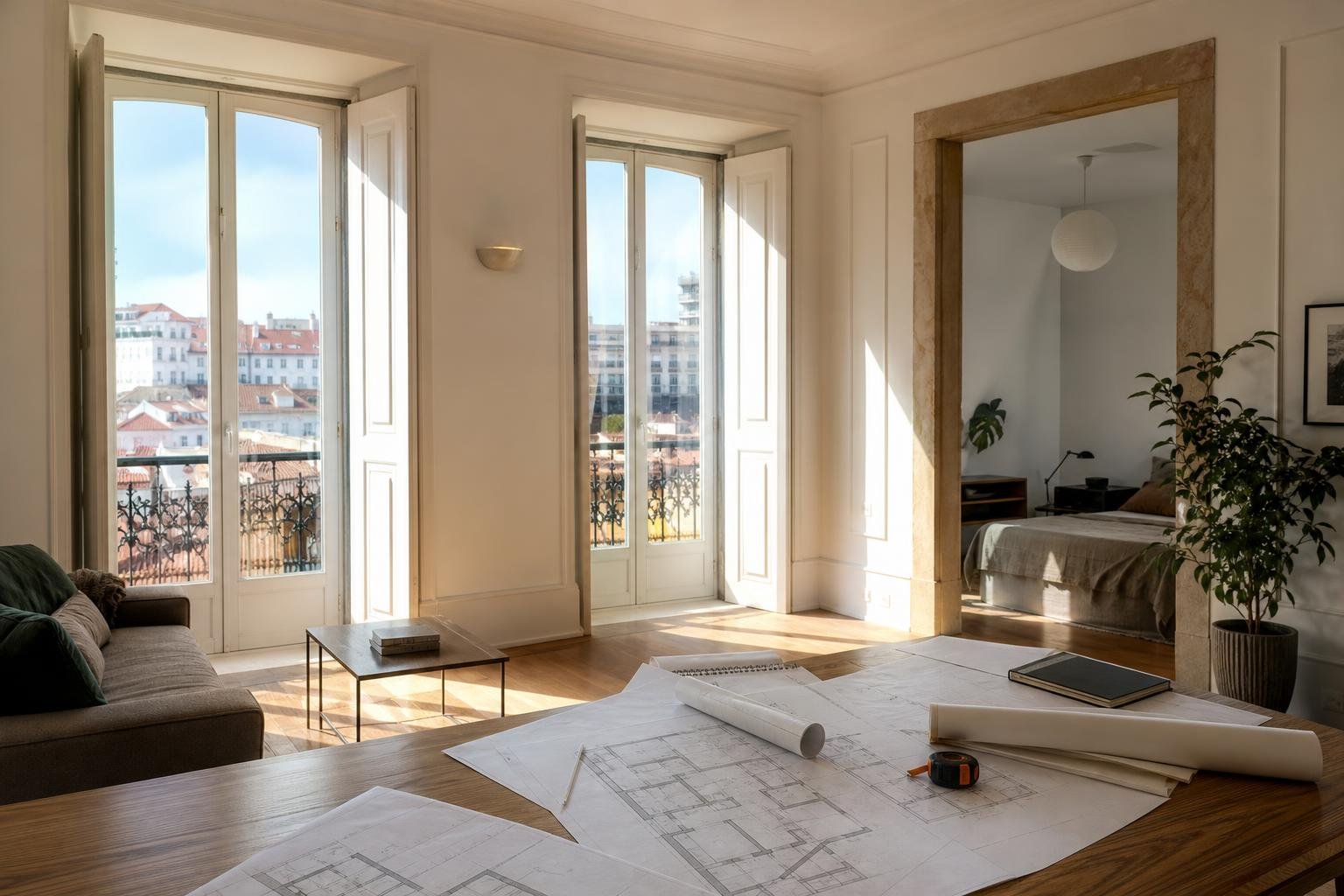
A bed in a studio needs more than an empty corner. You need room to sleep, change the sheets, open a drawer or wardrobe door, and reach the window without weaving around furniture. Mark those actions on the floor with masking tape before ordering anything. It is a simple test that quickly shows whether a divider will support daily life or only look good on a plan.
Set the level of separation you actually need. If you often have guests, you may want the bed to disappear from view. If people in the home keep different hours, controlling light may matter most. In a flat with one façade, protecting daylight for the living area often matters more than obtaining a fully opaque division.
- Visual privacy: prevent a direct view of the bed from the entrance.
- Light privacy: reduce living-room light when someone is resting.
- Sound privacy: soften conversation, television and calls.
- Flexibility: open the area by day or when friends visit.
A lightweight divider handles the first two well; for noise, doors, seals and materials need more attention, as covered in interior doors and acoustic seals.
Which type of divider works best?
A ceiling-mounted curtain is the most reversible option: it can be drawn back during the day, washed, and changed with relatively little work. It does need a properly fixed track and enough fabric so it does not sit taut when closed. Choose lining or a double layer where night-time blackout is a priority.
An open slatted screen creates a clear boundary, retains visual depth and lets light and air travel through. It works well when the bed sits away from the window or when the aim is to conceal the headboard rather than enclose a room. A fixed or moveable screen can suit rented homes, but it needs a stable base and must not narrow the escape route.
Fluted glass is useful where the bed needs daylight and some visual privacy. On its own, it does not stop light from the living room or control noise; add a curtain, blind or door where needed. See fitting and maintenance points in fluted-glass partitions in renovation.
| Option | Best when | Main point to watch |
|---|---|---|
| Ceiling-track curtain | You want flexibility and blackout | Allow for secure fixing and room to stack the fabric |
| Slatted or open shelving screen | You want definition without losing depth | It does not fully control light or sound |
| Fluted glass | You need to carry daylight deeper into the flat | It needs cleaning and a separate blackout solution |
| Low storage unit with panel | You need storage and a visual boundary | It must not block airflow or circulation |
How to keep daylight while protecting the bed
If the window is on the bed side, an opaque wall taken up to the ceiling can leave the living area reliant on electric light during the day. Choose a divider that stops short of the window, has an open upper section or uses translucent glass. If the window is in the living area, the sleeping zone can borrow light through a translucent upper band, side opening or curtains kept open outside sleeping hours.
Avoid placing a tall wardrobe between the window and the bed. It cuts daylight, creates a hard-to-clean face and may leave a cold, stagnant area behind the furniture. A more balanced arrangement puts heavy storage on a solid wall and keeps the bed divider visually permeable.
At night, use layers of light: soft general light for moving around, reading light at the bed and a low-level light for finding the way without fully waking up. The DGS guidance for working from home highlights available light, task lighting, airing and an organised space; the same principles help in a studio where one area changes purpose throughout the day. Read the DGS guidance on organising a home workspace.

Ventilation: what a divider must not hide
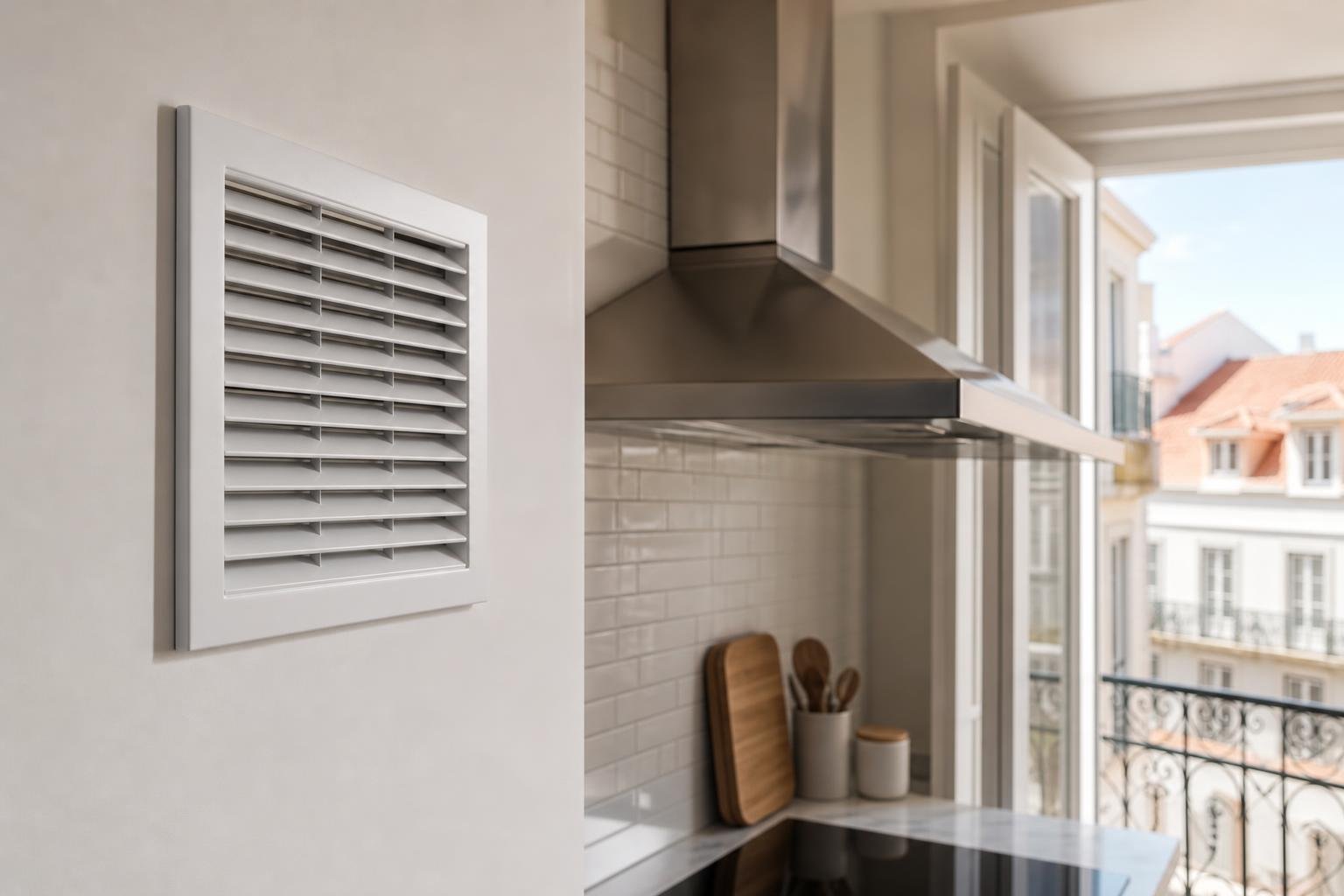
An overly enclosed bed zone can more easily hold heat, odours and stale air, especially in small studios and older Lisbon flats with a single façade. Do not cover air grilles, window inlets, openings or doors that already contribute to air renewal. A curtain, perforated panel or door with an appropriate opening leaves far more scope than a rigid box built to the ceiling.
There is no single residential rule that can simply be copied from the legal limits for commercial and service buildings. Even so, DGS reference material identifies pollutants, carbon dioxide and fungi as relevant indoor-air indicators. Treat that as a reason not to approach a windowless sleeping compartment as a purely decorative project: consult the DGS indoor-air protection thresholds and reference conditions.
If you already have window condensation, mould marks or persistent smells, address the cause before placing a bed against an external wall. Leave cleaning access, do not conceal damp warnings behind panels and keep the window easy to use. A divider that forces you to keep the only ventilation source shut is a poor choice, however discreet it looks.
Storage that divides without making the flat feel tighter
The unit that separates the bed should store items you use, rather than becoming a wall of forgotten boxes. A low chest, open shelving at a moderate height or a storage bench can mark the change between living and sleeping while keeping the sightline open above. Keep books, charging points and bed linen on the bed side; use niches or closed doors on the living-room side for less personal items.
Before selecting depths, measure the route with doors and drawers open. In many studios, a badly positioned drawer causes more daily frustration than a lack of capacity. Keep bulky seasonal items, suitcases and spare bedding within existing cupboards instead of filling the sleeping divider up to the ceiling.
If the headboard sits against a new wall, plan sockets, switches, reading lights and any niches from the start. Making these decisions before finishes are closed avoids visible extension leads and improvised drilling; see the guide to a bedroom headboard wall with lighting, outlets and storage.
When it becomes building work, and what to check in Lisbon
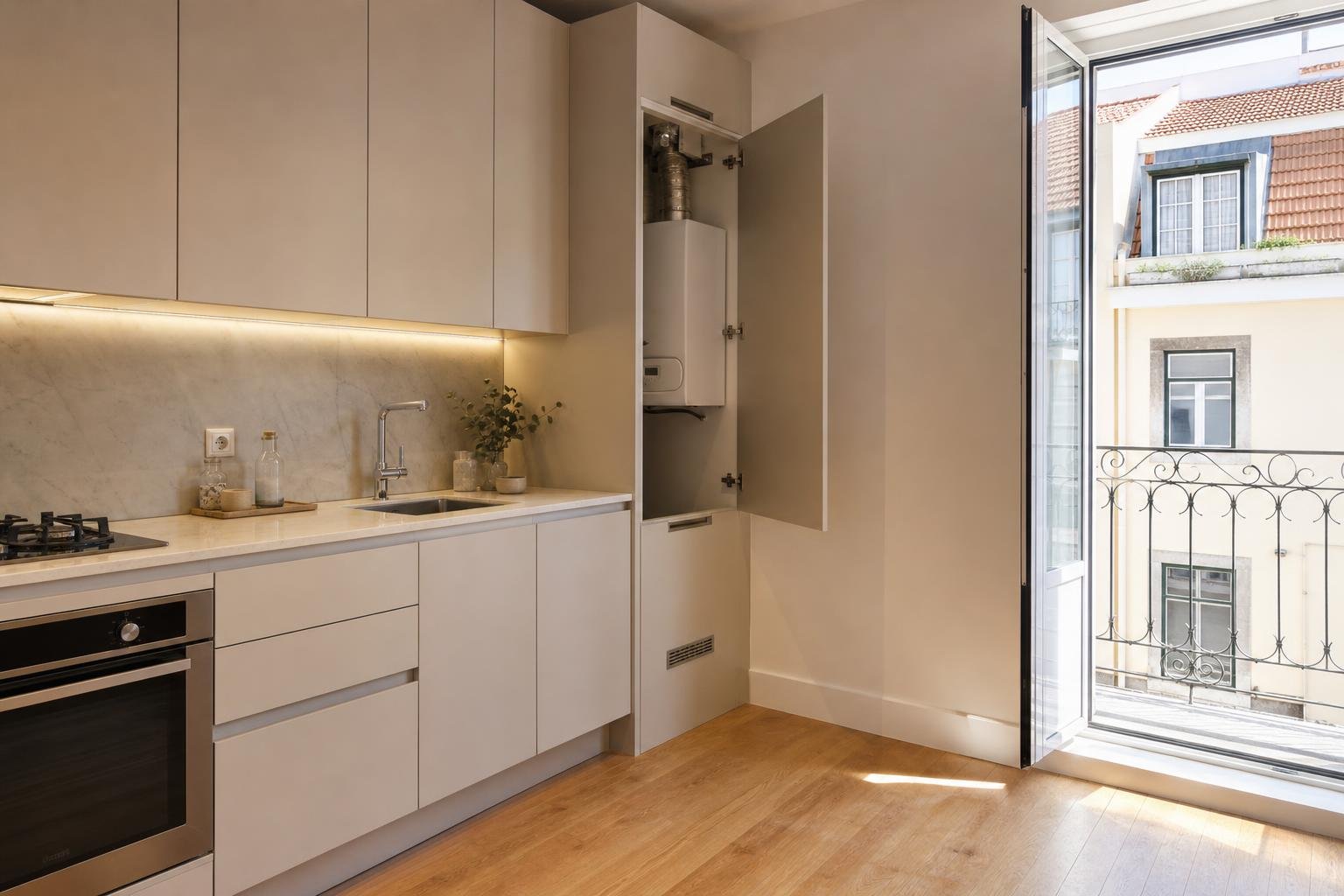
A curtain, folding screen or freestanding furniture does not have the same effect as a new wall, pocket door or changes to electrical services. When the solution involves permanent fixings, plasterboard, made-to-measure glass, moved sockets or a new internal layout, first establish what is behind the surfaces and who will coordinate the trades.
In Lisbon, some internal alteration work may be exempt from prior control when it does not affect structural stability, façades, roofs or other elements specified by the municipality. That does not make every demolition, wall or service change risk-free: older buildings can contain construction systems that need technical assessment before drilling or cutting. Consult the municipal conditions for internal works exempt from prior control, especially where deliveries, skips or pavement occupation are involved.
Bring in a professional when the divider affects structure, plumbing, existing ventilation, the electrical board or walls showing signs of damp. The small scale of a studio does not reduce the importance of these issues; it simply makes mistakes more visible and harder to work around.
Key takeaways
- Map the routes for getting up, dressing, making the bed and reaching the window before choosing a divider.
- Use partial separation where the flat has only one meaningful source of daylight.
- Do not conceal grilles, windows or damp behind the new sleeping zone.
- Plan outlets, reading lights and storage before fixing a headboard or closing a partition.
If your solution requires a fixed partition, new lighting or service alterations, gather a measured plan, wall photographs and a note of your daily routines. Obra Lisboa can help turn that brief into a coherent renovation plan, coordinating finishes, electrical work and installation.
Sources and further reading
- DGS guidance on organising a home workspace
- DGS indoor-air protection thresholds and reference conditions
- internal works exempt from prior control
AI-generated editorial image; it does not depict an Obra Lisboa project.

Obra Lisboa