A renovation that stays inside one apartment can look like a private matter. On the day rubble bags, tools, floor protection and deliveries arrive, it affects the whole building. Giving notice to the building manager is not a dispensable courtesy: it helps distinguish a legitimate internal refurbishment from work that affects the façade, structure, shared services or everyone’s routes through the building.
In Lisbon, preparation should run on two tracks. One is planning control: establish whether the work is exempt from prior municipal control, whether the property has heritage protection and whether public-space occupation is needed. The other is condominium coordination: explain what will happen, for how long and how shared areas will be protected. This guide sets out that sequence before the first demolition work begins.
Start by defining exactly what the work changes
Do not use “internal works” as an automatic answer. List the actual elements involved: walls to remove or build, plumbing, electrical board, floors, windows, external equipment, chimneys, ventilation, entrance doors and balcony changes. Then identify anything that may affect structure, façade, roof, vertical stacks, ducts or other common parts.
As a rule, alteration works inside buildings or apartments are exempt from prior municipal control when they do not affect structural stability, change building height, façades, roof form or roof covering, or involve removing façade tiles. Important exceptions apply to listed properties, properties being considered for listing, protection zones and protected groups of buildings. Check Lisbon City Council’s page on works exempt from prior control in Lisbon before assuming that hiring a contractor is enough.
A wall that looks lightweight may conceal a service stack, a shared duct or components requiring technical assessment. If there is doubt about a wall’s role or the network passing through it, have it checked before the quotation is finalised. For work involving partitions, also review what to check before removing apartment walls in Lisbon.
Separate condominium approval from straightforward notice
Not every renovation needs a resolution of the condominium assembly, yet not every internal project should proceed without speaking to the condominium. Notice to the manager is the sensible route when there will be noise, contractors moving through the building, lift use, protection of stairs, waste removal or deliveries. It identifies a site contact and allows rules to be agreed before the first issue arises.
Formal approval becomes central when the work affects common parts or changes the outside appearance. The Civil Code states that works changing the architectural line or aesthetic arrangement of a building require prior approval from the condominium assembly, passed by a majority representing two-thirds of the total value of the building. Read the relevant legal text in the Portuguese Official Gazette.
Replacing a window with a visibly different design, colour or division, fitting an outdoor unit, changing a guardrail, drilling the façade or altering an extraction outlet should not be presented as minor site details. Check the deed of constitution, condominium rules and any building-protection restrictions before ordering materials.
Send a notice that lets the building prepare
A useful notice is brief, specific and sent with reasonable lead time. Include the apartment number, the name and contact details of the responsible person, the contractor or site supervisor, expected start and finish dates, usual working days and hours, particularly noisy activities, and the intended method for moving materials and waste.
Add what will be protected: the lift cabin, landings, handrails, fire doors and flooring. State where the team can wait without blocking the entrance and how rubble bags will be removed. Do not promise dates that cannot be met; it is more helpful to say that demolition is scheduled for two days and that any material change will be communicated.
If the building rules set hours, delivery routes or lift conditions, include them in the construction plan. A sound contract helps turn those arrangements into clear duties; see the essential points in a Lisbon renovation contract.
- Notice subject: “Works in apartment X — dates and contact”.
- A contact available while work is under way.
- Expected periods of high noise and deliveries.
- A commitment to clean the shared areas used each day.
- A method for reporting damage or obstructions.

Do not confuse notice to the condominium with duties to City Hall
Notice to the building manager does not replace municipal notification. In Lisbon, notification of the start of work and the identity of the person carrying it out must be made up to five days before work begins, whether or not the project is subject to prior control. Check the required information and submission route on the City Council page for notification of the start of works.
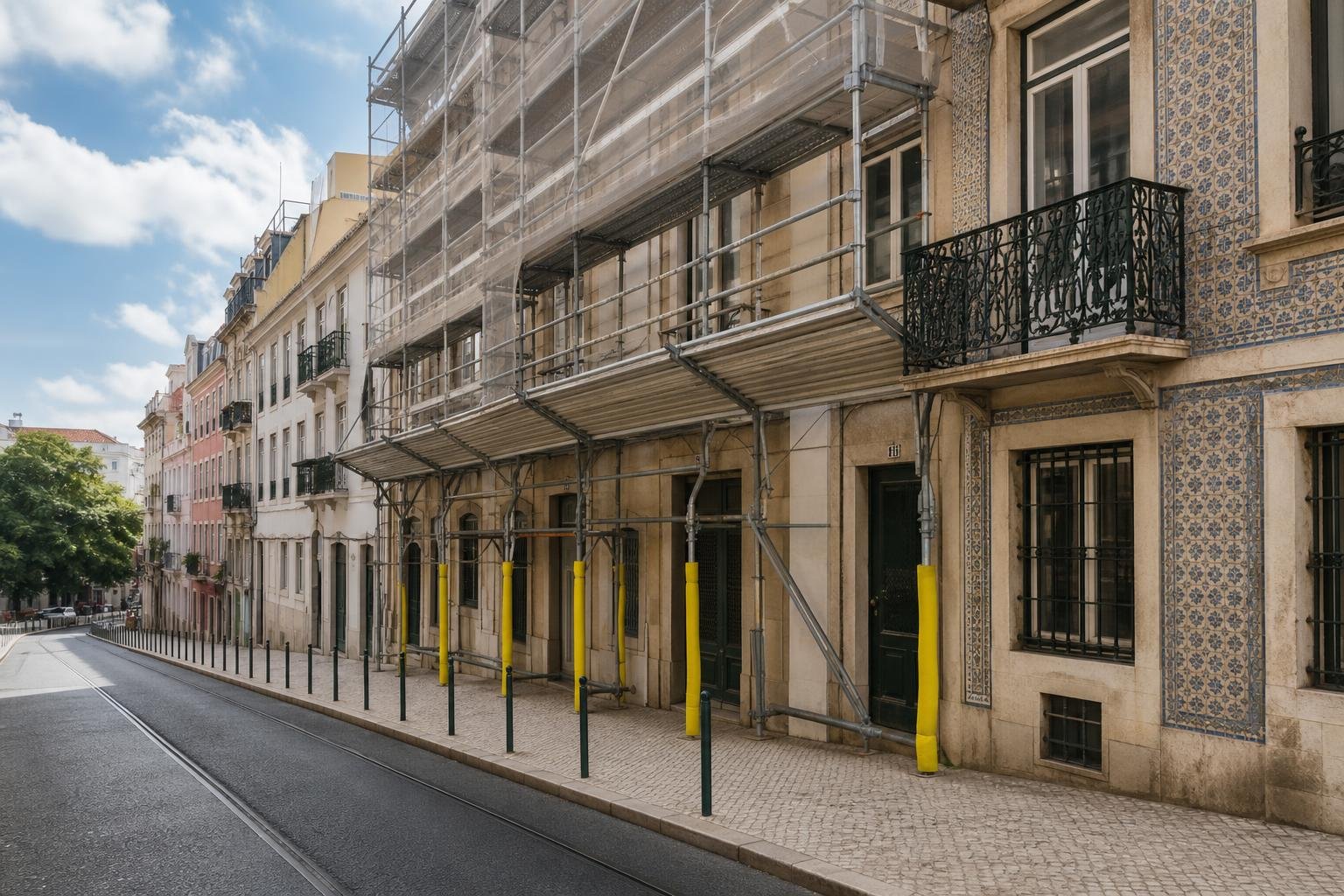
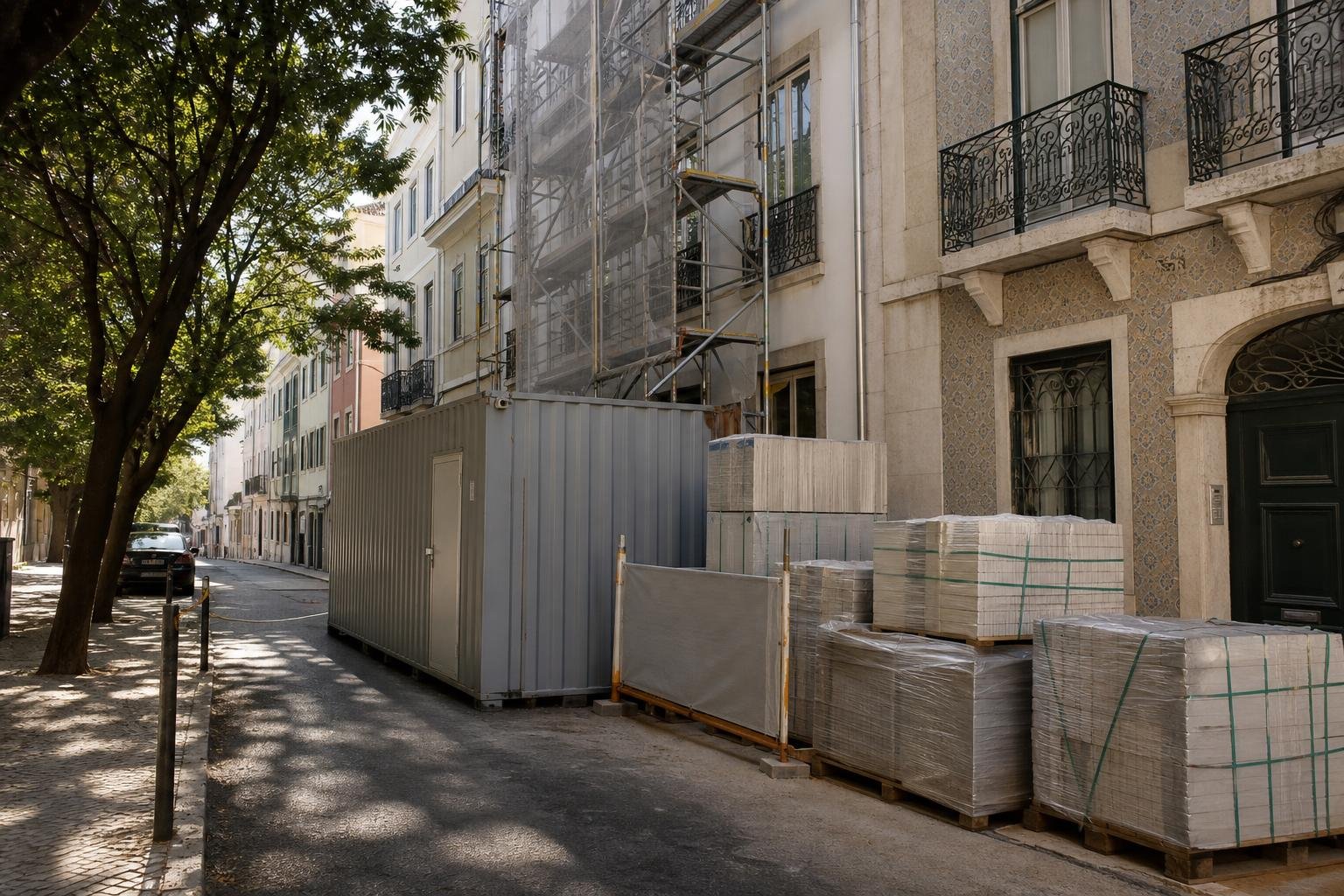
Even exempt work may require public-space arrangements. A skip, scaffolding, external hoist, materials on the pavement or a loading area does not become permitted because it appears in a lobby notice. The City Council separates the procedures for exempt work and work subject to prior control; for the latter, consult the rules on public-space occupation linked to works subject to prior control.
In practical terms, treat these as three separate items: notice to the condominium, notice of commencement to the City Council and, where relevant, an application or notification for using public space.
Agree lift use, deliveries and waste removal before blockages begin
The most difficult point is rarely the final coat of paint; it is usually the first week. Demolition, furniture removal, plasterboard deliveries and rubble removal are concentrated into a few days and put shared areas under pressure. Agree in advance whether the lift can be used, what protection the condominium accepts, its load or size limits, and who removes that protection at the end.
When the lift cannot take materials or the building does not allow certain loads, the team must know the alternative route and how stairs, landings and doors will be protected. Assign one person to open the building, receive materials and inspect shared areas before and after. Dated photographs of protected areas are a simple way to avoid arguments about pre-existing damage.
Waste needs the same level of planning. Bags should not wait in the lobby, garage or pavement for collection. Arrange frequent removal, a properly authorised skip where needed, and cleaning of the route used. This planning reduces common friction and prevents the renovation from being associated with obstructions that could have been avoided.
Keep a simple record of decisions and changes
Keep the notice sent, the manager’s reply, assembly minutes where applicable, protection photographs, public-space permissions, contractor contacts and waste-removal records in one folder. This is useful working documentation: it allows a quick response if there is a complaint about hours, a mark in the lift or a change to the original plan.
If the work develops into an external intervention, a new façade penetration or a longer period of intense noise, give fresh notice before it happens. The same applies to delays that extend protection or occupation of a shared area. A short message sent in advance works better than explaining a decision that has already been made.
Treat the condominium as part of project logistics. The apartment remains yours, but access, façade, general services and daily life in the building follow their own rules. Starting with that distinction protects the programme, reduces interruptions and makes final handover calmer for everyone.
Planning a renovation in a Lisbon apartment building? Obra Lisboa can help define the scope, work sequence and practical coordination with the condominium before work begins.
AI-generated editorial image; it does not depict an Obra Lisboa project.

Obra Lisboa