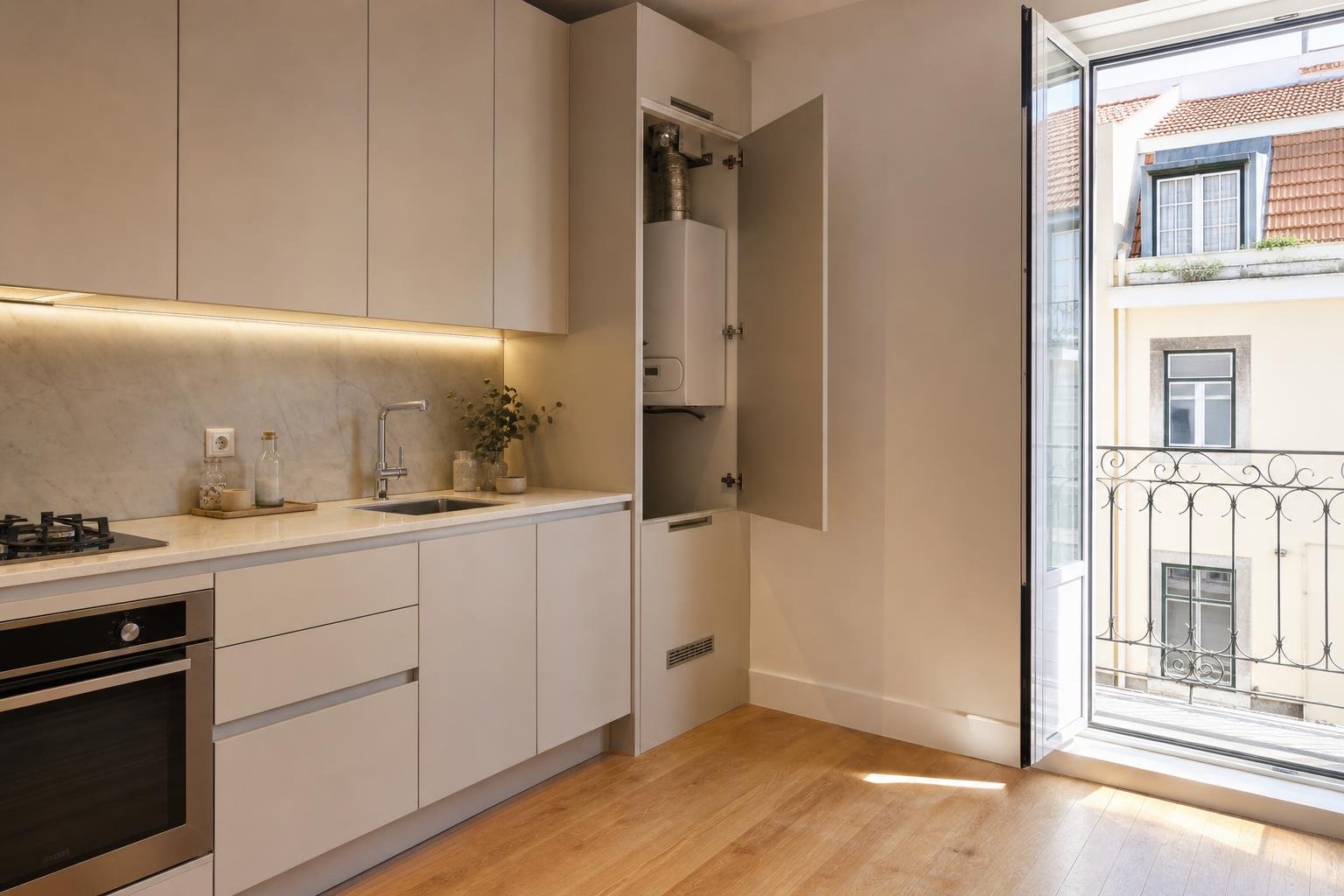
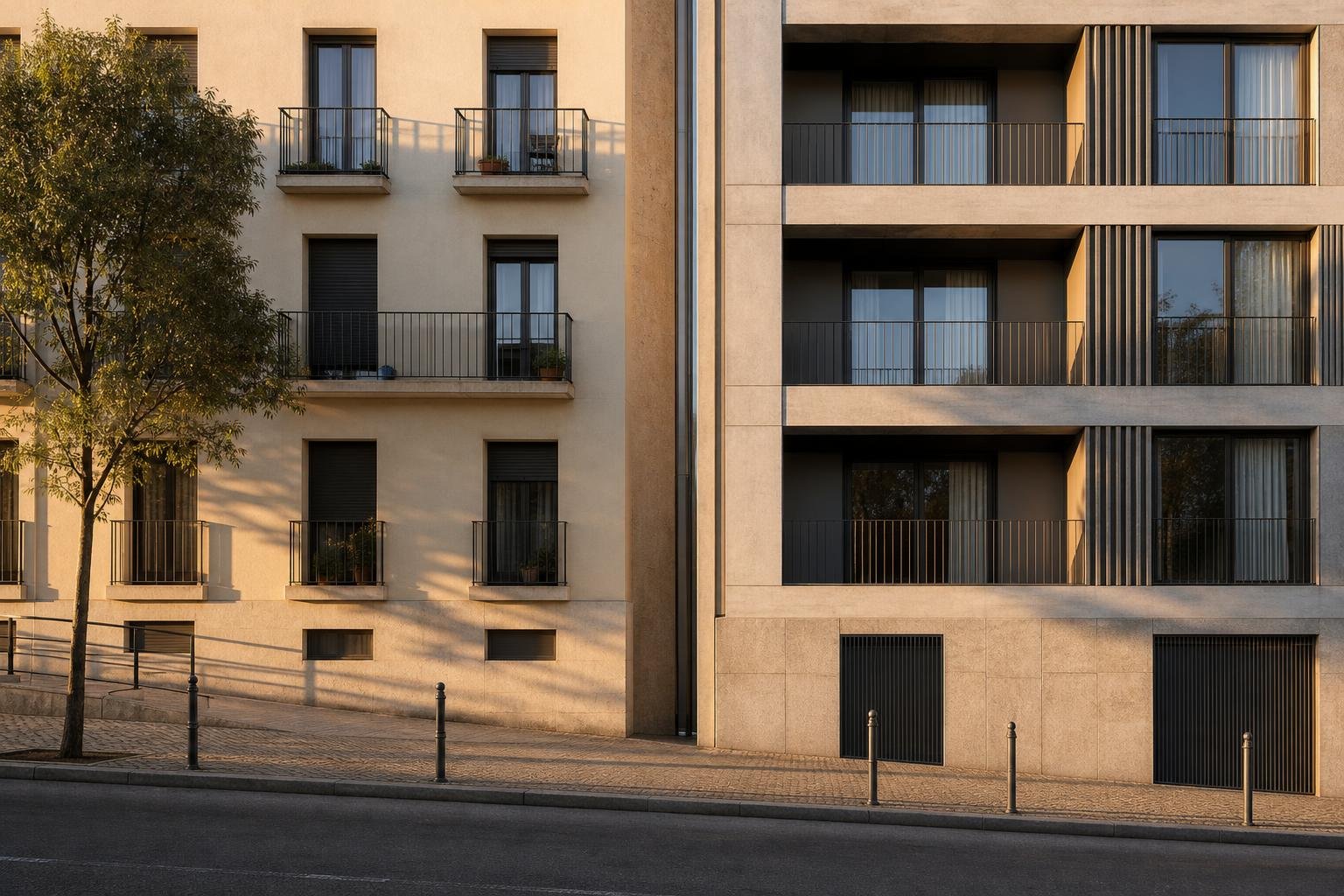
To reduce glare in a south-facing living room, control daylight at the window first, then adjust furniture and artificial lighting. Blacking out the room can waste valuable winter light; leaving the glass unprotected can turn an afternoon of work, reading or television into a squinting exercise. The most useful approach is usually a sheer daytime layer, adjustable protection against direct sun and seating positioned away from the main reflection line.
In Portugal, homes are expected to provide adequate daylight and visual comfort so that activities can be carried out without visual fatigue, a principle set out in the residential conditions regulation published in Diário da República. In a living room, that means evenly distributed light rather than a strong beam hitting your eyes or a screen.
Contents
- First, identify when and where the light is uncomfortable
- Which window treatment suits each use of the room?
- Where should the sofa, television and desk go?
- How to light the room at night without making it flat
- Common mistakes in a very bright living room
- A simple plan before you buy or renovate
First, identify when and where the light is uncomfortable
A south-facing room receives sun for much of the day. The issue is seldom overall brightness: it is the contrast between a very bright area and the rest of the room. Watch the space at three points — morning, midday and late afternoon — before ordering curtains or moving sockets.
- When sitting on the sofa, can you look outside comfortably or are you facing an overly bright patch?
- With the television off, can you see the window reflected in the screen?
- Does a desk used for computer work face the glass, or receive side light?
- Does direct sun reach artwork, books, fabrics or flooring for hours?
Record these moments with photographs taken from where you actually sit. Images often reveal reflections that are easy to miss during a quick visit. In Lisbon apartments with tall windows, narrow balconies or pale buildings opposite, it also helps to separate direct sun from reflected daylight.
Which window treatment suits each use of the room?
There is no single curtain that suits every purpose. A sheer layer softens daylight while retaining a connection to outdoors; an opaque layer is useful at specific times; an external solution intercepts sun before it heats the glass. The building energy-performance rules identify the solar factor of glazed openings as relevant to cooling demand, which is why external shading is worth considering in a larger renovation. Check the Portuguese building energy-performance regulation before altering a façade or replacing windows.
For a room used throughout the day, favour solutions that stop direct sun without making a dark wall. Screen roller blinds, adjustable Venetian blinds, well-restored interior shutters or linen curtains with a light lining all behave differently; ask to see samples at the window, rather than only under shop lighting.
| Option | Best use | Main consideration |
|---|---|---|
| Sheer curtains | Diffuse daylight during the day | They do not fully block low, direct sun |
| Adjustable blinds | Control views, privacy and sun angle | They need accurate measuring and regular cleaning |
| Blackout curtains | Television, rest and occasional intense sun | They can remove too much daylight if used alone |
| External shading | Strong sun before it reaches the glass | It may need condominium and façade approval |
Where should the sofa, television and desk go?
Lay out the room around sightlines, rather than the wall that happens to be empty. A sofa pushed against a window can receive heat and glare at eye level; a television directly opposite the opening turns the window into a mirror. Whenever possible, place the screen perpendicular to the main daylight source and use a matt wall behind it.
A desk works best with light from the side, ideally with the window on the side of the non-writing hand to avoid casting shadows on paper. If the room combines dining, work and rest, create a reading spot close to the window but set slightly back, with a small table and an accessible socket. Obra Lisboa’s guide to a reading nook by a window addresses this balance between daylight, curtains and clear circulation.
Avoid highly glossy finishes in the sun path: dark lacquered tops, glass tables and polished floors increase reflections. A matt rug, satin-finished timber table or low-sheen painted wall can solve more than an extra lamp.

How to light the room at night without making it flat
Once the sun goes down, the room should not rely on one ceiling fitting. Combine soft ambient light, task light beside the reading seat and a discreet fitting that adds depth to a wall, shelf or artwork. Artificial light then supports each activity instead of trying to imitate daylight.
Plan switches around real use points: the room entrance, sofa area and dining table. If renovation work is planned, provide sockets where floor and table lamps will actually stand; moving furniture later without a nearby socket quickly leads to visible extension leads. See Obra Lisboa’s guide to planning sockets and switches before walls are closed.
Choose shades, diffusers or indirect light in the places where people spend most time. An exposed bulb may be efficient but still uncomfortable when it sits in the seated person’s line of sight.
Common mistakes in a very bright living room
The first mistake is treating excessive sun as a decoration-only problem. Film, blinds or curtains will not fix a layout that places a screen in front of a window. The second is installing a fixed, dark solution that removes useful light on overcast days.
- Buying curtains without checking coverage width and track height.
- Leaving side gaps exactly where low sun enters.
- Using only heavy curtains in a room that also needs daytime privacy.
- Choosing highly reflective fabrics that throw light further into the room.
- Fixing awnings, canopies or external elements without checking condominium rules and façade design.
External changes need particular care in apartment buildings. Review the building file, condominium rules and fixing method before placing an order. For options that work outside the glass, read Obra Lisboa’s guide to external shading for apartments.
A simple plan before you buy or renovate
Make decisions in stages. First, test furniture positions for a week: turn the sofa, temporarily cover a reflective surface and move the desk to receive side light. Then try a fabric or blind sample in the actual opening. Only after that should you set dimensions, tracks, controls and any façade work.
- Map hours of sun and reflections on clear days.
- Define priority activities: television, dining, work or reading.
- Choose the daytime layer and direct-sun protection.
- Check that furniture avoids front-facing reflections.
- Coordinate curtains, sockets and lighting before painting or closing suspended ceilings.
Census data show that most Portuguese main homes have four or five rooms, so adapting a living room that gathers several daily routines is a recurring housing issue. See the INE and LNEC review of Portugal’s housing stock for that context.
Key takeaways
- Control sunlight at the window before adding lighting or replacing furniture.
- Place the television and desk perpendicular to the window whenever the plan allows.
- Use a sheer daytime layer and adjustable protection for direct sun.
- Test layouts and samples in the actual room before ordering made-to-measure items.
If the living room is part of a renovation, take this map of sun, reflections and daily uses into the design stage. The Obra Lisboa team can help coordinate lighting, electrical points, recessed curtain systems and interior works in one coherent renovation plan.
Sources and further reading
- residential conditions regulation published in Diário da República
- Portuguese building energy-performance regulation
- INE and LNEC review of Portugal’s housing stock
AI-generated editorial image; it does not depict an Obra Lisboa project.

Obra Lisboa