In a small apartment, the ceiling is often treated as a default neutral surface: white, flat and forgotten. Keeping it light makes sense, especially where daylight is limited. Yet a carefully chosen ceiling colour can solve real proportion issues: it can make a long room feel more settled, give a sleeping area within a living room clearer identity, or soften the sharp contrast between old walls and a newly repaired ceiling.
The decision should not start with a paint chart. Start with window orientation, clear height, the lighting used after sunset and the first view when entering the room. Portugal’s health authority highlights the role of daylight and the reflective capacity of light tones in domestic comfort; that is why a darker ceiling needs more thought than an accent wall. Read the DGS guidance on environmental comfort in the home.
Start with the room’s height and existing light
Before choosing colour, look at the room at three points: morning, mid-afternoon and evening under its normal artificial lighting. A north-facing Lisbon living room may feel cool even with white walls; a west-facing bedroom receives strong late light and can change dramatically between winter and summer. Bring home large samples, paint them on board or on a small ceiling area, and live with them for several days.
As a visual rule, a light ceiling reflects more light and tends to recede. A mid-tone ceiling appears closer and can make a tall room feel less empty. A dark tone absorbs light and needs walls, flooring and lighting that can carry the decision. This is not about banning deep blue, olive green or reddish brown. It is about deciding whether the room has enough lit surface and whether that more enveloping mood is actually wanted.
In homes where people spend much of the day, indoor air and the materials used during the work also matter. The DGS notes that construction materials, furniture and decorative products can be indoor air-pollution sources. Choose paints suitable for interiors, ventilate while applying them and avoid sealing the room straight after painting.
Use the ceiling to correct proportion, not to follow a trend
In a narrow, long living room, a coloured ceiling can visually shorten the route from door to window. It works best with a softened shade — misty blue, toasted sand, dry green — rather than a highly saturated colour added without a link to the rest of the room. Repeat it quietly in a cushion, artwork or curtain lining. One connection is enough; the entire room does not need to be colour-matched.
In a small bedroom with a high ceiling, a shade slightly warmer than the walls can make the space feel more sheltered. Where clear height is already limited, keep the ceiling in a very pale version of the wall colour, or choose a white with a compatible undertone. Blue-white over beige walls can look grubby; warm white beside blue-grey walls can turn yellow after dark.
In renovation work, height is a practical issue rather than an abstract one. Technical rules refer to a 2.40 m minimum clear height for habitable rooms in certain residences, while allowing justified exceptions in existing buildings. See the published Diário da República reference. In an older flat with limited height, test very dark colours above eye level especially carefully.
Choose one of four colour approaches
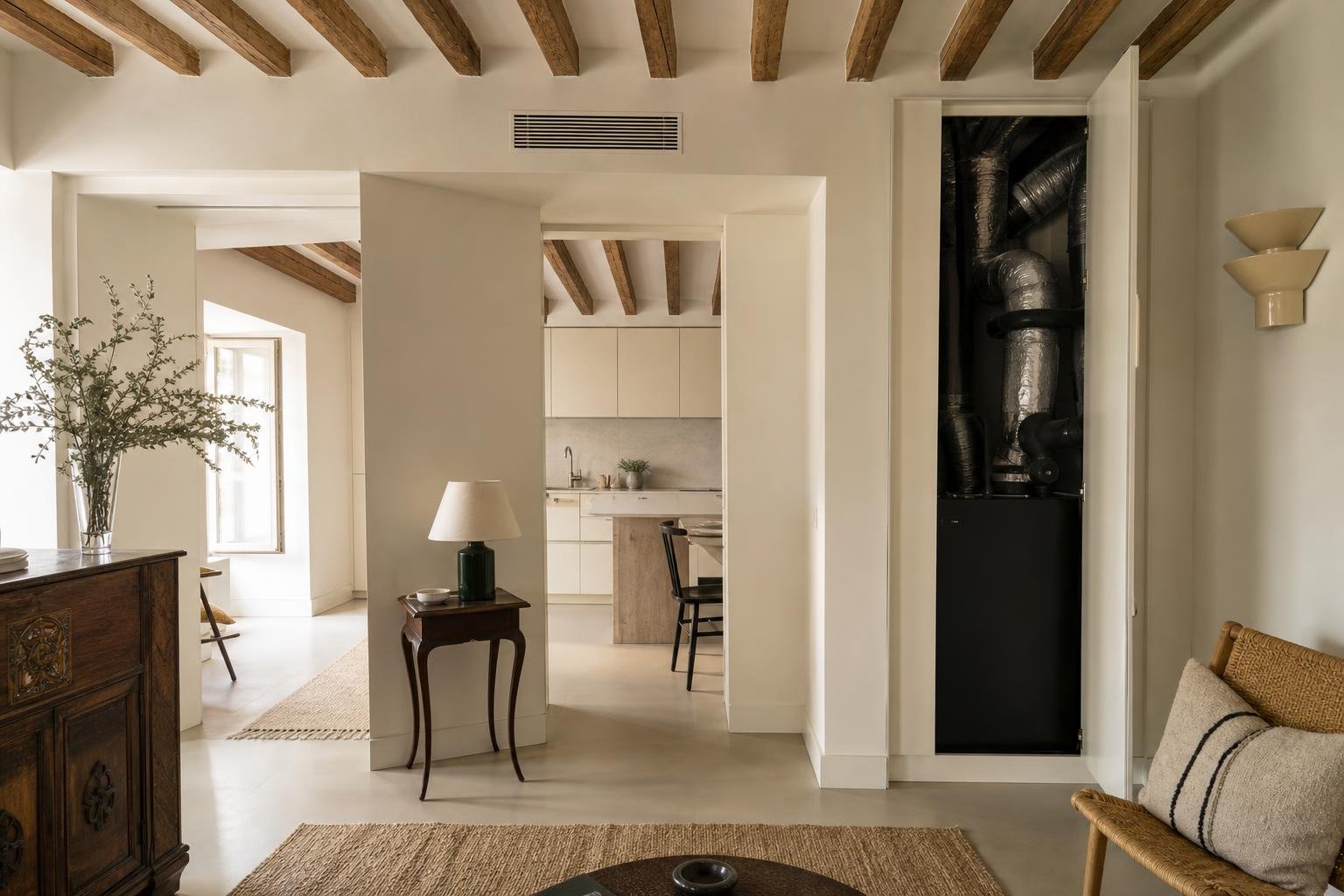
Warm white ceiling: this is the safest choice with lime-plastered walls, old timber, exposed stone or hydraulic tiles. Look for a white with a small beige or pink undertone when daylight is cool; it avoids a clinical result without sacrificing brightness.
Ceiling and walls in one shade: this suits bedrooms, home offices and small sitting rooms where you want corners and patch repairs to recede. Use a flatter finish on the ceiling and a low-sheen washable finish, or matt washable finish, on walls. The continuous colour feels calm, but it requires a properly prepared surface.
Ceiling one or two steps darker: useful in a tall room or living room with simple cornices. It keeps the architecture legible while adding depth. Warm greys, foggy blues and diluted greens are reliable options.
A deliberately coloured ceiling: this can be the main feature in a cloakroom, hallway or compact dining area. Keep the other contrasts under control: if the ceiling is terracotta, do not also introduce a heavily patterned rug, several chair colours and an oversized statement pendant.

Plan lighting before committing to the finish
The same paint can look flat, refined or oppressive depending on light. One central flush fitting casts shadows towards corners and exposes unevenness; light distributed through wall lights, discreet tracks or adjustable fittings makes the ceiling read more evenly. For painted ceilings, favour light sources with good colour rendering and test the colour temperature in the actual room rather than choosing from the box.
Do not aim very intense spots directly at a ceiling with plaster imperfections. Grazing light reveals waviness, poorly repaired cracks and differences in texture. If you want to light an artwork or a wall, aim downwards and let the ceiling receive reflected light.
In an internal corridor, a slightly darker ceiling can help define the route if doors and walls remain light. To avoid turning the passage into a gloomy tunnel, link the choice to a considered interior-corridor lighting plan, with enough light near doorways and changes of direction.
Prepare the surface: colour does not hide defects
A painted ceiling draws attention to its own surface. Before colour goes on, check for damp stains, loose paint, active cracks or hollow areas. Painting over a leak only postpones the repair; the stain will return and the finish will lose its evenness. In older Lisbon buildings, inspect the junctions between ceiling, cornice and walls, where fine cracks often appear.
Remove only unsound material, repair cracks with products compatible with the existing background, sand without gouging, and apply the primer specified for that substrate. A new plaster ceiling, a local repair and a very absorbent older area may each need different preparation. If you are unsure about filler, sanding, primer and coat sequence, review how to prepare interior walls before painting; the same diagnostic and preparation principles apply overhead.
To reduce roller marks, keep a wet edge, work in the direction of the main light source and respect drying times. In a compact room, rushed work is noticeable precisely because the ceiling sits so close to the normal field of view.
Adapt the plan to common rooms
Small living room: if there is generous window light, try a warm-white or very pale blue ceiling with neutral walls. If the room is dark, place colour on a wall or in textiles and keep the ceiling light.
Bedroom: soft matt tones reduce glare. A continuous wall-and-ceiling colour can feel restful behind the bed, provided bedding and bedside lights provide enough contrast.
Kitchen: steam and grease call for suitable washable paint and effective extraction. Avoid a very dark ceiling in a kitchen already dominated by tall cabinetry; it makes the whole composition feel heavier.
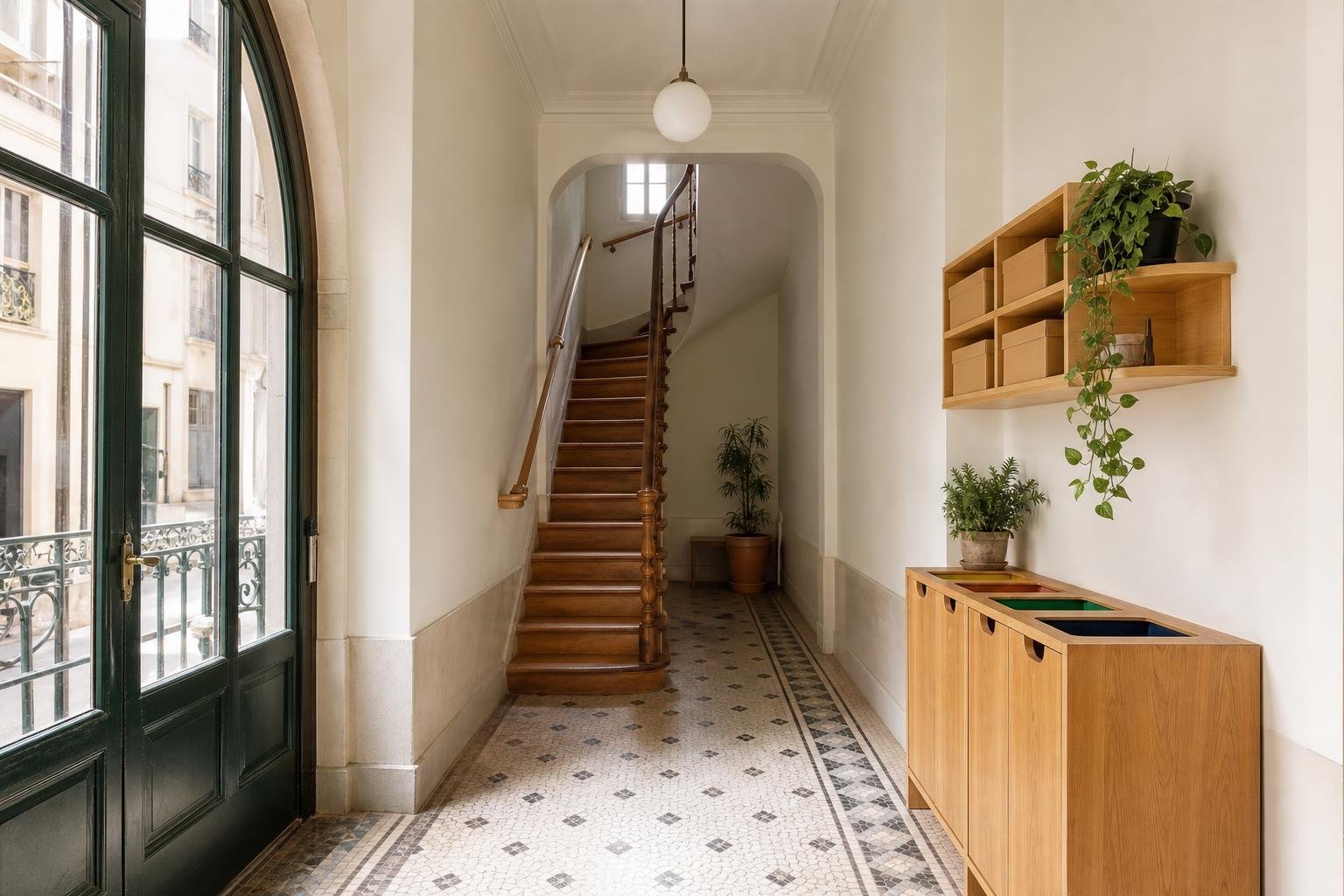
Entrance or corridor: this is the best place to try a stronger colour over a limited area. Measure width, height and door swing before deciding. In compact flats, finishes should support everyday circulation; see these ideas for making better use of small homes.
In Lisbon, conservation, rehabilitation and internal alteration works can have specific administrative treatment. For the particular case, check the municipal information on urban-planning fee exemptions or reductions, especially where painting forms part of a wider intervention.
A painted ceiling works when it is planned around daylight, height and the daily use of the room. If you are renovating an apartment, Obra Lisboa can help coordinate finishes, lighting and surface preparation before work begins.
AI-generated editorial image; it does not depict an Obra Lisboa project.

Obra Lisboa