An old wall with loose render, flaking paint or failing joints needs more than a quick trip to the builders’ merchant. In many Lisbon flats, masonry was built with stone, solid brick and relatively soft mortars. Covering it with a very rigid or low-permeability layer may make the surface look tidy for a while, yet push moisture elsewhere and speed up deterioration.
The practical decision starts by separating three issues that often occur together: loss of render adhesion, water ingress and indoor condensation. Only then does it make sense to choose between lime mortar, a renovation-specific formulation or, in particular situations, a cement-containing mortar. The repair should be compatible with the existing wall, repairable in future and finished appropriately for the exposure and use of the room.
Diagnose the wall before removing render
Do not use a hollow sound as the only reason to remove render. Tap the wall carefully, mark detached areas and look for patterns. Damage concentrated at skirting level may point to water at floor level or a leaking pipe; staining around a window may indicate failed sealant or sill drainage; mould behind a wardrobe against an external wall often suggests condensation and poor air movement.
Look at the substrate as well. An uneven stone wall with deep joints and old lime render behaves differently from a more recent hollow-brick wall. Remove only material that is detached, friable or powdery. Portuguese rehabilitation regulations published in the Diário da República set out a useful principle: where possible, original wall finishes should be respected, and repairs should use materials compatible with the existing wall’s physical and mechanical characteristics. See the published guidance on compatible finishes and materials in rehabilitation.
Deal with the water source before closing the wall. New mortar cannot fix a poorly draining gutter, an open external crack, a leaking pipe or a room that produces vapour every day. For a structured way to read the warning signs, see how to distinguish salt deposits, condensation and water ingress on old walls.
Air lime, hydraulic lime and cement: what changes in real work
Air lime mortars harden mainly through contact with carbon dioxide in the air. They are generally softer, more vapour-permeable and well suited to shallow repairs or renders on old walls that need to retain their drying capacity. They require careful application, proper curing time and protection from both rapid drying and direct rain.
Natural hydraulic lime gains strength through a reaction with water as well. It can suit more exposed areas, small external repairs or situations requiring higher early strength. Its class and formulation must still match the substrate; “stronger” does not automatically mean “better”.
Cement brings strength and speed, yet a cement-rich mix can be more rigid and less permeable than historic masonry. If the wall moves, contains salts or remains damp, that mismatch can encourage cracks in the render, edge detachment or deterioration of adjacent masonry. This does not make cement wrong everywhere: it is often suitable for concrete elements, modern bases and details specified in a project. The mistake is applying it by default to every old wall.
Published municipal guidance advises retaining old render whenever possible and using compatible mortar, preferably air lime and sand, for repairs to older buildings. Consult the Diário da República text on compatible render for old buildings.

Choose mortar by the wall’s location, not the bag label
A dry, protected internal wall with small defects may need only local consolidation, lime-based levelling mortar and a fine finish. An external gable exposed to rain and wind requires checks to façade weatherproofing, upper-edge details and window junctions before any render work. In a ground-floor property or basement, the main issue may be water reaching the base of the wall; covering it with a waterproof coating can conceal symptoms and make drying harder.
Always request the technical data sheet and confirm the specified thickness per coat, accepted substrates, required preparation and compatible finish. Do not combine products from unrelated systems without confirmation. A highly sealed acrylic primer beneath mineral mortar, for example, may undermine the permeability that the wall needs.
Where modest improvement to a cold wall is sought, lime mortars with lightweight aggregates, including cork, may be considered after proper assessment. They are not a replacement for an insulation design where significant thermal improvement is required. Available thickness, junctions with floors and ceilings, window reveals and home ventilation still determine the outcome.
If the work includes internal insulation, read when internal wall insulation works in Lisbon apartments and how to avoid condensation. The new mortar needs to be considered as part of the full wall build-up rather than selected in isolation.
Preparation, application and curing decide the result
After removing failed render, clear away dust, loose salts and particles with no adhesion. Rake out deep joints only until sound material is reached; do not widen stone joints merely to make filling easier. Damp down the substrate evenly when the product sheet calls for it. A very dry wall pulls water from mortar too quickly and weakens adhesion, while a saturated wall causes problems of its own.
On uneven surfaces, work in coats. First regularise voids and joints, then apply the body coat and allow it to cure before finishing. Avoid correcting major unevenness in one thick pass. Use reinforcing mesh only where it has a clear role, such as junctions between different materials or stabilised cracks. Mesh does not solve active structural movement or persistent water ingress.
Curing deserves particular attention in Lisbon, especially on façades exposed to sun and wind. Protect fresh work from heavy rain and abrupt drying. Do not hurry the process with heaters placed against the wall. Lime needs suitable conditions to harden, and rushed work often reappears later as fine cracking, surface dusting or weak adhesion.
Use a finish that lets the wall keep working
A waterproof paint over lime render can reduce the wall’s ability to dry. With mineral finishes, verify compatibility between mortar, skim coat and paint. Limewash and silicate paints are common options for mineral substrates, but they need appropriate preparation and application as part of the chosen system. Do not use an “anti-mould” paint as the sole response to a wall receiving water or condensing every day.
Excess humidity can cause condensation on cold surfaces, especially walls, and can lead to mould, according to the Portuguese health authority’s guidance on indoor air. Once the repair is complete, keep bulky furniture away from colder external walls, use extraction in kitchens and bathrooms, and air rooms after moisture-producing activities. The health authority recommends airing a home for at least ten minutes each day and increasing ventilation while and after cooking, cleaning, washing, drying clothes or showering; see its general recommendations for reducing indoor humidity.
A successful repair is not judged only by a smooth wall on handover day. It should remain stable, allow local maintenance and avoid creating a new place for water to accumulate. That balance between substrate, mortar, construction detail and daily use makes the intervention last.
Planning repairs to loose render, cracks or damp walls in an older property? Obra Lisboa can help define the right sequence for diagnosis, repair and finishing before renovation work begins.
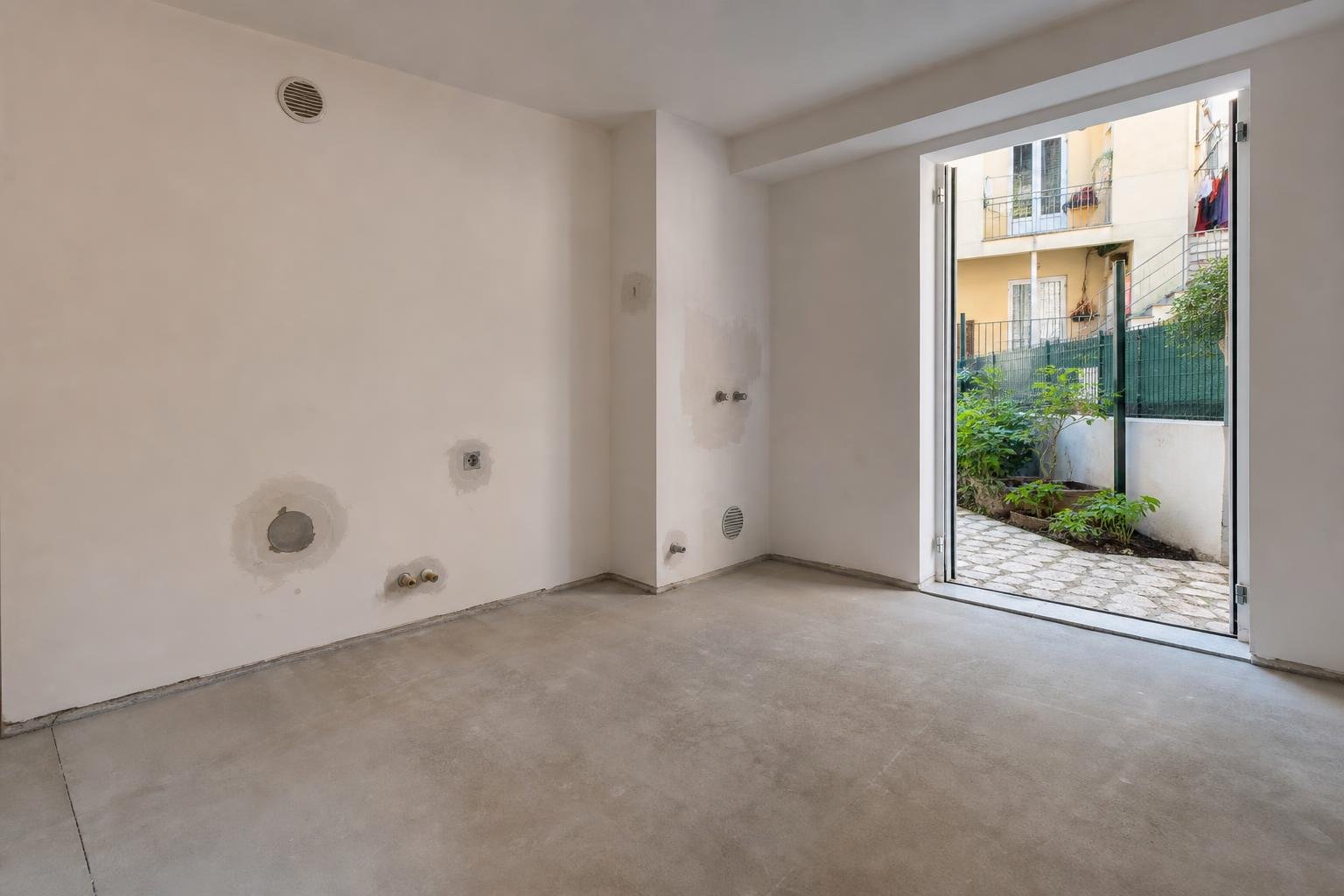
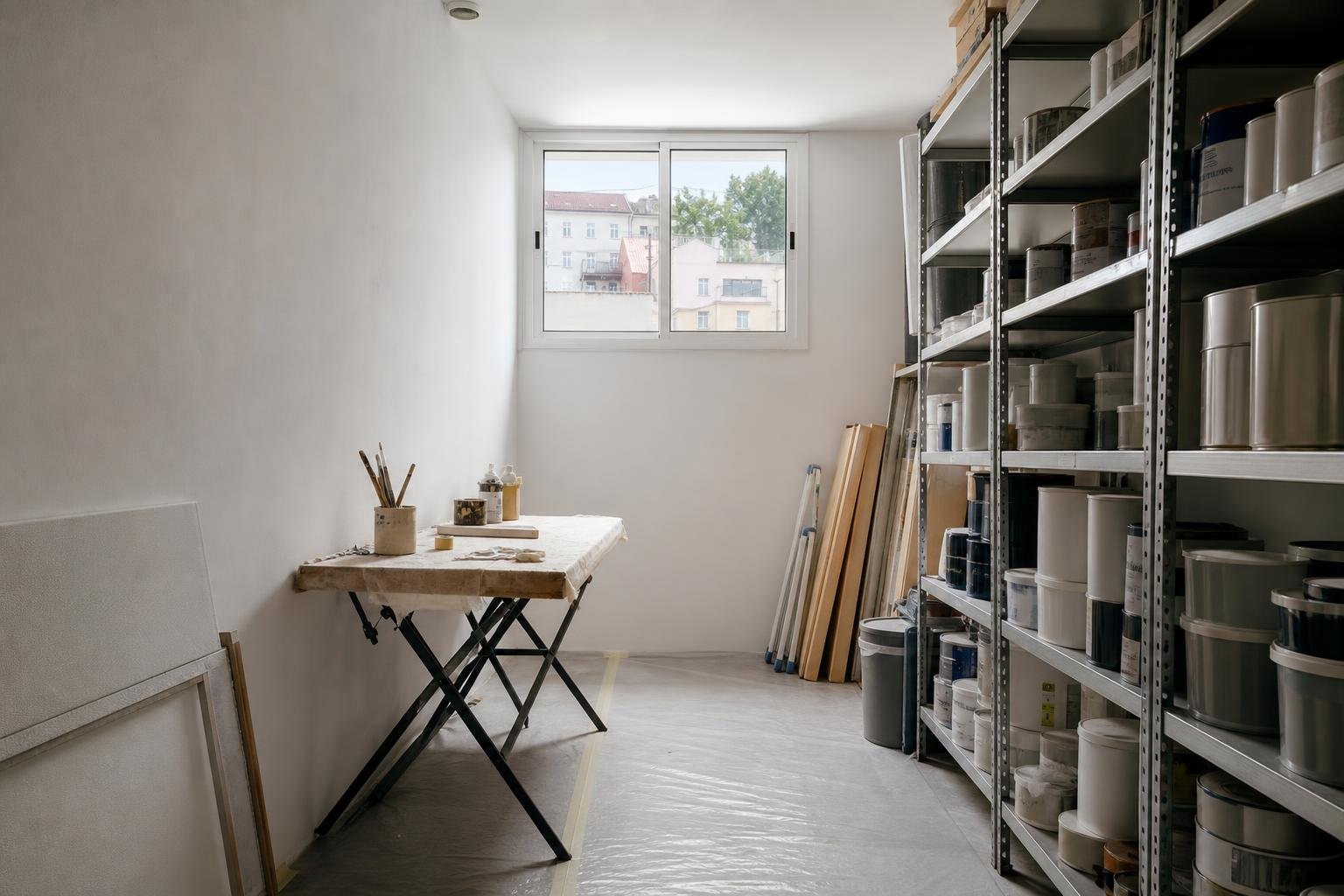
AI-generated editorial image; it does not depict an Obra Lisboa project.

Obra Lisboa