During a renovation, a conversation that settles a question at 8.30am can become an argument about cost, time or responsibility two weeks later. A properly maintained site log closes that gap. It records what was seen, who decided, which drawing applies and what remains outstanding before the team moves on.
In Lisbon, notice of the start of works must be submitted up to five days before work begins, including for works exempt from prior control. Where prior communication applies, the works documentation also includes the site log. Check the municipal rules for notice of the start of works and for building works under prior communication. For a client, the practical benefit is turning that requirement into a daily coordination tool.
Keep the formal record separate from conversation
Messages, calls and site conversations remain useful, but they should not be the final archive for a decision. The site log should receive a short entry whenever an instruction changes the sequence, cost, programme, technical solution or access to the home.
A good entry answers six questions: date; location; observed fact; decision or request; person responsible; response deadline. Rather than writing “check kitchen”, write: “12 May: in the run between the stack and sink, the existing wall prevents the planned route; contractor to submit an alternative route and cost effect by 14 May; do not close the wall before approval.”
Do not use the record to assign blame or vent frustration. Describe the state of the work, attach evidence where available and state the next action. That approach helps the team work and leaves a readable history if the people involved change.
Set out who can record and who must reply
Before site set-up, agree a short responsibility matrix. The works director records progress, events and matters requiring a decision; supervision confirms inspections and directions; designers answer project clashes; the client approves choices affecting price, time or finish.
There is no need for everyone to write every day. It is safer to require each issue to have an identified author and recipient. For work subject to prior communication, Lisbon City Council states that the submission must include documents for the contractor, technical works director and works supervision director, alongside the relevant designs. See the municipal building works prior-communication service.
For an apartment renovation, a weekly routine is often enough: visit the site, record progress, photograph areas that will be concealed and make a list of decisions needed for the following week. When a wall is opened, damp is found or an installation changes, record it that day.
Record what will disappear behind finishes
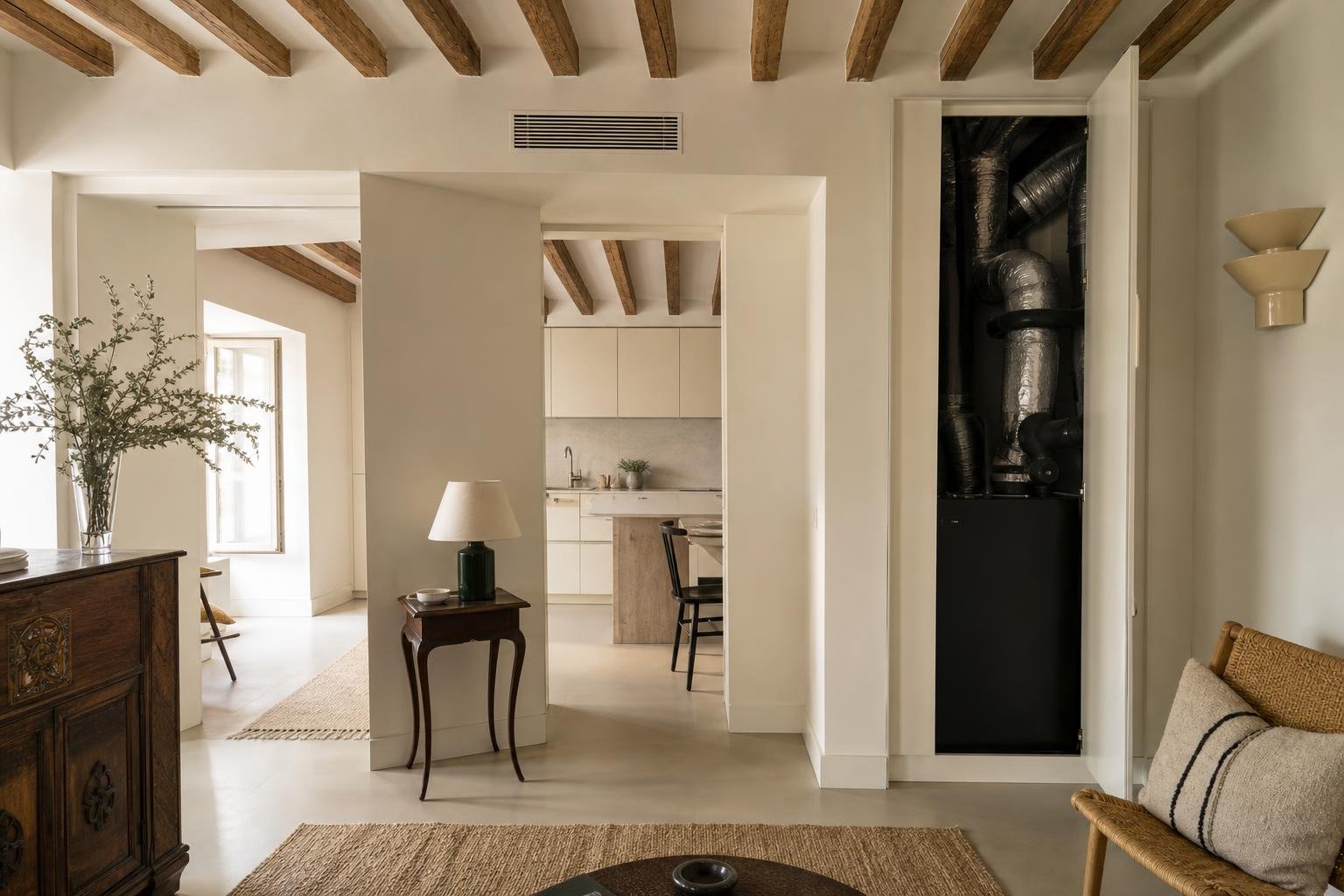
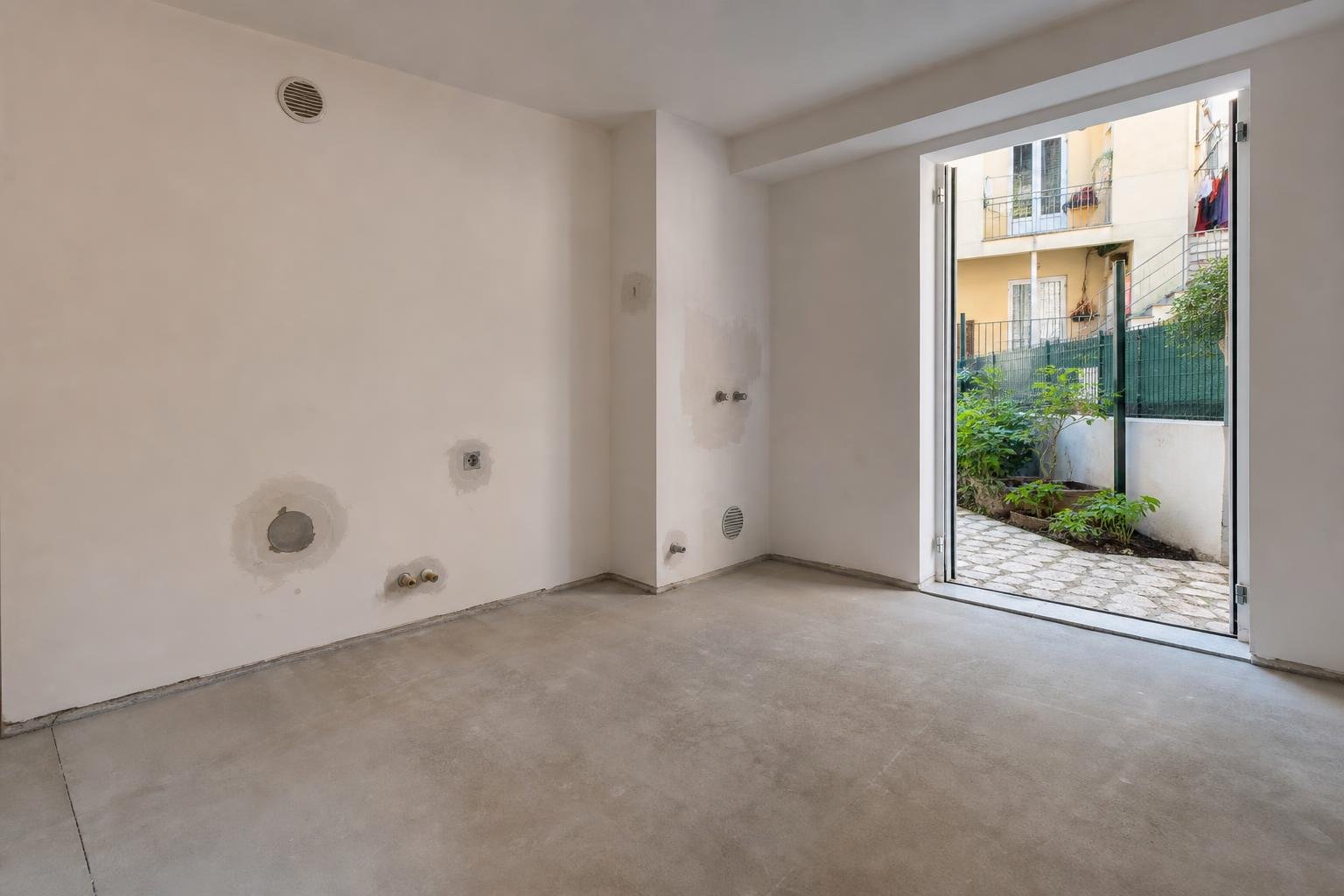
The best photograph of an installation is taken before the finish conceals it. Record routes for water, drainage, electricity, air-conditioning and reinforcement within plasterboard walls, always identifying the room and orientation. A tape measure or a dimension marked on the drawing is far more useful than an image with no scale.
Create consistent file names: date, room, element and revision. For example: “2026-05-12_kitchen_cold-water_north-wall_v01”. Avoid galleries mixed with personal photographs or forwarded images without dates. The aim is for any participant to find the required information within minutes.
Where a decision comes from a drawing, attach the correct drawing and state its revision number. This prevents work being installed from an outdated plan saved on someone’s phone. The discipline matters particularly when kitchens, bathrooms or electrical panels are being altered.

Extra work needs a clear approval trail
Extra work should never begin with a sentence exchanged in a corridor. First, describe the cause: a concealed element, a coordination error, a new client request or a technical requirement. Then request a proposal setting out quantity, price, added time, effect on related work and the relevant drawing or technical solution.
The next entry must state whether the proposal is approved, refused or still under review. The team should only proceed after that point, except for urgent action needed to keep people safe or prevent greater damage. In that case, record the reason, temporary extent and decision still required immediately.
This process supports the provisions that should already appear in a Lisbon renovation contract: price, contract documents, dates and the method for approving changes. The site log does not replace the contract; it records how the project has been managed under it.
Treat the programme as a sequence, not a completion date
“Finish by the end of the month” is a target, not a construction programme. A digital site log works best when it follows verifiable milestones: demolition complete, services approved before walls close, waterproofing tested, finishes delivered, cabinetry measured, installation booked and final cleaning arranged.
At each visit, compare the planned and completed work, then name the precise blockage. It may be a missing part, curing time, an outstanding finish decision or a delivery that needs the lift reserved. In Lisbon apartment buildings, small access and delivery delays quickly build up.
If the programme changes, do not delete the earlier forecast. Record the revision, its reason and the effect on later milestones. The comparison shows whether the delay is isolated or whether the sequence requires a new programme. It also prevents the site from stopping while a choice that could have been resolved the previous week remains open.
End every week with an executable action list
A useful weekly entry ends with simple dated actions. Include technical queries, client decisions, orders, required visits and areas that cannot progress without confirmation. Keep each item to one action assigned to one person.
- Confirm final bedside light-point heights by Tuesday.
- Provide the approved flooring sample before placing the order.
- Confirm duct routes before closing the suspended ceiling.
- Reserve the lift for the tile delivery.
Where the project involves demolition or a material alteration, also confirm the correct planning route. The municipal page for demolition works under prior communication refers to Ordinance No. 71-C/2024, which updated the site-log model and requirements, including the characteristics of the electronic site log.
The goal is not to produce more paperwork. It is to make sure the team knows what can be done tomorrow and that yesterday’s decisions remain easy to find. For changes during construction, apply the same written-approval discipline described in approving extra work during a renovation.
Planning a renovation in Lisbon? Obra Lisboa can help organise scope, work sequencing and decision points before the project starts.
AI-generated editorial image; it does not depict an Obra Lisboa project.

Obra Lisboa