A renovation is less likely to stall when every order has a confirmed decision, a deadline and a linked work stage. A common mistake is to treat taps, tiles, doors and appliances as separate purchases. On site, each choice affects measurements, services, access, storage and sequencing. Before setting a start date, create a simple map showing what must be decided, who signs it off, when it is ordered, where it will be stored and which task cannot begin until it arrives.
Contents
- Why can one apparently simple order stop the work?
- Which materials belong at the top of the plan?
- How do you build a procurement map that the team will actually use?
- When should you schedule delivery? Too early can also cause trouble
- How should materials be received without creating disputes later?
- What should happen when a lead time fails or a choice changes?
Why can one apparently simple order stop the work?
A missing item rarely affects only one day. If the shower tray has not arrived, final waterproofing, tiling, the enclosure and furniture installation may all remain pending. If handles are not selected before cabinet doors are made, fitting can progress, but the handover will be incomplete. If the dishwasher model changes after services are closed up, avoidable alterations may be needed.
Start by separating three moments: decision, confirmed order and material available on site. They are not the same. A catalogue selection is not an order; a paid order does not mean that the item fits in the lift, arrives before installation or can be stored safely in the flat.
This control supports the contract and the overall programme. IMPIC states that private construction contracts above the applicable legal threshold must be put in writing and must identify, among other elements, the scope, price, completion period and payment arrangements. It is worth connecting the procurement map to those documents, especially to establish who supplies each item. See IMPIC’s guidance on construction contracts.
Which materials belong at the top of the plan?
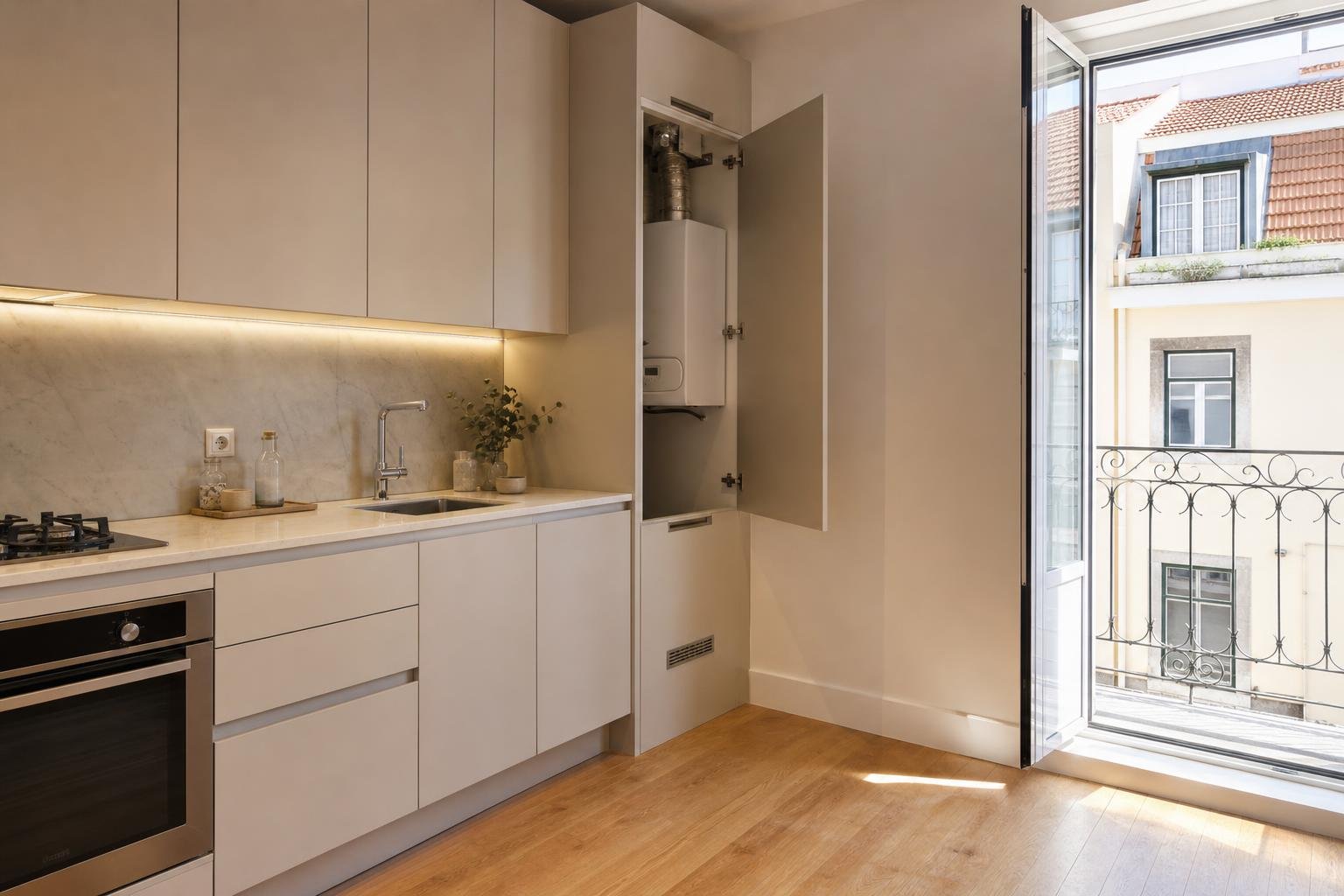
Begin with items that determine dimensions, services or finishes. They are not always the most expensive. A wall-hung WC affects the concealed frame and finished height; an induction hob may require confirmation of the electrical supply; a pocket sliding door must be planned before the wall is closed.
Build the list by dependency rather than by room:
- Infrastructure: built-in equipment, shower trays, drains, windows, pocket doors and special electrical points.
- Surfaces: flooring, tiles, stone, worktops and finishing profiles.
- Final fitting: sanitaryware, taps, decorative lighting, mirrors, handles, appliances and technical blinds.
Add a fourth column for consumables and accessories: traps, valves, profiles, corner trims, grilles, sealants and fixings. They are small, yet they can delay completion. To prevent incompatible selections, review drawings and specifications before ordering; the designer’s technical assistance may clarify project questions during the preparation of the appointment and supply process, under Law No. 41/2015 in the Diário da República.
| Milestone | Question to answer | Useful record |
|---|---|---|
| Decision confirmed | Are the model, size, finish and supplier defined? | Technical sheet or saved link |
| Order confirmed | Are quantity, lead time, transport and conditions accepted? | Written confirmation and proof |
| Ready to install | Is the site measured, prepared and clear for the item? | Photo and team sign-off |
How do you build a procurement map that the team will actually use?
A shared spreadsheet is enough if it is updated and has an owner. Avoid building a detailed file that nobody opens. For every line, record:
- item and room;
- approved size or reference;
- who buys it and who confirms compatibility;
- decision deadline;
- supplier lead time;
- target delivery date;
- unloading and storage location;
- work stage that depends on it;
- status: to select, approved, ordered, received, checked or installed.
Set deadlines backwards from installation. If joinery needs final dimensions after tiling, the tiles must be chosen before the joinery drawing is signed off. If stone depends on the basin and tap, those products need to be fixed before the final worktop measurement.
As a practical routine, use a weekly meeting to review first the decisions due within the next 14 days; then the items due to arrive in the following two weeks; then deliveries with no safe storage location. The purpose is not to predict every surprise. It is to expose blockages before they reach the site.

When should you schedule delivery? Too early can also cause trouble
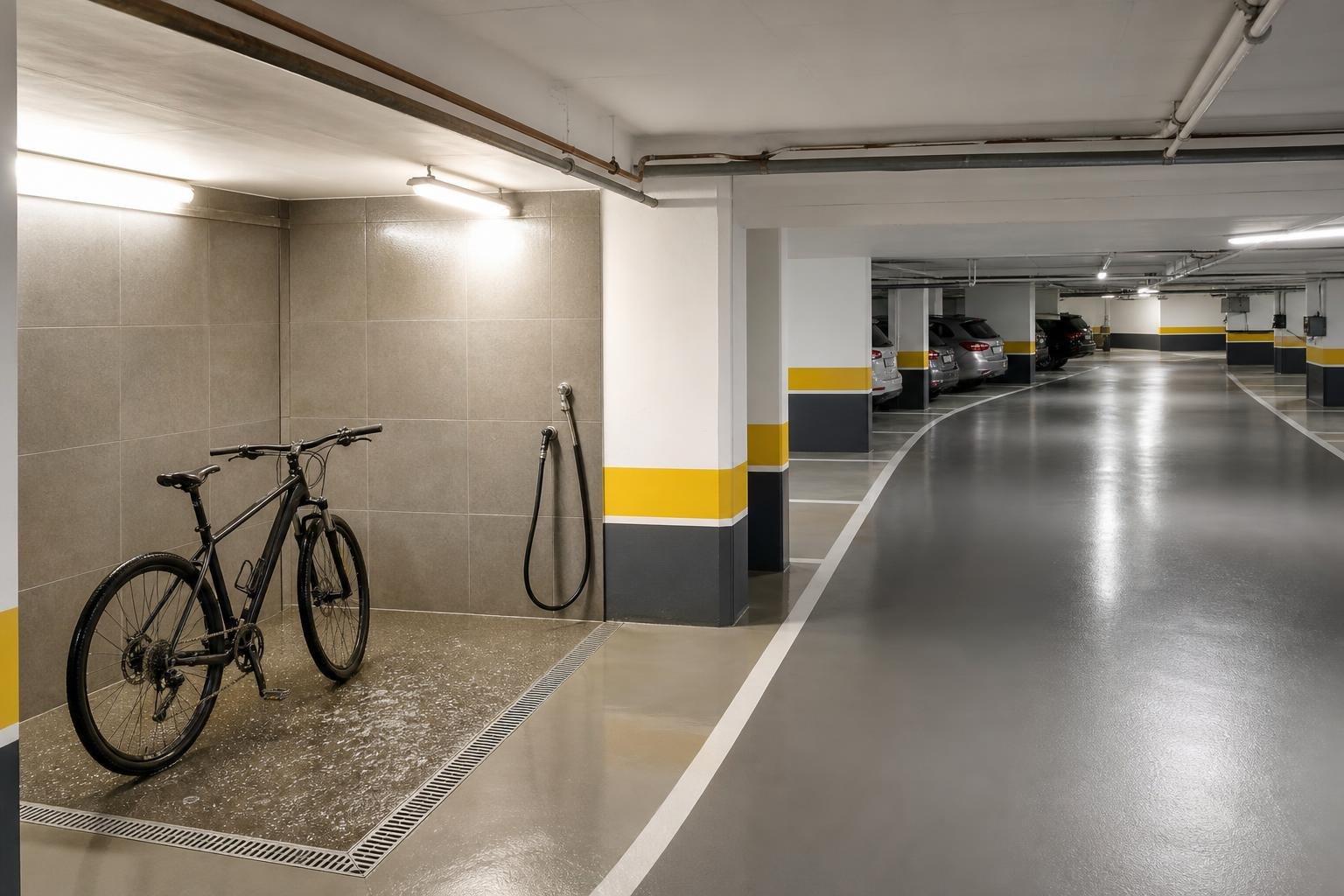
Having everything delivered on day one can sound prudent, yet in a Lisbon flat it may block circulation, increase damage risk and make the trades’ work harder. Flooring and furniture can be affected by moisture, dust or impacts; sanitaryware and glass require protected storage; heavy boxes may not fit in the lift or be allowed in the lobby.
Plan deliveries in windows. Early-installation materials come in when conditions are dry and there is a protected area. Fragile items and finishing products arrive closer to fitting. Confirm who unloads, who checks quantities and damage, and where packaging waste will go.
If unloading requires a skip, scaffolding, a material deposit or another use of the pavement, the programme is no longer only an internal matter. In Lisbon, works exempt from prior planning control may still require notification or a licence for public-space occupation; for works subject to prior control, the occupation plan must include a schedule for equipment. Check the municipal requirements for exempt works and for works subject to licensing or prior notification.
How should materials be received without creating disputes later?
Receiving goods should be quick, but methodical. Do not sign off or accept a delivery without checking at least the reference, visible quantity, finish, package dimensions and obvious damage. Photograph pallets, crushed boxes, glass, profiles and stone corners before moving them.
Where there is a discrepancy, report it in writing on the same day: item, quantity, photo, delivery-note number and the expected effect on installation. Do not solve it through scattered messages alone. Keep the record in the same map or in a project folder that the client, site lead and supplier can access.
It also matters who takes custody. When material is bought by the client but kept on site, establish where it is placed, who has access and what protection will be used. In buildings with lifts, narrow stairs or sensitive common areas, agree the route in advance. Our guide to protecting lifts and shared areas during renovation helps anticipate this logistical step.
What should happen when a lead time fails or a choice changes?
Do not conceal the change until the fitting day. As soon as a supplier delays a delivery or an item becomes unavailable, assess four options: wait, choose an equivalent alternative, resequence the work or complete part of it temporarily. The right route depends on what remains exposed, the cost of later removal and whether progress would compromise warranties or finishes.
Record the decision with the date, programme impact, price difference and approval from the person paying. An alternative tile may require a new layout; another tap may change drilling; a door with a different thickness may require revised architraves. Do not approve something merely “similar” without checking dimensions and technical sheets.
Before appointing a contractor, also confirm the responsible company’s qualification. The IMPIC portal provides searches for construction companies’ licences, certificates and other registrations through its company search service. That check does not replace a clear proposal, but it removes one basic uncertainty.
The next step is straightforward: hold a pre-start meeting, open the map on one screen and do not confirm the start date until critical items have owners, dates and delivery locations. For the written framework behind that meeting, see our guide to renovation contracts in Lisbon.
Key takeaways
- List materials by the dependency they create, rather than only by room or price.
- Always separate a decision, a confirmed order and material available for installation.
- Set the place, route and receiving person before booking every critical delivery.
- Record every substitution, delay or damage in writing on the day it happens.
If you are preparing a renovation in Lisbon, gather the plan, the selections already made and the dates you want to meet. Obra Lisboa can help structure a construction or renovation project around a clear sequence of work.
Sources and further reading
- IMPIC’s guidance on construction contracts
- company search service
- exempt works
- works subject to licensing or prior notification
- Law No. 41/2015 in the Diário da República
AI-generated editorial image; it does not depict an Obra Lisboa project.

Obra Lisboa