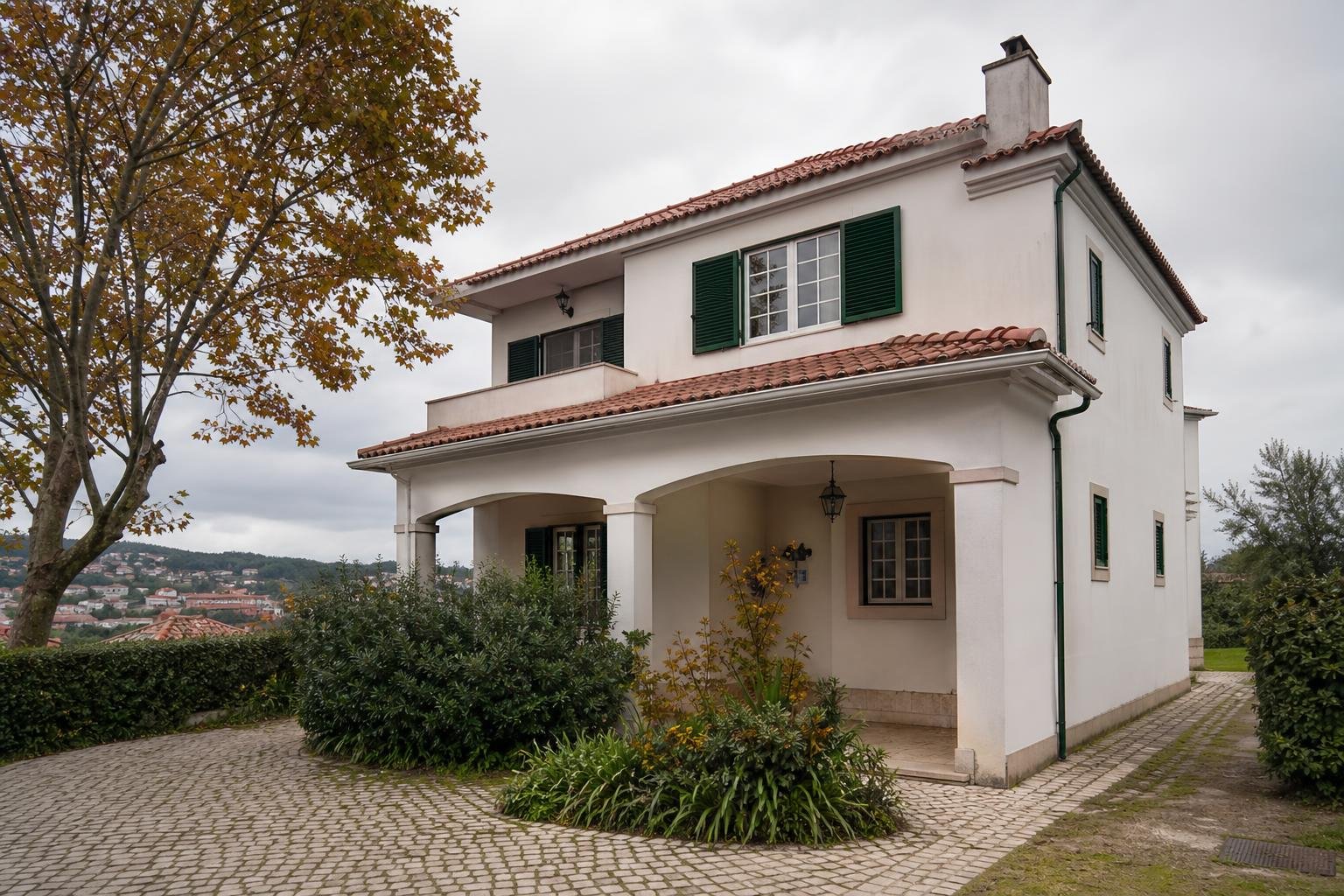
A peeling façade needs more than a fresh colour. Where old paint has lost adhesion, cracks have formed around openings or render sounds hollow, painting over the surface simply postpones a more expensive repair. In Lisbon, strong sun, wind-driven rain and airborne salts make substrate preparation especially important, particularly on older buildings with thick walls and lime-based render.
A sound sequence starts by identifying what has failed: the finish, the render, window seals, a sill, a rainwater pipe or water entering from the roof. Only then is it possible to choose cleaning, local consolidation, mortar repair, primer and paint. This guide sets out the decisions that help an exterior coating protect the wall while retaining the character of the building.
Separate dirt, failed paint and active moisture first
Inspect the façade on a dry day, then look at it again after rain. Dark marks that grow when wet, blistering paint below a window sill or vertical cracking beneath a gutter usually point to moving water; they are not simply a paint issue. White, powdery salt deposits also require diagnosis. Brushing them away and repainting may hide them for a few months, but it does not stop moisture entering the wall.
Carry out a few basic checks before ordering materials:
- use a scraper on peeling areas; if paint comes away in sheets, remove every layer that is no longer sound;
- tap the render carefully; a hollow sound may indicate detachment from the wall;
- inspect the junctions between window frames, sills and wall, along with rainwater-pipe connections;
- photograph cracks and date the images. If they widen, run diagonally or appear with distortion, pause the paint work and seek technical advice.
A façade may have surface algae on a shaded elevation while also suffering a local leak at a parapet. Covering both with a thick “waterproof” coating is the wrong response. Remove the cause first, repair the substrate second and apply the finish last.
Check building, street and municipal requirements before scaffolding goes up
A repaint that keeps the existing façade configuration may be treated as conservation work. However, conservation work on a listed building, a building being listed or one within a protected area requires a licence. Checking this early prevents an owner from ordering a colour or solution that conflicts with local restrictions. Lisbon City Council explains the framework on its page for conservation works requiring a licence.
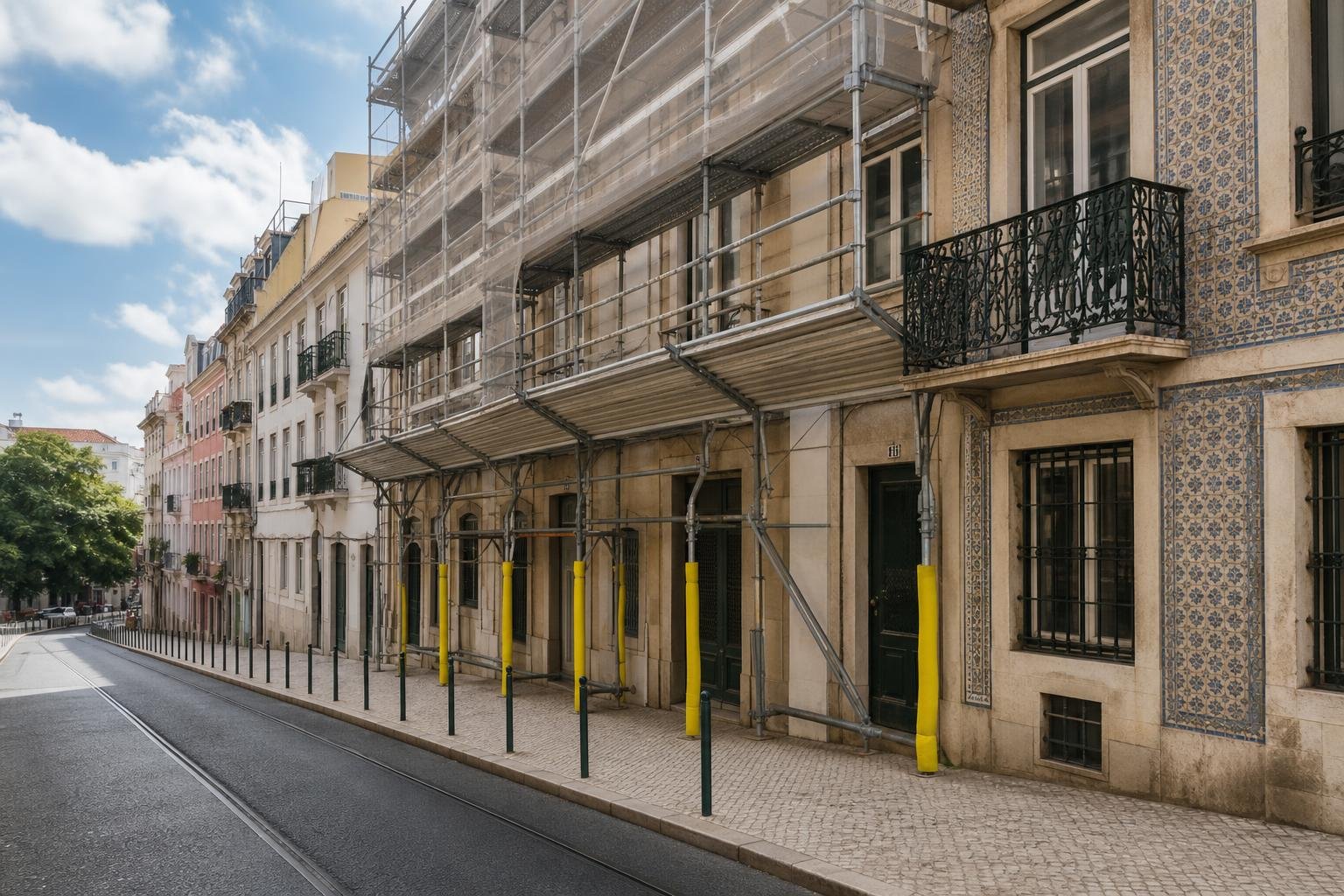
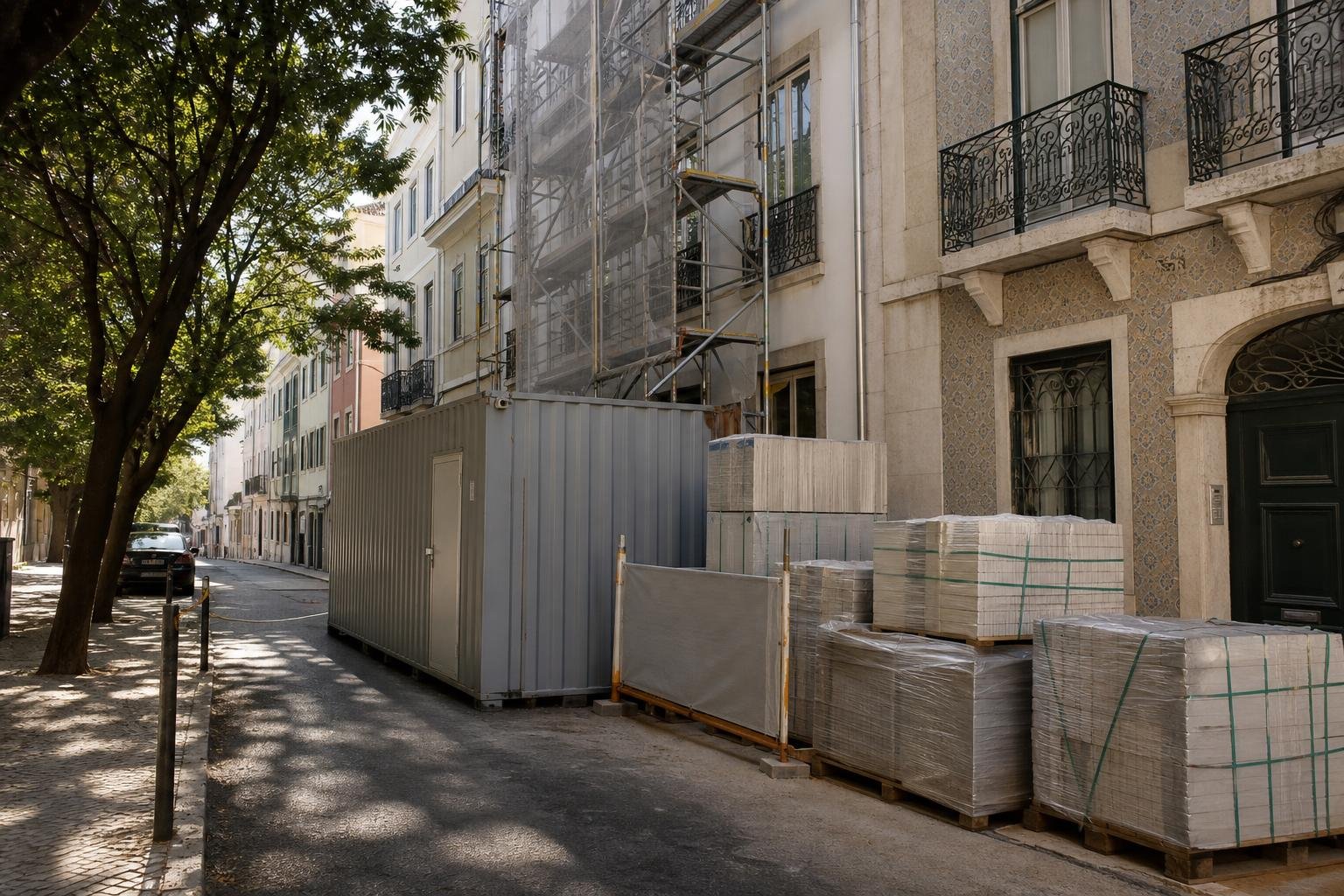
In an apartment building, also confirm the condominium decision, access to balconies and enclosed verandas, protection for windows and the responsibility for repairs to shared elements. If scaffolding, a skip, a hoist or material storage is needed on the pavement, public-space occupation has separate requirements even where the building work itself is exempt from prior control. The municipal guidance on public-space occupation for works requires a plan covering pedestrian routes, barriers, equipment and signage.
Do not leave this until the day before work begins. On a narrow street in Alfama, Campo de Ourique or Estrela, the access solution can determine the size of each work area, delivery times and whether the whole façade can realistically be repaired in one campaign.
Repair render with a mortar that suits the existing wall
The key decision is not the paint brand; it is compatibility between the existing wall and the repair mortar. On old stonework, solid brickwork or lime-based mortars, an overly rigid repair rich in cement can concentrate stresses and make drying more difficult. Cracking at the junction, detachment or moisture appearing elsewhere are common outcomes.
Remove only loose render until firm edges are reached. Clear dust, loose salts and friable material; dampen the background where the specified mortar requires it; then apply the repair in controlled thicknesses, respecting curing periods. Do not level an entire elevation with fine filler designed only for minor imperfections. Across broad areas, the repair needs to reproduce the thickness, texture and behaviour of the existing coating.
Published rehabilitation regulations in the Diário da República offer a useful principle for traditional buildings: exterior mortar should be compatible with the substrate, and cement as the sole binder is discouraged on older masonry and lime-based renders. See this reference on compatible renders and façade finishes. It is not an automatic specification for every Lisbon building, but it explains why the existing material should be identified before repair work begins.

Choose limewash, silicate or acrylic paint with the whole system in mind
Limewash and mineral silicate paints can suit compatible mineral substrates and older façades that need to remain highly vapour permeable. They demand careful preparation and application in line with the manufacturer’s system. Acrylic paints can perform well on stable cement-based render and compatible previously painted surfaces, provided they are not being used to hide moisture or weak existing layers.
Do not select a product solely because it is described as washable, elastic or fully waterproof. An excessively closed coating over a damp wall can trap water within the render. Equally, mineral paint applied over an old organic film may not bond as expected. Where there is uncertainty, use a test area and confirm the recommended primer for that particular substrate, rather than choosing only by colour.
Façade preparation may also be the right moment to decide whether the wall needs a broader thermal upgrade. ADENE identifies wall and roof insulation as part of an integrated approach to improving comfort and building performance. Read its guidance on building rehabilitation and energy efficiency before paying for paint that may have to be removed to install external insulation a few years later.
Resolve cracks, seals and junctions before the first coat
Cracks do not all have the same cause. Very fine surface cracks may come from shrinkage in the finish; cracks that return at changes of material, opening corners or structural lines need a response that accounts for movement. Opening them up and filling every one with rigid compound often creates a visible line after the first hot summer.
Assess each condition separately:
- stable cracks in render: open and repair using a compatible product, with local mesh where the system calls for it;
- window-frame seals: remove failed sealant, clean, prime where needed and renew with a sealant designed for movement;
- sills: check outward fall, drip detail and continuity of the junction;
- rainwater pipes: correct loose brackets and leaks before repairing the runoff stain;
- parapets and copings: inspect caps, joints and locations where water can enter from above.
Protect stone surrounds, façade tiles, railings and decorative features before washing, sanding or priming. Painting a wall does not justify erasing the materials that give a building its identity. Where there are historic tiles, stone or ornament, the method must be specific rather than an extension of ordinary paint preparation.
Set a work sequence that does not damage completed repairs
A well-managed elevation reduces patching and uneven colour. The usual order is: resolve water ingress; protect openings and ground surfaces; remove loose material; wash and treat biological growth; allow drying; repair render and cracks; cure; apply primer where the system requires it; paint full coats across each elevation; remove protections and review junctions. Drying time is not idle time. It is part of the coating system.
Plan by elevation rather than simply by floor. Stopping a coat in the middle of a wall, changing paint batches without blending or working on a wall heated by direct sun can leave marks that are difficult to correct. Check the weather forecast, avoid wet substrates and excessive heat, and protect the façade from early rain according to product instructions.
If window repairs, gutters or roof work are included, coordinate those trades before the final paint coat. For general repair and preparation, it is also useful to revisit the principles of quality and durability in construction: verify substrates, materials and workmanship instead of approving the work only by its final appearance.
A durable façade starts with a clear diagnosis and a properly planned work sequence. To plan repairs, match materials and coordinate an intervention in Lisbon, contact Obra Lisboa.
AI-generated editorial image; it does not depict an Obra Lisboa project.

Obra Lisboa