If you are hiring a renovation for your own home, the practical rule remains simple: ask for a quote with VAT clearly shown and do not accept a reverse-charge invoice without confirming your tax position. Portugal changed important VAT reverse-charge rules for certain construction services on 1 July 2026. The change mainly concerns companies, developers, owners carrying on an economic activity and landlords in particular situations; for a private homeowner, copying that invoicing model can create an avoidable problem.
Contents
- What changed on 1 July 2026?
- Does a family renovating its own home fall within this rule?
- Why does the contractor’s qualification deserve closer attention?
- Which documents should you request before the first payment?
- How should you compare two quotes when one mentions reverse charge?
- When should you stop and seek specialist confirmation?
What changed on 1 July 2026?
The change took effect on 1 July 2026 and widened the scope of VAT reverse charge for certain construction services, including some housing construction and rehabilitation contracts. The guidance published by IMPIC links the change to Decree-Law no. 97/2026 and highlights the legal qualification of the business supplying the service.
Reverse charge does not mean exemption or a discount. It means that, instead of the contractor charging VAT in the usual way, the customer may become responsible for accounting for it in its periodic VAT return. It is a VAT mechanism designed for relationships involving taxable persons, not a formula that a private homeowner can select because the quote appears lower.
There is one immediate practical consequence: before comparing proposals, check whether every bidder is pricing on the same VAT basis. A proposal with no visible VAT may not be cheaper; it may simply assume a treatment that does not apply to your situation.
Does a family renovating its own home fall within this rule?
As a rule, someone commissioning work as the final consumer for an owner-occupied home is not acting as a VAT taxable person for that purchase and receives an invoice where VAT is charged by the supplier at the applicable rate. Reverse charge depends on specific conditions connected to the customer’s tax status and to the work being bought.
Some cases are less straightforward: an individual may run a business; a company may acquire, rehabilitate or operate property; an owner may carry out works on an asset used for business activity. In those cases, the answer does not depend on the label given to the works — “renovation”, “refurbishment” or “minor repairs” — but on the contract, the buyer’s status and the actual nature of the work.
Do not ask a contractor to remove VAT “and sort it out later”. Do not sign an appointment stating that VAT is due by the customer if you do not understand who must account for it. When deciding the scope and its treatment, it helps to align the quote with what is written in the renovation contract.
Why does the contractor’s qualification deserve closer attention?
IMPIC’s guidance says that, for this purpose, construction services must be supplied by entities legally qualified to carry out construction activity. That makes the preliminary check more important: the invoice, contract and work on site should all point to the same business and to a consistent scope of works.
Before appointing anyone, use IMPIC’s public search for qualified companies and construction licences. Save the result with the consultation date in the project file. It does not replace checking references, scope, insurance or management capacity, but it avoids appointing an entity without a verifiable qualification.
- Check the legal company name and VAT number that will appear on the invoice.
- See whether the business appears as holder of an appropriate licence or certificate.
- Ask the quote to identify included work, relevant subcontracting and exclusions.
- Match these details against the contract and payment certificates.
This check is also useful when work expands in stages. A change of scope agreed verbally is exactly the sort of gap that later makes invoicing difficult to interpret.

Which documents should you request before the first payment?
Start with a quote that can become a control document. It should separate labour, supplied materials, demolition, specialist work, protection of common areas, waste removal and excluded items. Where there is a tax doubt, ask for a written note explaining the VAT treatment assumed rather than waiting for the final invoice.
Keep a project file containing:
- the accepted quote and work programme;
- the contract, technical appendices and approved changes;
- evidence of the IMPIC search;
- measurement sheets or records of verified work;
- invoices, receipts and proof of payment;
- messages about extra work, substitutions and delays.
Payments should follow verifiable work, as explained in our guide to renovation measurement sheets and payment certificates. This routine does not settle a VAT question on its own, but it reduces the risk of paying for vague, duplicated or out-of-contract items.
How should you compare two quotes when one mentions reverse charge?
Start by removing any conclusion based on the final total alone. Put the proposals side by side and request written answers to three questions: who is identified as the customer, which VAT rule is being applied and what contractual basis supports that treatment.
Then confirm that both documents cover the same work: preparation, protection, demolition, installation, connections, finishes, cleaning and removal. A reverse-charge quote may appear lower, while another quote charges VAT conventionally. Without the same tax assumption, you are not comparing like-for-like prices.
The wider cost context makes this discipline even more useful. In August 2026, the new-housing construction cost index rose 7.5% year on year; materials rose 7.1% and labour costs 8.0%, according to the INE release published on 9 October 2026. Those figures do not set the price of a renovation, but they reinforce the value of agreeing quantities, substitutions and review rules before work begins.
When should you stop and seek specialist confirmation?
Pause before signing or paying if the quote says “reverse charge” but does not identify the basis, if the contractor asks for payment to an account unrelated to the contracted business, if the invoice VAT number differs from the proposal, or if you are asked to declare that you are a taxable person when you are not.
You should also seek accounting or tax confirmation when the work concerns a rented property, a company, professional activity carried out from home, property development or a purchase for resale. In these cases, a short phrase on an invoice does not replace an assessment of the actual circumstances.
For project management, keep one clear rule: every payment should match a correct invoice and documented work. If the project is still taking shape, first define scope, responsibilities and sequence. A construction team can help turn those decisions into an executable plan; see how Obra Lisboa works.
Key takeaways
- For an owner-occupied home, do not assume VAT reverse charge applies to you.
- Compare quotes with the same scope and the same VAT assumption.
- Check the contractor’s IMPIC qualification and save a dated result.
- Request written clarification before accepting an invoice that makes VAT due by the customer.
Planning a renovation in Lisbon? Before appointing a contractor, gather the quote, scope and outstanding decisions. Contact Obra Lisboa to discuss the planning and delivery of your project.
Sources and further reading
- guidance published by IMPIC
- search for qualified companies and construction licences
- INE release published on 9 October 2026
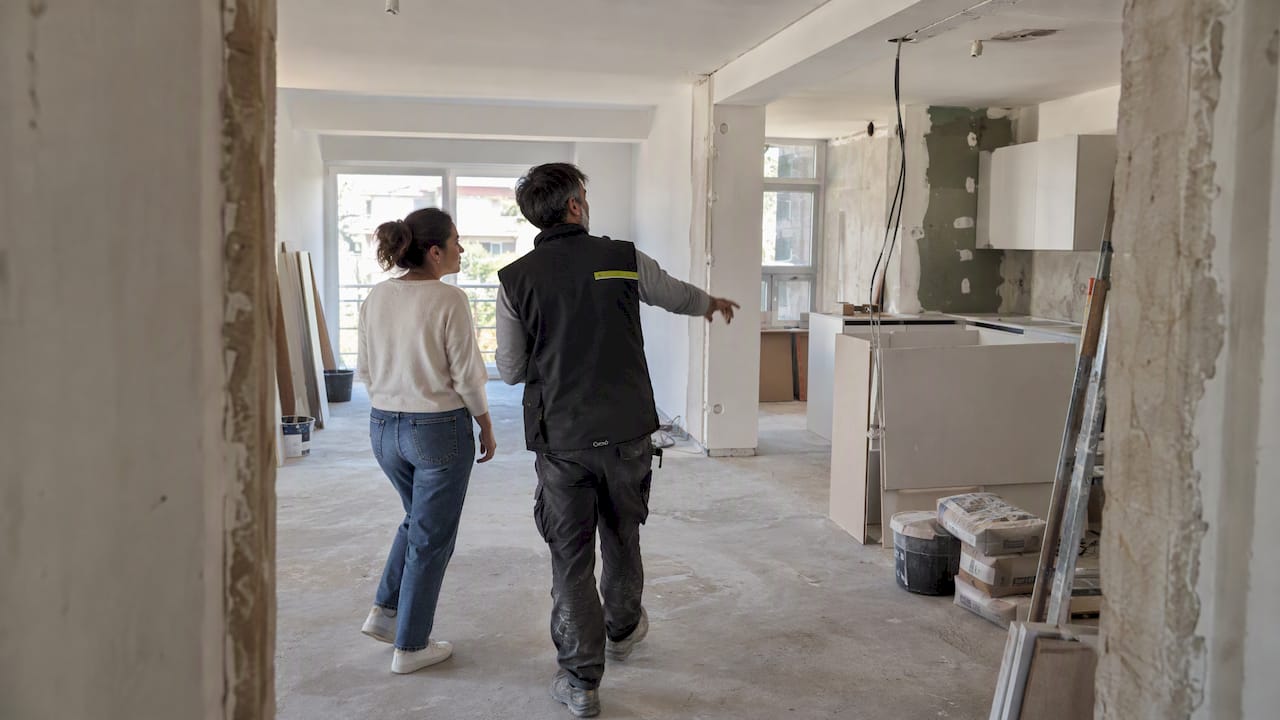
Editorial image; it does not depict an Obra Lisboa project.

Obra Lisboa