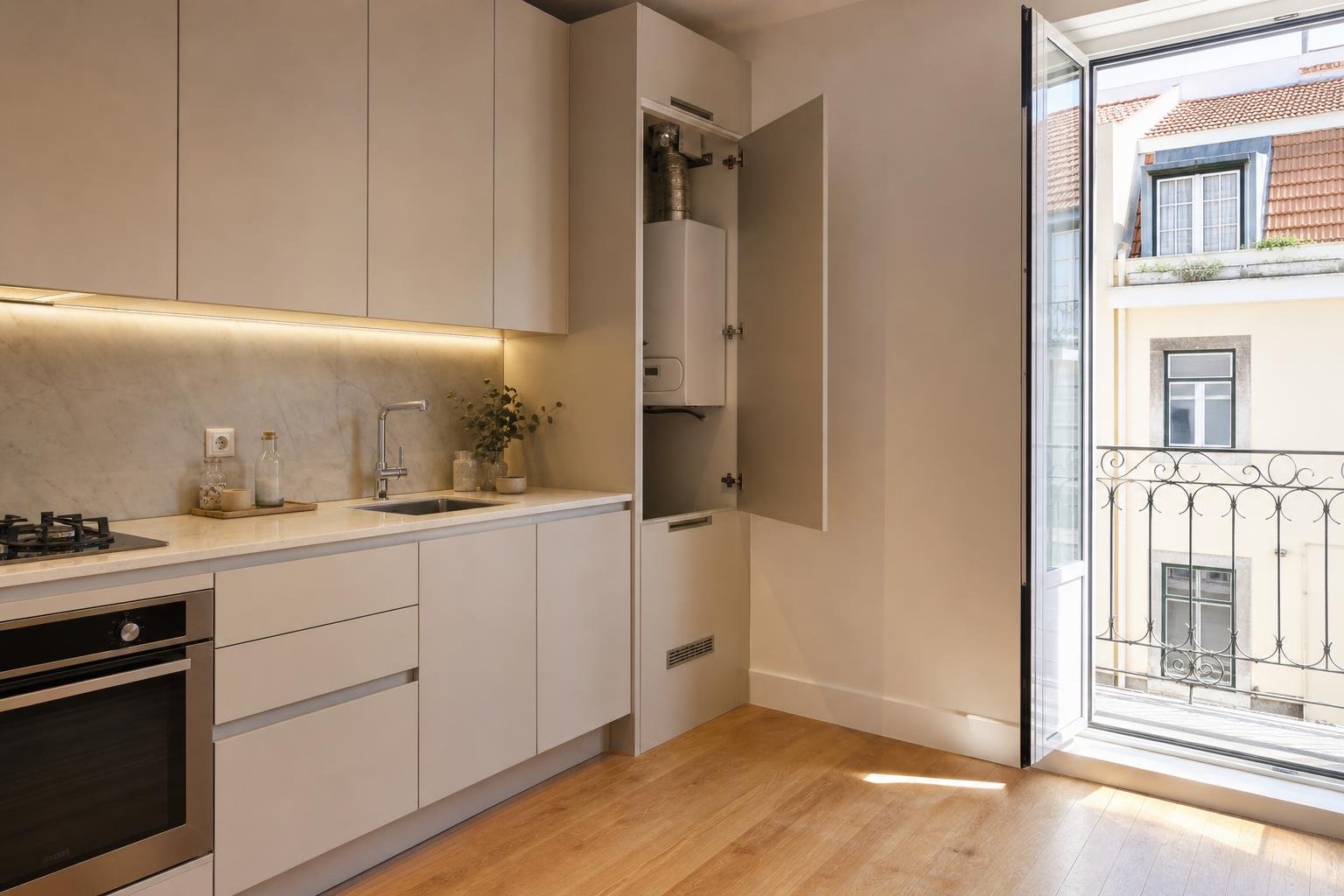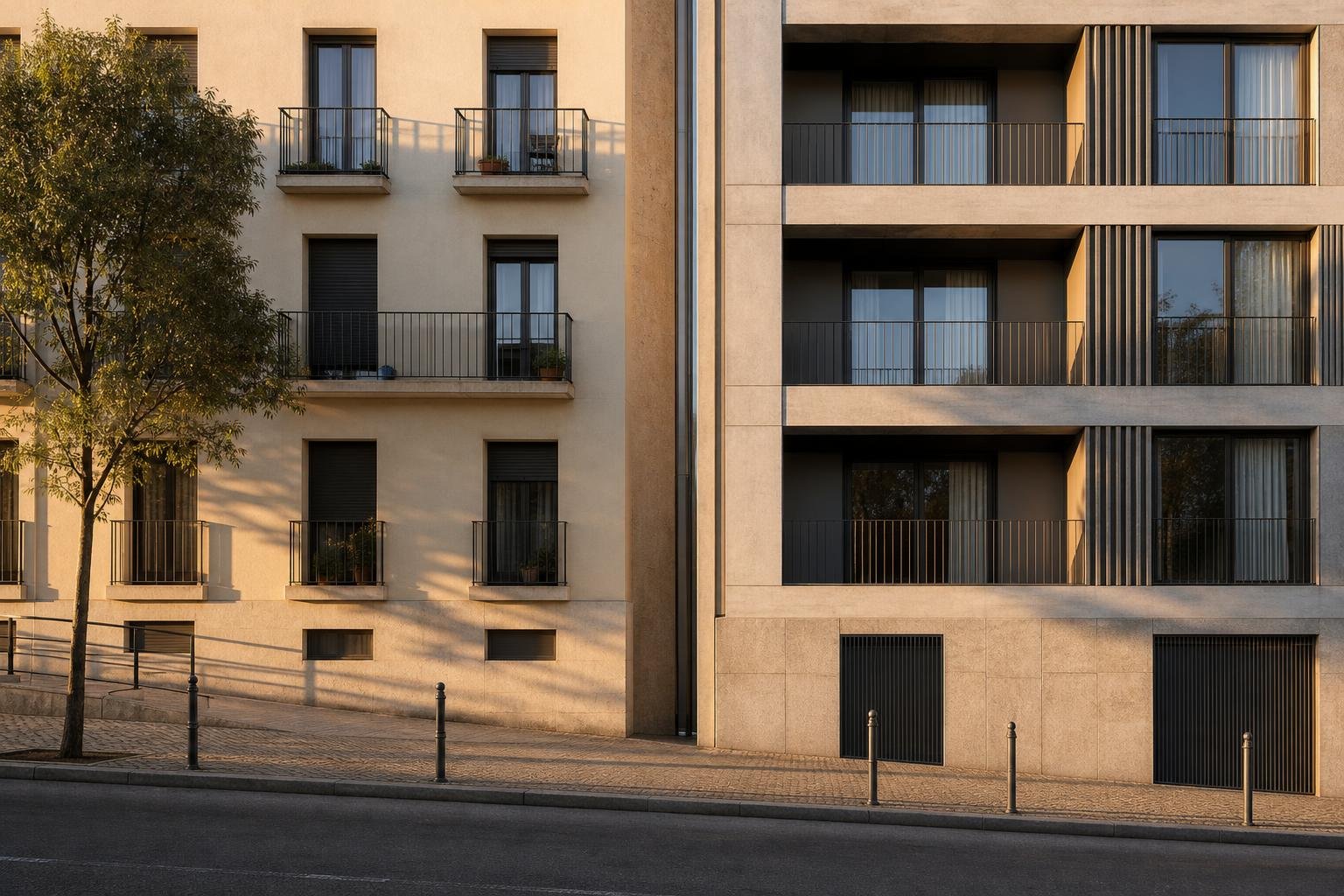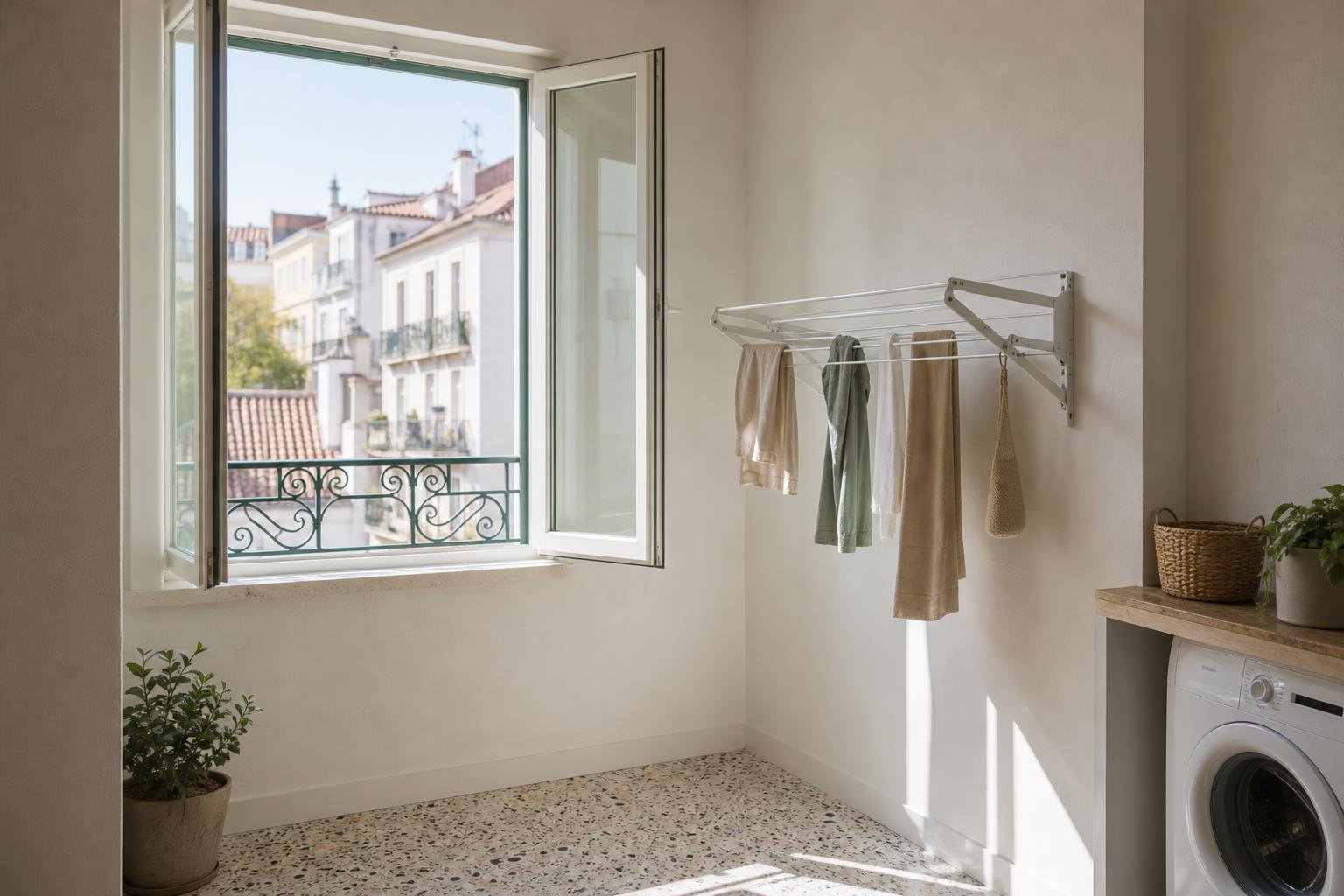

A well-executed external project is not measured only by fresh paint or the final appearance of the façade. It is also measured by how well it protects what is already there: frames, glazing, sills, shutters, balconies, outdoor equipment and the interior of every apartment. During repair, cleaning, painting, waterproofing or localised cladding work, one poorly handled temporary detail can leave permanent marks, direct water through the window envelope or spread dust throughout the home.
In Lisbon, where many projects take place in occupied buildings and beside public streets, protection must balance safety, continued use and consideration for the surroundings. The municipality requires public-space occupation plans to identify matters including barriers, scaffolding, access routes and temporary signage; once authorised, occupation may only take place under the approved terms. Review Lisbon’s rules for public-space occupation related to works before finalising site arrangements.
This guide explains what to check before, during and at the close of the work, so that temporary protection performs as a real safeguard rather than becoming another source of defects.
Start with a survey: every façade and window responds differently
Before ordering mesh, plastic sheeting or tape, carry out a simple documented survey. Photograph each opening from outside and inside, including sills, window boards, frames, sealant joints, shutter boxes, grilles, air-conditioning units and nearby cracks. Note scratched glass, weathered paint, detached sealant, chipped stone or existing signs of damp. These records prevent later disputes and help distinguish an old defect from damage caused during the works.
The survey should also identify the frame material. Powder-coated aluminium, painted timber, PVC and steel react differently to abrasives, solvents, heat and adhesive tape. A cleaning product or tape left in place for too long can stain a finish; a cover pressed against glazing can trap condensation; an older window may not withstand pressurised water.
Where the project includes local repairs, check whether finishes are sound and whether there are hollow or deteriorated areas. Do not assume that a façade which looks stable will safely withstand vibration, impact work or aggressive washing. For a broader approach to diagnosing building defects, see our guide on how to diagnose leaks and damp.
Use temporary protection that does not create a new defect
Effective protection responds to a specific risk. For fine dust, the priority is limiting entry through gaps and keeping frames closed whenever practical. For splashes of mortar, paint or cleaning products, use a film or cover that will not react with the surface and remove it promptly after the highest-risk stage. For rain, the solution must direct water away rather than merely wrapping the opening like a bag.
Avoid enclosing damp areas completely in plastic for long periods. Water trapped between the cover and the façade can stain stone, encourage fungal growth or find its way through weakened joints. Always provide a ventilation and drainage strategy. At sills, make sure the protection does not cover drips, balcony outlets or drainage points.
On scaffolding, fine mesh or screening has an important containment and protection role, but it does not replace direct protection of openings. The Diário da República regulation on barriers and scaffolding describes enclosing work areas with appropriate fine mesh or screening. On site, this should be supplemented with measures suited to the façade, access arrangements and forecast weather.
Prevent water ingress by considering routes, pressure and weak points
Most water ingress associated with external work is not caused by one dramatic failure. It develops when sprayed water, wind-driven rain or standing water finds an open joint, a sill without sufficient fall, a deteriorated shutter box or a poorly finished temporary connection. Before washing or repairing, define where water will come from, where it will go and which element prevents it from entering the home.
Do not direct pressurised water towards frame joints, grilles, façade-to-balcony junctions or upper window flashings. If cleaning, testing or washing is necessary, start in an unobtrusive area and observe the interior during and after the operation. On rainy days, inspect temporary protection regularly: a wind-loosened flap or detached tape can quickly change the route of water.
Lisbon’s urbanisation and building rules address precautionary protection measures as well as mobility and safety during works. Refer to the Lisbon Municipal Urbanisation and Building Regulation when setting up the project. In practical terms, ask the contractor to state in writing how openings will be protected during rain and how the protection will be checked before covers are removed.

Control dust and waste without making the home impossible to ventilate
Dust from sanding, cutting or removing finishes can enter through very small gaps, shutter boxes, vents and balcony doors. The answer should not simply be to keep everything closed for weeks. A better approach combines external containment, frequent cleaning of work areas and planned ventilation periods when dust-generating operations are not taking place.
Inside the home, protect sills, floors near openings and nearby furniture with removable coverings. Do not apply tape directly to delicate finishes without a prior test. Remove dust from tracks, outlets and window boards every day, because dust mixed with water can block drainage and leave stains. If occupants have allergies, young children or particular sensitivities, agree working times and give notice before especially dusty or noisy tasks.
Site organisation matters too. The municipal occupation plan covers barriers, support areas, vehicle entry and exit, storage and containers. Clear logistics reduce the need to move waste close to façades or leave materials loose in exposed places. To plan communication in an occupied building, read how to reduce the impact of construction work on the community.
Coordinate protection with safety, access and condominium rules
A protected window must not become an inaccessible exit, obstruct essential ventilation or prevent safe access to a balcony. Before fitting films, internal netting or fixed covers, confirm which openings are used to reach equipment, clean, evacuate or carry out maintenance. In multi-apartment buildings, establish who may enter balconies, who operates shutters and how a report of water ingress will be handled quickly.
Where scaffolding, barriers or pavement occupation are involved, protecting the façade is linked to protecting pedestrians. The municipal guidance states that, in certain notification situations, a minimum clear pavement width of 1.50 metres must remain and a protective canopy is required. Do not improvise changes to the site after installation: moving scaffolding, a container or screening may require the authorised occupation to be amended.
Also check that the contractor is properly identified. The IMPIC notes the obligation to display the company identification and contractor licence number visibly at the site entrance. For the client and condominium residents, this makes it easier to know whom to contact when protection needs correcting or damage must be reported.
Inspect daily and close the project with a genuine final check
Temporary protection should never be installed and forgotten. Carry out a daily check, particularly after wind, rain or vibration-heavy work. Confirm that tape remains secure, screens are not permanently pressed against glazing, window tracks remain clear, water is not pooling on balconies and mesh has not released dust towards openings. Record unusual situations with photographs and have them corrected before the next stage begins.
At the end, removal should be gradual and followed by cleaning. Take off protection without dragging abrasive particles across glazing or frames. Clean window boards, drip edges and outlets; open and close every window; check shutters, locks, grilles and sealant joints. Then inspect from inside for damp marks, odours or darkening near perimeter details.
A useful handover list includes final photographs comparable with the original survey, confirmation that no holes or adhesive residue remain, drainage testing where relevant and clarity about who will address later defects. This control discipline is one reason construction oversight matters; see also why construction supervision is important.
A renewed façade should leave a home better protected, not more exposed. If you are planning external works on a Lisbon building, Obra Lisboa can help plan the intervention, coordinate protection, review critical junctions and monitor execution with attention to the details that prevent damage indoors.
Editorial image; it does not depict an Obra Lisboa project.

Obra Lisboa