
An outdoor tap can make balcony planting, floor cleaning, bicycle washing and everyday maintenance much easier. Yet this modest addition should be approached as a technical alteration, not as an accessory fitted at the last minute. A poorly planned connection can leave pipework exposed to sun, create concealed leaks, send water across the façade or discharge it into the wrong place.
Before choosing a tap, establish its purpose, the route of the supply pipe and how used water will be collected. In Lisbon, the work may also involve condominium and planning considerations, particularly where the façade or shared building elements are affected. The municipal guidance on building work subject to prior communication is a useful starting point. Planned properly, a balcony water point becomes a convenient, safe and maintainable feature.
Begin with how the balcony will actually be used
Start by defining specific uses. Watering a few pots calls for a different arrangement from regularly washing a large terrace, using a hose or adding a small utility sink. On a compact balcony, a tap near the door may be enough. In a larger outdoor area, its position should allow you to reach the full space without pulling hoses over thresholds, furniture or planting.
Make a simple list: watering, floor washing, equipment cleaning, pet care or another occasional task. Then consider frequency. If the tap will only be used a few times a month, a compact protected arrangement may be more sensible than an elaborate installation. For regular use, allow for a washing area, a hose holder and somewhere to keep accessories dry.
Rainwater systems require a separate design, clearly identified pipework and suitable equipment; it is not safe to improvise connections between alternative-water and drinking-water circuits. For related ideas on making exterior areas work harder, see how to improve an outdoor space.
Choose the supply route and provide an accessible shut-off
The new point should be fed from an existing supply that can serve it without temporary hidden fixes. In many flats, this means opening internal walls, skirtings or service cupboards, so the route needs to be coordinated before finishes are closed. The applicable technical framework for building water supply and drainage systems covers the design, construction and operation of these installations, as set out in this Diário da República regulation on water and sanitation systems.
An accessible, labelled shut-off valve before the pipe reaches the exterior is essential. It lets you isolate a leak at the tap, hose or fitting without turning off water to the whole home. Do not hide it behind fixed joinery or inside an inaccessible box. In wider refurbishment work, planning access from the outset prevents unnecessary demolition later; the same principle is covered in our guide to inspection access panels for concealed plumbing.
Where pipework crosses an external wall, the opening must be properly sealed and protected. Filling a hole with generic filler is not enough: the detail must cope with movement, weather and repeated wetting without directing water back into the building fabric.
Specify a tap and fittings that can withstand outdoor exposure
Outdoor materials face sun, rain, dust, temperature changes and less careful use. Choose a tap designed for exterior conditions, with a durable finish and an easy-to-use handle. A threaded hose outlet is practical, but it should be paired with a reliable connector and a hose that is not left permanently pressurised.
The tap should be at a comfortable height, clear of the floor to reduce splashback and close enough to a drainage point. Where children use the area, or where the balcony is shared, consider a lockable model or a small ventilated protective enclosure. Avoid fragile extensions as permanent solutions, and do not leave quick connectors outdoors once sunlight has degraded them.
Slow leaks are especially troublesome on balconies because they can go unnoticed before reaching the flat below or the inside of a wall. Test the tap open and closed, the joints, hose and shut-off valve after installation. Repeat the check before and after periods of heavy use. Water efficiency begins with preventing waste: ADENE highlights consumption monitoring and efficient water-using devices as practical measures in its article on water efficiency in buildings through the AQUA+ system.
Drainage: used water needs a safe route away
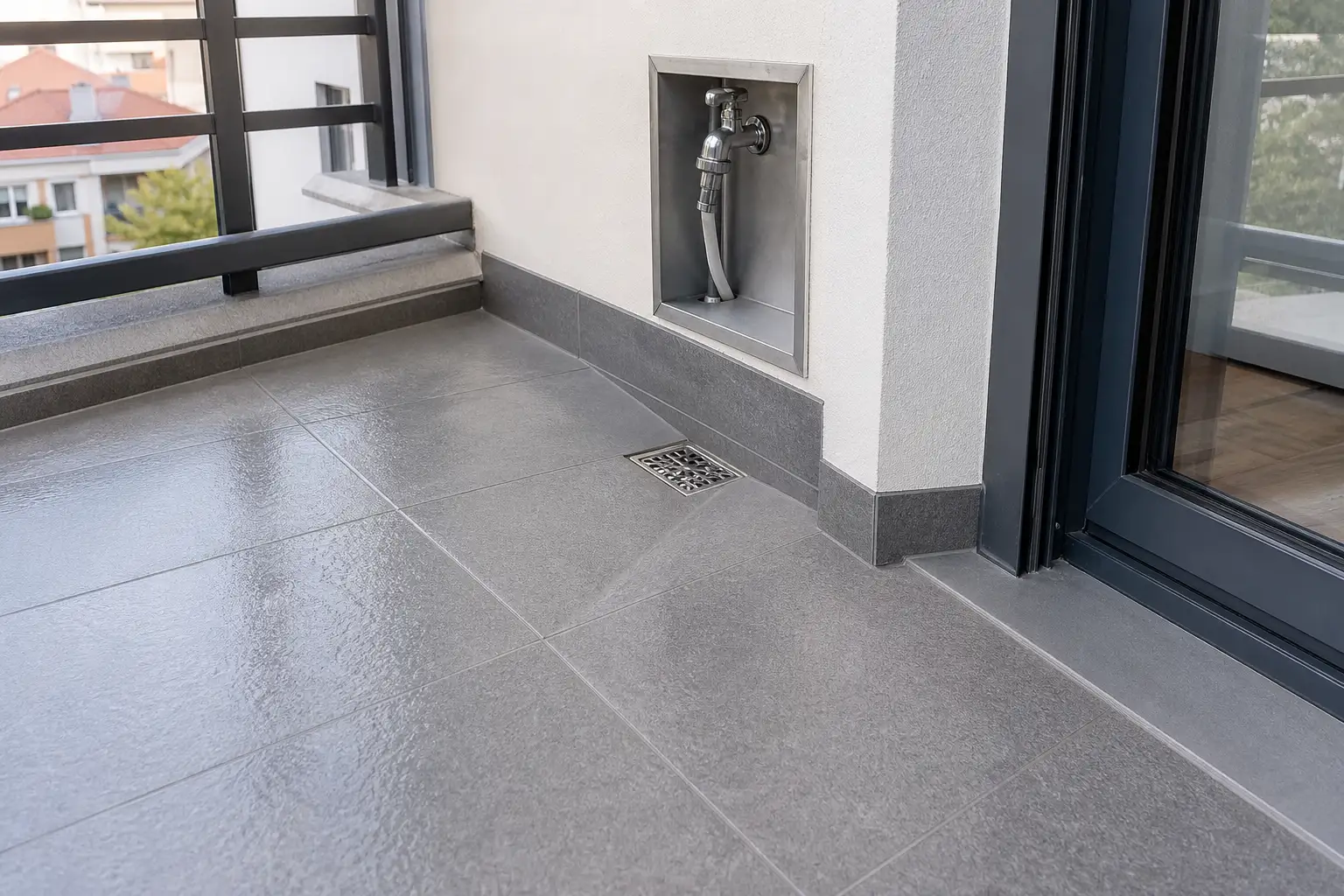
A tap is not useful if cleaning water pools beside the door, runs across the façade or is pushed towards a neighbouring balcony. First inspect the existing falls, drain positions and condition of grates. The surface should lead water to its intended outlet, without local dips or a need to wash large amounts of water back towards the building.
It is important to distinguish rainwater from water generated by cleaning. Detergent, potting soil and other residue should not simply be sent to improvised outlets. The suitable connection and execution conditions need to be assessed in the context of the building and its existing drainage system. If there are puddles, cracks or staining on the neighbour’s ceiling, pause the tap project and diagnose drainage and waterproofing first.
Keep drains clear of pots, outdoor rugs and fixed furniture. Leave an access strip for cleaning, and check regularly that leaves, compost and pet hair are not blocking the grate. For apartment exterior works, our article on apartment balcony safety explains why flooring, drainage and safe use should be assessed together.
Protect waterproofing at walls, thresholds and railings
Many leaks do not start in the middle of a balcony floor. They begin at junctions: where floor meets wall, at a door threshold, around pipes or at fixings for railings and equipment. When creating a water point, do not drill through finishes and waterproofing without understanding what lies behind them. A seemingly small penetration can create a water path, especially when it receives repeated splashing.
The right solution depends on the balcony’s construction. It may require a sleeve through the wall, a seal compatible with the waterproofing layer, an elastic finishing detail and mechanical protection. The tap needs a stable support, rather than being fixed only to a fragile finish. If tiles have to be removed, joints and edge details should be reinstated with exterior-suitable materials.
Watch for warning signs over the following months: darkened joints, peeling internal paint, damp odours, salt deposits, cracks by the threshold or water that takes too long to disappear. Do not conceal these signs with fresh sealant. It is better to find the source and restore continuity in the protective system before repairing the visible finish.
Condominium approval, façade issues and professional execution
In an apartment building, a balcony may include elements treated as common parts, particularly where the work changes the external appearance, crosses the façade or affects the building’s waterproofing and drainage. Lisbon City Council states in its document list for changes during building work that works affecting common elements such as façades, balconies or roofs may require condominium authorisation recorded in meeting minutes. Always check the condominium rules, constitutive title and applicable process before starting.
Small work still needs a method. Ask a qualified professional to verify the supply source, pipe route, drainage compatibility and the way junctions will be repaired. Photograph valves and pipe positions before walls or boxes are closed. Those records can save time and disruption during a future repair.
Finally, plan maintenance: clear drains, inspect joints, store the hose, close the shut-off valve before extended absences and observe the balcony after heavy rain. A well-executed outdoor tap should be unobtrusive. Its real value is that it works without putting water where it does not belong.
Planning a more practical balcony or terrace? Obra Lisboa can help turn everyday needs into a coordinated plan for water supply, drainage, finishes and careful execution.
Editorial image; it does not depict an Obra Lisboa project.

Obra Lisboa