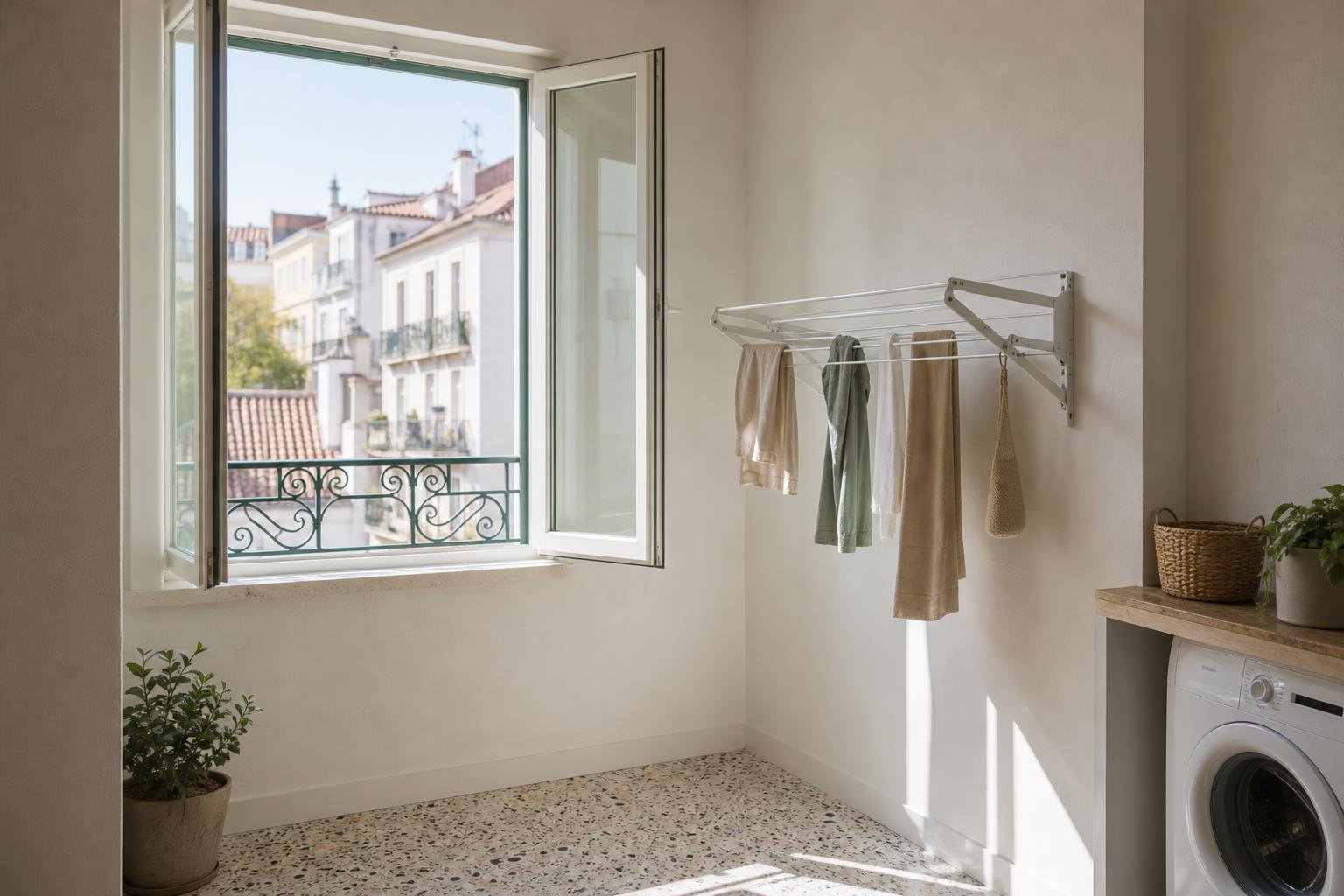

Well-planned bicycle storage can clear balconies, hallways and private storage rooms, make everyday cycling easier and prevent friction between neighbours. Yet turning a basement, former storeroom or shared area into a useful bike room is not simply a matter of adding a few racks. The intended use of the space, clear access and escape routes, moisture control and straightforward rules all need to be considered from the outset.
Lisbon’s municipal rules define bicycle parking as an area specifically equipped for bicycle storage, while the 2021 amendment states that bicycle parking should be provided where demand is most predictable. In an existing building, however, the appropriate solution must begin with the actual condominium: its deed, internal rules, technical constraints and day-to-day use.
Choose the right room, not simply an unused corner
Begin by identifying an area that can accommodate bicycles without obstructing entrances, stairs, corridors, fire doors, service cupboards, technical panels or vehicle spaces. A good bike room should not force residents to lift, drag or manoeuvre bicycles through tight shared routes. The route from the street or garage to the rack should be direct, well lit and easy to understand.
Before designing anything, establish whether the area is common property, for exclusive use or allocated to another function. Portuguese horizontal-property rules identify, among other things, building structure and general service installations as common parts; they also limit changes of use that conflict with a space’s designated purpose. Check the official Diário da República framework on horizontal property, the building deed and the condominium rules before assuming that an empty basement room can be repurposed without collective approval.
If the project involves enclosing openings, changing partitions, adding a door, affecting structural elements or interfering with building services, obtain advice from qualified professionals and confirm the applicable planning route. A modest-looking intervention can affect safety, accessibility and future maintenance.
Measure movement before selecting racks
The most compact rack does not always produce the most usable storage room. City bikes, e-bikes, children’s bikes, bikes with child seats and bikes with baskets all need different clearances and handling movements. Survey the bikes likely to be stored, or at least set out their dimensions on a plan: handlebar width, length, turning space and door swing.
Keep a continuous aisle so that someone can enter, remove a bike and leave without moving other people’s bicycles. Do not position racks in front of electrical cabinets, valves, meters, fire equipment or inspection access points. Where there is a garage door or ramp, make sure bicycle movements do not conflict with vehicles or pedestrians.
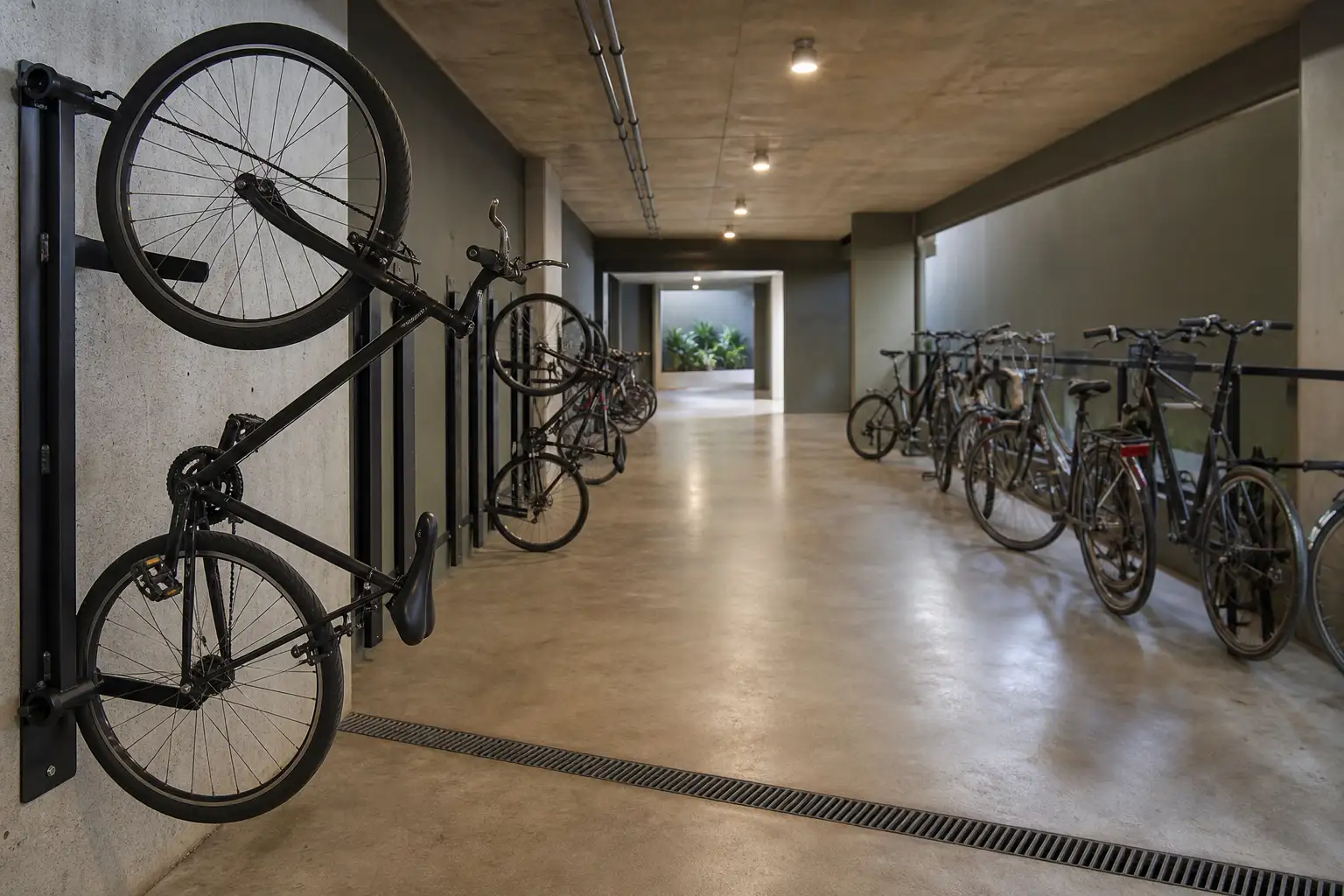
Floor channels, vertical racks, individual hooks and two-tier systems can all work in the right setting. Vertical storage saves floor area but may not suit heavy bicycles or users with limited mobility. Instead of aiming for the highest possible capacity, aim for smooth daily use without collisions. The principle is close to that of planning an apartment entry wardrobe: storage only works when circulation remains clear.
Robust anchors and security without makeshift solutions
A shared bicycle room should provide a solid point where each user can secure the bike frame and, ideally, one wheel. Hanging bicycles only by a wheel, locking chains to pipes or improvising anchors on railings and building services can cause damage and offers inconsistent protection.
Choose racks designed for the expected load and fix them to a wall or slab with suitable strength. The wall construction matters: solid masonry, concrete, hollow block and lightweight partitions require different fixings and have different load capacities. Never attach heavy racks to plasterboard unless the wall structure and reinforcement have been designed for that purpose.
Security should be proportionate to the building and the risk. A controlled-access door, adequate lighting, numbered spaces and a clear process for abandoned bicycles are often more useful than a complex system that nobody manages. If CCTV or electronic access is proposed, the condominium should address management and privacy. Where the work affects walls, doors or services, review also what to check before altering apartment walls in Lisbon.
Moisture, ventilation and cleaning: protecting bikes and the building
Basements and garages are common places for bicycle storage, but they can also retain moisture, condensation, dust and water brought in on tyres. A bicycle will corrode faster in a persistently damp environment. More importantly, an unresolved leak can damage finishes, walls and building components.
Portugal’s Directorate-General of Health notes that excessive humidity can cause condensation on cold surfaces and encourage mould, with negative effects on occupants. Refer to the DGS guidance on indoor air, humidity and environmental quality. In practical terms, repainting a stain is not a remedy: establish whether the cause is water ingress, poor drainage, condensation, unsuitable washing practices or insufficient ventilation.
Provide ventilation appropriate to the space, a finish that can be cleaned easily, a mat or drainage area at the entrance and cleaning arrangements that do not send water into sensitive zones. Keep drains accessible; never cover them with bikes or stored items. If the room has a persistent odour, recurring staining or standing water, solve the underlying issue before spending money on racks.
Rules that prevent the room becoming cluttered
Even a well-built bike room loses its value when it becomes a dumping ground for unused bicycles, broken scooters, boxes and tools. A short set of rules, approved and communicated to users, is an essential part of the project. It should say who may use the room, how spaces are allocated, how each bicycle is identified, where locks are attached and which items may not be stored.
Include provisions for abandoned items, removal after notice, cleaning, responsibility for damage and a ban on flammable materials or improvised electrical charging. E-bike batteries deserve particular attention: where charging is allowed, it should be based on an electrical solution properly sized, protected and agreed by the condominium—not on extension leads running across the floor.
Rules should also state that doors, escape routes, technical cabinets and safety equipment must remain clear at all times. This discipline supports a wider programme of preventive building maintenance, where regular checks and minor corrections help avoid expensive repairs later.
A straightforward proposal for the condominium meeting
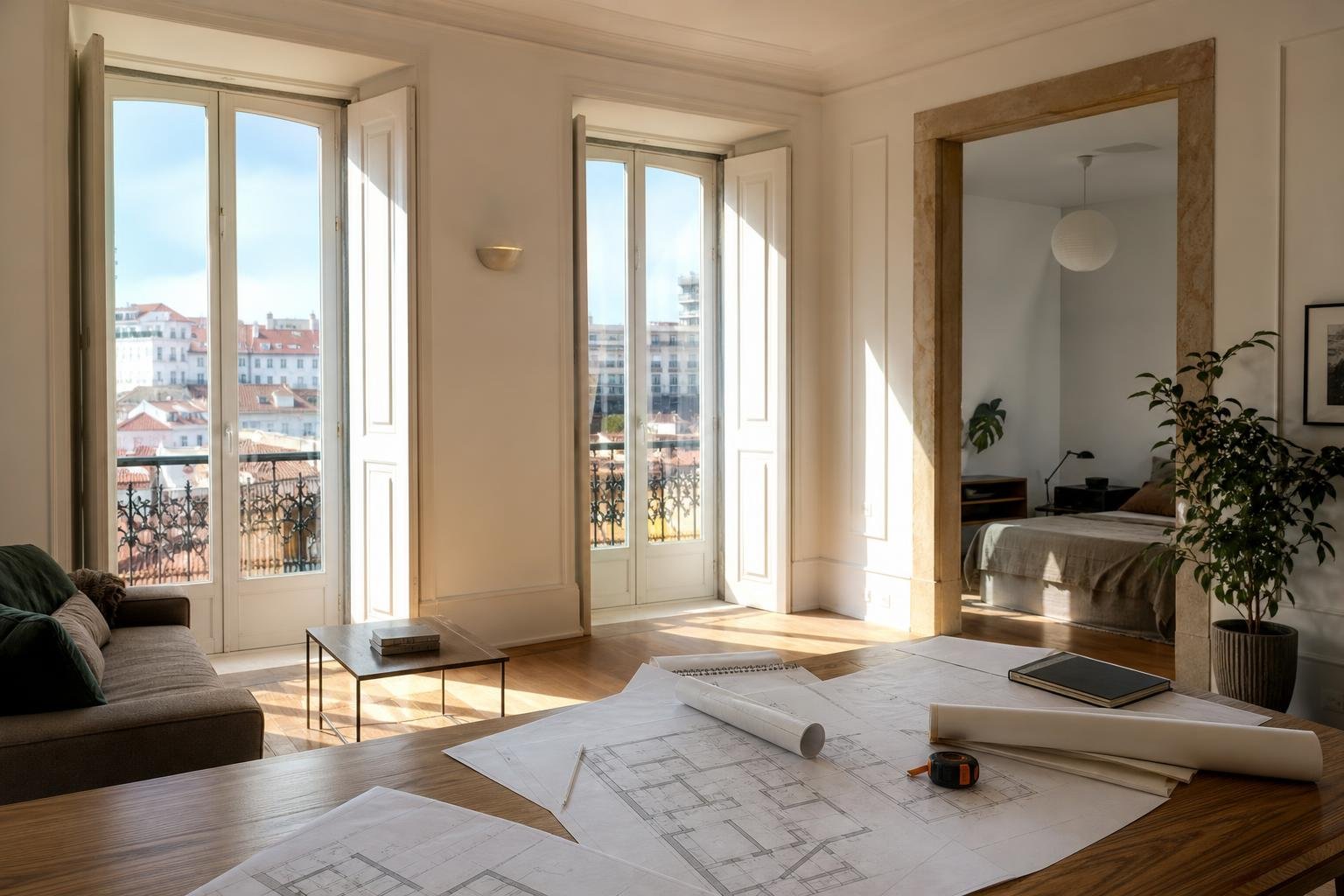
Bring a specific proposal to the condominium meeting rather than a general request to “make room for bikes”. Prepare a plan showing the available area, access route, prudent number of spaces, rack type, anchor locations, lighting, ventilation, indicative costs and use rules. Identify what requires technical confirmation and whether common areas or municipal procedures are affected.
Lisbon’s Municipal Urbanisation and Building Regulation defines bicycle parking as an area equipped for bicycle storage, and its update says parking spaces should be ensured where demand is predictable. Use the RMUEL amendment on mobility and bicycle parking as useful context, rather than treating it as an automatic template for every older building.
Start with a reversible, properly executed scheme: a sensible number of labelled spaces, secure racks, an unobstructed aisle and a review after several months. Actual use will reveal whether more spaces are needed, whether certain bicycle types are difficult to accommodate or whether the rules need refining.
Planning to adapt a basement, garage or shared room for bicycles? Obra Lisboa can help turn the initial survey into a clear works plan that respects the building, access routes and the condominium’s day-to-day needs.
Editorial image; it does not depict an Obra Lisboa project.

Obra Lisboa