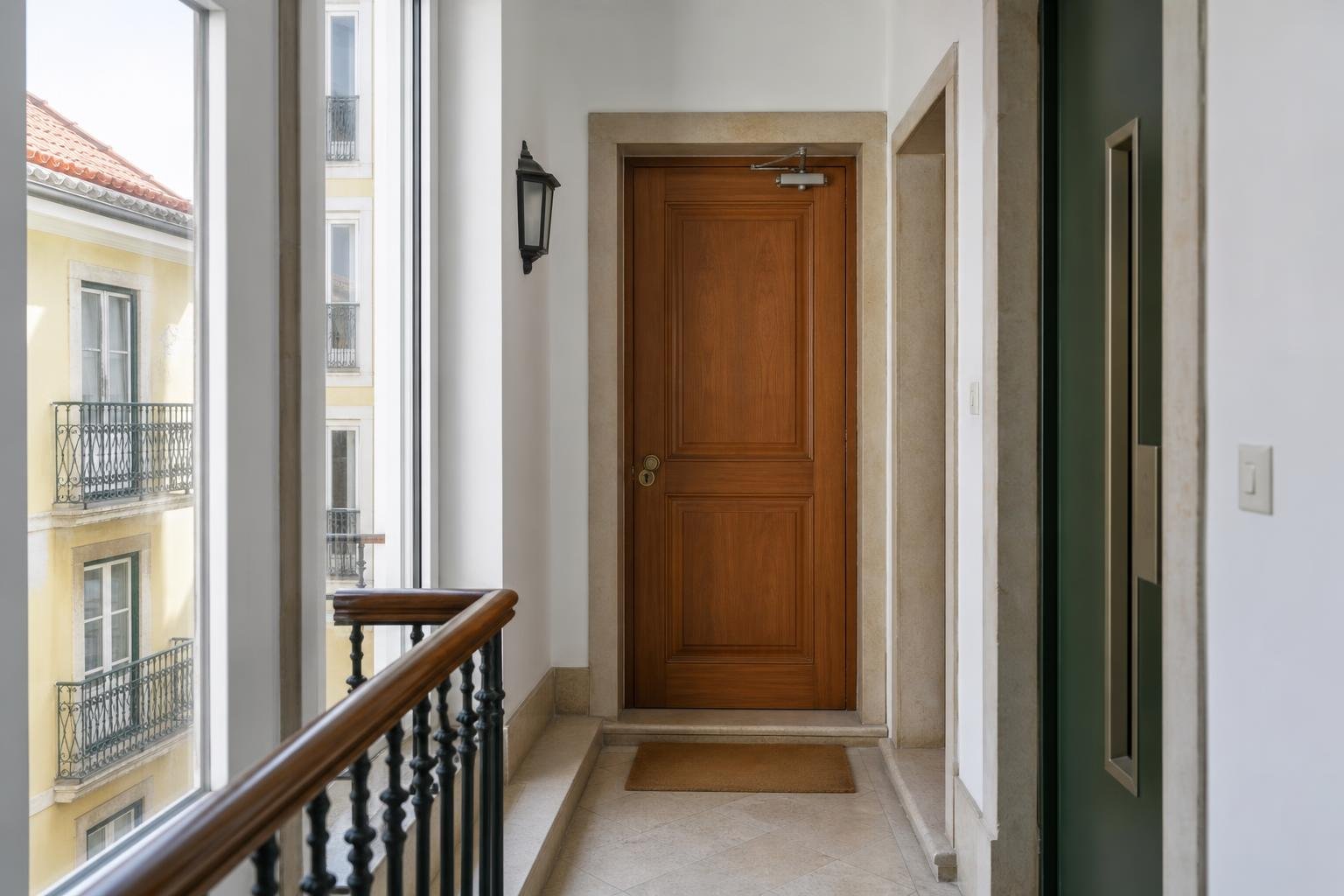
A door that slams, remains ajar or takes too much effort to open may seem like a minor annoyance. In a residential building, however, it affects residents’ rest, the security of shared areas, the life of hardware and the ease of movement for children, older people, pushchairs and people with reduced mobility.
Hydraulic closers, floor springs, dampers and hold-open devices are useful when they answer a specific need. They should not be selected for appearance alone, or adjusted simply to “close faster”. The aim is straightforward: the door should close reliably when required, without slamming, trapping users or becoming an obstacle in the route. This guide helps assess entrance doors, corridors, garages and stair access points before work begins.
Start with the door’s actual use
Before choosing a closer, observe the door for several days. Who uses it, how often is it opened, is it exposed to draughts, does it separate an internal area from a garage, does it lead to stairs, or is it part of an escape route? A lightweight corridor door does not need the same solution as a heavy metal door exposed to wind and intensive use.
Record specific symptoms: a hard final impact, incomplete closing, hinge noise, difficulty pulling, a leaf rubbing on the floor or a handle that does not return. Very often, the damper is not the root cause. Misaligned hinges, a distorted frame, overly thick seals or an uneven threshold may be responsible. Fixing the cause before increasing spring force prevents wear and a misleading sense of safety.
In buildings used by children, older residents or people with temporary limitations, try opening the door while carrying something in one hand. If the passage takes excessive effort, or the leaf accelerates at the end of travel, the adjustment needs review.
Fire safety is not compatible with improvised fixes
For fire-resisting doors on escape routes, automatic closing is not a decorative extra. It forms part of the performance of the complete assembly: door leaf, frame, hardware and seals. Portugal’s Technical Regulation for Fire Safety in Buildings states that these doors must have devices that return them automatically to the closed position. Check the regulation before replacing, disconnecting or altering any device.
For that reason, fire doors should never be held open with wedges, plant pots, boxes or other objects. Where operational reasons require a hold-open arrangement, it must be compatible with the safety function and release the door in a fire. An overly powerful closer is not a solution either: it can make the door difficult to use and encourage residents to prop it open.
If there is uncertainty about the door’s classification or the installed system, arrange a technical inspection. Replacing only a closer arm or spring with a “similar” item can undermine the expected performance.
Adjust closing speed, latch action and opening force
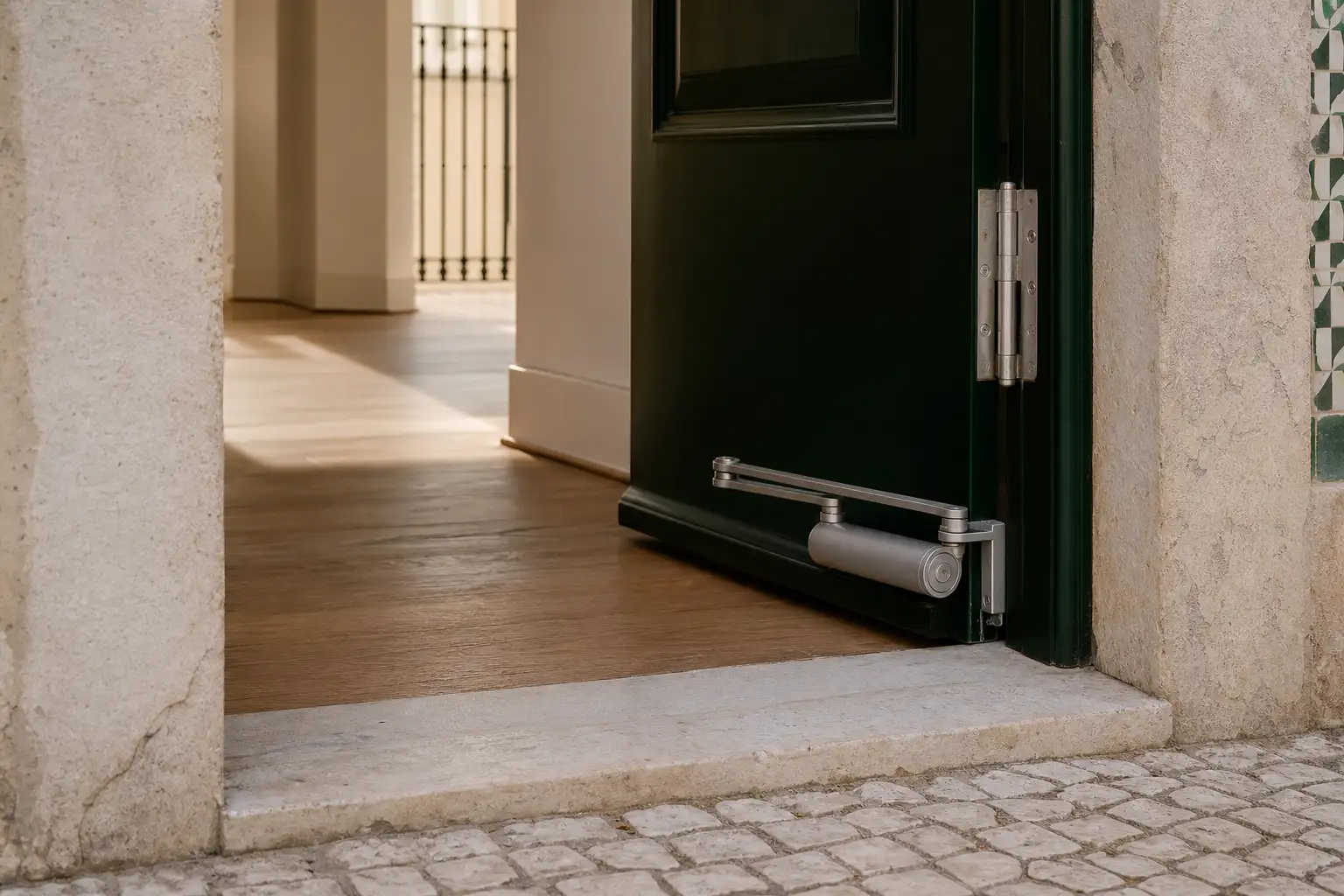
A hydraulic closer usually allows adjustment of at least the closing speed and latch action. Closing speed controls the main travel; latch action ensures the latch engages without a harsh impact. Adjustment should be gradual, with repeated testing in normal conditions, including when the door is fully open and only partly open.
A door that closes too slowly may fail to latch when air pressure changes. One that closes too fast increases noise, vibration and the chance of striking someone passing through. Check the latch, strike plate and keep alignment as well: if the leaf needs an extra push to engage, the fault is mechanical and cannot be solved by increasing damper pressure.
Avoid makeshift changes using oil, unsuitable screws or adapted components. Besides shortening hardware life, they can create leaks and unpredictable door behaviour. Simple, documented maintenance is particularly valuable for shared-use doors.
Accessibility: a safe door must still be usable
Ease of passage should be considered from the design stage or throughout renovation. The Portuguese Decree-Law 163/2006 and its technical accessibility standards sets out accessibility conditions for residential buildings and offers a useful principle for any alteration: existing barriers should not be worsened.
In practical terms, check the clear width with the door open, manoeuvring room near the handle, continuity of flooring and the absence of rugs or high thresholds that require difficult manoeuvres. A closer that is too strong can cancel the benefits of a well-sized opening. A door that shuts on a pushchair, crutch or a person moving slowly is not properly adjusted.
Where a door serves a regularly used route, test the whole arrangement with different users. Choose handles that are easy to grip, avoid harsh edges and keep the swing area clear of furniture, bicycle racks, bins or other objects.
Noise, draughts and ventilation: achieve balance without over-sealing
Slamming is often caused by pressure differences between spaces, open windows on opposing façades or mechanical extract ventilation. Before blaming the closer, establish whether persistent draughts are present. Seals, brush strips and stop dampers can reduce noise, but they must not obstruct grilles, technical gaps or ventilation arrangements provided for the building.
A more airtight renovation needs careful attention to air renewal and moisture. For the relationship between comfort, condensation and everyday use, read Ventilation in Renovated Homes: Prevent Damp and Mould Without Losing Comfort. The priority is not to seal every opening indiscriminately; it is to manage airflow, reduce unwanted infiltration and retain necessary ventilation.
If a shared door only slams on windy days, a properly adjusted damping solution may be more appropriate than increasing closing force. On internal doors, cushioned stops or perimeter seals can improve acoustic comfort without changing essential operation.
Condominium decisions, common areas and proper records
Doors to stairs, corridors, entrances, garages and service areas are normally common parts of the building, so changes should not be treated as an individual initiative. Finish, fire resistance, opening direction, access-control devices and the building’s overall appearance may all be connected.
In Lisbon, municipal documentation for alteration works states that, where work affects common areas, condominium authorisation minutes must be submitted. Check the applicable framework in the Lisbon City Council document list for building alteration works, and seek professional advice when the work goes beyond a simple adjustment.
To avoid disputes and rework, record the problem, the doors covered, hardware model, colour, maintenance plan and final acceptance responsibility. If the door is fire-resisting, coordinate the decision with the appropriate checks; see also Fire Doors in Residential Buildings: What to Check During a Renovation. A good solution is discreet: it closes properly, reduces noise and is barely noticed.
Planning to replace or adjust doors in your building’s shared areas? Obra Lisboa can help assess the door, hardware, circulation space and compatibility of the proposed work with the building. A technical visit before purchase helps prevent unsuitable solutions and repeated alterations.
Editorial image; it does not depict an Obra Lisboa project.

Obra Lisboa