
A pedestrian gate can look like a straightforward purchase: choose a design, select metal or timber, and have it fitted. In reality, it is a daily-use element that shapes the arrival at home, controls privacy and has to work through rain, sun, wind, shopping bags, prams and visitors. Poor planning can lead to loose hardware, corrosion, puddles at the threshold, awkward opening or conflicts with the pavement.
Before comparing finishes, treat the gate as part of a small system: boundary wall, posts, paving, drainage, lock, lighting and the route to the front door. In Lisbon, municipal rules for walls and enclosures facing the public street should be checked at the outset. The Lisbon Municipal Urbanisation and Building Regulation sets, among other provisions, a 1.20 m maximum height for boundary walls along public streets, while enclosures up to 2.0 m may be permitted when complemented by hedges.
This guide helps you make durable choices, without replacing a proper check of the rules that apply to the plot, street and any heritage constraints.
Start with the property boundary and planning rules
Your first drawing should show where private land ends, where public space begins, and how the gate relates to the wall, pavement and utility meters. Do not assume that replacing an existing element allows you to repeat any height, opacity or position. Lisbon’s municipal regulation includes specific rules for walls and enclosures, including sites where adjoining land levels differ. A gate incorporated into a new wall, a change to the plot frontage or work in a protected area may be assessed differently from a simple repair.
Where there is uncertainty about siting, alignment, height or restrictions, a prior information request to Lisbon City Council can expressly cover the siting and height of boundary walls. It is a sensible way to clarify feasibility before ordering metalwork, stonework or foundations.
Also avoid leaves that swing out over the pavement. As well as creating a hazard for passers-by, they can interfere with public-space use. Design the opening entirely within the plot, or choose a sliding arrangement where there is room and where its track can be kept clean.
Plan for a comfortable passage, not just a nominal width
The clear opening is the usable width after the frame, stop, handle and lock are installed; it is not simply the ordered leaf width. Think about daily use: a person carrying shopping, a pram, a bicycle being wheeled through, or someone with reduced mobility. Portugal’s accessibility rules state that pedestrian routes should provide a continuous unobstructed channel at least 1.20 m wide, as set out in Decree-Law No. 163/2006 and its technical standards.
Not every private approach has precisely the same legal context, but this is a useful design benchmark for an entrance that is comfortable and ready for future needs. More important than chasing one isolated figure is ensuring a logical sequence: a stable exterior landing, room to manoeuvre, a reachable handle, no unnecessary threshold upstand and a clear path to the main door.
If the gate swings inward, check its opening radius and where a person stands while opening it. A wide leaf that blocks the route, hits a step or crushes planting is not a well-resolved entrance.
Match the opening type to the site
A hinged gate is robust, visually simple and often works well with reliable locking. It does, however, require stiff posts, properly sized hinges and clear internal space for its swing. A sliding gate removes that swing, but needs usable side space, a bottom track or cantilever system, end stops and regular cleaning along its travel path.
Weight matters more than it first appears. A tall, solid steel leaf with heavy cladding puts substantial load on hinges and posts, especially in wind gusts. Ask the supplier to state the anticipated weight, fixing system, number and type of hinges, stops, and provision for later adjustment. For automated gates, add safety devices, manual emergency release and a maintenance plan.
Security does not require turning the entrance into an unfriendly barrier. Good lighting, controlled sightlines, an appropriate lock, firm posts and a leaf that closes smoothly are more valuable than poorly fixed decorative hardware. For wider guidance on workmanship and material decisions, read how to ensure the quality and durability of a building.

Resolve water management before the final paving goes in
An exterior entrance should direct water away from the threshold, posts and shallow foundations. A common failure is paving right up to the wall while leaving a low point beside the gate. Water then pools, splashes the metal base, carries dirt into the track and can enter through joints or through the junction between paving and wall.
The 1991–2020 climate normal for Lisbon’s Instituto Geofísico station records average annual rainfall of 793.5 mm, with higher monthly values between October and March; see the IPMA Lisbon climate normal. It does not by itself size drainage, but it explains why falls, channels, accessible gullies and maintenance are not minor details.
Before the finish is installed, set out the levels and direction of runoff. Where appropriate, use a drainage strip, a properly located channel or permeable paving, all compatible with the ground conditions and permitted discharge route. Do not send water onto the pavement or conceal gullies beneath mats, pots or tracks. If the entrance already has standing water, assess the whole water route first, as explained in our guide to courtyard and patio drainage in Lisbon.
Choose materials by construction detail, not appearance alone
Galvanised and coated steel, suitably finished aluminium, treated timber, or combinations of these materials can all work well. The right choice depends on exposure, design, available maintenance and, above all, how junctions are made. Attractive paint will not compensate for water trapped inside profiles, unprotected cuts or incompatible screws that speed up corrosion.
Look for internal drainage in profiles where appropriate, correctly closed ends, accessible fixing points and adequate clearance from paving. The bottom of the gate should not scrape the ground or sit so close that it traps leaves and mud. With timber, confirm the species, treatment, ventilation and distance from the ground; with metal, confirm surface preparation, corrosion protection and the method for repairing scratches after installation.
It is equally wise to coordinate metals: hinges, screws, handles and the main structure should be specified as one system. Request real colour and texture samples, but also ask for detail drawings showing the junction with posts, threshold and wall. That is where durability is decided, rather than in the first photograph.
Prepare installation and a simple maintenance routine
Before fabrication, check all on-site dimensions, squareness, vertical alignment and final paving levels. Posts that look plumb can reveal meaningful misalignment once a lockable leaf is fitted. Also plan cable routes for the bell, video entry system, lighting or automation before walls and paving are closed. This coordination avoids late chasing and visible patch repairs.
At handover, test opening and closing repeatedly, check clearances, stops, lock operation and water runoff at the threshold. Keep technical sheets, touch-up colour details, keys, remotes and maintenance instructions. A seasonal inspection is often enough to remove leaves and grit, tighten hardware when needed, lubricate only points recommended by the manufacturer, and watch for lifting paint or cracks around supports.
If the work includes buried services, new posts or a major alteration to the entrance, do not improvise. The right solution comes from measurement, regulatory checks and coordinated construction. A discreet, well-fitted and easy-to-maintain gate adds value because it works without demanding attention.
Renovating the entrance to a house in Lisbon? Obra Lisboa can help coordinate access, paving, drainage, walls and finishes so that the gate forms part of a coherent, durable project. You may also find our guide to protecting windows and façades during external works useful.
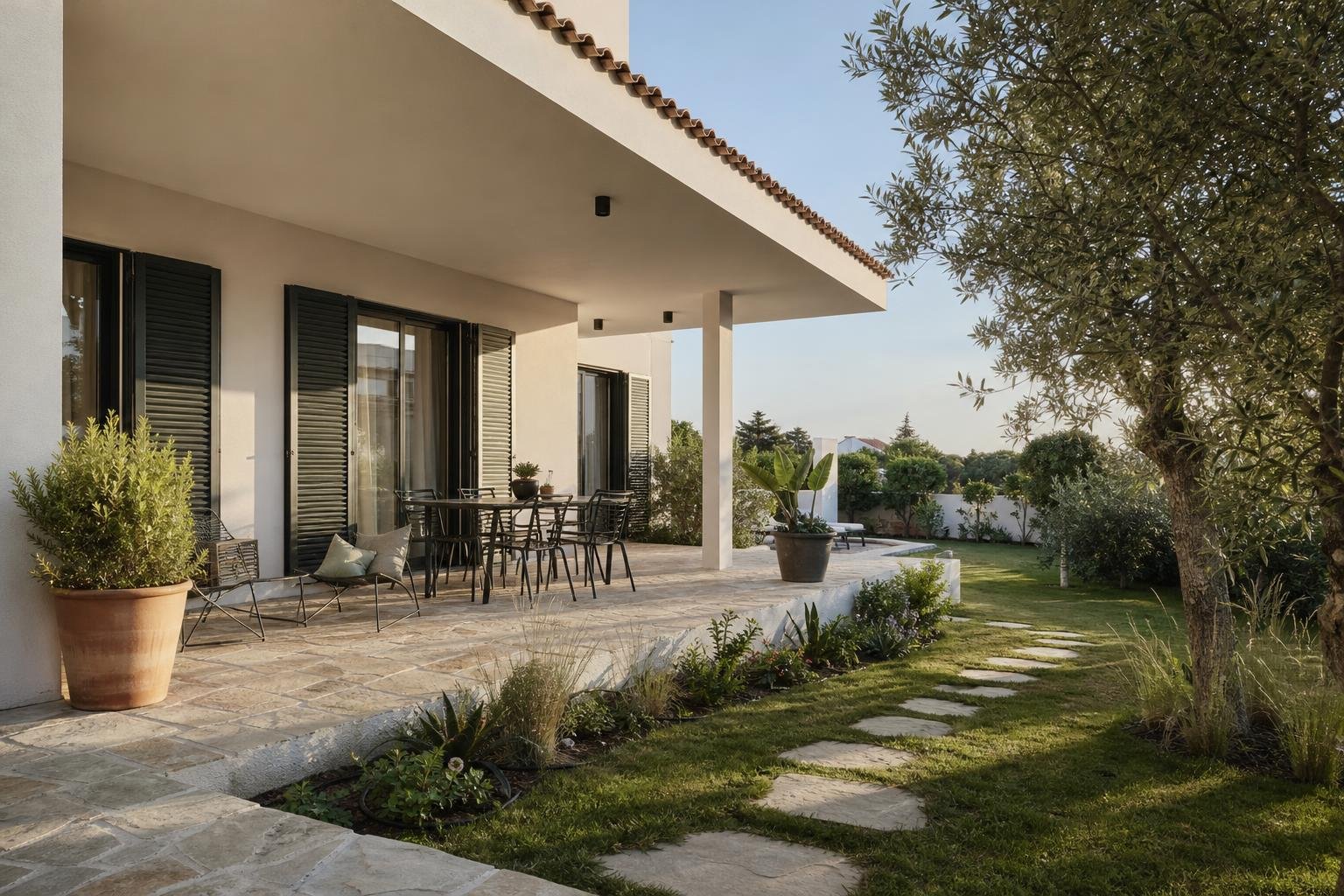
Editorial image; it does not depict an Obra Lisboa project.

Obra Lisboa