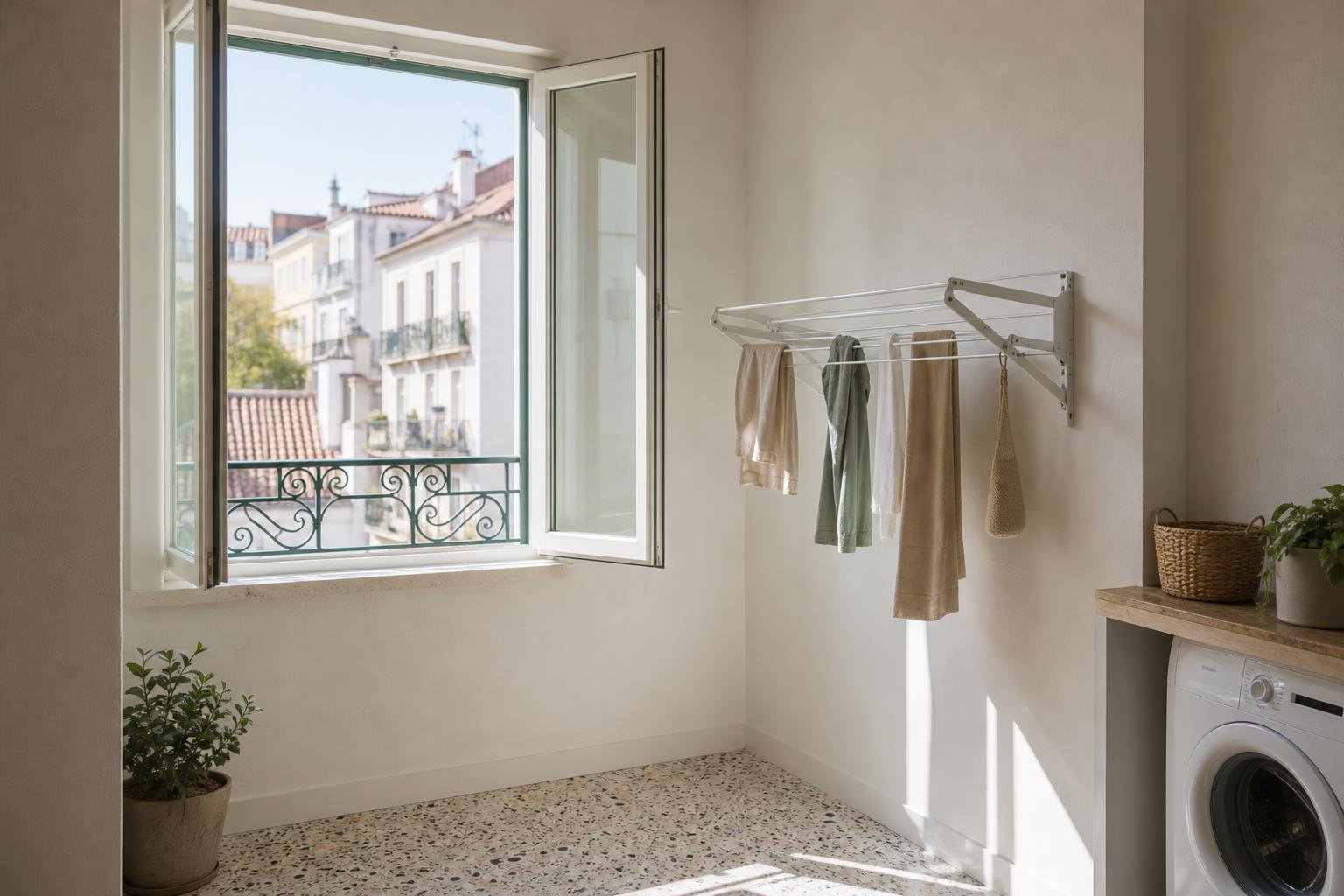

Domestic hot water often looks like a straightforward choice until walls are being closed, cabinets are ordered and equipment has to fit through the door. In a renovation, a hot-water heat pump can provide an efficient and comfortable solution, but it is not an appliance to decide on at the end. It needs air volume, service clearance, condensate drainage, properly insulated pipework and a storage capacity matched to how the household actually uses hot water.
The aim is not simply to buy the largest cylinder or the unit with the longest feature list. It is to create a coordinated system: hot water when it is needed, short routes to taps, less water wasted while waiting for temperature, and straightforward future servicing. Portuguese energy rules define domestic hot water as heated potable water used for bathing, cleaning, cooking and similar purposes, and include technical systems within building energy-performance requirements. Start with the Portuguese technical-systems and energy-performance regulation as a project reference, while relying on a qualified professional for the specific design.
Start with household routines, not the product brochure
The first question is how many people use hot water and when they use it. A two-person home with showers at different times has a very different demand pattern from a family that concentrates showers, laundry and kitchen use in the morning or evening. For one week, note the busiest periods, the number of bathrooms likely to be used at once, and whether the home has a bath, high-flow showers or an existing recirculation loop.
With this information, the designer or installer can estimate useful storage capacity, storage temperature and the likely role of electric back-up. An oversized choice consumes more space and keeps a larger volume of water hot; an undersized choice may trigger the immersion heater too often. Efficiency is not only about the technology. It is about matching the system to real demand.
Review the existing pipe network too. Long runs, uninsulated pipes and concealed connections with no access can undermine everyday comfort. Before changing the equipment, read our guide to sewer and plumbing systems before renovating, because moving a kitchen or bathroom is the right moment to coordinate every service.
Choose a location that supports the equipment
A domestic hot-water heat pump extracts heat from air, so its location affects performance, noise and the temperature of the surrounding space. A plant room, laundry area, ventilated storage room or garage may work well, provided there is enough room, suitable installation conditions and a realistic route for future replacement or repair.
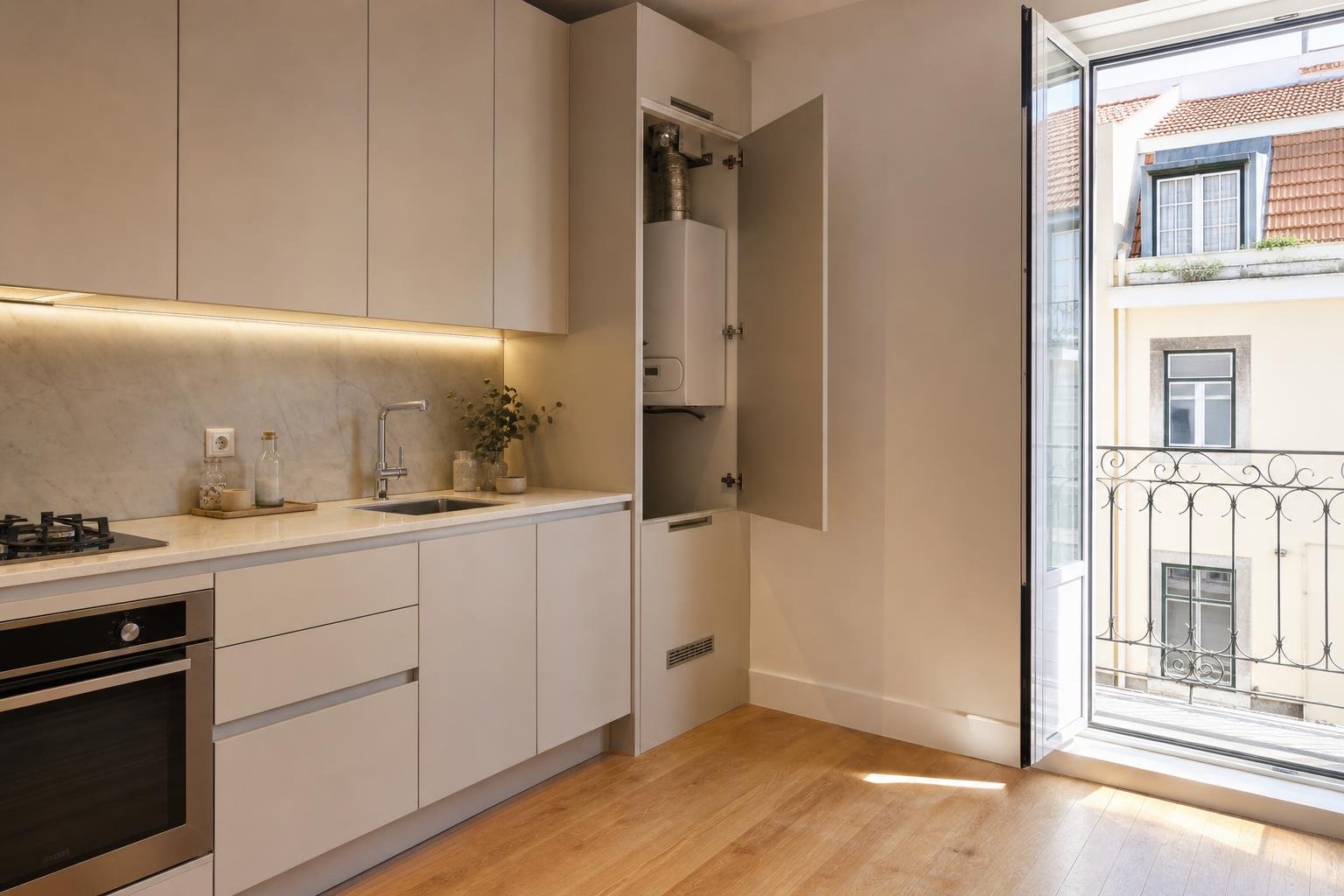
Do not choose the spot simply because there is an electrical socket nearby. Check clear height, doorway widths, the strength and level of the floor, working space around the unit and how the cylinder will be brought into the property. If the unit is placed inside a cupboard, that cupboard cannot be treated as a sealed box: air intake and discharge must follow the manufacturer’s instructions and the designed installation arrangement.
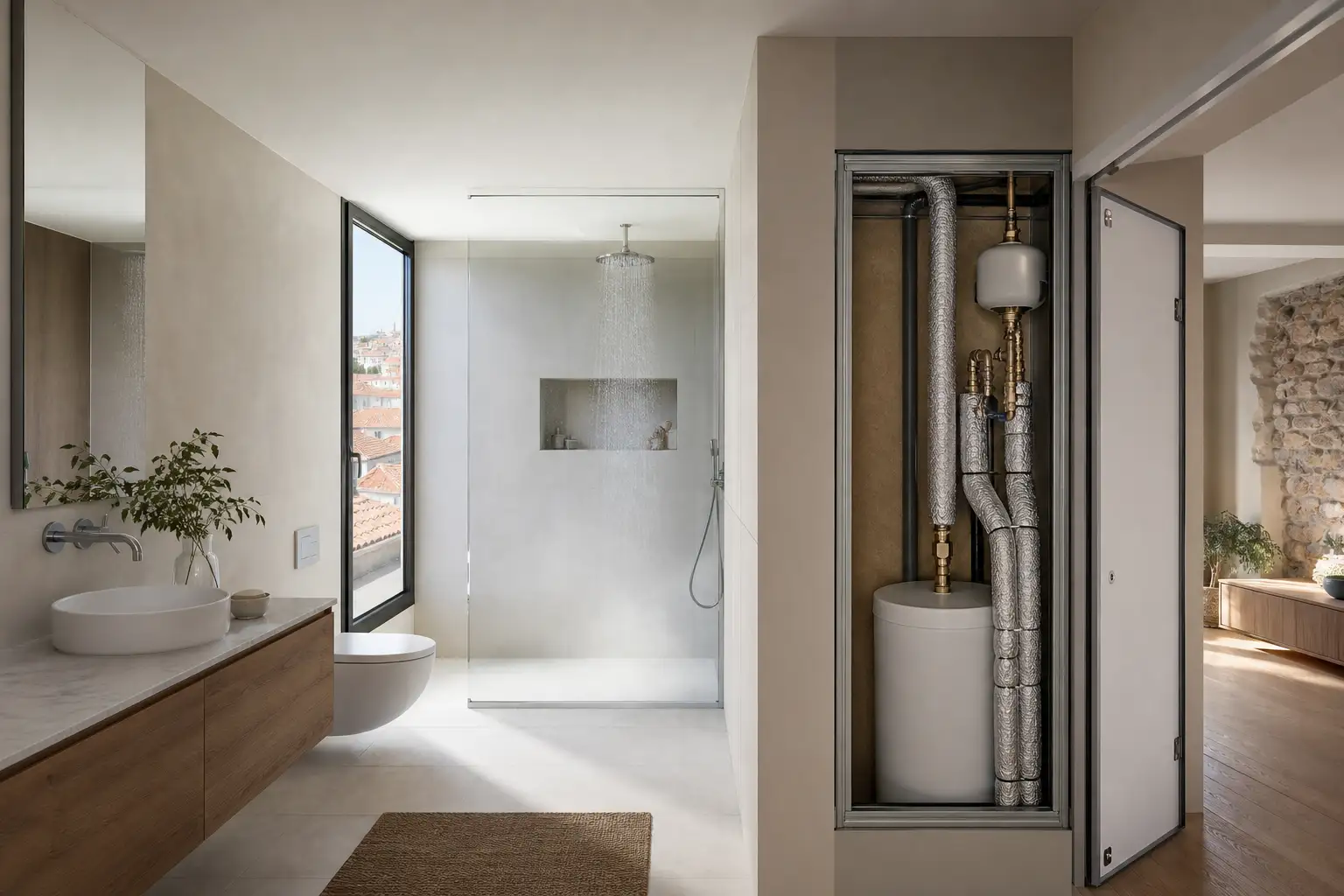
Noise needs equal attention. Positioning a unit beside a bedroom, against a lightweight partition or inside an unplanned cabinet can turn an efficient system into a daily nuisance. Where renovation work includes meters, valves and other equipment, plan an accessible technical utility cupboard from the outset, without compromising required airflow.
Plan condensate, safety discharge and the floor below
When operating, a heat pump may produce condensate. This water needs a safe, properly planned route to a suitable drain; it should not drip into a makeshift tray, a cabinet or a balcony. Decide on falls, traps where appropriate and cleaning access before finishes and linings are completed.
The cylinder also needs protection against possible leaks or safety-valve discharge. A water-resistant floor, drainage point and an arrangement that makes a fault visible help stop a minor problem from remaining hidden for weeks. This is particularly important in an apartment, where a small leak can damage another home.
Do not bury joints, isolation valves, filters or discharge connections behind a finished wall. Planning inspection access panels for concealed plumbing allows components to be checked and repaired without demolishing tiles or cabinetry. A discreet but well-positioned access point is more valuable than a flawless-looking finish that cannot be maintained.
Cut heat losses and waiting time at the tap
Opening a tap and wasting water while waiting for it to heat up is frustrating. Very often, the generator is not the main issue: the problem is the distance from cylinder to outlet, poorly sized pipes or inadequate insulation. During a renovation, try to keep hot-water production reasonably close to bathrooms and the kitchen, while still respecting the unit’s ventilation and drainage needs.
Hot-water pipes and, where present, return circuits should be continuously insulated and protected. Portuguese guidance published in the official gazette highlights insulation on supply and return circuits in central recirculating domestic-hot-water systems, as well as compatibility between the heat generator and the water-use fittings. See the Portuguese reference on water efficiency and hot-water systems when considering these design decisions.
Do not add recirculation automatically. It can improve convenience on long pipe runs, but it can also create ongoing losses if insulation, timers or controls are poor. In many homes, shortening the route and improving insulation is the simpler and more resilient answer.
Coordinate electricity, controls and available energy
A heat pump needs an electrical supply sized for its requirements, appropriate protection and a dedicated arrangement installed by a qualified professional. Use the renovation to check switchboard capacity, isolation arrangements and cable routes, rather than relying on extensions or last-minute work after cabinets are in place.
Operating schedules and control modes are worth considering too. Setting the unit around predictable demand or available photovoltaic generation can make better use of electricity, but only if it does not reduce comfort or cause unnecessary electric back-up cycles. ADENE provides indicative tools for assessing efficiency measures, including domestic hot-water production and solar use; use the ADENE energy-efficiency calculators as a starting point, then confirm the assumptions for your home with a professional.
Temperature settings, health protection, thermostatic mixing valves and commissioning should be treated as one coordinated package. The occupants need comfortable, safe water, while the equipment needs operating conditions defined by its manufacturer and installer.
Coordinate site logistics, condominium rules and future servicing
In Lisbon, replacing an internal appliance may sound like minor work, but site logistics still matter. A large cylinder can require lift protection, delivery booking, movement through shared areas and organised removal of the old unit. If the renovation needs a skip, materials on the street or other external occupation, check the municipality’s guidance on public-space occupation for works exempt from prior planning control early in the process.
If you live in a condominium building, communicate work that may involve noise, moving heavy items or access through common areas. Keep technical sheets, installation diagrams, service contacts and photographs of pipework before walls are closed. These records speed up future diagnosis and avoid costly trial-and-error investigations.
Finally, include maintenance in both the budget and the calendar: inspect the drain route, clean components as the equipment requires, check valves and watch for signs of damp. An efficient installation is one that remains accessible, understandable and safe years after the renovation is finished.
Renovating a home in Lisbon and want hot water, plumbing, electrical work and finishes to be coordinated rather than improvised? Obra Lisboa can help structure the decisions from the planning stage, so day-to-day comfort does not depend on last-minute fixes.
Editorial image; it does not depict an Obra Lisboa project.

Obra Lisboa