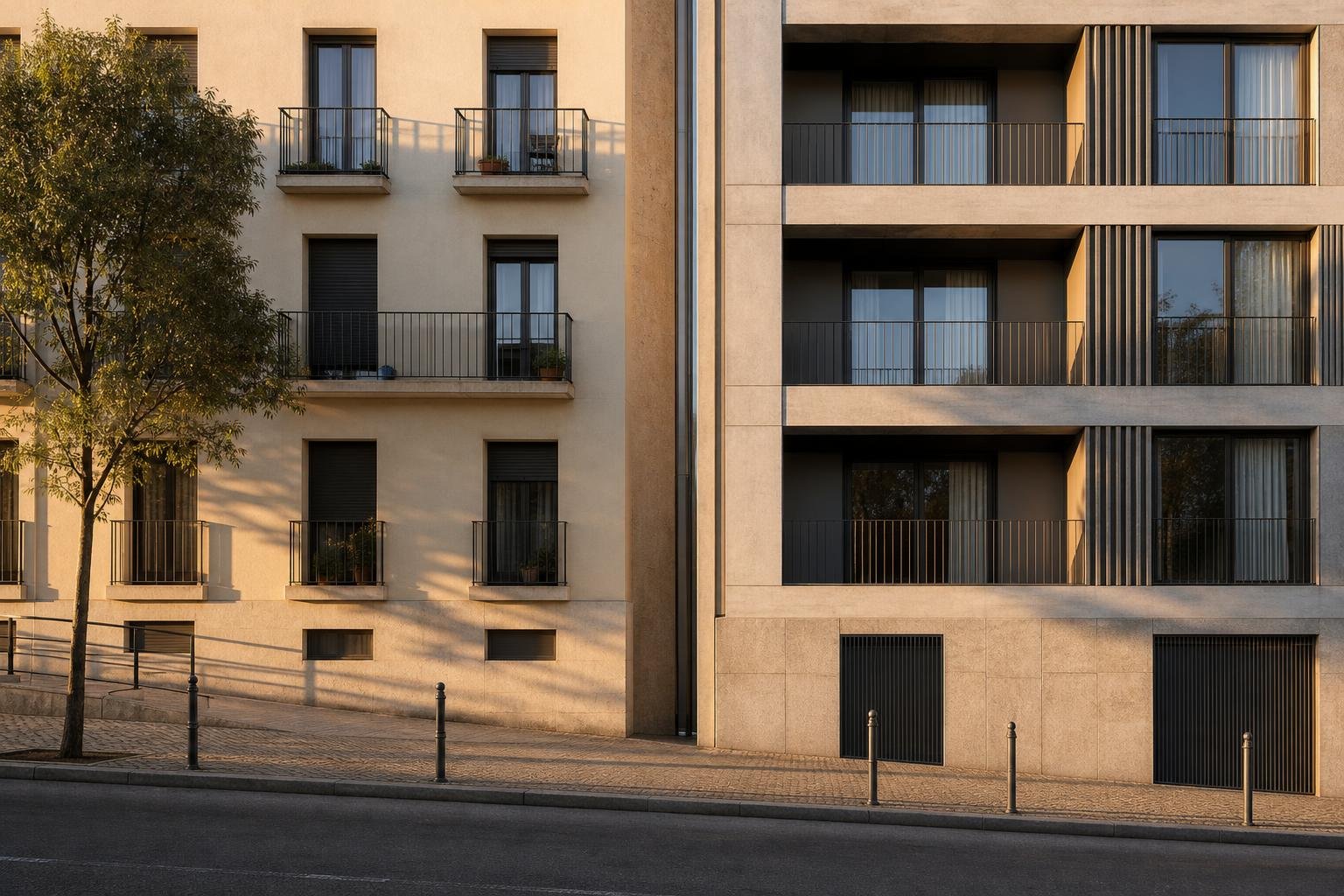

A tiled façade is more than a building’s public image. It is an outer layer exposed to rain, sun, pollution, movement in the underlying wall and decades of repairs that may not be compatible with the original materials. In Lisbon, one loose tile, a crack beside a window or a darkened patch can look localised while signalling failed adhesion, water ingress or deterioration in the mortar behind the finish.
For that reason, sound restoration starts before scaffolding is erected. The aim should not be to make the façade look brand new at any price. It is to understand what is there, retain what remains serviceable and replace only what has genuinely failed. This protects the building’s character, reduces waste and prevents an attractive repair from concealing an active defect.
Survey first; do not begin by buying replacement tiles
Start by reading the façade as one connected system. Photograph and map cracked, loose, missing, stained or mismatched tiles. Record cracks in render, open joints, rust marks, white salt deposits, deteriorated window frames, window sills with poor drainage and defective roof-edge details.
Patterns matter. Tiles that sound hollow when assessed by a competent professional may indicate loss of adhesion; staining concentrated below sills or beside downpipes often points to water; cracks crossing both joints and tiles require investigation to establish whether they are superficial or associated with movement in the wall behind. Do not remove tiles simply to “have a look” without recording their position and arranging safe retention.
It is also sensible to relate exposure to the local climate. The 1991–2020 Lisbon Geophysical Institute normal records approximately 793.5 mm of annual rainfall, with higher monthly averages from October through January. Consult the IPMA Lisbon climate normal when planning water-management repairs and timing work before the wetter part of the year.
Separate conservation, repair and replacement
Conservation does not mean leaving every element untouched. It means selecting the least invasive intervention that restores safety and continuity. Unsuitable cleaning can scratch glaze, erase decoration, open the surface or force water behind tiles. Likewise, excessively rigid mortar may concentrate stresses and create new fractures.
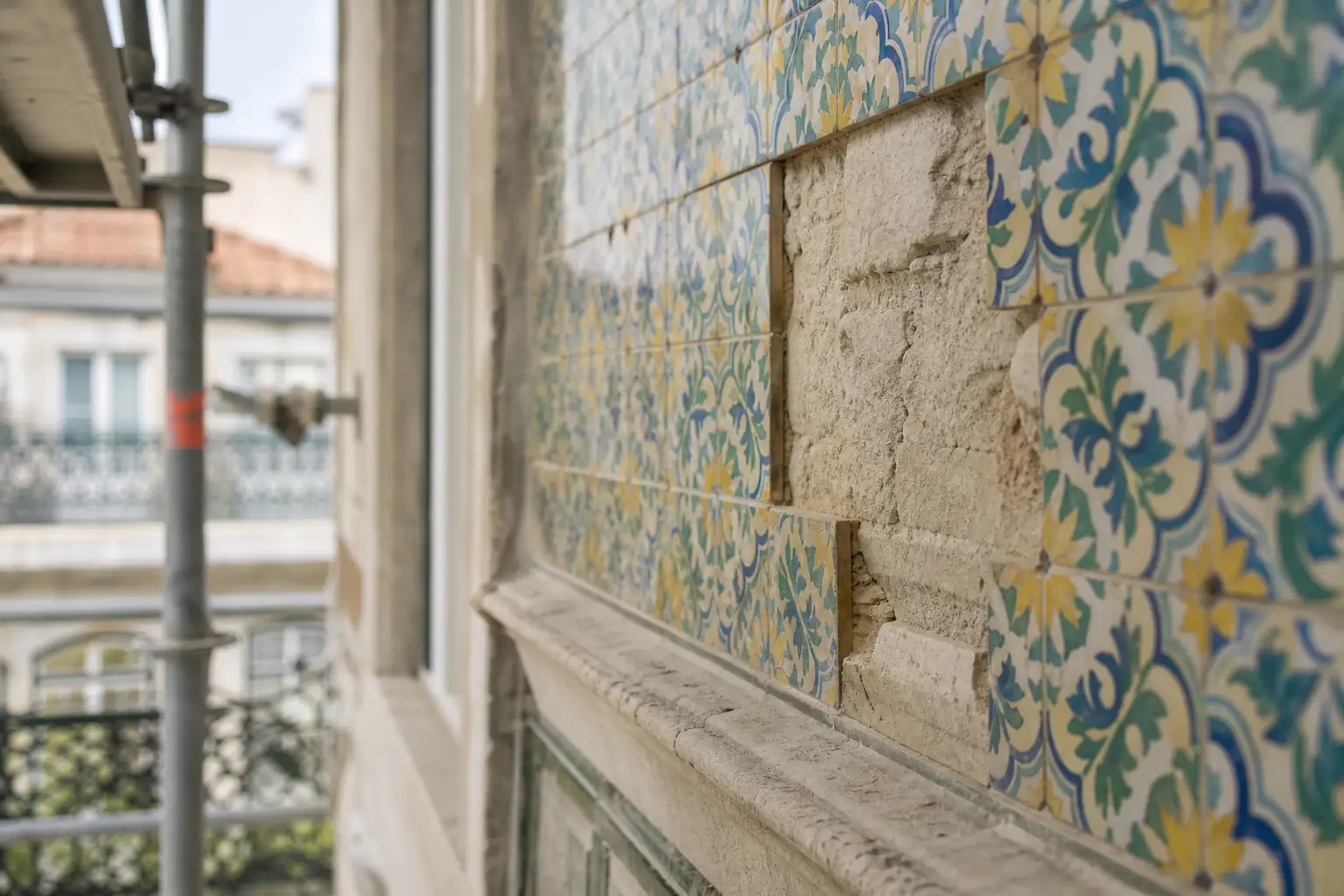
Where tiles are detached but intact, the priority is to identify the cause and consider careful resetting with compatible materials. Where losses exist, replacements should respect size, thickness, finish and pattern, rather than attempting an artificially perfect copy. On repetitive tiled façades, the pattern module and joint alignment matter as much as colour. Keep removed original pieces, label their locations and retain samples for comparison.
Lisbon’s municipal rules state that building elements should only be replaced where deterioration is irreversible and favour identical or compatible materials. Read the relevant provisions in the Lisbon Municipal Urbanisation and Building Regulation published in Diário da República. In practice, this supports a technical, evidence-led decision rather than wholesale replacement for convenience.
Fix the water behind the façade before repairing its surface
Broken or loose tiles are often the visible result, not the source, of the problem. Water may enter through failed joints, copings, flashings, balcony details, window sills, frames, downpipes or cracks. If these routes remain open, installing new tiles is only a temporary cosmetic measure.
The scope should therefore include checks to roof edges and upper details, downpipe testing, water discharge and drainage, crack repair and review of balcony junctions. It is equally important to confirm that the wall can dry. Applying vapour-resistant coatings indiscriminately across the façade can trap moisture in the substrate and move the failure elsewhere.
Where the project also includes windows, shutter boxes or sills, coordinate the sequence so the façade is not repaired twice. Replacing frames should respect the joint between opening, sill and tile finish; this is closely related to Obra Lisboa’s guide to replacing windows during a Lisbon renovation.
Check heritage status, condominium approval and planning controls
The façade is normally a shared part of an apartment building. Before appointing contractors, confirm the condominium resolution, the approved scope, future maintenance responsibilities and whether scaffolding, a platform or a skip will require use of the pavement. Lisbon’s supporting documentation for conservation work expressly requests condominium authorisation minutes when work affects shared areas, including façades.
Listed buildings, buildings under consideration for listing and properties within listed ensembles or sites are subject to specific controls. Lisbon City Council explains that conservation works on these properties require a licence; consult its conservation works licensing guidance before fixing a programme or ordering materials.
Removing façade tiles is especially sensitive. The municipal page on building works licensing includes planning operations that remove façade tiles among those subject to licensing. Do not assume that a small-looking intervention is exempt: confirm the specific case with a qualified professional and the local authority.
Appoint the right team and specify the work precisely
A serious quotation should not merely say “façade repair”. It should distinguish survey work, site protection, access equipment, cleaning trials, substrate consolidation, resetting, localised replacement, joint treatment, repair of weathering details, testing and final cleaning. Ask for materials, application sequence and the areas proposed for replacement to be identified clearly.
It is wise to carry out a sample panel in an unobtrusive location before approving the method across the entire façade. This makes it possible to assess the cleaning result, joint colour, mortar behaviour and appearance of any replicas. Agree who may authorise discoveries made during the work, how original tiles will be stored and what photographic record will be handed over at completion.
External work can also influence indoor comfort. Thermal bridges, water ingress and inadequate ventilation are not solved solely by renewing a façade’s appearance. To connect conservation with building health, see the Obra Lisboa article on ventilation in renovated homes, especially where condensation or mould appears on external walls.
Build maintenance into the decision from day one
Restoration lasts only when it is followed by straightforward, regular maintenance. At least annually, inspect joints, roof-edge details, window sills, downpipes and the most exposed elevations. After heavy rain or strong winds, look for new water trails, persistent staining and tiles showing signs of movement.
Avoid aggressive cleaning, drilling without prior assessment and coatings that cover the tiled surface. Keep a building file with before-and-after photographs, a map of replacements, product data sheets and contractor contacts. If spare tiles are available, store them dry, labelled and protected from impact.
A tiled façade can age gracefully when the work respects its materials, addresses water at the source and allows for future inspection. The most valuable outcome is not an over-uniform surface, but a safe, legible finish that can continue telling the building’s story.
Planning work on a tiled façade in Lisbon? Obra Lisboa can help organise the diagnosis, define a practical scope and coordinate the work with a careful, building-appropriate approach.
Editorial image; it does not depict an Obra Lisboa project.

Obra Lisboa